
To keep your fabrics safe, adjust your garment steamer’s temperature and steam pressure based on the material. Use low heat for silk to prevent damage, keep the steamer a few inches away, and steam on the wrong side. For wool, use gentle, low to medium steam, and avoid direct contact. Linen should be steamed carefully, keeping a safe distance and ensuring it’s slightly damp. Continue exploring for detailed tips on protecting your fabrics effectively.

Get your wardrobe favorites delivered free with Prime
- Fast, free delivery on millions of items
- Prime Video, Amazon Music and more included
- Member-only deals all year
Key Takeaways
- Adjust steam temperature and pressure to low or delicate settings for silk, wool, and linen to prevent damage.
- Keep the steamer at a safe distance from fabrics to avoid water spots, scorching, or fiber weakening.
- Steam on the wrong side or underside of silk and wool to reduce direct heat exposure.
- Test on a hidden area before full steaming to check for adverse reactions on delicate fabrics.
- Use moderate frequency and avoid pressing directly onto linen to maintain fabric integrity and appearance.
Popular right now

KitchenAid Artisan 5-Quart Tilt-Head Stand Mixer, Almond Cream

Vitamix Propel Series 750 Professional-Grade Blender, 4 Programs, Black

Roborock Robot Vacuum and Mop with LiDAR Navigation and 10,000 Pa Suction
As an affiliate, we earn on qualifying purchases.
Why Do Different Fabrics Require Special Steaming Care?
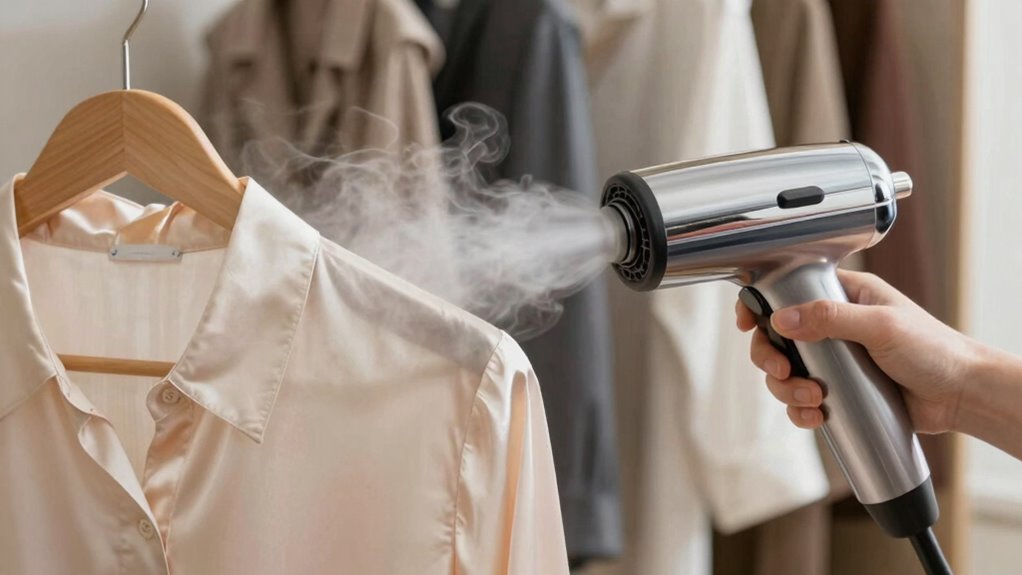
Different fabrics react differently to heat and moisture, which is why they require special steaming care. Understanding fabric treatment means recognizing how each material responds to steam temperature. For example, delicate fabrics like silk can be damaged if exposed to high heat, causing discoloration or weakening fibers. Wool, on the other hand, benefits from gentle steaming to release wrinkles without shrinking or felting. Linen, being more robust, can handle slightly higher steam temperatures but still needs careful treatment to prevent stiffening or scorching. Adjusting the steam temperature based on fabric type ensures you won’t accidentally harm your clothes. Additionally, fabric care guidelines help you tailor your steaming approach to preserve the integrity and appearance of each fabric, keeping your garments looking their best. Being aware of fabric reactions to heat can also help prevent common steaming mishaps and prolong the life of your clothing. Proper knowledge of fabric properties allows you to optimize your steaming technique for each material, ensuring safe and effective results. Recognizing fabric-specific steaming requirements is essential for maintaining fabric quality over time.
How to Prepare Your Garment Steamer for Delicate Fabrics
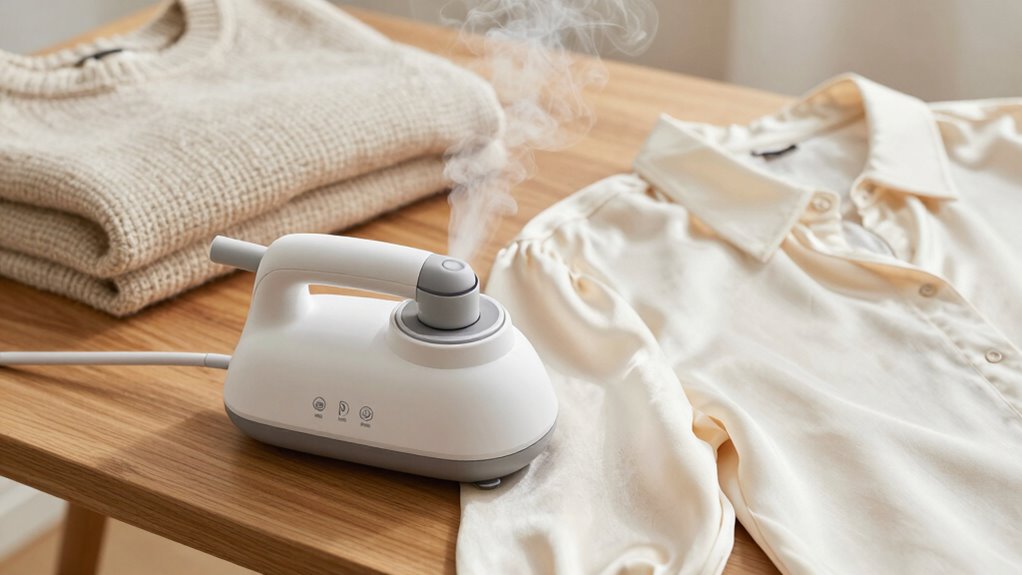
Before steaming delicate fabrics, it’s essential to prepare your garment steamer properly to prevent damage. Start by setting the fabric temperature low to avoid overheating, which can weaken fibers like silk or wool. Adjust the steam pressure to a gentle level to prevent fabric distortion or water spots. Guarantee the water reservoir is clean and filled with distilled water for consistent steam quality. Allow the steamer to heat up fully before use. Keep the steamer at a safe distance from the fabric surface. Remember, controlling steam pressure and fabric temperature helps protect your delicate garments. Additionally, understanding security zone info and nanotechnology advancements can lead to better fabric treatments that enhance fabric safety and durability.
How to Safely Steam Silk Without Damage?
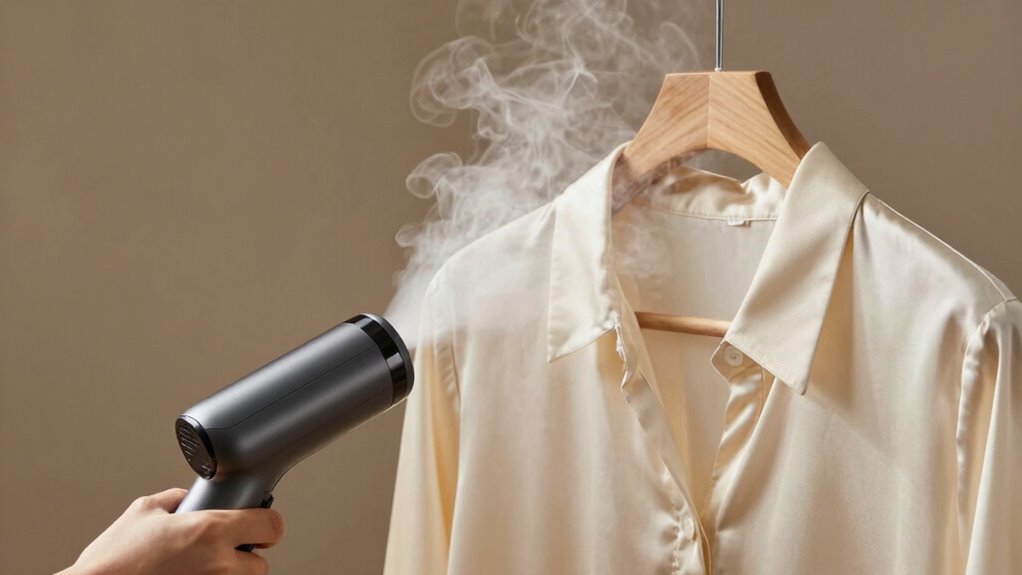
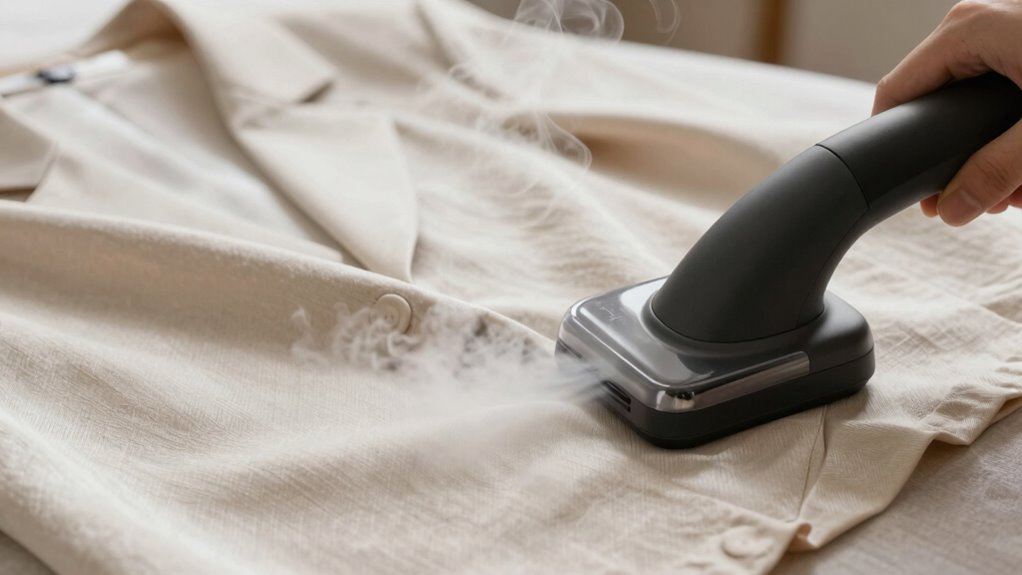
Wondering how to steam silk safely without causing damage? The key is controlling the steam temperature, which should be low to prevent fabric softening or burning. Keep your steamer at a gentle heat, ideally around 212°F (100°C), and avoid direct contact with the silk to prevent water spots or stretching. Hold the steamer a few inches away from the fabric, using smooth, even strokes. Always steam on the wrong side of the silk when possible, as this minimizes direct heat exposure. If your steamer has a fabric setting, choose the low or delicate option. Remember, gentle and consistent steam application is your best defense against damage while restoring silk’s natural sheen and smoothness. Additionally, being mindful of fabric safety rules can help prevent accidental damage during steaming, especially considering the sensitivity of delicate fabrics like silk. Incorporating precise temperature control ensures that you avoid overheating and preserve the fabric’s integrity during the process. Using a modern, AI-enabled steamer with built-in safety features can further help monitor and maintain optimal steaming conditions, reducing the risk of damage.
Best Practices for Steaming Wool and Wool Blends
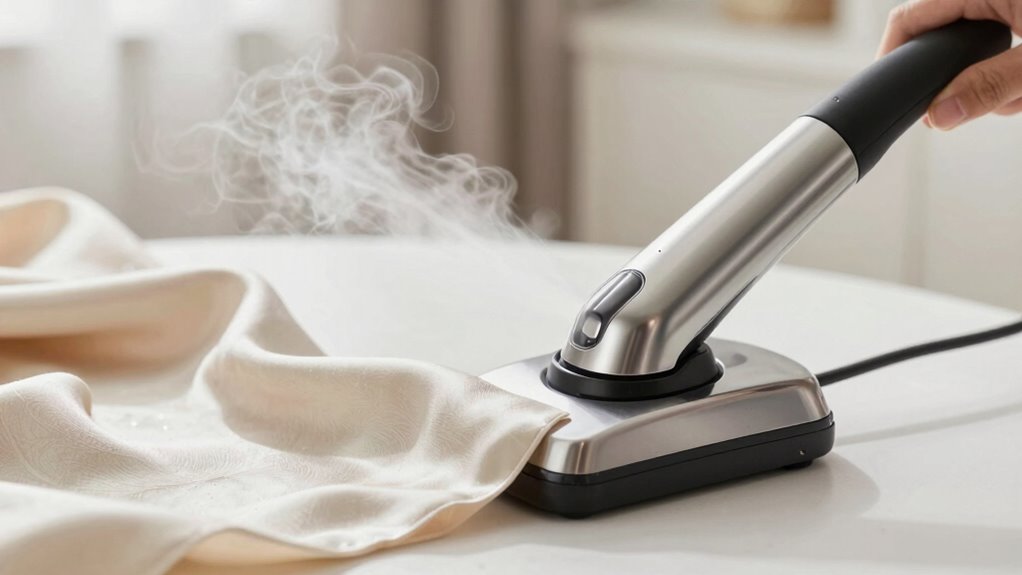
To effectively steam wool and wool blends without damaging the fibers, you should use a gentle approach and maintain a moderate steaming temperature. Wool fabric fiber is delicate, so avoid high heat that can cause shrinkage or felting. Keep the steamer at a low to medium setting and hold it a few inches away from the fabric. This helps relax wrinkles without risking damage. Additionally, understanding the thermal properties of wool can guide you in selecting the appropriate steaming technique. Consider these best practices: – Use a lower steaming temperature specifically for wool and wool blends – Test on a hidden area first to check for adverse reactions – Keep the steamer moving smoothly to avoid overheating one spot – Steer clear of direct contact with the fabric fiber to prevent water spots – Never press the steamer directly onto the wool to preserve its texture, and be aware of how heat transfer impacts wool fibers during steaming. Being mindful of fabric safety rules and proper steaming techniques ensures you maintain the integrity of wool and wool blends during steaming. Additionally, knowing how fiber characteristics respond to heat can help you customize your steaming process for better results.
Linen Steaming Safety Rules to Keep It Looking Fresh
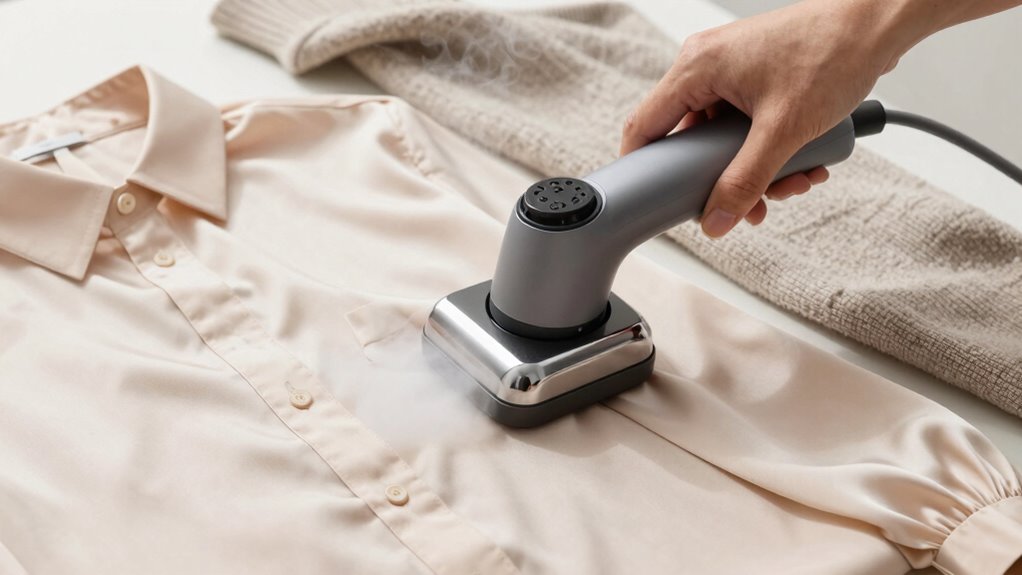
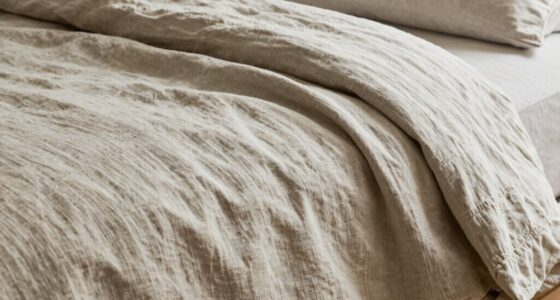
Properly steaming linen can keep your fabrics looking crisp and fresh, but it’s important to follow safety rules to avoid damage. Linen has a coarse fabric texture that responds well to steam when used correctly. Keep the steamer at a safe distance to prevent water spots or scorching. Use a moderate steaming frequency—too much can weaken fibers, too little won’t remove wrinkles effectively. Always test a small, inconspicuous area first to check how the fabric reacts. Avoid pressing the steamer directly onto the linen; instead, hover just above the surface. Make sure the linen is slightly damp for best results. Following these safety rules helps maintain linen’s natural appearance and prolongs its lifespan, keeping it looking fresh and well-cared for.
Common Mistakes When Steaming Delicate Fabrics: and How to Avoid Them
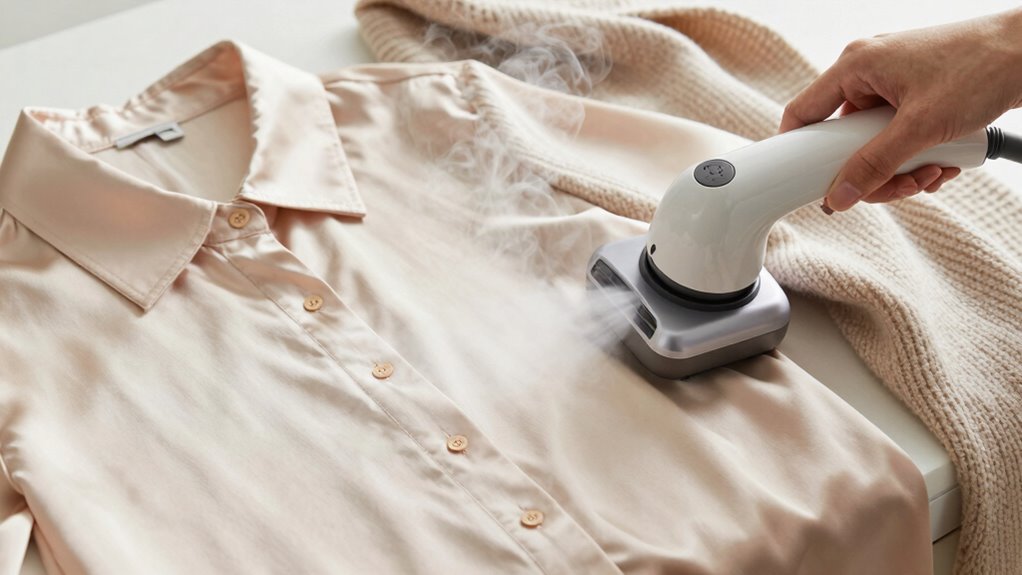
Many people make the mistake of holding the steamer too close to delicate fabrics, which can cause water spots, scorching, or even fabric damage. To avoid this, maintain a safe distance, usually about 1-2 inches away. Be cautious of fabric stretching, which can happen if you pull or tug while steaming. Always move the steamer smoothly to prevent steam burns on your skin.
Hold the steamer 1-2 inches away to prevent water spots and fabric damage.
Here are common mistakes to watch out for:
- Holding the steamer too close, risking water spots or scorching
- Applying excessive steam, leading to fabric stretching or damage
- Using high heat on fragile materials
- Ignoring the fabric’s specific steaming instructions
- Not testing on a small area first, risking steam burns and damage
Frequently Asked Questions
Can Garment Steamers Damage Synthetic Fabrics Like Polyester?
Synthetic fabrics like polyester are generally safe from damage when you follow proper synthetic fabric care and polyester steaming safety. Use the steamer on a low or medium setting, keep it at a safe distance, and avoid prolonged direct contact. This prevents melting or scorching. With careful steaming, you can effectively remove wrinkles without harming your polyester, making it easy to maintain a fresh, polished look.
How Often Should I Descale My Garment Steamer for Delicate Fabrics?
Think of your garment steamer like a delicate bridge—requiring regular upkeep to stay strong. For delicate fabrics, you should descale your steamer every 2-3 months to prevent mineral buildup that can damage fibers. If you notice reduced steam or a strange odor, it’s time to descale sooner. Regular descaling keeps your steamer performing smoothly, protecting your silk, wool, or linen from harm while ensuring flawless results every time.
Is It Safe to Use Tap Water in All Types of Garment Steamers?
Using tap water in your garment steamer isn’t always safe, as it can cause mineral buildup over time. To protect your steamer and guarantee safe use, check the manufacturer’s guidelines. If tap water is recommended, consider using filtered or distilled water to reduce mineral deposits. This helps prevent clogs and keeps your steamer working efficiently, especially when handling delicate fabrics like silk, wool, and linen.
What Temperature Settings Are Best for Steaming Sensitive Fabrics Safely?
To protect your delicate fabrics, set your steamer to a gentle, low temperature for safe steaming. Proper temperature control prevents scorching or damage, especially for silk, wool, and linen. Keep the heat harmonious with fabric sensitivity, ensuring effective yet gentle steam. By dialing down the temperature, you safeguard your garments’ softness and structure, making sure your steamer steers clear of sizzling and keeps your fabrics fabulous.
Are There Specific Protective Measures for Steaming Embellished or Embroidered Fabrics?
To safeguard embellished or embroidered fabrics, you should use a low steam setting and hold the steamer at a safe distance. Place a pressing cloth or a piece of fabric over the embroidery to prevent direct contact and avoid damaging the embellishments. This approach ensures embroidered fabric protection and maintains the integrity of embellished fabric safety, preventing water spots or damage to delicate threads and decorative elements.
Conclusion
Remember, treating delicate fabrics like silk, wool, and linen with care is like tending a fragile garden—you’ll enjoy the beauty longer if you nurture it properly. Always follow safety rules, prep your steamer, and stay attentive to each fabric’s needs. By doing so, you’ll keep your wardrobe’s elegance blooming and prevent damage. With a gentle touch and mindful approach, your garments will stay fresh and vibrant, shining like stars in your closet’s night sky.