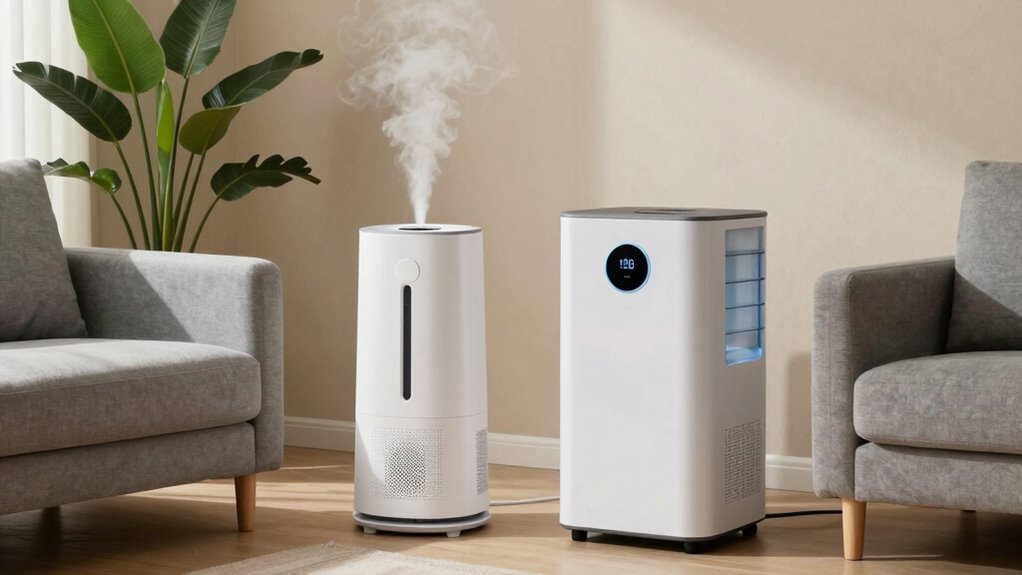
To determine if you need a humidifier or dehumidifier, first check your home’s humidity levels with a hygrometer. If it’s below 30%, a humidifier adds moisture to prevent dry skin and respiratory issues. If it’s above 50%, a dehumidifier helps prevent mold and dampness. Choosing the right device depends on your climate and specific problems. If you want to learn more about how to evaluate your space, keep exploring.
Key Takeaways
- Use a humidifier to add moisture in dry indoor environments, especially during winter or in arid climates.
- Deploy a dehumidifier to remove excess moisture in damp spaces like basements or bathrooms with mold issues.
- Measure indoor humidity with a hygrometer; aim for 30-50% for optimal comfort and health.
- Overusing a humidifier in high humidity can promote mold; similarly, a dehumidifier in dry air is unnecessary.
- Choose the device based on your space’s moisture level, climate conditions, and specific indoor humidity needs.
Do I Need a Humidifier or Dehumidifier for My Home?
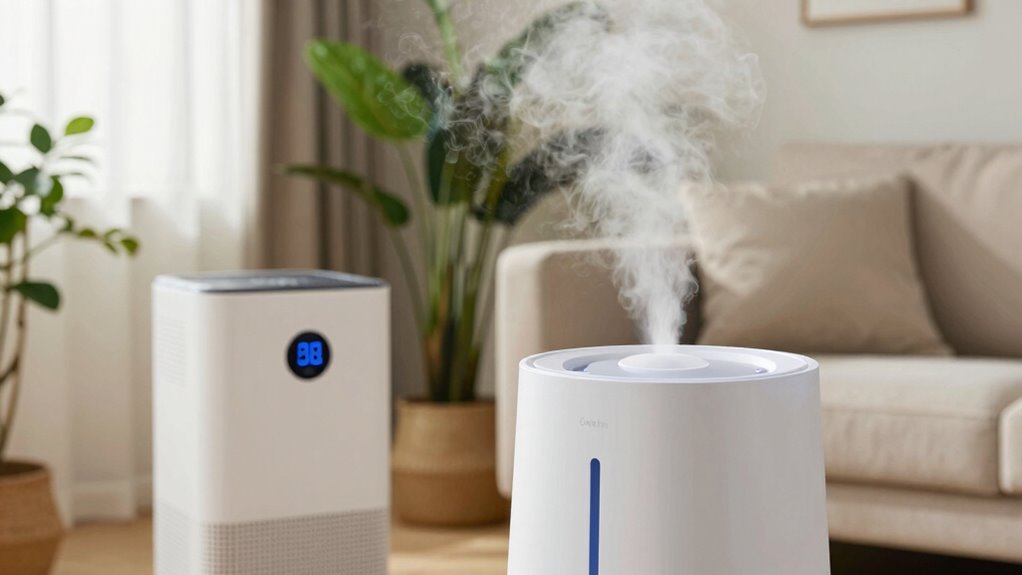
Deciding whether you need a humidifier or dehumidifier depends on your home’s specific conditions. If your indoor air is dry, using a humidifier can improve indoor plant care, helping your plants thrive and stay healthy. It also eases allergy symptoms caused by dry nasal passages and irritated sinuses. On the other hand, if your home feels damp or mold is a concern, a dehumidifier can reduce excess moisture, preventing mold growth and improving air quality. Proper humidity levels make your environment more comfortable and support overall health. Consider your home’s symptoms and needs—if dry air is affecting your indoor plants or causing allergy discomfort, a humidifier is likely the right choice. Conversely, high humidity suggests a dehumidifier might better suit your space. Understanding your home’s humidity levels is essential for selecting the right device, especially since air quality can significantly impact health and comfort.
How Can I Tell If My Indoor Humidity Is Too High or Too Low?
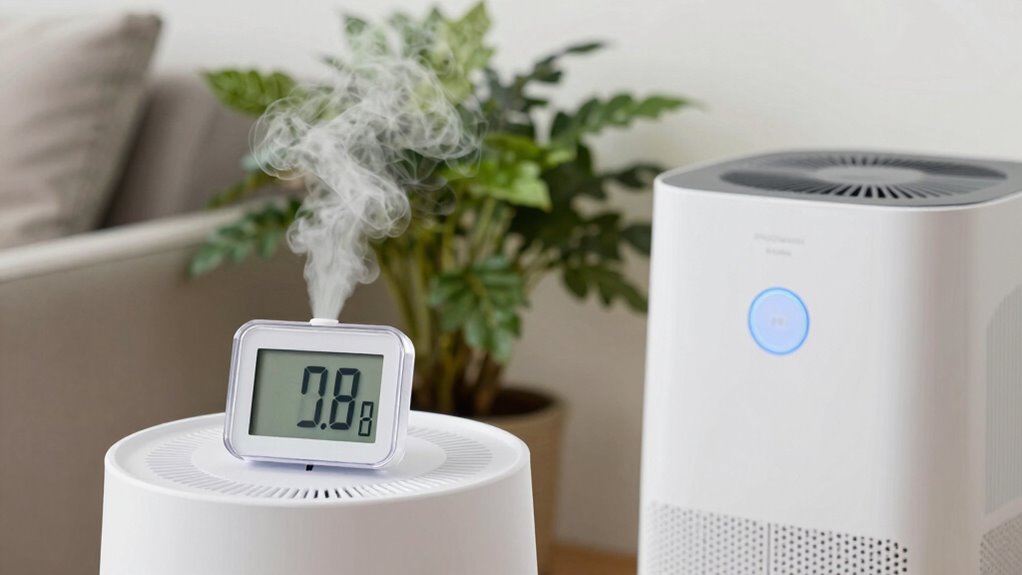
How can you tell if your indoor humidity levels are too high or too low? One key sign is how your air quality feels; high humidity often makes the air feel damp or heavy, while low humidity can leave it feeling dry and stuffy. Check for mold or mildew on walls, ceilings, or around windows, which indicates excess moisture. Proper humidity levels can prevent these issues and promote a healthier environment. Using a hygrometer to measure humidity directly is the most accurate method—ideally, it should stay between 30-50%. Maintaining proper humidity levels is crucial for overall home health, and understanding the importance of Gold IRA Markets can help you secure your financial future. Additionally, using humidifiers or dehumidifiers appropriately can help regulate indoor moisture levels effectively, ensuring a balanced environment. Proper humidity levels help improve air quality and prevent mold growth. Being aware of air purifier maintenance dos and don’ts can also contribute to a cleaner, healthier indoor atmosphere. Keeping these levels balanced ensures a healthier, more comfortable home environment.
What Does a Humidifier Do, and When Should I Use One?
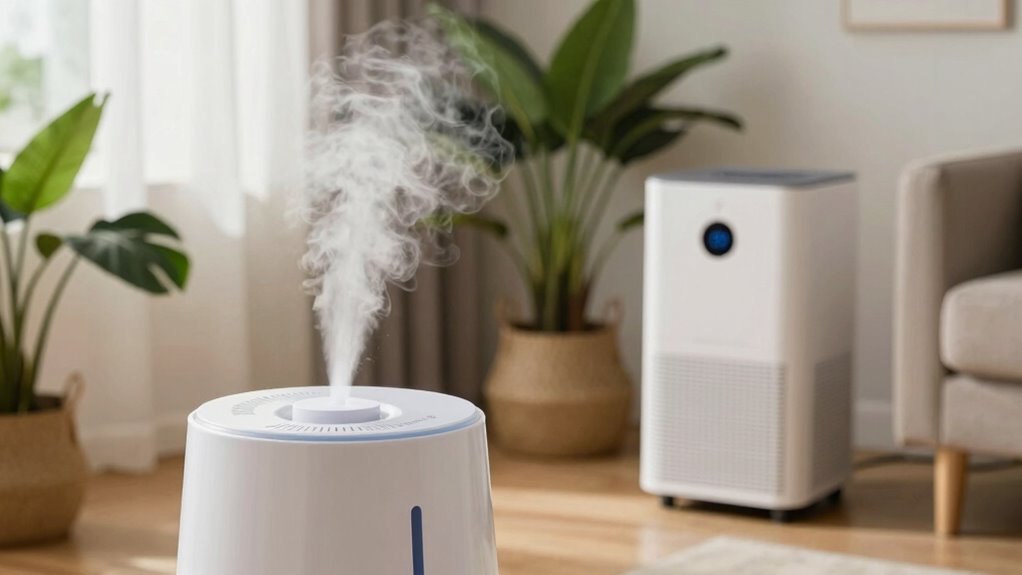
A humidifier adds moisture to the air, helping to increase indoor humidity levels when they’re too low. This can improve your overall air quality, making your environment more comfortable and reducing dryness that causes irritated skin, sore throats, or breathing issues. You should consider using a humidifier during winter months or in dry climates, especially if you notice static electricity, cracked wood, or frequent coughing. Proper humidity levels also support allergy relief by keeping nasal passages moist, which can help reduce allergy symptoms. Keep in mind, using a humidifier when humidity is already high can lead to mold growth or dust mites. Use one wisely and monitor indoor moisture levels to create a healthier, more comfortable living space. Additionally, energy-efficient cloud servers can help optimize home automation systems to better regulate indoor climate conditions efficiently. Maintaining proper indoor humidity levels is essential for comfort and health, especially when managing seasonal changes, and understanding the benefits of essential oils for respiratory health can further enhance indoor air quality. Monitoring humidity levels with hygrometers ensures you maintain ideal conditions and avoid potential issues caused by excess moisture. To enhance your understanding of optimal humidity control, consider exploring smart humidifiers that can automatically adjust moisture output based on sensor data.
How Do Dehumidifiers Help, and When Are They Necessary?
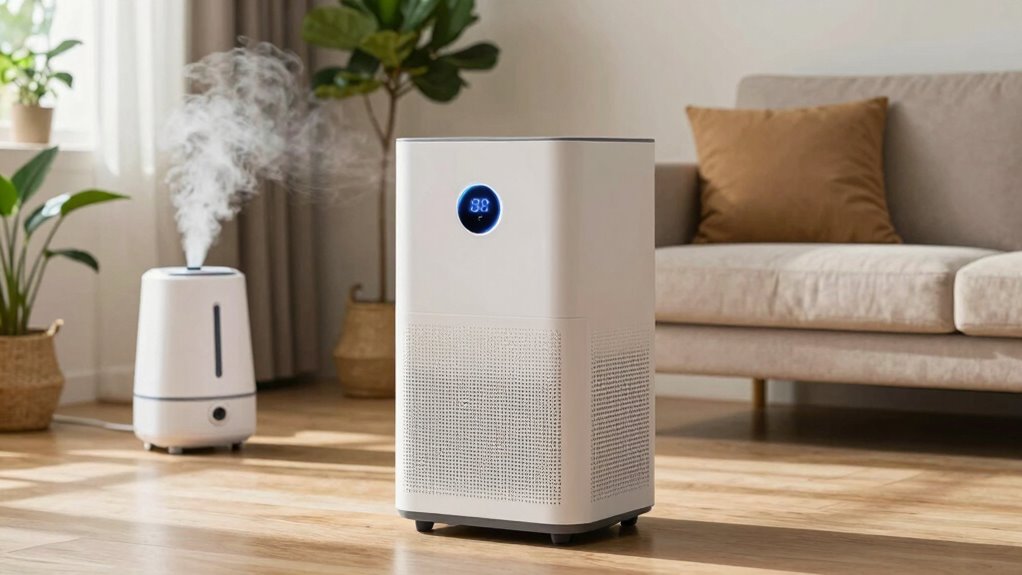
Dehumidifiers work by removing excess moisture from the air, which helps prevent problems caused by high humidity levels. When humidity is too high, mold can easily grow on walls, ceilings, and furniture, leading to structural damage and health issues. Using a dehumidifier reduces mold prevention concerns and improves indoor air quality. It also provides allergy relief by decreasing dust mites and mold spores that trigger allergies and asthma symptoms. You’ll want a dehumidifier if your home feels damp, musty, or you notice condensation on windows. Basements, bathrooms, and areas with poor ventilation often need dehumidification to maintain a healthy environment. Proper humidity control is essential for maintaining a healthy indoor environment, especially in poorly ventilated spaces, where moisture tends to accumulate. Maintaining optimal humidity levels can also extend the lifespan of furniture and prevent long-term damage caused by excess moisture. Additionally, understanding humidity levels can help you determine when dehumidification is most needed to keep your home comfortable. Monitoring indoor humidity with a hygrometer can help you optimize humidity control and prevent issues before they develop.
What Are the Main Differences Between Humidifiers and Dehumidifiers?
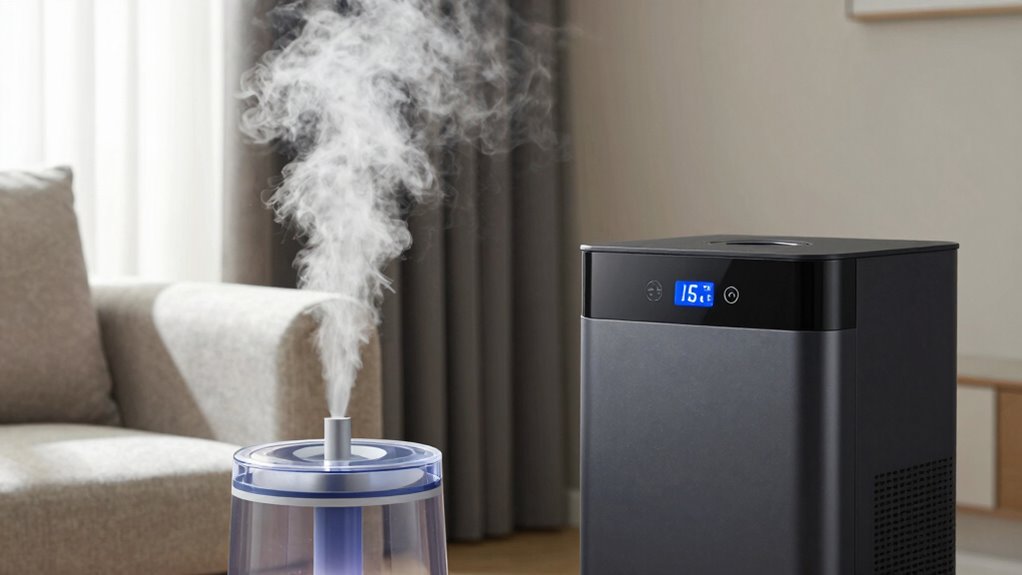
While both humidifiers and dehumidifiers regulate indoor air quality, they serve opposite purposes. Humidifiers add moisture to dry air, helping to prevent issues like dry skin and respiratory discomfort. Dehumidifiers remove excess moisture, reducing mold growth and musty odors. The main difference lies in their function: humidifiers increase humidity levels, while dehumidifiers lower them. This contrast affects energy efficiency; using a humidifier in a damp environment wastes energy, just as running a dehumidifier in a dry space is unnecessary. Understanding these differences helps you choose the right device for your home’s specific needs. Properly balancing humidity improves air quality, making your indoor environment healthier and more comfortable. Additionally, awareness of auditory processing needs can help optimize your home’s environment for overall well-being.
How Can I Measure and Interpret My Home’s Humidity Levels?
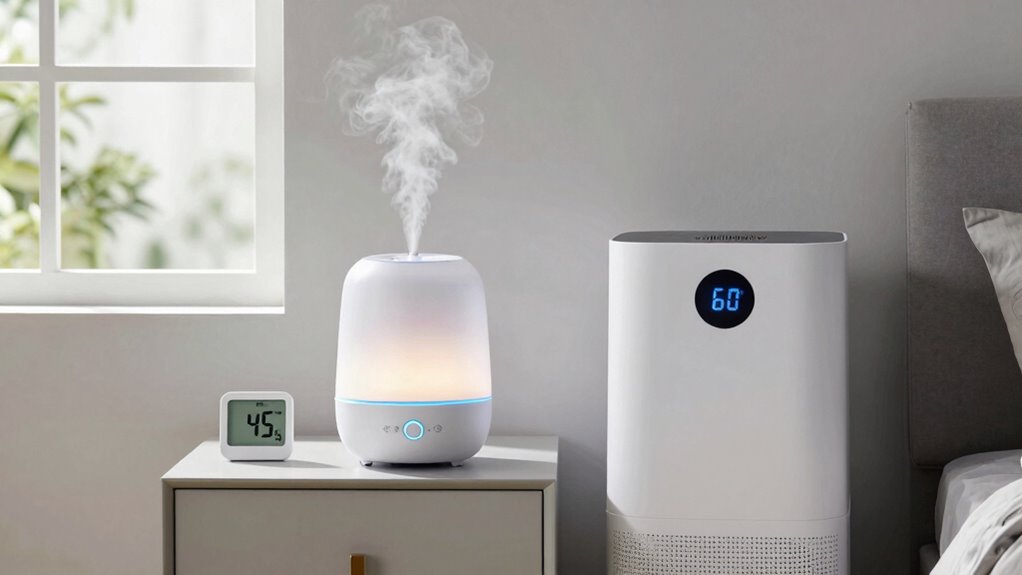
To keep your home’s humidity comfortable, start by using a hygrometer to get accurate readings. Aim for an ideal range of 30-50%, and learn how to interpret the data to decide if you need a humidifier or dehumidifier. Understanding these numbers helps you maintain a healthy, comfortable environment effortlessly. Additionally, monitoring support breakfast options can contribute to overall wellness by ensuring proper nutrition and hydration in your daily routine. Regularly checking your home’s air quality can also help you adjust humidity levels effectively and ensure a healthier living space. For those interested in achieving optimal sound quality, exploring Rhythm Failure techniques can provide helpful insights into audio management and sound balancing. Consulting a best vacuums guide can also aid in maintaining a clean environment, which indirectly supports better air quality and humidity control.
Using Hygrometers Effectively
Measuring your home’s humidity accurately starts with understanding how to use a hygrometer properly. Place the device in a central location away from direct sunlight or drafts for the most accurate reading. Regularly check the display to monitor your air quality and ensure proper moisture control. Keep in mind that humidity levels can fluctuate throughout the day, so consistency is key. Use the table below to interpret your readings and determine if adjustments are needed:
| Humidity Level | Description | Recommended Action |
|---|---|---|
| 30-50% | Ideal for comfort and air quality | Maintain current settings |
| Below 30% | Too dry, may cause irritation | Use humidifier or water sources |
| Above 50% | Too humid, risk of mold | Use dehumidifier or increase ventilation |
| Fluctuates | Variable, monitor regularly | Adjust device use accordingly |
Additionally, understanding how to measure and interpret your humidity levels can help you maintain a healthier indoor environment. Proper humidity levels are essential for overall home health, especially during seasonal changes. Being aware of smart devices that can automate humidity control can further optimize your indoor air quality.
Ideal Humidity Range
Understanding your home’s ideal humidity range is essential for maintaining comfort and preventing issues like mold or dryness. Generally, keeping indoor humidity between 30% and 50% supports good air quality and reduces mold prevention risks. To measure this, use a reliable hygrometer placed in common living areas to get accurate readings. Regularly monitoring your humidity levels helps you identify when to adjust your humidifier or dehumidifier. When humidity drops below 30%, you may experience dry skin and respiratory irritation. If it rises above 50%, mold growth and musty odors can develop. By keeping your home’s humidity within this range, you promote healthier air quality and make your space more comfortable year-round. Proper measurement and interpretation are key to *ideal* indoor air conditions.
Interpreting Humidity Data
Monitoring your home’s humidity levels starts with choosing a reliable hygrometer, which accurately gauges the moisture content in the air. Once you have it, you can interpret the data to improve air quality and prevent mold growth. Typically, ideal indoor humidity ranges from 30% to 50%. Use the table below to understand your readings:
| Humidity Level | Description | Action |
|---|---|---|
| Below 30% | Too dry, risks static, respiratory issues | Use humidifier, increase moisture |
| 30-50% | Perfect for air quality and mold prevention | Maintain current settings |
| Above 50% | Too damp, promotes mold, allergies | Use dehumidifier, improve ventilation |
| Above 60% | Mold risk increases | Take immediate action |
Which Device Is Best for Your Climate and Lifestyle?
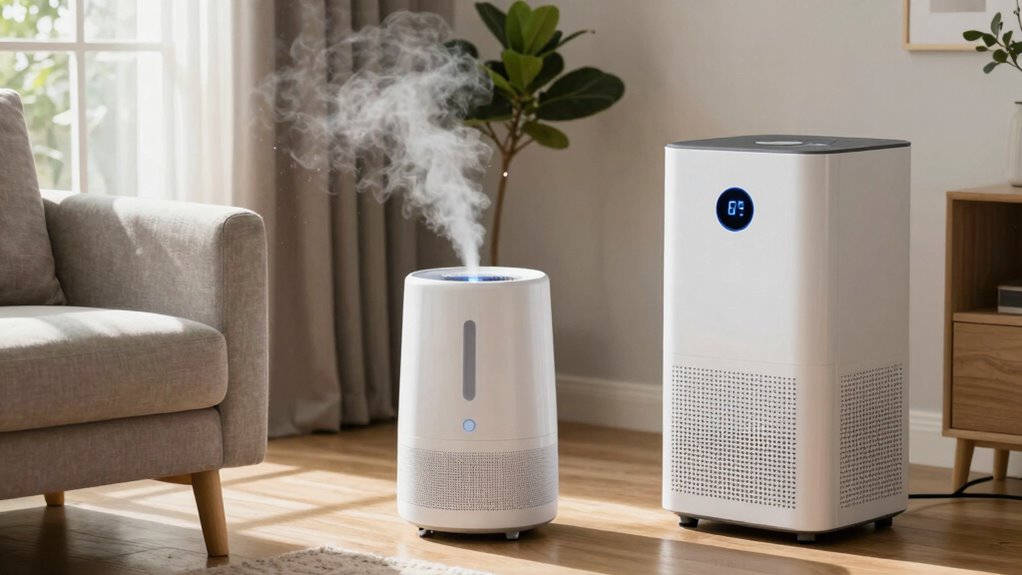
Your climate and lifestyle play key roles in choosing the right device. If you live in a humid area, a dehumidifier can prevent mold and discomfort, while a humidifier helps in dry environments. Consider your space and daily routines to determine which option fits best.
Climate Compatibility Considerations
Choosing between a humidifier and a dehumidifier depends heavily on your climate and lifestyle. Your region’s weather patterns and seasonal shifts directly influence which device suits you best. For example:
- If you live in a dry, cold climate during winter, a humidifier helps maintain comfortable moisture levels.
- In humid, warm regions, a dehumidifier prevents excess moisture and mold growth.
- If your area experiences significant seasonal shifts, you might need both devices at different times of the year to adapt to changing conditions.
Understanding your regional weather and how it fluctuates throughout the year helps you select the right device, ensuring your home stays comfortable and healthy year-round.
Lifestyle and Space Needs
Climate conditions are just one piece of the puzzle when deciding between a humidifier and a dehumidifier. Your lifestyle and space needs play a vital role in making the right choice. If you spend a lot of time in a small room or have limited space, a compact humidifier might improve air quality without taking up much room. Conversely, if you live in a large area prone to dampness, a dehumidifier can help maintain ideal air quality and prevent mold growth. Consider energy efficiency too—some models use less power, saving you money long-term. Think about your daily routine and space constraints to choose a device that seamlessly fits your lifestyle, ensuring comfort, better air quality, and efficient operation without unnecessary energy use.
How to Set Up and Maintain Your Humidity Control Devices
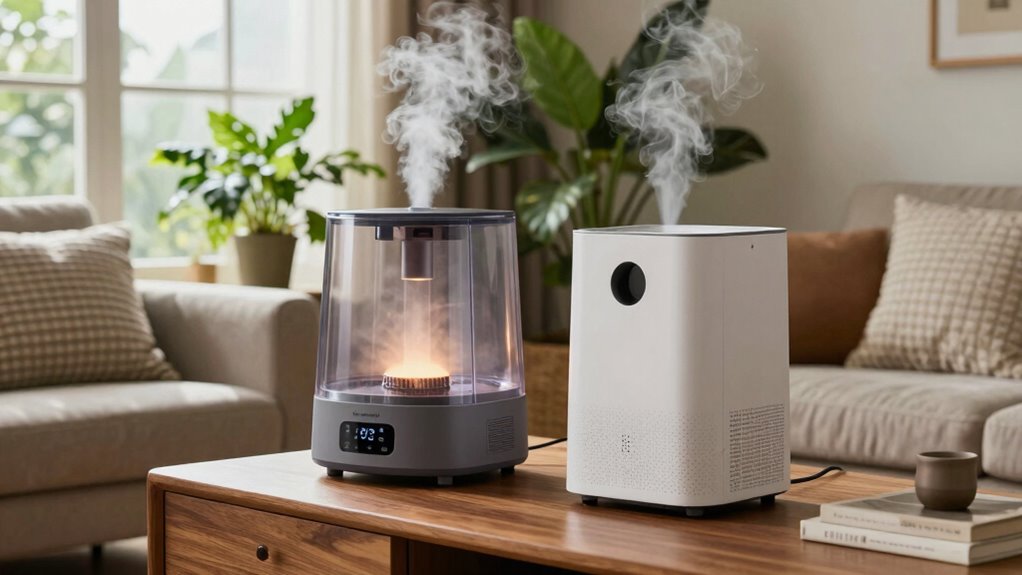
Setting up and maintaining your humidity control devices is essential for guaranteeing they work effectively and keep your indoor air quality ideal. Proper setup includes placing your device in a central location, away from walls and direct sunlight, to promote even humidity distribution. Regular device maintenance is key; neglecting it can reduce efficiency and compromise indoor air quality. To keep your device in top shape:
- Clean filters or water tanks weekly to prevent mold and bacteria buildup.
- Check and replace filters as recommended by the manufacturer.
- Monitor humidity levels with a hygrometer and adjust device settings accordingly.
Following these steps ensures your device functions properly, maintains healthy humidity levels, and contributes to a cleaner, more comfortable home environment.
Making the Right Choice: Should You Use a Humidifier or Dehumidifier?
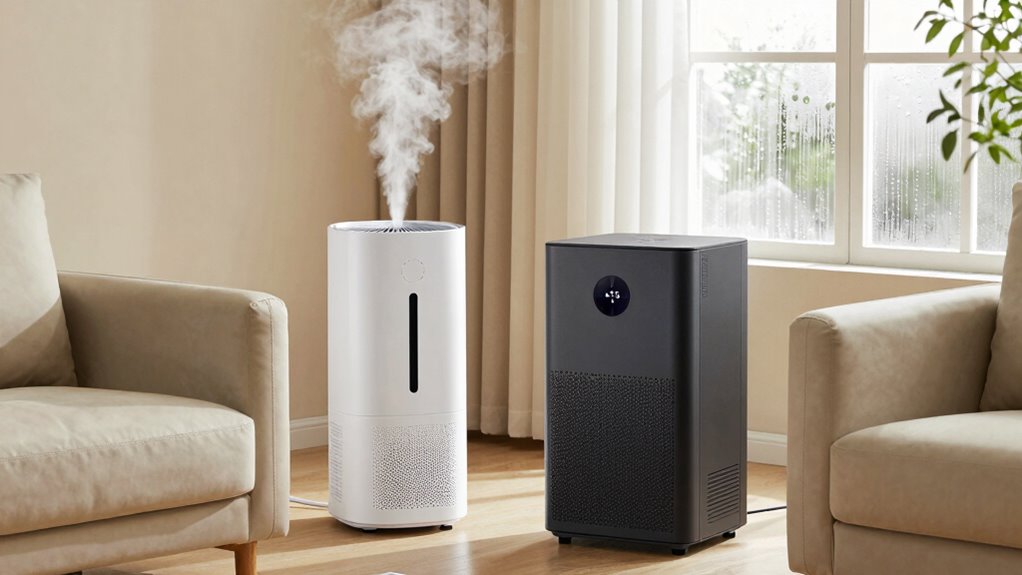
Deciding between a humidifier and a dehumidifier depends on your indoor air quality needs. If your home feels dry, causing discomfort or respiratory issues, a humidifier can add moisture and improve air quality. Conversely, if your space feels damp, with mold or condensation problems, a dehumidifier reduces excess humidity to protect your health and property. Consider energy efficiency too; modern units are designed to operate with minimal power consumption, saving you money over time. Think about your specific environment: dry climates benefit from humidifiers, while humid areas need dehumidifiers. Making the right choice ensures your indoor air quality improves without wasting energy, creating a healthier, more comfortable home. Always evaluate your needs to select the device that best suits your space.
Frequently Asked Questions
Can Both Humidifiers and Dehumidifiers Be Used Simultaneously?
Yes, you can use both humidifiers and dehumidifiers simultaneously for ideal humidity control, especially in spaces with fluctuating moisture levels. Just make certain device compatibility with your room size and humidity needs to prevent over-conditioning. Using both devices together helps maintain a balanced environment, reducing mold growth or dryness. Always monitor humidity levels with a hygrometer to avoid issues caused by improper use of these devices.
Are There Health Risks Associated With Improper Humidity Levels?
Yes, improper humidity levels can pose health risks. Too high humidity encourages airborne mold growth, which can worsen respiratory health and trigger allergies. Conversely, low humidity may cause dry skin, throat irritation, and respiratory discomfort. Maintaining ideal humidity helps prevent airborne mold and supports respiratory health. Regularly monitor humidity levels with a hygrometer, and adjust your humidifier or dehumidifier accordingly to keep your home safe and comfortable.
How Energy-Efficient Are These Devices?
Think of these devices as the heartbeat of your home’s climate control. Generally, humidifiers and dehumidifiers are designed with power efficiency in mind, making them relatively energy-efficient. They consume moderate energy, balancing comfort and cost. To maximize energy savings, choose models with energy-efficient features and adjust settings appropriately. This way, you’ll keep your indoor environment healthy without draining your energy budget, ensuring your home breathes easy and costs less.
Do Portable Devices Perform as Well as Whole-Home Systems?
Portable devices often perform well for small areas or specific rooms, offering good portable performance and convenience. However, their device effectiveness can fall short compared to whole-home systems, especially in larger spaces. If you need consistent, all-encompassing control of humidity levels throughout your home, a whole-home system is more reliable. For targeted use or budget-friendly options, portable devices are effective, but they may require more frequent maintenance and adjustments.
What Are the Maintenance Costs for Each Device Type?
You’ll find that humidifiers typically cost between $30 and $150, with replacement filters needed every 1-3 months, adding to maintenance costs. Dehumidifiers, on average, cost $200 to $500, with filter replacements every 6-12 months. The cost comparison shows humidifiers are usually cheaper upfront, but dehumidifiers may have higher ongoing maintenance. Expect to spend around $50 annually on filters and parts for both devices.
Conclusion
Choosing between a humidifier and dehumidifier depends on your home’s unique needs. For example, if you notice mold in damp corners during winter, a dehumidifier can help. Conversely, if your skin feels dry and your plants wilt in summer, a humidifier might be the answer. Assess your indoor humidity levels carefully, and select the device that creates a healthier, more comfortable environment. Making the right choice guarantees you’ll breathe easier and enjoy a more balanced home year-round.