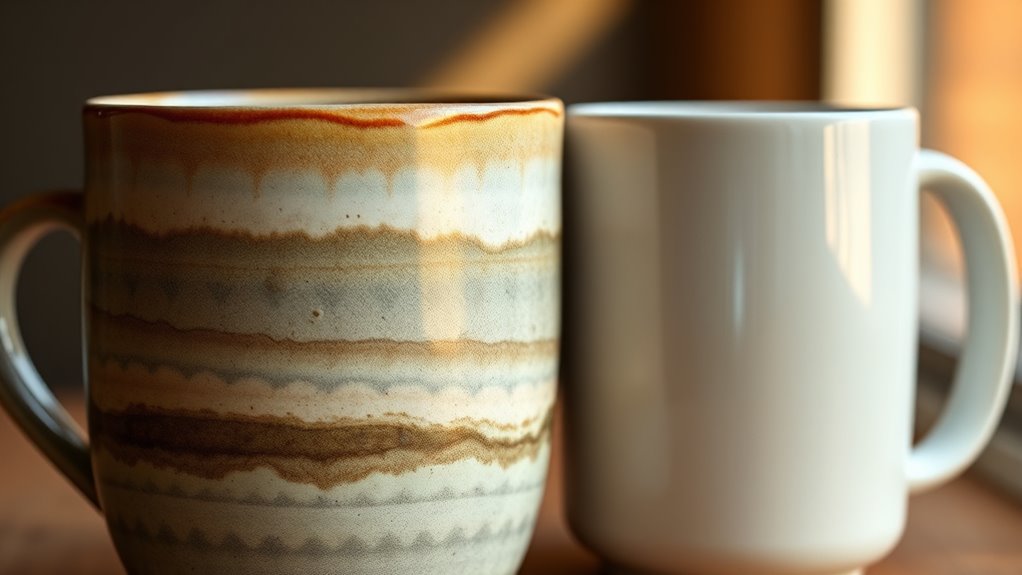

When comparing artisan and mass-produced products, you’ll notice that artisan items are handcrafted, showcasing unique character and using high-quality materials, which often makes them more durable and culturally meaningful. Mass-produced goods are made quickly with automation, resulting in uniformity and lower costs but less personality and craftsmanship. Understanding these differences highlights the added value of artisanship, sustainability, and tradition. Explore further to discover how choosing handmade influences quality, heritage, and your overall appreciation of craftsmanship.
Key Takeaways
- Artisan products are handcrafted with unique character, while mass-produced items are uniform and predictable.
- Handmade craftsmanship preserves cultural techniques, adding cultural and traditional value.
- Artisans use high-quality materials, resulting in durable, long-lasting products compared to mass-produced goods.
- Artisan items promote sustainability through local, eco-friendly practices; mass production generally involves more waste and energy.
- The slower, deliberate process of artisans emphasizes quality and authenticity over quantity and efficiency.
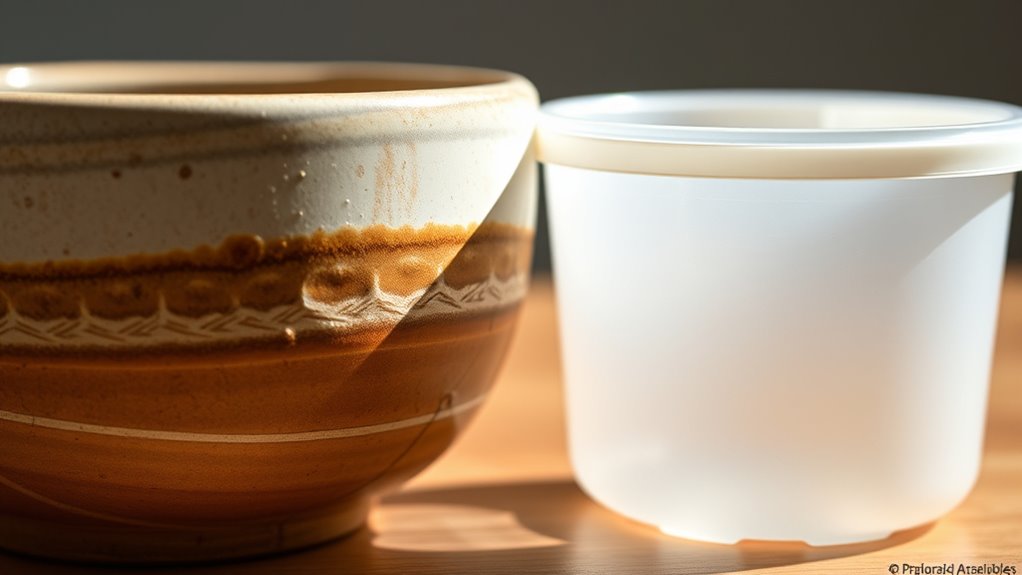
Have you ever wondered what truly sets artisan products apart from mass-produced items? It all comes down to the process behind each piece. When you look at an artisan product, you’re witnessing the result of handmade craftsmanship—an approach rooted in skill, attention to detail, and a deep connection to tradition. Unlike items churned out through industrial manufacturing, which prioritize efficiency and uniformity, artisan creations often involve a slower, more deliberate process. This craftsmanship ensures that each piece carries a unique character, displaying subtle variations that highlight the human touch. The difference is palpable; you can sense the care and dedication poured into every stitch, carve, or brushstroke. Moreover, artisan products often utilize traditional techniques, which have been passed down through generations, further enriching their cultural significance.
Artisan products showcase unique character through handcrafted skill, attention to detail, and a deep respect for tradition.
Mass-produced items, on the other hand, are crafted in factories where industrial manufacturing techniques dominate. These methods rely on automation, assembly lines, and standardized molds to produce large quantities of identical items rapidly and cost-effectively. While this approach allows for affordability and consistency, it often sacrifices the personal touch that makes artisan products special. When you buy a mass-produced item, you might miss the imperfections that reveal its handmade origins. Instead, you get a product that’s uniform, predictable, and designed for maximum efficiency rather than uniqueness.
Choosing artisan over mass-produced isn’t just about aesthetics; it’s about valuing the story behind each item. Handmade craftsmanship involves meticulous work that often takes hours or even days, infusing each piece with a sense of authenticity and tradition. When you purchase artisan products, you’re supporting skilled artisans who have honed their craft over years, preserving cultural techniques that might otherwise fade away. These products often feature higher-quality materials, which further elevate their durability and appeal. This commitment to quality means that artisan items tend to last longer, providing you with a tangible connection to the craftsmanship and history embedded within each piece.
Furthermore, artisan products often promote sustainability by utilizing local materials and eco-friendly practices. Because they aren’t produced en masse, there’s less waste and fewer environmentally damaging processes involved. In contrast, mass-produced goods tend to generate more waste and require significant energy consumption, impacting the environment over time. When you choose handmade craftsmanship, you’re not just buying a product; you’re making a conscious decision to support sustainable practices and keep traditional skills alive. This personal investment in quality and sustainability makes artisan items valuable far beyond their initial use, fostering a deeper appreciation for the effort and artistry involved.
Frequently Asked Questions
How Does Craftsmanship Influence Product Durability?
Craftsmanship considerably boosts product durability because artisans use handmade techniques that guarantee each item is carefully crafted. Your focus on material quality means stronger, longer-lasting products. When artisans pay attention to detail and select premium materials, the final piece withstands wear and tear better than mass-produced items. This dedication to quality and craftsmanship results in durable products that last longer, giving you better value and satisfaction over time.
Can Mass-Produced Items Be Ethically Sourced?
Yes, mass-produced items can be ethically sourced if companies prioritize transparency in their supply chain and work with suppliers committed to fair labor practices. By choosing brands that emphasize ethical sourcing, you support responsible manufacturing, reduce environmental impact, and ensure fair treatment of workers. Always research brands’ supply chain policies to make informed decisions, as ethical sourcing isn’t exclusive to artisan products but can be integrated into mass production as well.
What Environmental Impacts Differentiate Artisan From Mass Production?
Ironically, mass production might seem greener, but it often leaves a larger ecological footprint due to its reliance on unsustainable materials and energy-intensive processes. Artisan items, on the other hand, typically use sustainable materials and minimize waste, making them more environmentally friendly. By choosing artisan, you help reduce environmental impacts, supporting sustainable practices that protect ecosystems and lower the overall ecological footprint, even if it takes longer to make.
How Does Consumer Perception Affect Perceived Value?
Your perception greatly influences the perceived value of artisan products. When you see perceived exclusivity, you’re more likely to value the item highly, believing it’s unique or rare. An emotional connection also boosts value, as you feel a personal attachment to the craftsmanship or story behind the product. This combination makes artisan goods seem more special and worth the higher price, shaping your overall buying decision.
Are There Hybrid Approaches Combining Artisan and Mass Production?
Yes, there are hybrid approaches blending artisan craftsmanship and mass production. You might see handmade collaborations or limited edition collections, where skilled artisans work alongside factories to create unique, high-quality items. These approaches combine the charm of handmade details with the efficiency of large-scale manufacturing, appealing to your desire for exclusivity and value. This fusion offers the best of both worlds—authenticity and accessibility—satisfying your need for distinctive, well-crafted products.
Conclusion
In the end, choosing between artisan and mass-produced items is like deciding whether to chase the whisper of Da Vinci’s brush or the steady hum of a factory. You hold the power to seek authenticity or embrace convenience. Remember, the true value lies not just in craftsmanship or quantity, but in the story you choose to support. Like the hero’s journey, your decision shapes the legacy of your everyday treasures.