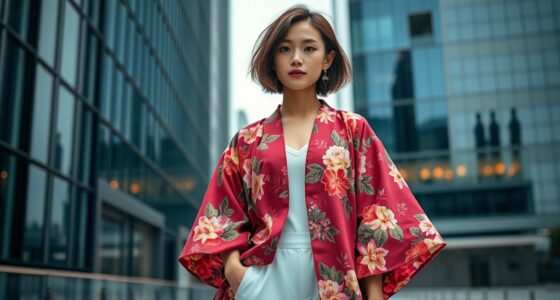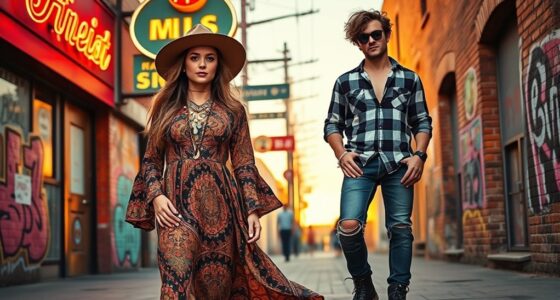
The boho aesthetic in film and television uses free-spirited clothing, earthy tones, and vintage pieces to reveal characters’ personalities and emotional journeys. It visually communicates themes of rebellion, self-discovery, and authenticity, often showing character growth through wardrobe changes. This style adds depth and realism, creating a relaxed, genuine atmosphere that draws you into the characters’ worlds. If you keep exploring, you’ll uncover how these visual cues enrich storytelling and character development.
Key Takeaways
- The boho aesthetic in film and TV visually expresses characters’ personalities, backgrounds, and emotional states through flowing, layered, and earthy wardrobe choices.
- Costume design using boho elements highlights themes of rebellion, self-discovery, and cultural influences, enriching storytelling.
- Fashion shifts in characters’ wardrobes reflect internal growth, emotional struggles, and transformations over the course of narratives.
- The boho style contributes to the overall atmosphere, creating relaxed, authentic, and spontaneous visual tones that enhance scene depth.
- Incorporating vintage and artisanal pieces emphasizes individuality and authenticity, reinforcing characters’ unique identities and personal journeys.
The boho aesthetic has become a mesmerizing visual language in film and television, effortlessly blending free-spirited style with artistic expression. When you see characters dressed in boho fashion, you instantly recognize more than just their wardrobe — you see a window into their personality and inner world. Filmmakers and TV creators use boho elements to shape character development, revealing traits like independence, creativity, and a desire for authenticity without relying on dialogue. The flowing skirts, layered jewelry, and earthy tones are more than just trends; they’re intentional choices that tell you about a character’s background, beliefs, and emotional state. For instance, a character wearing an eclectic mix of vintage pieces might symbolize a free-spirited nature, someone who values individuality over societal norms. Conversely, a character donning more refined boho pieces could suggest a nuanced personality—someone who seeks harmony and self-expression but also maintains a sense of sophistication.
You’ll notice that in many stories, boho fashion acts as a visual shorthand, helping you understand a character’s journey without having to say much. It’s a way to add depth and authenticity to their portrayal. A character’s transformation through their wardrobe choices often mirrors their internal evolution, making the boho aesthetic a powerful tool for storytelling. When a character’s style shifts from tightly controlled and minimalist to layered and free-flowing, it signals growth or newfound freedom. This evolution isn’t accidental—it’s carefully crafted to deepen your connection to the character’s arc. Additionally, the use of costume design rooted in boho fashion can highlight cultural influences or a desire to break away from mainstream conventions, reinforcing themes of rebellion or self-discovery.
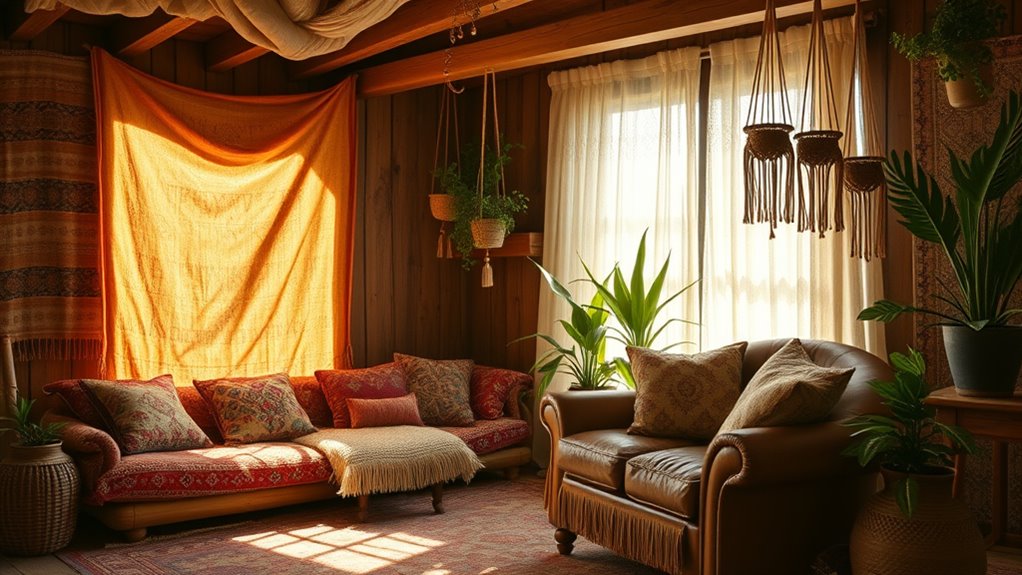
Moreover, the boho aesthetic influences the overall atmosphere of a scene, complementing the character’s development. The relaxed, earthy vibe sets a tone of authenticity and spontaneity, drawing you into their world. Costuming choices rooted in boho fashion can also highlight cultural influences or a desire to break away from mainstream conventions, reinforcing themes of rebellion or self-discovery. As you watch, you start to see how the visual language of boho style communicates complex emotional states and relationships. It’s a subtle but effective way for filmmakers to craft multi-dimensional characters whose personalities unfold through their wardrobe and aesthetic choices, making the storytelling richer and more immersive.
Frequently Asked Questions
How Has the Boho Aesthetic Evolved Over Recent Decades?
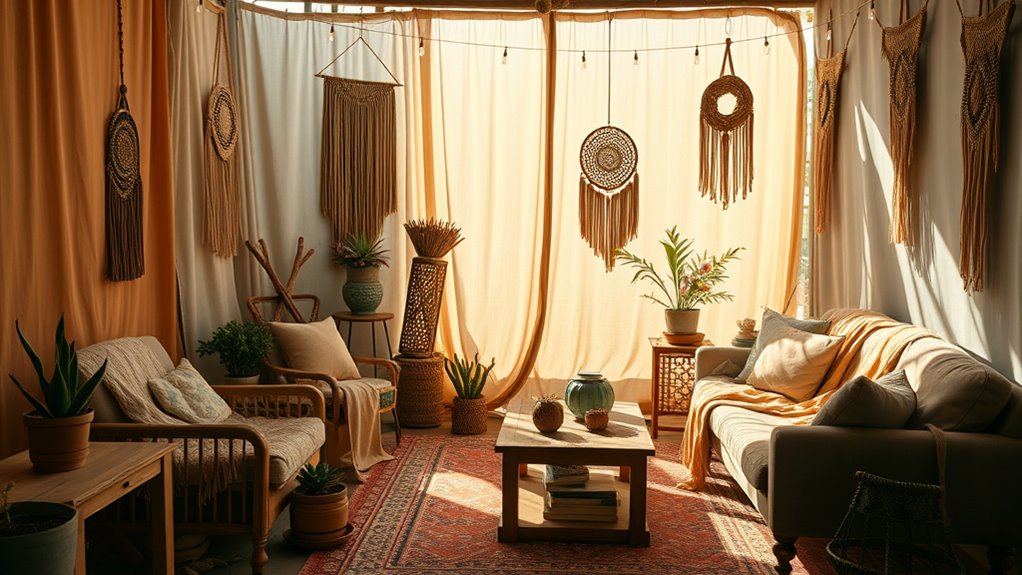
You’ve seen how boho fashion trends have become more eclectic and sustainable, blending vintage pieces with modern styles. In boho interior design, it’s evolved to feature more earthy tones, layered textures, and a relaxed, cozy vibe. Over recent decades, the aesthetic has shifted from free-spirited hippie roots to a more polished, versatile look that blends effortlessly into contemporary living while still celebrating individuality and creativity.
Which Iconic Characters Exemplify Boho Style in Film and TV?
You’ll recognize boho fashion icons like Lisa Bonet’s Denise Huxtable and Sienna Miller’s character in “Factory Girl,” who embody relaxed, eclectic styles. These boho character archetypes often feature free-spirited, artistic traits, making them memorable. Their outfits, layered jewelry, and natural fabrics serve as perfect examples of how boho fashion influences film and TV, inspiring countless fans to embrace a laid-back, bohemian vibe.
Are There Specific Directors Known for Incorporating Boho Elements?
You’ll notice directors like Sofia Coppola and Wes Anderson incorporate boho fashion and boho interior elements in their films. They blend relaxed, eclectic styles with vintage accessories, creating a dreamy, laid-back vibe. Their use of earthy tones, layered textures, and handcrafted details enhances the boho aesthetic, making their visuals feel warm and inviting. By doing so, they bring the free-spirited essence of boho style to the screen, mesmerizing audiences.
How Does the Boho Aesthetic Influence Costume Design Choices?
Imagine a vintage record player spinning as you watch a film—this captures how the boho aesthetic influences costume design choices. You notice the use of earthy boho color palettes, mixing warm tones with muted shades to evoke natural vibes. Boho accessory choices like layered necklaces, fringe details, and flowy fabrics create a relaxed, eclectic look that authentically reflects the free-spirited essence of the style.
What Cultural Influences Shape the Boho Aesthetic in Media?
You see that the boho aesthetic in media is shaped by hippie culture and ethnic influences. Hippie culture’s free-spirited, nature-inspired vibe directly impacts the relaxed, layered clothing choices. Ethnic influences, like Indian, Middle Eastern, or African patterns, add richness and diversity to the style. These cultural elements combine to create a look that’s earthy, eclectic, and globally inspired, reflecting a desire for authenticity and individuality.
Conclusion
As you watch the boho aesthetic unfold on screen, remember it’s more than just free-spirited fashion—it’s a contrast between chaos and calm, tradition and rebellion. Behind the laid-back vibe lies a carefully curated rebellion against conformity. So, next time you see flowing fabrics and vintage touches, recognize the deeper story of individuality and artistry. The boho look isn’t just a style; it’s a quiet rebellion echoing through every frame.