
Boho fashion now champions sustainability by emphasizing ethical sourcing, fair labor practices, and eco-friendly materials like organic cotton and hemp. This style blends aesthetic expression with responsible choices, encouraging you to support brands that prioritize transparency and tell stories about their supply chains. By embracing vintage, upcycled pieces, and advocating for mindful consumption, you help drive a cultural shift toward more sustainable fashion. Continuing your exploration reveals how boho can shape a more ethical industry and lifestyle.
Key Takeaways
- Boho fashion emphasizes ethical sourcing, fair labor, and transparency, aligning with the sustainability movement.
- The use of eco-friendly materials like organic cotton and Tencel reflects a shift toward environmentally responsible practices.
- Incorporating vintage and upcycled pieces promotes responsible consumption and reduces fashion waste.
- Brands sharing supply chain stories empower consumers to make informed, ethical fashion choices.
- The boho style’s cultural shift fosters broader industry adoption of sustainable, responsible manufacturing practices.
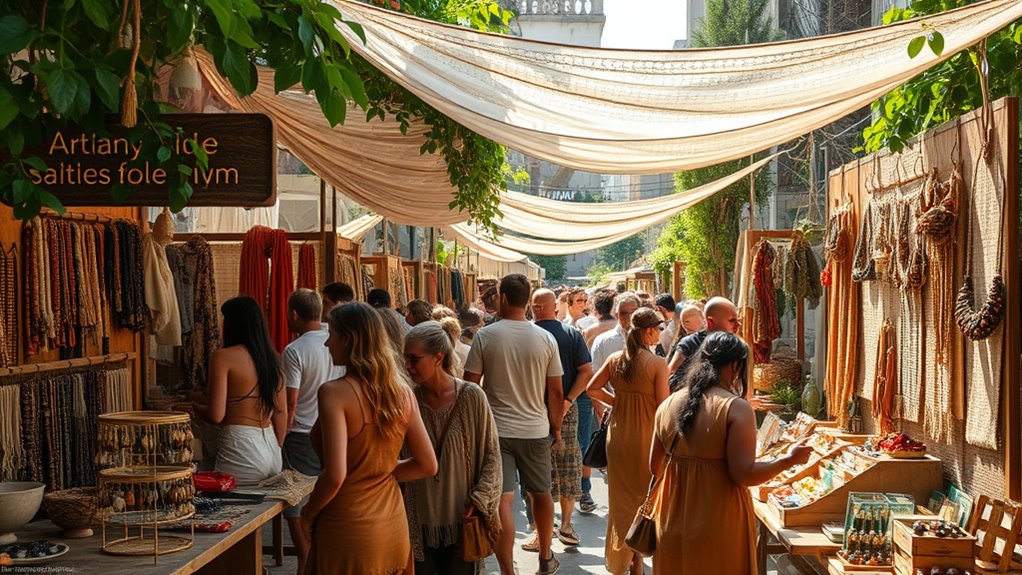
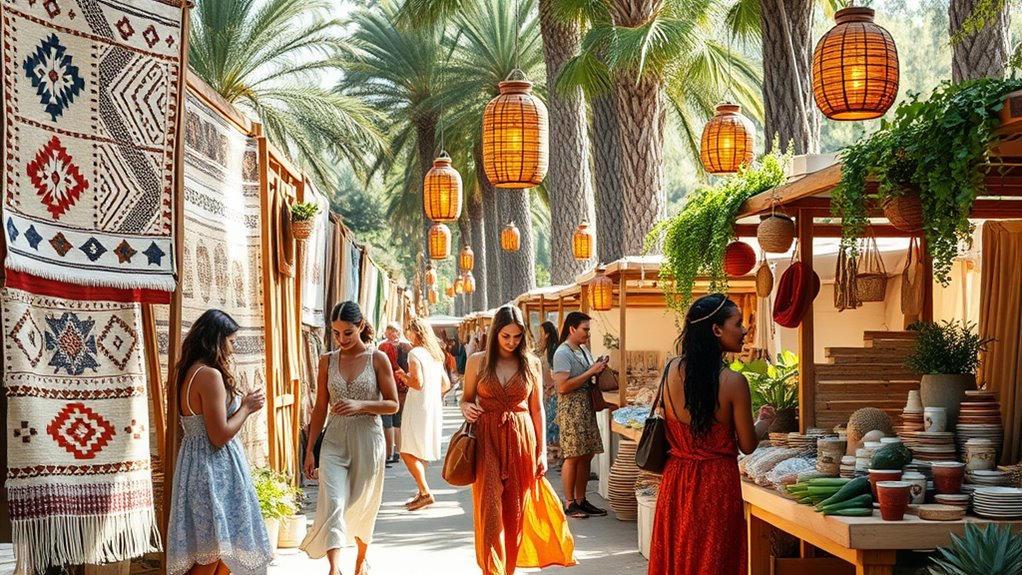
The boho style, with its relaxed, free-spirited aesthetic, has become more than just a fashion statement—it’s increasingly linked to the sustainability movement. As someone who appreciates this style, you might notice that many boho brands now prioritize ethical fashion by sourcing materials responsibly and ensuring fair labor practices. You’re not just dressing for look; you’re making a conscious choice to support brands that value transparency, sustainability, and social responsibility. This shift reflects a broader cultural awareness that fashion can be both beautiful and ethical. When you choose boho pieces made from eco friendly materials, you’re actively participating in reducing environmental impact. Natural fibers like organic cotton, hemp, and Tencel are common in boho clothing because they require less water and pesticides during production. These materials are biodegradable and renewable, making them a sustainable alternative to synthetic fabrics that contribute to pollution. By opting for clothing made from eco friendly materials, you help decrease your carbon footprint and support the development of environmentally responsible manufacturing practices. The emphasis on ethically produced fashion also means that artisans and workers are paid fair wages, work in safe conditions, and are respected for their craftsmanship. When you buy from brands committed to ethical fashion, you’re supporting livelihoods and helping to combat exploitation in the industry. Many boho brands now tell stories about their supply chains, making it easier for you to make informed decisions. You might find labels that clearly state their use of sustainable and fair-trade practices, giving you confidence that your purchase aligns with your values. furthermore, the boho aesthetic naturally lends itself to upcycling and vintage shopping, which further promotes sustainability. You can incorporate thrifted or vintage pieces into your wardrobe, reducing waste and giving existing garments new life. This approach not only minimizes waste but also creates a unique, personalized style that’s rooted in conscious consumption. As you embrace boho fashion, you’re part of a cultural shift towards more mindful and responsible choices. Your wardrobe becomes a statement of your values—highlighting that beauty and ethics can go hand in hand. Wearing clothing made with eco friendly materials and supporting ethical fashion brands allows you to express your free-spirited personality while making a positive impact on the planet. In this way, the boho style transforms from merely a visual expression into a meaningful stance on sustainability, inspiring others to follow suit. Ultimately, your choices can help reshape the fashion industry, encouraging more brands to adopt sustainable practices that benefit both people and the environment.
Frequently Asked Questions
How Does Boho Fashion Influence Local Artisan Communities?
You influence local artisan communities by supporting boho fashion, which often involves artisan collaborations that boost their income and visibility. Your choices help preserve cultural traditions, as many boho pieces incorporate handcrafted techniques passed down through generations. By choosing ethically-made boho styles, you promote cultural preservation and empower artisans, ensuring their crafts thrive amid modern trends. Your fashion decisions can make a meaningful difference for these communities.
Are Boho Lifestyle Choices Genuinely Eco-Friendly or Just Trend-Driven?
You might think boho lifestyle choices are eco-friendly, but often, they’re just trend-driven. Unlike sustainable practices, boho fashion can sometimes promote fast fashion, which harms the environment. Plus, cultural appropriation can occur when styles are borrowed without respect or understanding. So, while some embrace it genuinely for eco-conscious reasons, many follow the trend without considering its impact on the environment or cultural communities.
What Are the Ethical Considerations in Boho-Inspired Sustainable Products?
When considering boho-inspired sustainable products, you should think about ethical issues like cultural appropriation and fair trade. Avoid products that exploit cultural symbols without respect or understanding. Prioritize fair trade items that ensure artisans are paid fairly and work in safe conditions. By doing so, you support genuine sustainability and respect cultural origins, making your choices more responsible and meaningful rather than just trend-driven.
How Do Boho Cultural Symbols Impact Indigenous Communities?
You influence how boho cultural symbols impact indigenous communities by recognizing cultural appropriation and respecting indigenous rights. When you wear or display these symbols without understanding their significance, you risk perpetuating stereotypes and disrespecting traditions. By educating yourself and supporting authentic indigenous artisans, you help preserve cultural integrity. Your choices can foster appreciation rather than exploitation, ensuring indigenous communities maintain control over their symbols and cultural expressions.
Can Boho Aesthetics Be Adapted to Modern Sustainable Living Practices?
Yes, you can adapt boho aesthetics to modern sustainable living practices. Incorporate eco-friendly materials into your boho interior, like reclaimed wood or organic textiles, to create a stylish yet sustainable space. Use boho wellness principles by choosing natural, non-toxic products that promote relaxation and mindfulness. By blending these elements, you’ll cultivate a cozy, eco-conscious environment that reflects your values and enhances your well-being.
Conclusion
As you embrace the boho style, you’re also part of a larger sustainability movement. Your choices can support eco-friendly practices and cultural appreciation. Isn’t it empowering to know that your fashion sense can contribute to a more sustainable world? By blending style with purpose, you help challenge fast fashion and promote mindful consumption. So, next time you choose boho, ask yourself: are you making a positive impact? Your style can indeed change the world.