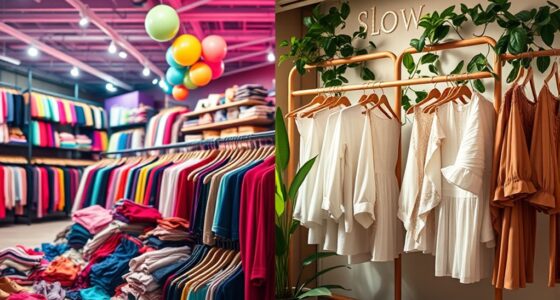
Counterculture movements like the hippies and boho shifted fashion by encouraging self-expression, sustainability, and inclusivity. You saw styles that challenged mainstream norms, promoting eco-friendly fabrics and gender-neutral looks. These movements turned fashion into activism, reflecting personal values and social causes. They inspired future trends centered on conscious consumerism and ethical practices. If you keep exploring, you’ll discover how these styles continue to influence fashion today and beyond.
Key Takeaways
- The hippie movement challenged mainstream fashion, promoting self-expression, individuality, and boundary-pushing styles that evolved into boho fashion.
- Counterculture emphasized sustainable, eco-friendly materials like organic cotton and recycled textiles, influencing modern boho aesthetics.
- Hippie ideals broke down gender norms, inspiring gender-neutral and versatile boho clothing that promotes inclusivity.
- Fashion became a form of activism, with both movements advocating for environmental responsibility and social change through style choices.
- The shift from hippie to boho fashion fostered a focus on conscious consumerism and ethical practices shaping future trends.
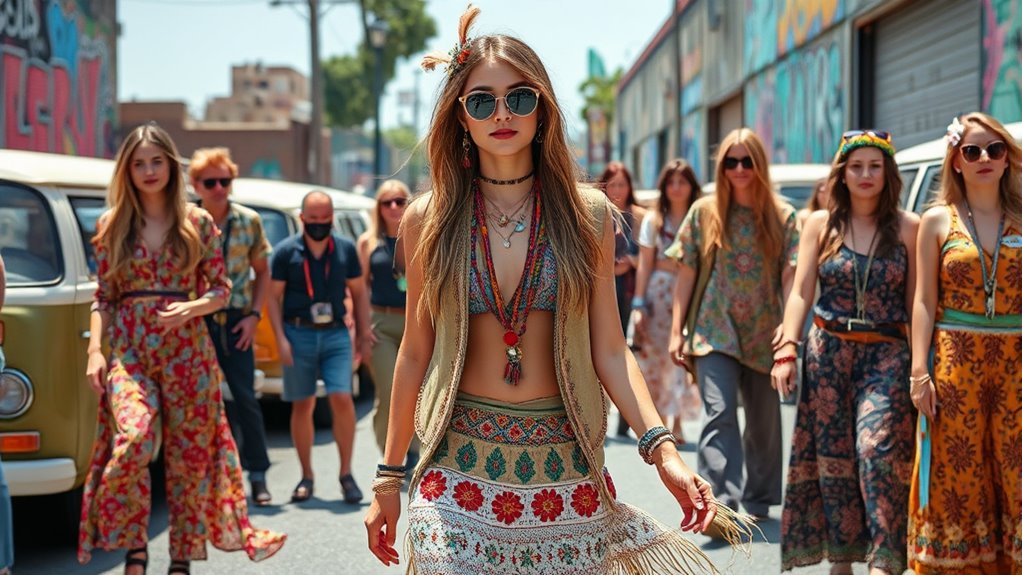
Counterculture movements have long influenced fashion by challenging mainstream norms and encouraging self-expression. As someone interested in style, you can see how these movements push boundaries, inspiring new ways to dress that reflect individuality and values. One key way they’ve done this is by promoting sustainable materials. Instead of opting for fast fashion’s cheap, environmentally harmful fabrics, these movements emphasize eco-friendly choices like organic cotton, hemp, and recycled textiles. This shift isn’t just about looking good; it’s about making a statement that cares for the planet. By choosing sustainable materials, you align your wardrobe with ethical principles, showing that fashion can be both stylish and responsible.
Counterculture fashion champions eco-friendly materials that make a statement for sustainability and personal values.
Additionally, counterculture movements have fostered the rise of gender neutral styles, breaking down traditional gender roles in clothing. You might notice that today’s fashion encourages mixing traditionally masculine and feminine elements, creating versatile looks that don’t conform to binary standards. This approach allows you to express yourself freely, without feeling confined by societal expectations. When you wear gender neutral styles, you send a message that clothing is about personal expression rather than fitting into predefined categories. It’s a way to challenge norms and promote inclusivity, making fashion more accessible and welcoming for everyone.
These movements have also popularized the idea that fashion isn’t just about trends; it’s a form of activism. By choosing pieces made from sustainable materials and embracing gender neutral styles, you participate in a broader cultural shift. Your wardrobe becomes a tool for advocating environmental responsibility and social equality. This mindset encourages you to seek out brands that prioritize ethical practices, fair labor, and environmentally conscious production processes. It’s about making intentional choices that reflect your values, rather than just following fleeting trends.
Furthermore, the influence of counterculture has inspired the rise of sustainable fashion, which continues to evolve as consumers become more conscious of their environmental impact. In essence, counterculture movements have transformed fashion into a platform for self-expression, activism, and sustainability. When you incorporate sustainable materials and explore gender neutral styles, you’re not just updating your wardrobe—you’re joining a movement that challenges outdated norms and promotes a more inclusive, eco-conscious future. Fashion becomes more than superficial; it becomes a way to stand up for what you believe in. So, next time you pick out an outfit, consider how your choices can reflect your individuality and your commitment to positive change, just as these movements have inspired generations to do.
Frequently Asked Questions
How Did Hippie Fashion Influence Mainstream Designer Collections?
You can see how hippie fashion influenced mainstream designer collections through the use of flower power motifs and psychedelic prints. Designers embraced these elements to create bold, free-spirited looks that resonated with a wider audience. By incorporating relaxed silhouettes, vibrant patterns, and a bohemian vibe, they made counterculture style more accessible and trendy, blending rebellious roots with high fashion to shape contemporary styles.
What Are the Key Symbols of Counterculture in Fashion?
Think of fashion as a billboard for rebellion—you’ll notice symbolic accessories like peace signs, flowers, and tie-dye that shout peace and love. Protest motifs such as safety pins, slogans, and ripped fabrics also serve as powerful symbols of counterculture. These elements act like secret codes, expressing your desire for change and individuality while challenging mainstream norms. Wearing them shows you’re part of a movement that values self-expression and social awareness.
How Has Boho Style Evolved From Its Origins?
You see that boho style has evolved by blending folk influences with modern trends, creating a relaxed, eclectic look. While it retains its roots in vintage revival, today’s boho incorporates contemporary fabrics and cuts, making it more versatile and accessible. You might notice more polished pieces alongside vintage-inspired garments, reflecting its journey from counterculture rebellion to mainstream fashion, all while maintaining its free-spirited, artistic vibe.
Which Counterculture Movements Impacted Fashion Beyond the 1960S?
You see punk rebellion’s jagged leather and safety pins piercing mainstream fashion, while disco glamour’s shimmering sequins and glittering fabrics ignite dance floors worldwide. These movements transformed clothing into bold statements, breaking traditional boundaries well beyond the 1960s. Punk’s raw edge and disco’s glamorous flash continue to influence style today, compelling you to express your individuality with fearless, vibrant choices that challenge norms and celebrate countercultural spirit.
How Does Sustainable Fashion Relate to Hippie and Boho Ideals?
Sustainable fashion aligns closely with hippie and boho ideals by emphasizing eco-friendly fabrics and ethical production. You can embrace these values by choosing clothes made from organic materials and supporting brands committed to fair labor practices. This approach helps you express your individuality while respecting the environment and promoting social responsibility, just like the original counterculture movement aimed to challenge mainstream consumerism and promote more conscious living.
Conclusion
As you explore the evolution from hippie to boho, it’s clear how counterculture has profoundly shaped fashion. Did you know that in 1969, over 70% of young Americans embraced free-spirited styles as a form of rebellion? This statistic highlights how countercultural movements influence mainstream trends. So next time you wear flowy skirts or fringe jackets, remember—you’re part of a legacy that challenged norms and celebrated individuality. Fashion isn’t just style; it’s a statement of cultural change.