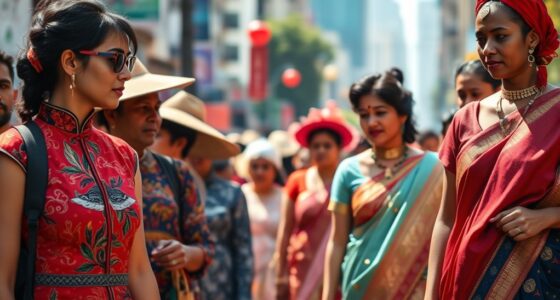

Indigo dyeing across cultures showcases a rich history of techniques and deep meanings. You’ll notice natural dyes from plants, like in West African adire or Indian saris, where fermentation and oxidation create vibrant blues. These textiles symbolize spirituality, power, and cultural pride, serving as markers of identity and social status. Each region’s unique methods reflect their worldview and traditions. Exploring further reveals how indigo unites global communities through timeless craft and profound symbolism.
Key Takeaways
- Indigenous and traditional dyeing techniques often utilize natural indigo from plants through fermentation and oxidation.
- In West Africa, indigo is used in adire textiles, symbolizing spirituality and social status.
- Indian textiles like saris and dhotis showcase indigo as a mark of pride, elegance, and cultural identity.
- Indigenous communities in the Americas incorporate indigo in ritual fabrics, emphasizing spiritual connection and community values.
- Across cultures, indigo dyeing embodies themes of spirituality, protection, social hierarchy, and cultural continuity.
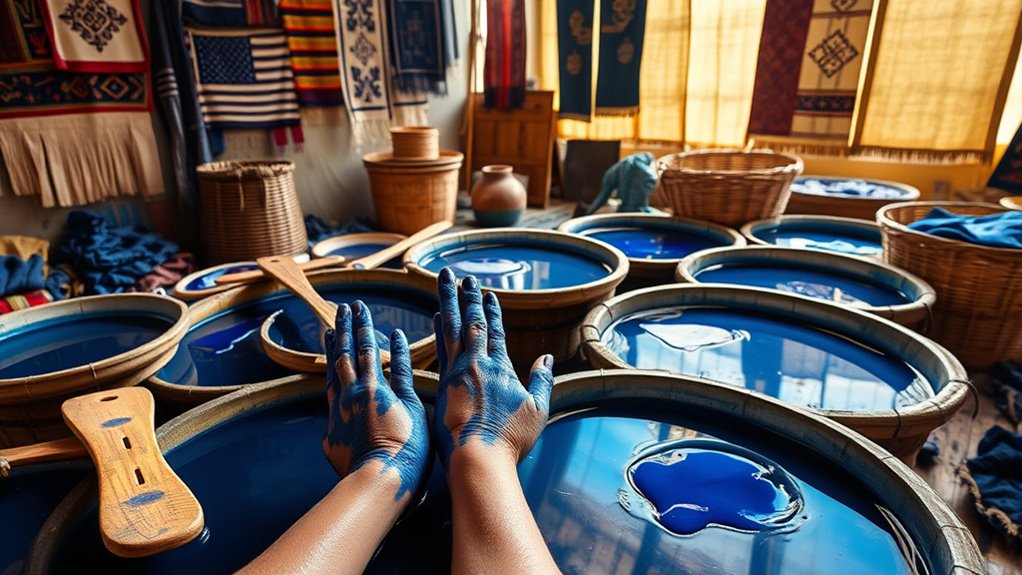
Indigo dyeing has long captivated cultures around the world with its vibrant hue and rich symbolism. When you explore this ancient craft, you quickly realize that it’s more than just a way to color fabric; it’s a reflection of history, identity, and tradition. Using natural dyes, especially indigo derived from plants, you connect with centuries-old practices that have been passed down through generations. These dyes aren’t just pigments—they embody cultural symbolism, representing status, spirituality, and community values. As you work with natural dyes, you become part of a global tapestry where each culture’s interpretation of indigo reveals its unique worldview.
In many societies, indigo is considered a sacred color, often associated with spirituality and the divine. For example, in West Africa, indigo-dyed textiles like the famous Yoruba adire are woven into ritualistic and ceremonial contexts, symbolizing power and spiritual protection. When you craft these fabrics, you’re participating in a tradition that links the material to ancestral beliefs and societal hierarchy. Similarly, in India, indigo holds a prominent place in traditional textiles like saris and dhotis, representing both elegance and cultural pride. The dye’s deep blue is thought to embody the infinite sky and spiritual awakening, making it more than just a color—it’s a symbol of connection to the divine.
You’ll also notice that indigenous communities in the Americas have long used natural dyes to express cultural identity. In Central and South America, indigo was a essential part of fabric production, often intertwined with rituals and social status. When you dye fabric with natural indigo, you’re not just creating a beautiful color—you’re engaging with a language of symbols that communicates community values, history, and social roles. The process of fermentation and oxidation involved in natural indigo dyeing highlights a relationship with nature, emphasizing sustainability and harmony with the environment.
Across cultures, the significance of indigo extends beyond its aesthetic appeal. It’s a marker of social status, spiritual belief, and cultural continuity. When you embrace natural dyes for indigo, you’re participating in a tradition that honors the environment and cultural heritage. The craft connects you to a global history of symbolism and storytelling, where colors serve as a visual language that transcends time and borders. Whether in Africa, Asia, or the Americas, indigo remains a powerful symbol—one that continues to inspire and unify diverse cultures through its deep, vibrant hue.
Frequently Asked Questions
How Does Indigo Dyeing Impact Local Economies?
Indigo dyeing boosts local economies by creating jobs in traditional and modern textile industries. You’ll see increased economic development as artisans sell their dyed fabrics locally and internationally. This craft also promotes cultural preservation, attracting tourism and supporting small businesses. By valuing indigo dyeing techniques, communities can sustain their heritage while fostering economic growth, ensuring that the cultural significance continues to thrive alongside economic benefits.
Are There Environmental Concerns With Traditional Indigo Extraction?
Think of traditional indigo extraction as a delicate dance with nature. While it’s often eco-friendly, concerns about environmental impact and chemical pollution remain. Some methods involve harmful chemicals that can contaminate water sources and harm ecosystems, like a shadow cast by the vibrant dye. You should be aware that sustainable practices are essential to protect the environment, ensuring future generations can enjoy the beauty and cultural significance of indigo.
What Are the Health Risks Associated With Indigo Dyeing?
You should be aware that indigo dyeing can pose health risks, especially from chemical exposure. You might experience allergic reactions like skin irritation or respiratory issues if you’re sensitive. To stay safe, wear gloves and protective clothing during the process, and guarantee proper ventilation. Limiting direct contact reduces the chances of allergic reactions and minimizes health risks associated with prolonged chemical exposure in traditional and modern indigo dyeing practices.
How Is Indigo Dyeing Preserved Among Modern Artisans?
You preserve indigo dyeing among modern artisans by maintaining traditional methods and cultural rituals. You use artisanal techniques like fermentation and layering to achieve authentic shades, honoring historical practices. Participating in workshops or cultural events helps keep these traditions alive. By sharing stories behind the dye’s significance and practicing sustainable methods, you guarantee that indigo dyeing remains a vibrant part of contemporary craft and cultural identity.
Can Indigo Dyeing Techniques Be Adapted for Sustainable Fashion?
You can adapt indigo dyeing techniques for sustainable fashion by embracing eco-friendly dyeing methods and natural dye alternatives. Instead of synthetic chemicals, use plant-based dyes that are gentle on the environment. These methods preserve the rich tradition while reducing ecological impact. With a mindful approach, you turn timeless techniques into innovative, sustainable fashion practices that honor cultural heritage and support eco-conscious choices, making your creations both beautiful and responsibly made.
Conclusion
As you explore the vibrant world of indigo dyeing, you’ll see it as a thread weaving cultures together, each stitch carrying stories and traditions. Like a midnight sky kissed by dawn, its deep blue hue holds secrets and symbolism across ages. Embrace this colorful tapestry, knowing that every fold and pattern whispers a timeless message. Indigo’s magic is yours to uncover—an eternal dance of art, history, and human connection woven into every piece.