Bohemian style originates from 19th-century artists and social rebels who rejected traditional norms and embraced freedom, individuality, and artistic exploration. Rooted in the bohemian movement of the 1960s, it draws on vintage, ethnic, and handmade influences to express authenticity and connection to nature. Over time, this aesthetic evolved into the popular boho chic, blending relaxed, layered looks with global details. If you look closer, there’s much more to discover about its rich history and cultural significance.
Key Takeaways
- Bohemian style originated in the 19th-century European and American artistic communities, emphasizing unconventional, artistic lifestyles.
- It evolved from the 1960s hipster movement, inspired by countercultural ideals of freedom, self-expression, and rejection of mainstream norms.
- The style incorporates vintage, ethnic, and handmade elements, reflecting global influences like Indian jewelry and Moroccan textiles.
- Over time, it transitioned into boho chic, blending relaxed, eclectic fashion with modern trends and artisanal details.
- Today, bohemian style continues to embody authenticity, individuality, and sustainability, influenced by digital innovation and cultural exploration.
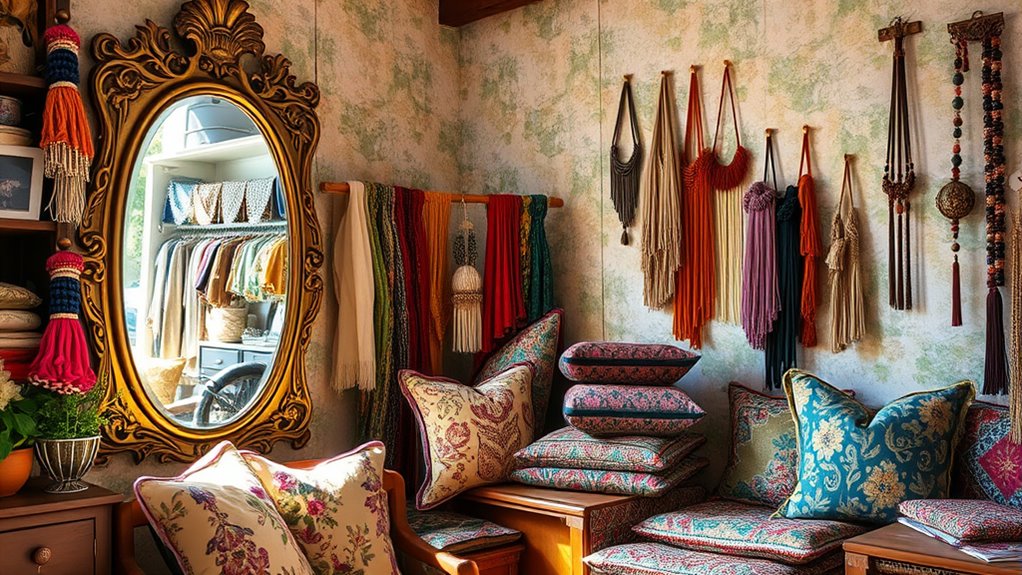
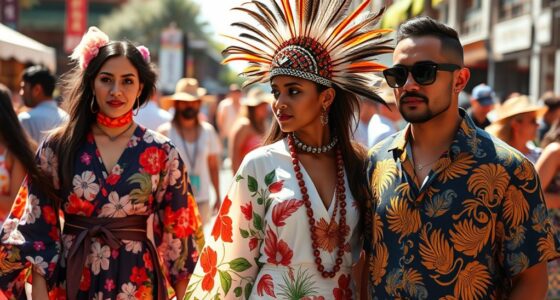
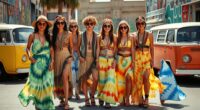
Have you ever wondered where the carefree, eclectic look of Bohemian style originated? It’s a question that takes you back through history to uncover a rich tapestry of cultural influences and social movements. The roots of this style are deeply intertwined with the hippie movement of the 1960s, which championed freedom, self-expression, and a rejection of mainstream fashion norms. During that era, young people sought to break free from traditional constraints, embracing a mix of vintage, ethnic, and handmade clothing. They layered flowing skirts, embroidered tunics, and fringed accessories, creating a look that felt both rebellious and deeply personal. This movement wasn’t just about clothes; it was a statement of ideals—peace, love, and unity—that resonated with a desire for authenticity and connection to nature. As the hippie movement gained momentum, its influence spilled over into mainstream fashion, sparking what we now call boho chic evolution.
Boho chic didn’t happen overnight; it evolved as a reflection of cultural shifts and artistic exploration. Designers began incorporating elements inspired by the bohemian lifestyle—think gypsy-inspired patterns, earthy tones, and artisanal details—into their collections. This style became more accessible, blending vintage finds with modern trends, and giving rise to a look that’s both relaxed and sophisticated. It’s characterized by an effortless mix of textures, layers, and global influences, from Indian jewelry to Moroccan textiles. The boho chic evolution transformed a countercultural aesthetic into a mainstream fashion statement, allowing people to express their individuality and free spirit through clothing. Furthermore, the influence of AI-powered virtual reality has started to revolutionize how people experience and visualize bohemian-inspired fashion in digital spaces.
Today, bohemian style continues to evolve, influenced by sustainability efforts and a desire for authenticity. You can see its legacy in the popularity of flowy dresses, oversized accessories, and the mix-and-match approach that encourages personal storytelling through fashion. The style’s origins in the hippie movement and its progression into boho chic reflect a continual pursuit of freedom—both in lifestyle and in expression. It’s about embracing imperfections, mixing vintage with new, and creating looks that feel uniquely yours. This journey from mid-20th-century rebellion to modern-day fashion iconoclasm highlights a timeless desire to break free from conformity and celebrate individuality. So, when you wear bohemian-inspired pieces, you’re carrying forward a legacy rooted in cultural upheaval, artistic exploration, and the enduring quest for personal authenticity.
Frequently Asked Questions
How Did Bohemian Style Influence Modern Fashion Trends?
Bohemian style influences modern fashion by embracing the carefree, artistic spirit of the hippie movement and indie fashion. You’ll notice this in flowy fabrics, layered accessories, and eclectic patterns that emphasize individuality. It encourages mixing vintage and contemporary pieces, creating a relaxed, boho-chic vibe. This trend celebrates freedom and self-expression, inspiring countless fashion choices today, from festival wear to everyday casual styles.
What Cultural Elements Are Most Prominent in Bohemian Aesthetics?
You’ll notice that bohemian aesthetics prominently feature hippie motifs and ethnic patterns, creating a free-spirited, eclectic vibe. These elements often include floral prints, fringes, and layered textures, reflecting cultural diversity and artistic expression. You might also see influences from various global traditions, blending them seamlessly to evoke a sense of wanderlust and individuality. Embracing these cultural elements helps define the authentic bohemian look you aim to achieve.
Which Key Figures Popularized Bohemian Fashion in the 19TH Century?
You might think artists like Dante Gabriel Rossetti and literary figures such as William Morris popularized bohemian fashion in the 19th century, but the truth is, it was a collective movement rooted in artistic and literary circles. These figures embodied bohemian ideals, blending unconventional clothing with a rejection of societal norms. Their influence inspired many to embrace free-spirited, eclectic styles that continue to shape bohemian fashion today.
How Has Bohemian Style Evolved Through Different Decades?
You see bohemian style evolve through the decades with the hippie movement in the 1960s, which embraced free-spirited, colorful, and eclectic looks. In the 2000s, a vintage revival brought back flowy dresses, fringe, and layered jewelry, blending old-world charm with modern flair. Each era’s twist keeps bohemian style fresh, reflecting societal shifts and your desire for individuality, comfort, and artistic expression.
Can Bohemian Style Be Adapted for Contemporary Urban Settings?
Yes, you can adapt bohemian style for contemporary urban settings by embracing its versatility. Mix flowy skirts with sleek leather jackets, add layered accessories, and incorporate eclectic patterns. Urban adaptation means blending relaxed, free-spirited elements with modern, structured pieces to create a stylish, effortless look. Play with textures and colors to reflect your personality, making bohemian versatility work seamlessly in your city life.
Conclusion
Think of bohemian style as a wandering river, flowing freely through time, shaping and reshaping itself with every twist. It’s a story of rebels and dreamers, forging beauty from chaos and passion. As you embrace this spirit, remember you’re part of its endless journey—an echo of those who dared to be different. Let your style be the current that carries you forward, wild and unbound, forever rooted in its vibrant, rebellious soul.