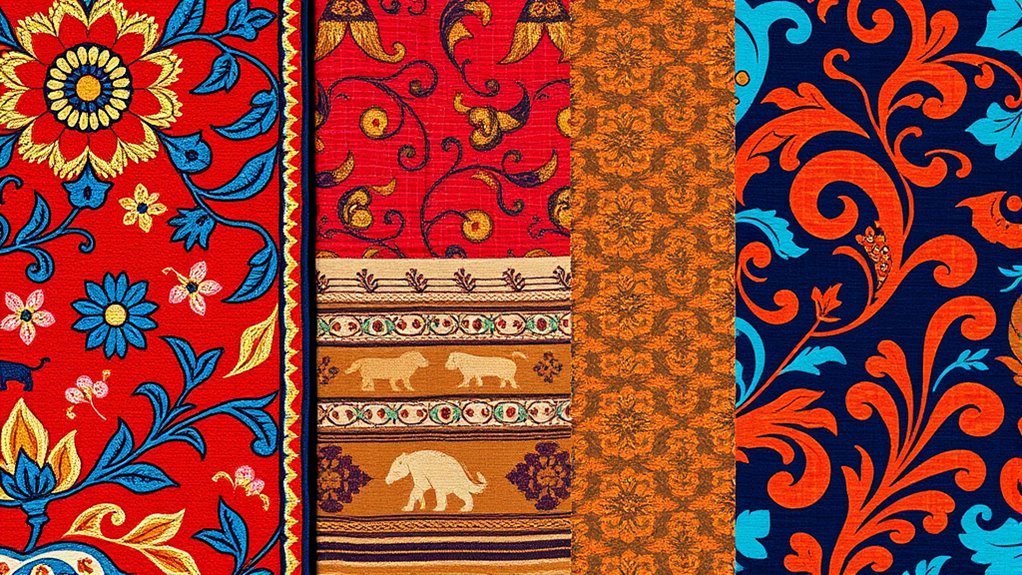

Textile motifs like Suzani, Kantha, and Batik each tell unique cultural stories through patterns and symbols. Suzani from Central Asia uses floral and geometric designs to represent fertility and protection. Kantha from India features intricate stitches with motifs like elephants and lotuses that reflect spiritual beliefs and life cycles. Batik from Southeast Asia employs wax-resist dyeing, with symbols signifying prosperity or protection. Discovering these motifs reveals the rich traditions behind each fabric’s story, if you keep exploring further.
Key Takeaways
- Suzani textiles feature vibrant floral and geometric motifs symbolizing fertility, protection, and prosperity from Central Asia.
- Kantha quilts use intricate running stitches with motifs like lotus and elephants, representing life, spirituality, and social status in India.
- Batik employs wax-resist dyeing to create symbolic patterns such as kawung and parang, reflecting natural elements and spiritual beliefs in Southeast Asia.
- Regional variations influence the meaning and style of motifs, preserving cultural identity and storytelling traditions across different communities.
- Textile motifs serve as visual narratives conveying community values, beliefs, and hopes across diverse Asian textile traditions.
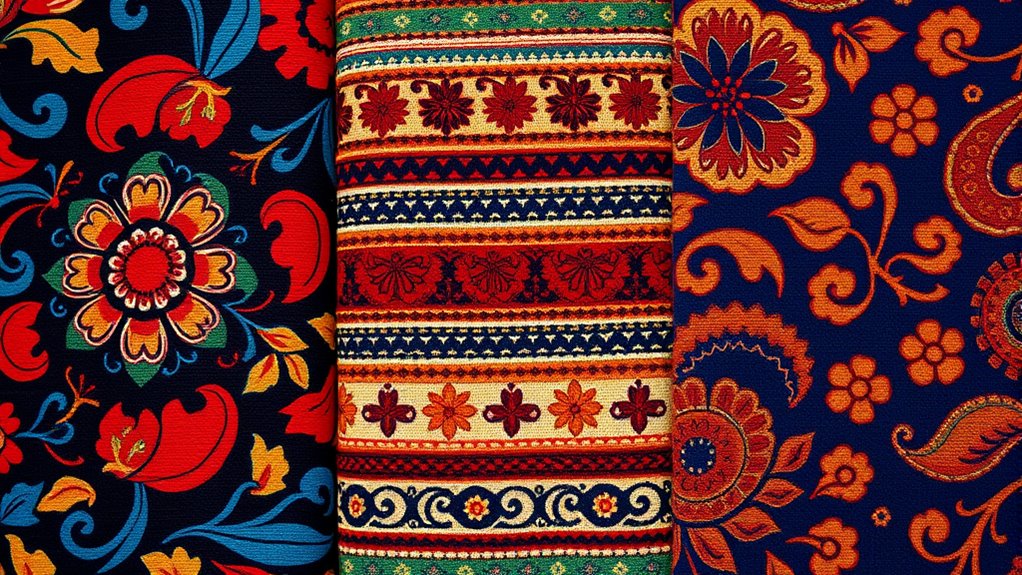
Have you ever wondered what stories or cultural meanings are woven into the patterns on textiles? Every motif tells a story, carrying symbolism in textiles that reflect traditions, beliefs, and histories. When you examine these patterns, you’ll notice that regional variations play a significant role, shaping the way symbols are used and interpreted. For example, in Central Asia, Suzani textiles burst with vibrant embroidery featuring floral and geometric motifs that symbolize fertility, protection, and prosperity. These patterns aren’t just decorative—they convey messages about the community’s values and hopes, often passed down through generations. The colors and shapes are deliberate, blending artistry with storytelling, making each piece a cultural artifact.
Moving across regions, you’ll find that textile motifs differ widely, influenced by local environments, beliefs, and customs. In India, Kantha quilts showcase intricate running stitches that create patterns representing life’s cycles, spiritual beliefs, and social status. These textiles often feature motifs like lotus flowers, elephants, or auspicious symbols, each carrying specific symbolic meanings rooted in regional traditions. The regional variations mean that a motif on a Kantha from Bengal might have a different significance than one from Odisha, even if they look similar. Such differences highlight how regional cultures shape the symbolism in textiles, making each piece a unique reflection of its origins. Additionally, the regional symbolism in textile motifs helps preserve cultural identity and storytelling across generations.
Batik, originating from Southeast Asia, especially Indonesia, adds another layer to this rich tapestry of symbolism. The wax-resist dyeing technique produces patterns that often symbolize natural elements, spiritual beliefs, or social status. For instance, certain motifs like the kawung (palm fruit) or parang (sword) carry specific meanings—prosperity, protection, or strength—specific to their regional contexts. The regional variations in Batik designs reflect local stories, beliefs, and even social hierarchies, with certain patterns reserved for royalty or special occasions. The meticulous craftsmanship of Batik motifs encapsulates cultural values, making each textile a storybook woven in fabric.
In all these textile traditions, symbolism in textiles isn’t static. It evolves while maintaining links to regional origins, serving as a visual language that speaks volumes about the communities that create them. Whether you’re admiring Suzani’s floral motifs, Kantha’s spiritual stitches, or Batik’s natural symbols, you’re engaging with a visual dialogue rooted in regional variations and cultural meanings. These patterns aren’t just decorative—they’re an essential part of cultural identity, storytelling, and tradition, connecting past and present through the language of textiles.
Frequently Asked Questions
What Are the Origins of Suzani Motifs?
You’ll find that suzani motifs originate from Central Asia, especially Uzbekistan. These designs reflect deep cultural symbolism, often depicting nature, fertility, and protection. Regional variations influence motifs, with some emphasizing geometric patterns, while others include floral or animal elements. These intricate textiles are handcrafted and passed down through generations, showcasing local traditions and beliefs. Suzani motifs are not just decorative but carry meaningful messages rooted in the history of the region.
How Is Kantha Embroidery Traditionally Practiced?
A stitch in time saves nine, and in Kantha embroidery, you practice this wisdom daily. You traditionally use simple running stitches to create intricate patterns on old fabrics, transforming them into vibrant textiles. This technique, rooted in Indian culture, reflects deep cultural symbolism and storytelling. You layer and quilt the cloth, emphasizing the importance of patience and tradition, which keeps the cultural heritage alive through each hand-stitched piece.
What Materials Are Used in Batik Fabric?
In batik fabric, you use natural or synthetic wax for textile dyeing, creating intricate designs by applying wax resist. You typically work with cotton or silk, which absorb dyes well. The wax preserves the fabric’s original color, ensuring fabric preservation during dyeing. This process allows you to produce vibrant, detailed patterns while maintaining the fabric’s integrity, making batik both decorative and durable.
Are These Motifs Culturally Significant or Purely Decorative?
You’ll find that these motifs are deeply rooted in cultural symbolism and artistic heritage, not just decorative. They often tell stories, represent beliefs, or signify social status, making them integral to the communities that create them. When you see Suzani, Kantha, or Batik designs, you’re witnessing more than artistry; you’re experiencing a visual language that preserves tradition, history, and identity across generations.
How Do These Motifs Influence Modern Textile Design?
These motifs influence modern textile design through their rich textile symbolism and cultural stories. You see their impact in contemporary adaptations, where designers incorporate traditional patterns into fashion, home decor, and art. By blending historical motifs with new techniques, you create textiles that honor heritage while appealing to modern aesthetics. This fusion helps keep these cultural symbols alive, making your designs both meaningful and visually enthralling in today’s diverse market.
Conclusion
Remember, a picture is worth a thousand words. By exploring motifs like suzani, kantha, and batik, you gain a deeper appreciation for cultural stories woven into fabric. These patterns aren’t just decorations—they’re traditions, symbols, and histories handed down through generations. Embrace the beauty and meaning behind each design, and you’ll see that, as the saying goes, “Clothes make the man,” but in this case, they reveal the soul of a culture.