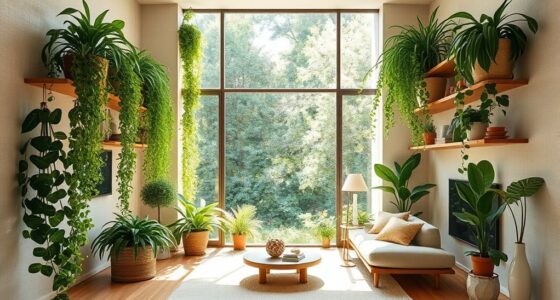
To balance maximalism with negative space and breathing room, focus on intentionally showcasing key statement pieces while leaving ample empty areas around them. Group smaller items into collections and avoid overcrowding surfaces or walls. Use open shelving and clear storage to keep clutter out of sight. strategically position lighting and maintain visual rhythm throughout the space. If you want your bold design to feel lively yet organized, exploring these techniques further will help you create harmony and style.
Key Takeaways
- Incorporate negative space around statement pieces to emphasize their importance and prevent visual overload.
- Limit large, dominant items and group smaller objects to maintain a balanced, uncluttered look.
- Use open shelving and clear storage to keep excess items out of sight, creating breathing room.
- Strategically position vibrant or patterned furniture with simpler accessories to achieve harmony.
- Maintain a visual rhythm by giving each element its designated space, blending maximalism with open areas.

Maximalism often feels like a bold celebration of self-expression, but without balance, it can overwhelm a space or look cluttered. To prevent this, you need to master the art of visual hierarchy and clutter control. When your room becomes packed with countless objects, colors, and patterns, your eye struggles to focus, and the space loses its impact. Creating a clear visual hierarchy helps guide attention and emphasizes the most important elements, making the room feel curated rather than chaotic. This involves deliberately arranging items so that your eye naturally moves from focal points to supporting details, giving the space a sense of order amid the abundance.
Clutter control is essential in achieving this balance. It might seem counterintuitive in maximalist design, but you don’t have to remove everything—just be intentional about what stays. Limit the number of large or dominant pieces and group smaller items into collections or vignettes. This prevents the space from feeling overwhelming and allows each element to stand out without competing for attention. Using negative space—areas left intentionally empty—creates breathing room that keeps the room from feeling crowded. Think of negative space as the pause between musical notes; it enhances the overall harmony of your design.
In practical terms, this means being selective with what you display and where. Instead of filling every surface, choose a few statement pieces and give them room to breathe. For example, if you have a vibrant, patterned sofa, balance it with simpler accessories and ample empty wall space. This not only accentuates the sofa but also prevents the room from looking cluttered. Incorporate open shelving or clear storage options to keep clutter out of sight, which further enhances visual hierarchy by removing distractions. Additionally, understanding the importance of visual hierarchy can help you create a balanced yet dynamic environment that reflects your personality.
Lighting also plays a vital role in guiding the eye and establishing hierarchy. Use strategic lighting to highlight certain features or artworks, drawing attention to specific areas and creating focal points. This helps your eye move naturally across the space, appreciating each element without feeling overwhelmed.
Ultimately, balancing maximalism with negative space and clutter control isn’t about minimalism or stark emptiness. It’s about creating a visual rhythm where each piece has its place, and your space feels lively yet organized. By consciously designing your environment with these principles, you guarantee your bold, expressive style remains engaging rather than chaotic. This harmony between abundance and restraint allows your personality to shine through while maintaining a space that feels inviting and visually appealing.
Frequently Asked Questions
How Can Negative Space Improve Overall Design Harmony?
Negative space improves overall design harmony by balancing visual weight and emphasizing focal points. When you use negative space effectively, it guides the viewer’s eye, preventing clutter and overwhelming elements. This breathing room allows your focal points to stand out, creating a more cohesive and pleasing composition. By managing negative space, you guarantee that each element contributes to a harmonious design, making your work more inviting and easier to understand.
What Are Common Mistakes When Balancing Maximalist Elements?
You often make the mistake of overcrowding your design with clutter and excessive ornamentation, which overwhelms the viewer. To avoid this, you should be mindful of negative space, allowing your elements to breathe and breathe room for the eye to rest. Overdoing it with details can distract from the main focus, so balance your maximalist elements carefully and remove unnecessary clutter to maintain harmony.
How Do Color Choices Affect Breathing Room in Design?
Think of color choices as the breath of your design. Bright, contrasting palettes can feel like a gasp, filling every inch with energy, while muted tones create space to breathe. Color psychology guides these choices—warm hues energize, cool shades soothe. By balancing bold contrasts with softer shades, you give your design room to breathe, making it inviting rather than overwhelming, and ensuring each element has space to speak.
Can Minimalism Complement Maximalist Styles Effectively?
Yes, minimalism can complement maximalist styles effectively by providing negative space that creates visual breathing room. You can incorporate minimalist elements to highlight intricate details or bold patterns, preventing the design from feeling overwhelming. By balancing dense, decorative aspects with areas of simplicity, you guide the viewer’s eye and maintain harmony, allowing each element to stand out. This contrast enhances overall visual impact while keeping the design’s energy intact.
What Tools Help Visualize Negative Space in Layouts?
You can use visualization tools like grid overlays, wireframes, and heatmaps to see negative space in layouts clearly. These tools help you analyze your layout’s balance and identify areas with too much or too little breathing room. By actively engaging with layout analysis features, you gain a better sense of how negative space guides the viewer’s eye and enhances overall design harmony, ensuring your maximalist style remains balanced and impactful.
Conclusion
So, when you master the art of balancing maximalism with negative space, you transform your space into a breathtaking masterpiece—like a symphony where every note has room to breathe. Don’t be afraid to let your personality shine through, even if it means giving your eye some breathing room. Remember, a little negative space is your secret weapon, turning chaos into harmony and making your space feel as expansive as the universe itself.