
To size your entryway and dining benches accurately, measure your space carefully, including walkways and nearby furniture. For entryways, aim for about 17-19 inches high and 15-18 inches deep, while for dining benches, ensure they’re around 48-60 inches long with a seat height of 17-19 inches. Avoid common sizing mistakes by considering user comfort and functionality. If you want to learn more about perfect bench dimensions, continue exploring these essential rules for a seamless fit and stylish look.
Key Takeaways
- Measure space carefully to determine appropriate bench length, width, and height, ensuring comfort and functionality.
- Follow standard dimensions: seat height of 17-19 inches, depth of 14-18 inches, and width based on user capacity.
- Leave sufficient clearance around benches for easy movement and safety, typically 24-30 inches for walkways.
- Match bench size and style to room proportions and decor for visual harmony and aesthetic balance.
- Consider user comfort by incorporating ergonomic principles, such as appropriate seat depth and supportive height.
Why Proper Bench Sizing Matters for Comfort and Style
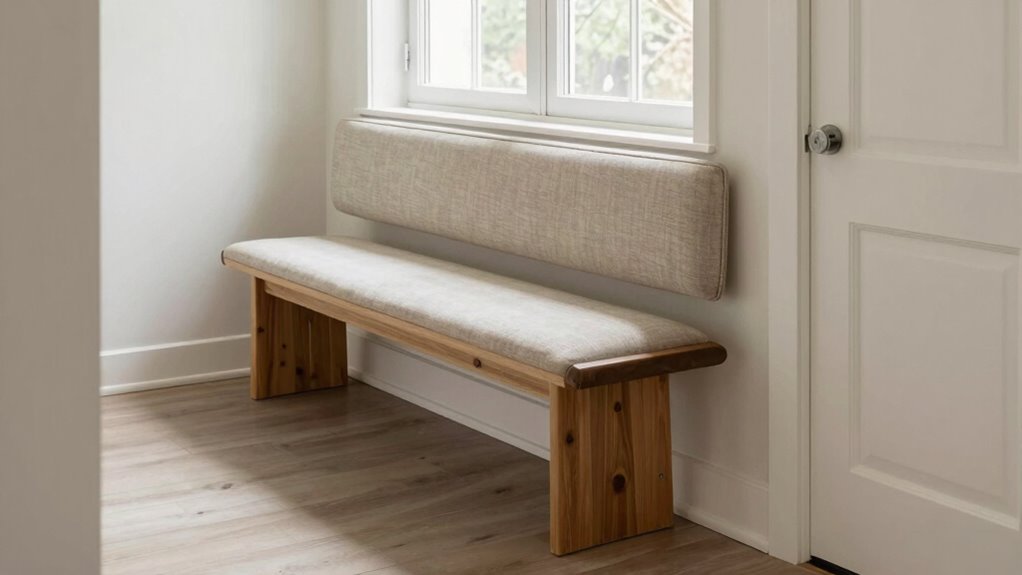
Choosing the right bench size is essential because it directly impacts both comfort and the overall look of your space. An appropriately sized bench ensures ergonomic design, so you and your guests sit comfortably without feeling cramped or overwhelmed. When the bench fits well, it promotes good posture and reduces discomfort during extended sitting. Additionally, proper sizing enhances aesthetic harmony, creating a balanced, cohesive environment. A bench that’s too large can overpower the space, while one that’s too small may look out of place. By selecting a size that complements your room’s proportions, you achieve a harmonious blend of function and style. Proper bench sizing also ensures your space remains functional and adaptable for different uses. Ultimately, thoughtful sizing elevates your space, making it inviting and visually pleasing.
How to Measure Your Space for the Perfect Bench
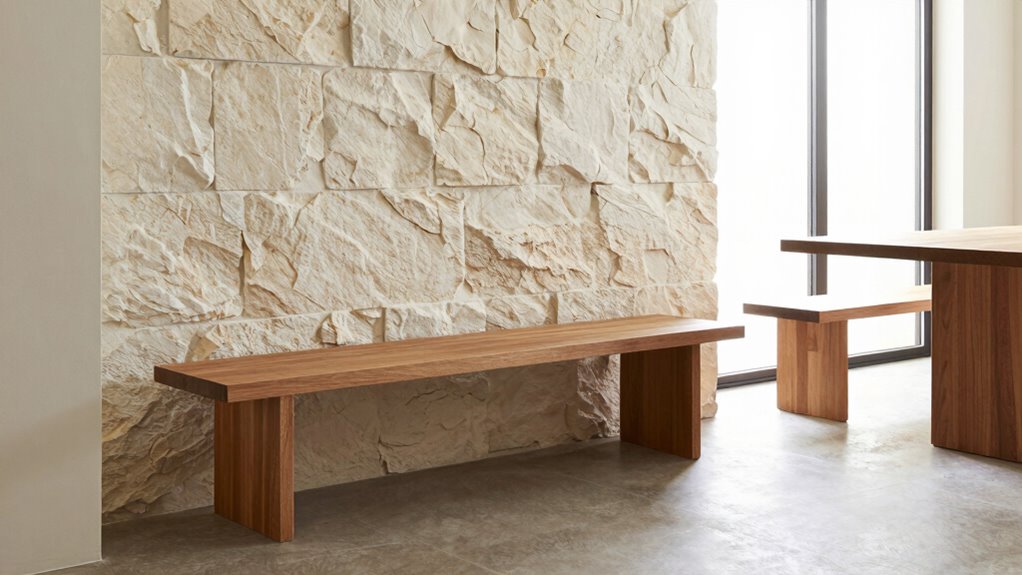
Start by measuring the space where you want your bench to go, making sure to account for any walkways or nearby furniture. Next, decide on the ideal length based on how many people you want it to seat comfortably. Additionally, consider ergonomic seating principles to enhance user comfort by choosing a size that allows enough room for sitting and easy movement. Incorporating body support features can also help ensure your bench provides optimal comfort and support. When selecting the size, keep in mind load capacity to ensure safety and durability for everyday use. It’s also helpful to consider ergonomic design to promote proper posture and reduce strain during use. Finally, keep user comfort in mind by choosing a size that allows enough room for sitting and easy movement. Incorporating sleep ergonomics principles can also help ensure your bench provides optimal comfort and support.
Measure Available Space
Before selecting a bench, you need to accurately measure the available space to guarantee a perfect fit. Start by noting the length, width, and height of the designated area, leaving enough room for easy movement. Consider material options that match your space’s style—wood, metal, or upholstered—while ensuring they fit comfortably within your measurements. Think about color coordination to create a cohesive look; lighter shades can make small spaces feel larger, while bold colors add visual interest in larger areas. Measure any surrounding furniture or architectural features that might influence bench placement. Use a tape measure for precision, and double-check your dimensions before shopping. Proper space measurement is essential for selecting a bench that not only fits well but also enhances the overall aesthetic of your entryway or dining area. Correct measurements help you choose a bench that complements your style and fits seamlessly into your space.
Determine Desired Bench Length
Wondering how to determine the perfect length for your bench? Start by measuring your space carefully, considering both the available width and the style you prefer. A well-sized bench should leave some room to move comfortably around it. When selecting your bench material, think about durability and how it complements your color coordination. For example, wood pairs well with warm tones, while metal suits cooler palettes. Use this guide to match your space:
| Space Size | Ideal Bench Length |
|---|---|
| Small | 40-50 inches |
| Medium | 50-60 inches |
| Large | 60-72 inches |
| Extra Large | 72+ inches |
Adjust length based on your unique space, ensuring both aesthetic appeal and practicality.
Consider User Comfort
To guarantee your bench offers maximum comfort, it’s vital to measure your space accurately, taking into account not just the length but also the height and clearance around the area. An ergonomic design ensures that sitting feels natural and supportive, preventing discomfort during extended use. Consider the height of the seat in relation to table or entryway heights, aiming for a comfortable sitting position. Adequate space for movement and legroom enhances user comfort and promotes ease of use. Additionally, selecting a bench that complements your overall aesthetic harmony creates a visually pleasing environment. By paying close attention to these measurements and design principles, you’ll ensure your bench not only fits perfectly but also provides a cozy, inviting spot for everyone.
Standard Entryway Bench Dimensions: Height, Depth, and Width
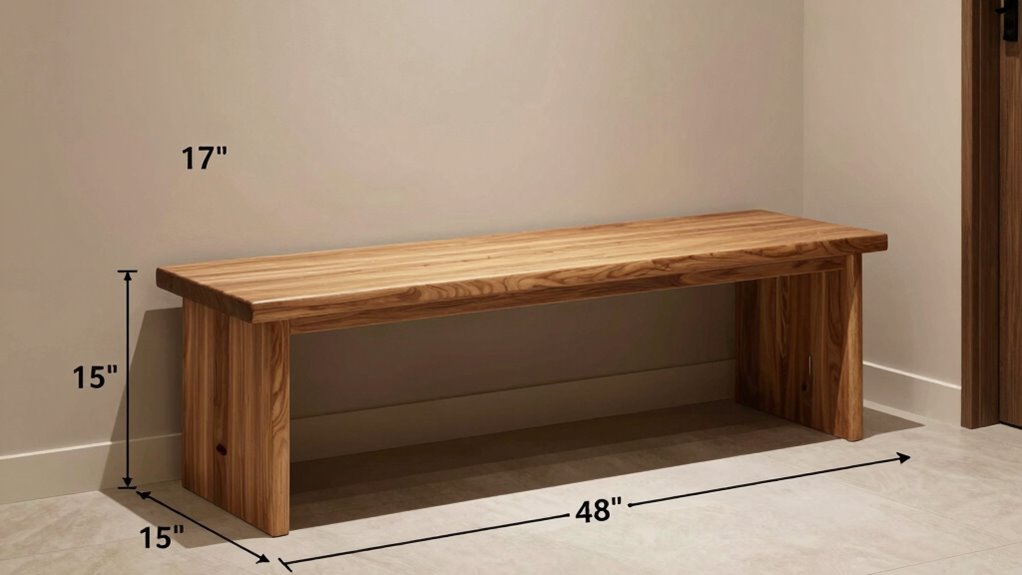
When selecting the ideal entryway bench, understanding standard dimensions is vital to guarantee comfort and functionality. Typically, a comfortable height ranges from 17 to 19 inches, allowing easy sitting and standing. The depth should be around 15 to 18 inches, providing enough space without overwhelming the entryway. Width varies based on your space, but a common range is 48 to 60 inches for multiple users. To enhance style, incorporate decorative accents like carved legs or unique finishes, which can complement your material choices—wood, metal, or upholstered options. Remember, the right dimensions ensure usability and flow, while your decorative accents and materials add personality and charm to your entryway. Prioritize these standard measurements for a balanced, functional, and inviting space. Additionally, selecting the right dog-friendly furniture ensures your pets can comfortably join you in your entryway or dining area. Understanding furniture sizing and the importance of appropriate proportions can help create a cohesive and comfortable environment.
What Factors Affect Bench Width and Seating Capacity?
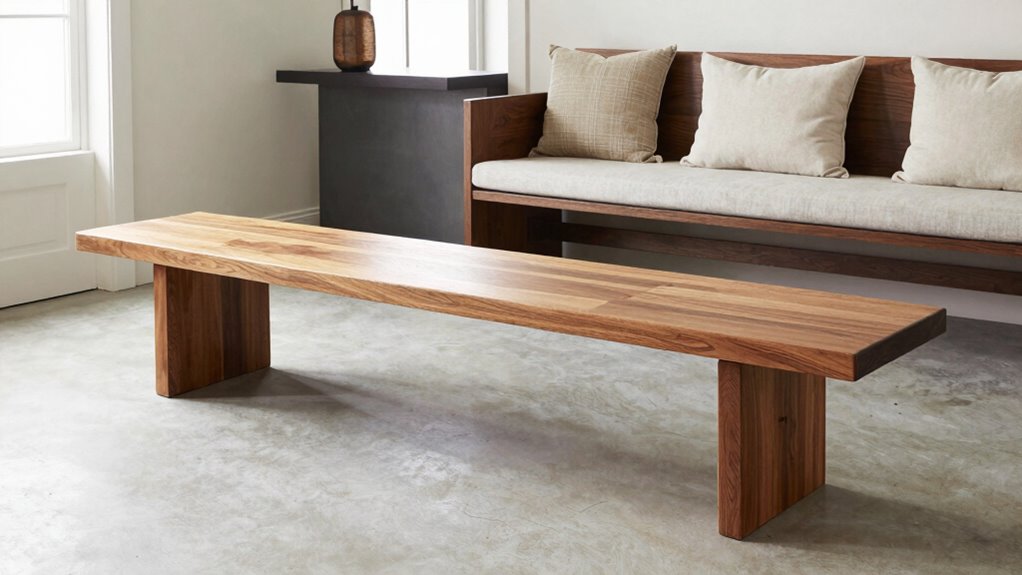
What factors influence how wide your bench should be and how many people it can seat? Materials selection impacts weight capacity and durability, affecting overall width. Color coordination can also influence the visual harmony, shaping your choice of size and style. Consider the intended use: a cozy entryway might need a narrower bench, while a dining area demands more width for comfort. The space available limits your options, and personal preferences guide the design. Here’s a quick overview: durability standards ensure your bench remains functional over time. Additionally, understanding weight capacity is vital for safety and longevity. Moreover, considering ergonomic comfort can help maximize seating satisfaction for everyday use. Incorporating construction techniques can also enhance the stability and longevity of your bench. Being aware of materials properties can help you select the best options for your specific needs.
Ideal Dining Bench Sizes for Different Table Lengths
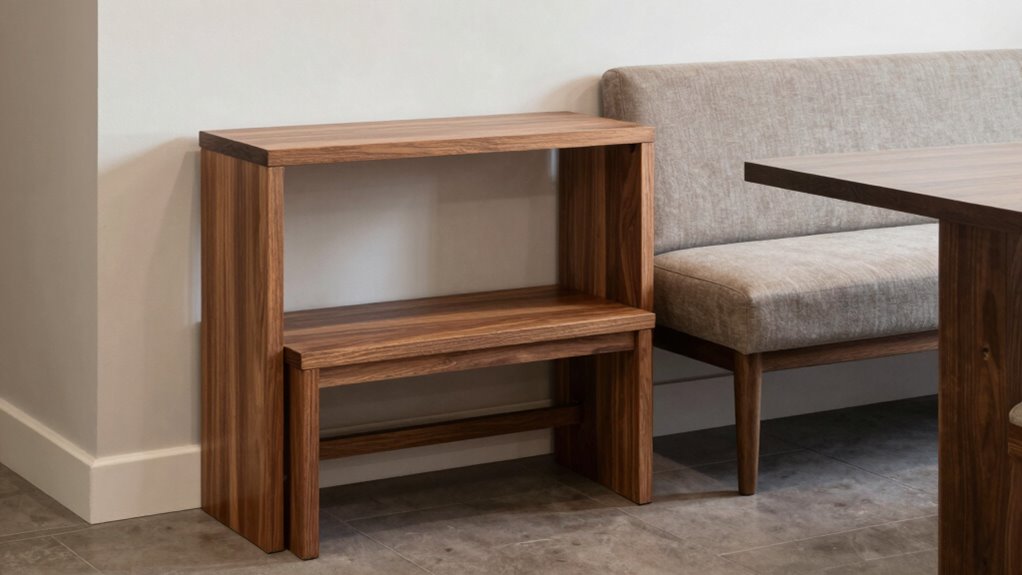
Choosing the right bench length guarantees comfortable seating and a cohesive look. For ideal capacity, match the bench size to your table’s length, typically allowing for 24 to 30 inches of space per person. By following these guidelines, you’ll create a dining area that’s both functional and inviting. Additionally, considering bench height ensures consistent comfort and proportional balance with your table. It’s also helpful to account for space planning to ensure the bench doesn’t overcrowd the room while maintaining ease of movement around the table.
Perfect Bench Lengths
The right bench length guarantees comfortable seating and a balanced look, so matching the bench size to your table is essential. For a standard 60-inch table, a bench around 48 inches long offers ample space for two or three people without overcrowding. If your table is longer, such as 72 inches, consider a 60-inch bench to maintain proportionality. Material options like wood, metal, or upholstered fabrics can influence the overall aesthetic and comfort. When selecting the perfect length, also think about color coordination; matching the bench’s hue to your table or surrounding decor creates a cohesive look. Additionally, considering ergonomic comfort and proper proportions can enhance seating experience and overall style. A well-sized bench enhances both style and function, making your space inviting and practical for everyday use and gatherings alike.
Seating Capacity Guidelines
Selecting the right bench size also depends on how many people you want to seat comfortably. For a standard 6-foot table, a 48-inch bench fits three to four people, while a 72-inch table can accommodate a 60-inch bench for five to six. Keep in mind, the bench material influences comfort and style—wood offers durability, while upholstered options add softness. Color coordination is key; choose a bench that complements your table’s finish or adds a pop of contrast.
- Choose a bench length that allows each person about 24 inches of space for comfort.
- Use matching or contrasting bench materials to enhance visual appeal.
- Consider the overall table size and room layout when selecting the ideal seating capacity.
Tips for Choosing the Right Bench Height and Depth
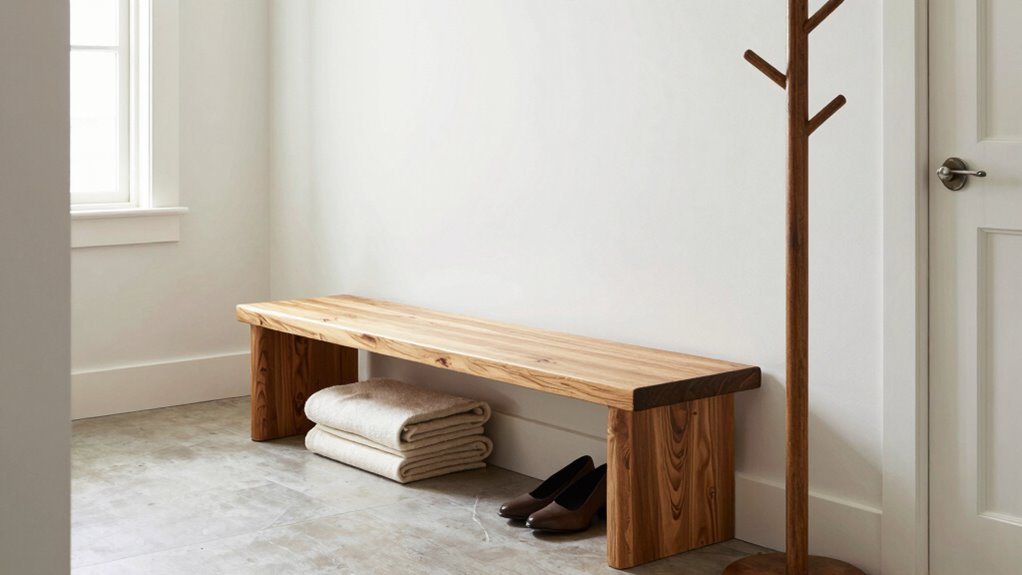
Finding the right bench height and depth is essential for comfort and functionality. To achieve this, prioritize ergonomic design, ensuring your bench supports proper posture and ease of sitting. Standard seat height ranges from 17 to 19 inches, which suits most people, but consider your specific needs for comfort. The depth should provide enough space for sitting comfortably without feeling cramped, typically between 14 to 18 inches. When selecting a size, aim for aesthetic harmony with your space; a well-proportioned bench enhances visual appeal and feels balanced. Keep in mind that a slightly lower or deeper bench can add character, but it should still promote comfort and usability. Proper sizing ensures your bench complements your space while providing a pleasant sitting experience.
Common Sizing Mistakes to Avoid When Buying a Bench
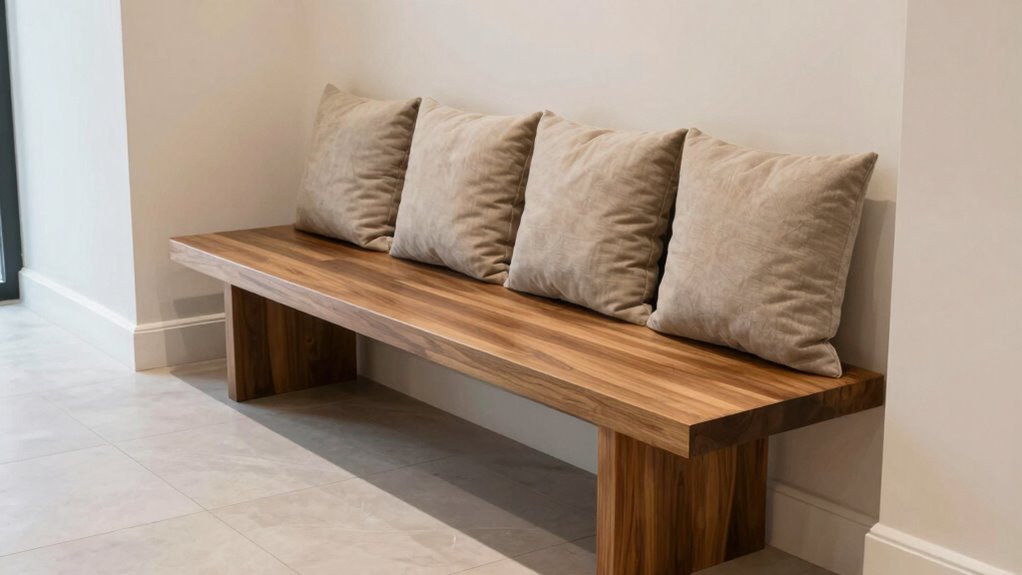
Choosing the wrong bench size can lead to discomfort and a cluttered look in your space. Avoid common sizing mistakes by considering your room’s proportions and the bench’s purpose. Oversized benches can dominate small areas, while too small ones may feel out of place. Think about how decorative accents, like cushions or throw pillows, will complement the size, and select a material that suits your aesthetic and durability needs. Additionally, understanding proper firewood stacking techniques can help optimize space and safety around your seating area. Proper space planning ensures that your bench fits comfortably without disrupting flow or functionality. Ensuring proper ventilation considerations can also contribute to a more comfortable and safe environment for your bench setup.
Are Adjustable or Custom Benches a Better Fit?
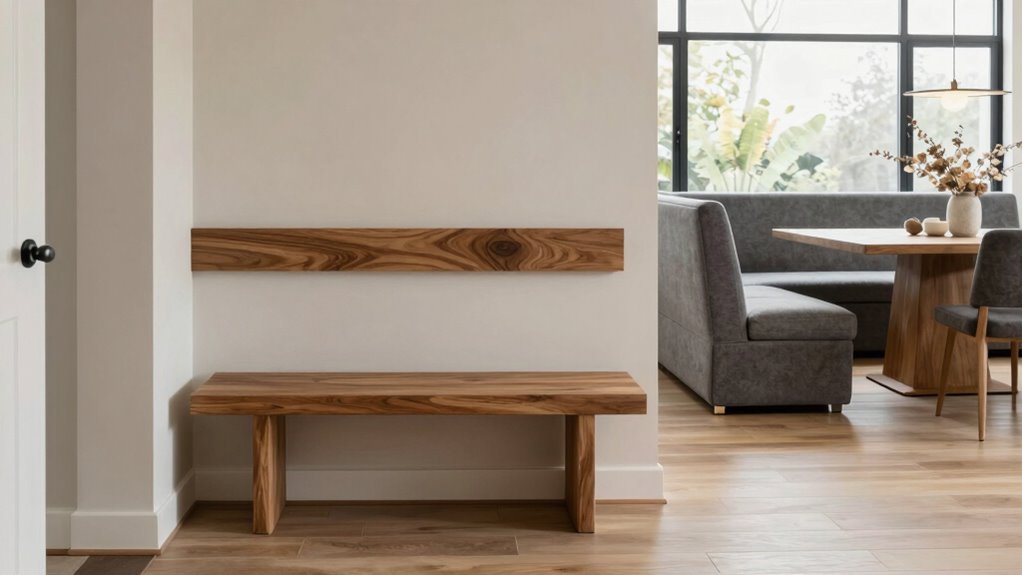
Deciding between adjustable or custom benches depends on your specific needs and how you plan to use the piece. Adjustable benches offer flexible customization options, allowing you to easily change height or angle to suit different users or activities. They’re ideal if you want versatility without committing to a single size or design. Custom benches, on the other hand, are built to your exact specifications, ensuring perfect fit and tailored aesthetic. They often feature superior ergonomic design, providing better comfort and support tailored to your body. If you prioritize long-term comfort and a personalized look, a custom bench may be the better choice. For adaptability and quick adjustments, an adjustable bench offers convenience and functionality that can meet evolving needs.
Balancing Style and Functionality With Proper Bench Dimensions
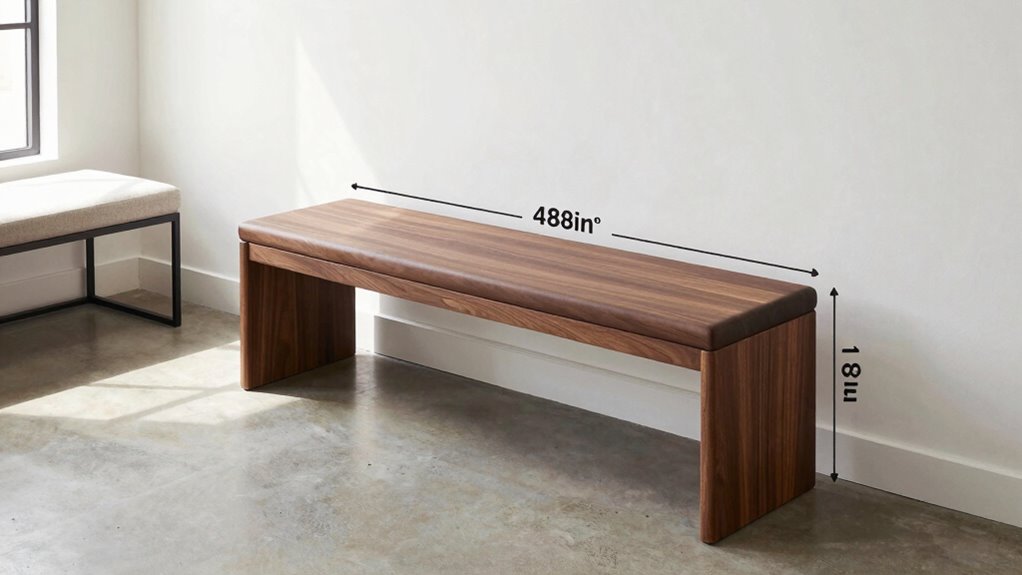
Getting the right bench dimensions means choosing an ideal seat height that feels natural and comfortable. You also want proportions that complement your space while ensuring everyone can sit easily without strain. When you balance style with functionality, your bench becomes both attractive and practical.
Ideal Seat Height
Have you ever sat on a bench that felt awkward or uncomfortable? The ideal seat height strikes a balance between style and functionality, guaranteeing comfort without sacrificing design. When choosing the right height, consider safety considerations—avoiding heights that cause strain or instability. Material durability also plays a role; sturdy materials support proper weight distribution and longevity.
Keep in mind:
- A seat height around 17-19 inches suits most entryways and dining areas
- Lower heights may hinder safety and ease of use
- Durable materials help maintain the proper height over time
Getting the height right ensures your bench is both attractive and practical, providing a safe, comfortable spot to sit without compromising on style.
Proportion and Comfort
When choosing the right bench, proportions play a vital role in creating a harmonious blend of style and comfort. An ergonomic design guarantees that the seat height and depth support natural posture, preventing discomfort during extended use. Proper proportions also enhance aesthetic appeal, making the bench look balanced and inviting. If your bench is too tall or too short, it can disrupt the visual flow and reduce comfort. Similarly, a seat that’s too deep or too shallow may cause users to adjust awkwardly, sacrificing both function and style. By paying attention to proportion, you guarantee that your bench is both visually pleasing and comfortable to sit on, striking the perfect balance between form and function. Understanding ergonomic principles can further help in designing a bench that offers optimal comfort and style. Incorporating proper load distribution ensures the bench remains stable and durable under regular use.
Final Checklist: Making Sure Your Bench Fits and Looks Great
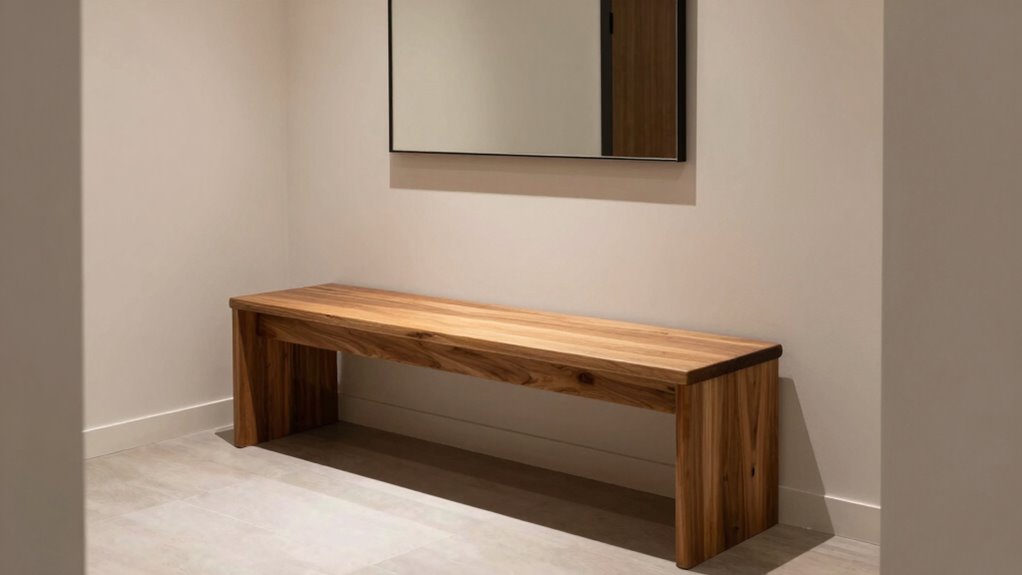
How can you assure your bench not only fits perfectly in its space but also enhances the overall look? Start by double-checking your measurements against the available area, guaranteeing enough clearance for comfortable use. Consider your decor style—whether modern, rustic, or traditional—and choose a material that complements it. The right material choices can elevate your space’s aesthetic while ensuring durability. Additionally, understanding content and online concepts can help you explore innovative ideas for integrating your bench into your overall design. To finalize, keep these in mind:
- Match the bench’s height and style with your existing furniture for a cohesive look.
- Guarantee the material and color blend seamlessly with your decor style.
- Verify the size allows for comfortable seating without overcrowding the space.
- Be mindful of space planning principles to optimize functionality and appearance.
This approach ensures your bench is both functional and visually appealing.
Frequently Asked Questions
Can Bench Sizes Differ for Indoor Versus Outdoor Use?
Yes, bench sizes can differ for indoor versus outdoor use. For outdoor benches, you should consider weatherproof materials that withstand the elements, ensuring durability. Indoor benches typically focus more on aesthetic styles and comfort, allowing for a wider range of sizes. Outdoor benches might be slightly larger or more robust to handle weather exposure, while indoor ones are often sleeker and tailored to your space’s design.
How Does Bench Shape Influence Space and Comfort?
Think of a bench shape as the frame of a well-crafted sculpture, where form and function blend seamlessly. A rounded or curved bench invites comfortable sitting, hugging the body and encouraging relaxation, while a straight, angular design maximizes space and offers clean aesthetic appeal. Your choice influences both comfort and style, making your entryway or dining area more inviting and visually balanced, like a masterpiece that fits perfectly in its space.
Are There Ergonomic Considerations for Bench Seating?
Yes, there are ergonomic considerations for bench seating. You should prioritize ergonomic comfort by choosing a bench with proper seat height and adequate padding to support good seating posture. Make sure the depth isn’t too deep, which can cause slouching, and opt for a backrest if possible, to promote proper spinal alignment. These choices help prevent discomfort and encourage healthy seating habits during extended periods of use.
What Materials Impact Bench Durability and Sizing?
Material selection directly impacts your bench’s durability and sizing, so choose sturdy options like hardwoods or metal for long-lasting use. These materials can support higher weight capacity without sagging or breaking. Avoid flimsy materials that compromise stability and safety. Consider the bench’s intended use, and pick a material that balances strength with style, ensuring it remains functional and well-sized for your space over time.
How Can I Customize Bench Dimensions to Fit Unique Spaces?
You can customize your bench dimensions by experimenting with custom height options and modular design features. Start by measuring your space precisely, accounting for clearance and comfort. Modular designs let you add or remove sections to fit unique areas perfectly, ensuring a seamless look. Don’t hesitate to get creative—adjust height and length to match your needs, making your bench both functional and tailored to your space.
Conclusion
Getting your bench sizing just right is like finding the perfect puzzle piece—it completes your space beautifully. Measure carefully, consider your needs, and avoid common mistakes to guarantee your bench fits seamlessly and looks stunning. When you choose the right size, your entryway or dining area will feel both inviting and functional, like a well-tailored suit. With these tips, you’re well on your way to creating a space that’s both stylish and comfortable.