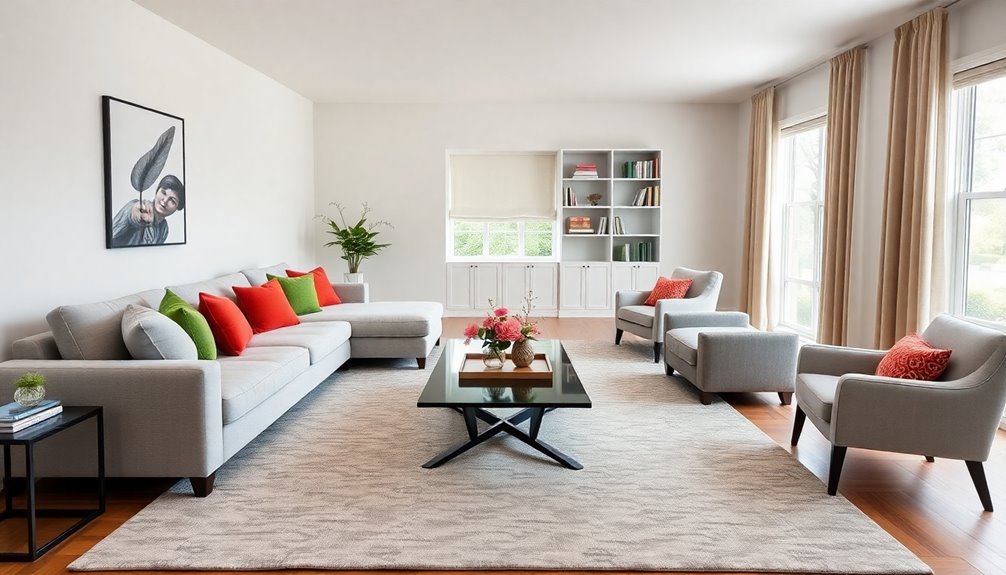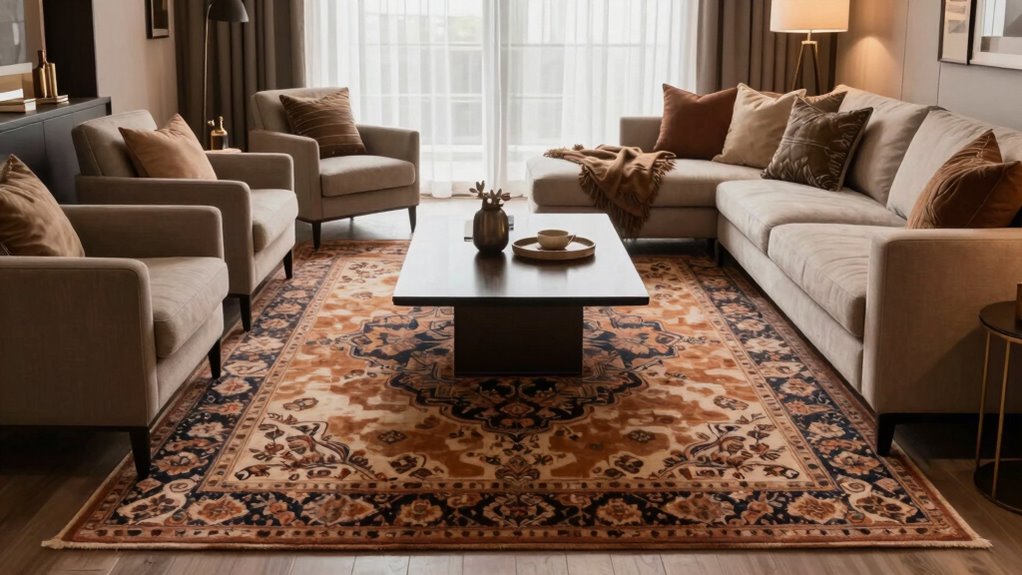
To build a room around a rug, start by choosing a size, shape, and style that sets the tone for your decor. Arrange furniture to highlight the rug without overwhelming it, with key pieces like sofas and chairs placing their front legs on the rug. Balance patterns and textures to create harmony, and use lighting to enhance the rug’s details. If you continue exploring, you’ll discover even more ways to create a polished, personalized space.

Get your wardrobe favorites delivered free with Prime
- Fast, free delivery on millions of items
- Prime Video, Amazon Music and more included
- Member-only deals all year
Key Takeaways
- Select a rug that sets the tone and style of the room as a visual anchor.
- Arrange furniture with front legs on the rug to unify the seating area.
- Balance the rug’s pattern and colors with neutral or complementary furniture pieces.
- Use lighting to highlight the rug’s textures and colors without causing glare.
- Choose a size and shape that harmonizes with the room’s layout for cohesive design.
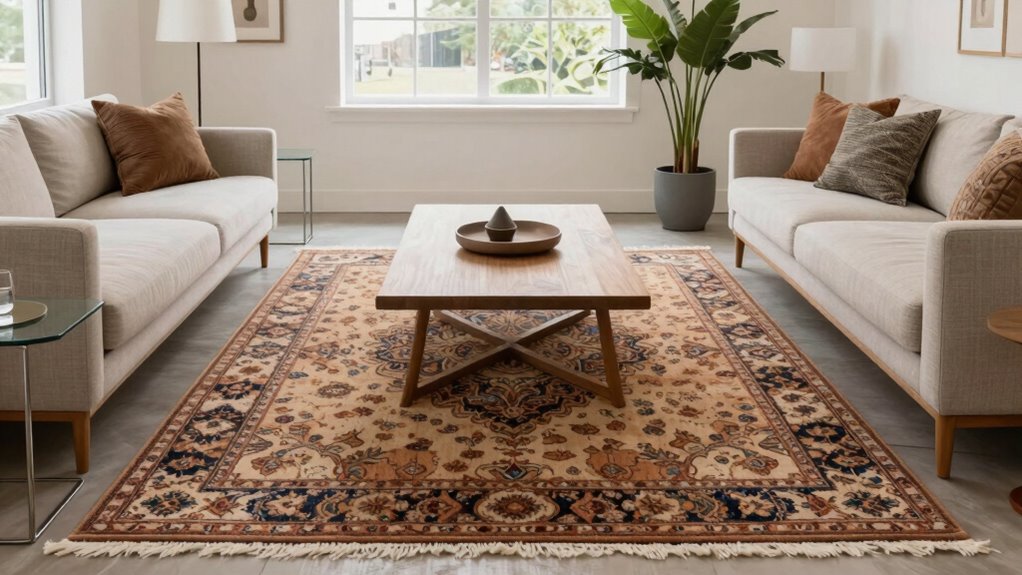
Building a room around a rug can transform your space into a cozy and stylish retreat, but the key is to plan carefully from the start. The rug you choose sets the tone for the entire room, so selecting one that aligns with your decorating style is essential. Whether you prefer modern minimalism, bohemian charm, or classic elegance, your rug will anchor your design theme. Once you’ve picked the perfect piece, everything else falls into place. Consider the colors, patterns, and textures of your rug to inform your choices for furniture and accessories. This guarantees a cohesive look that reflects your personal style.
When it comes to furniture placement, the rug acts as a foundational element. You want to arrange your furniture in a way that highlights the rug without overwhelming it. For example, in a living room, position your sofa and chairs so their front legs rest on the rug, creating a unified seating area. This not only anchors the space visually but also makes the room feel inviting and well-organized. Avoid pushing all furniture against the walls, as this can diminish the rug’s impact and make the room feel disconnected. Instead, use the rug as the central point around which everything else revolves.
In terms of decorating styles, think about how your choice of furniture complements the rug. If you have a traditional rug with intricate patterns, opt for classic furniture with clean lines to balance the visual complexity. Conversely, if your rug features bold, vibrant colors, keep your furniture neutral to let the rug stand out. For a contemporary look, sleek, low-profile furniture works well with a modern rug, while a bohemian style might incorporate eclectic pieces, layered textiles, and vintage finds around a statement rug.
Lighting also plays a pivotal role. Well-placed lamps or natural light should highlight the rug’s beauty without creating glare. Rugs with reflective or shiny fibers may require softer lighting, while plush, textured rugs benefit from brighter illumination to accentuate their tactile appeal. Additionally, understanding the types of rugs and their material qualities can help you select appropriate lighting to enhance their features. Paying attention to rug materials can also influence how you choose your lighting and accessories to best showcase their unique qualities. Incorporating the right decorative lighting can further emphasize the rug’s textures and colors, tying the room together seamlessly. Furthermore, considering the size and shape of the rug ensures it fits well within your space and complements your furniture arrangement, creating a balanced and harmonious environment.
Ultimately, building a room around a rug involves thoughtful planning—matching your decorating style, carefully placing your furniture, and paying attention to lighting. When all these elements work together harmoniously, you’ll create a space that’s both functional and aesthetically pleasing, making your room feel warm and personalized. Remember, the rug isn’t just a floor covering; it’s the foundation of your room’s personality.
Popular right now

De'Longhi Magnifica Evo Fully Automatic Espresso Machine with Manual Milk Frother, Silver

TCL QM64L 85-Inch QD-Mini LED 4K Smart Fire TV

Ninja NC501 CREAMi XL Deluxe 11-in-1 Ice Cream and Frozen Treat Maker with Two XL Containers
As an affiliate, we earn on qualifying purchases.
Frequently Asked Questions
How Do I Choose the Right Rug Size for My Room?
To choose the right rug size, consider your room’s dimensions and furniture placement. Make certain the rug is large enough to fit under key pieces, like sofas or beds, to create a cozy, unified look. Use rug layering for added style, and coordinate patterns with your decor to avoid clashing. A properly sized rug anchors the room, making it feel balanced and inviting while highlighting your design choices.
What Furniture Placement Works Best Around a Rug?
You’ll want furniture to seem like it belongs on the rug, not just placed nearby. Arrange sofas and chairs so their front legs sit on the rug, creating a cohesive, inviting space. Play with color coordination and texture mixing—pair soft fabrics with sleek surfaces for contrast. This setup makes your room feel balanced and stylish, turning your rug into the centerpiece that pulls everything together effortlessly.
How Can I Ensure the Rug Complements My Room’s Decor?
To guarantee your rug complements your room’s decor, focus on color coordination and pattern mixing. Choose a rug that picks up on your room’s dominant colors or contrasts nicely with your walls and furniture. Mix patterns thoughtfully, balancing busy designs with solid or subtle pieces, so everything feels cohesive. This approach creates a harmonious look that enhances your space without overwhelming it, making your decor feel intentional and stylish.
What Are Common Mistakes to Avoid When Building a Room Around a Rug?
When building a room around a rug, avoid common mistakes like neglecting pattern coordination, which can make the space feel chaotic. Don’t overlook rug layering, as it can add depth, but do so thoughtfully to prevent clashing styles. Make certain furniture placement complements the rug’s size and pattern, and steer clear of overly small rugs that can make the room seem disjointed. Thoughtful planning creates a cohesive, inviting space.
How Do I Maintain and Clean the Rug Effectively?
Think of your rug as a garden that needs tending. Regularly vacuum to remove dirt and debris, and use rug padding underneath for extra comfort and protection. For stain removal, act quickly with mild soap and water, avoiding harsh chemicals. Occasionally, rotate the rug to prevent uneven wear. By maintaining your rug this way, you’ll keep it looking fresh and vibrant, just like a well-cared-for landscape.
Conclusion
Now, picture stepping into your room, where the rug anchors everything like a warm embrace. The furniture surrounds it, creating a cozy oasis of style and comfort. You feel the soft fibers beneath your feet, inviting you to relax and unwind. By building your room around that beautiful rug, you’ve crafted a space that’s both inviting and harmonious—a perfect retreat where every detail flows seamlessly, making your home truly feel like your personal sanctuary.