
To size your chandelier correctly, measure your room’s dimensions and ceiling height carefully. For diameter, aim for one-third to one-half of your room’s width, adjusting based on style and space. For height, hang it 30-36 inches above surfaces in standard 8-foot ceilings, or longer for higher ceilings. Proper sizing guarantees balance and style harmony. Keep these guidelines in mind, and you’ll find it easy to select the perfect chandelier for any room.
Key Takeaways
- The ideal chandelier diameter is generally one-third to one-half of the room’s width for balanced proportions.
- Measure ceiling height accurately and hang the chandelier 30-36 inches above surfaces in standard 8-ft ceilings.
- For higher ceilings, increase hanging length proportionally, often 36 inches or more, to maintain visual harmony.
- Avoid oversized fixtures that overpower small rooms or undersized fixtures that look out of place, ensuring proper scale.
- Consider room function, style, and architecture to select a chandelier size that complements and enhances your space.
Why Proper Chandelier Sizing Matters for Your Room
Choosing the right chandelier size is essential because an ill-fitting fixture can overwhelm or underwhelm your space. When selecting a chandelier, consider current lighting trends that prioritize sleek designs and energy efficiency. A properly sized chandelier enhances your room’s aesthetic without overpowering it, creating a balanced focal point. Oversized fixtures can make a room feel cramped, while small ones might look out of place. Proper sizing also supports energy-efficient lighting options, ensuring you get adequate illumination without wasting power. By choosing a chandelier that fits your room’s dimensions, you improve both style and function. Understanding chandelier sizing guidelines can help you make informed decisions for any room. Incorporating room-specific dimensions into your planning ensures a harmonious and proportionate design. Additionally, paying attention to lighting placement can optimize the overall effect and ambiance of your space.
How to Measure Your Space for Accurate Chandelier Diameter and Height
To guarantee your chandelier fits perfectly and enhances your space, you need to accurately measure both its diameter and height. Start by measuring the room’s dimensions, focusing on the ceiling height and available width. For the diameter, consider the space’s size and purpose—larger rooms can handle bigger fixtures. Measure the ceiling height from the floor to the ceiling, then decide on a hanging height that leaves enough clearance, typically 30-36 inches above the table or floor. Use a tape measure for precision. When installing decorative fixtures, follow installation tips like ensuring proper weight support and clearance. These steps ensure your chandelier complements your space while maintaining safety and style. Proper measurement is key to choosing the right size for your room, especially when considering room proportions and how they influence fixture size and placement.
Additionally, understanding how scale and balance impact your decor choices can help create a harmonious environment that reflects your personal style. To further refine your selection process, consider visual weight and how it affects overall room harmony.
Chandelier Size Guidelines: Finding the Right Diameter for Your Room
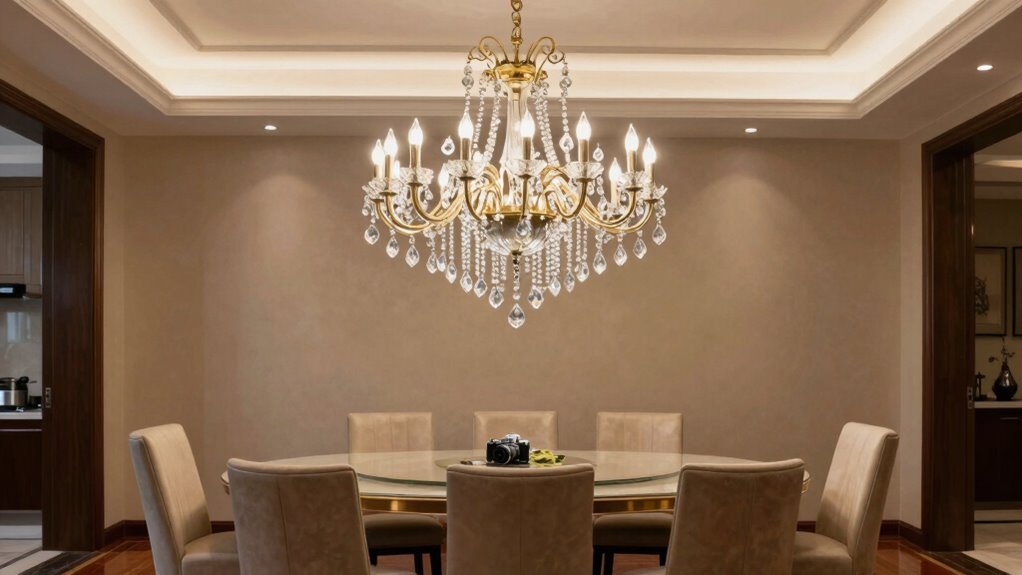
Finding the right chandelier diameter guarantees your fixture complements your space without overwhelming or seeming too small. To achieve this, focus on scale balance, ensuring the chandelier fits proportionally within the room’s dimensions. A chandelier that’s too large can overpower the space, while one that’s too small may look out of place. A good rule of thumb is to add the room’s width and length in feet, then convert that number to inches for the ideal diameter. This method helps create visual harmony, making your chandelier feel integrated and balanced. Remember, the goal is to enhance your room’s aesthetic without disrupting its flow. Proper sizing guarantees your chandelier becomes a focal point that elevates your space seamlessly. Lighting proportion is essential to ensure your chandelier enhances rather than disrupts your room’s overall design.
How High Should You Hang Your Chandelier? Adjusting for Ceiling Height
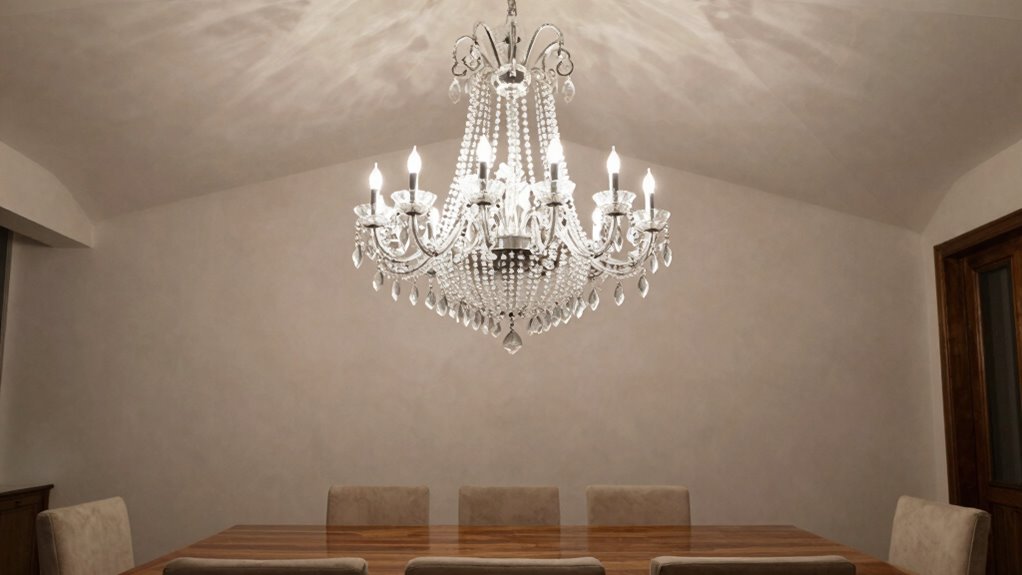
The height at which you hang your chandelier can dramatically impact the room’s look and function. Standard guidelines suggest specific hanging heights, but adjustments are necessary based on ceiling height. Consider the room’s purpose and traffic flow to make certain your chandelier is both stylish and practical.
Standard Hanging Heights
When hanging a chandelier, it’s essential to take into account the ceiling height to achieve the right balance and visual impact. Standard hanging heights vary based on room type and ceiling height, ensuring ideal lighting placement and bulb brightness. For standard 8-foot ceilings, hang the chandelier about 30-34 inches above the table or floor. Higher ceilings demand additional length for proper proportion. Use the table below to guide your choices:
| Room Type | Recommended Height from Floor/Surface |
|---|---|
| Dining Room (8 ft) | 30-34 inches |
| Living Room (9 ft) | 34-36 inches |
| Foyer (10 ft) | 36-40 inches |
| Kitchen Island | 30-36 inches |
| High Ceilings | 36+ inches, adjust accordingly |
In addition, considering the lighting placement can enhance the room’s ambiance and functionality. Proper installation practices are crucial for safety and optimal performance when hanging chandeliers. Additionally, understanding standard hanging heights helps ensure the chandelier complements the room’s proportions and overall design. Being aware of ceiling height considerations can help you make more precise adjustments for a cohesive look. Remember to account for room proportions when selecting the perfect chandelier size to maintain visual harmony.
Adjusting for Ceiling Height
Adjusting the height of your chandelier is essential to guarantee it complements your ceiling height and enhances the room’s overall aesthetic. For standard 8-foot ceilings, hang the chandelier so that the bottom is about 30 to 36 inches above the table or floor. If your ceiling is higher, you’ll need to raise the chandelier proportionally—about 3 inches for each additional foot of ceiling height. This prevents the fixture from feeling overwhelming or lost. If you already have a ceiling fan, ensure the chandelier’s height doesn’t interfere with it or wall sconces nearby. In spaces with higher ceilings, consider installing the chandelier higher to maintain balance. Properly adjusting the height maximizes visual appeal and ensures safe clearance and proportionality within the room. Ceiling height considerations are crucial to achieving a well-balanced and harmonious look.
Room Function Considerations
Choosing the right height for your chandelier depends heavily on the room’s purpose. For dining rooms, you want it to hang about 30-36 inches above the table, ensuring ample lighting without obstructing views. In living rooms, aim for a height that provides balanced illumination and complements ceiling height, considering lighting technology and energy efficiency. For foyers or entryways, hang the fixture so it’s 7 feet above the floor to avoid head bumps. Visualize:
- A grand chandelier with cascading crystals illuminating a high-ceiling entryway
- A sleek, modern fixture providing focused light over a dining table
- A minimalist design offering ambient light in a cozy living space
Adjusting hanging height based on room function ensures ideal lighting, enhances energy efficiency, and complements your space’s style. Proper cybersecurity measures are essential when installing smart lighting or security systems to protect your home from hacking attempts.
Common Measurement and Sizing Mistakes to Avoid
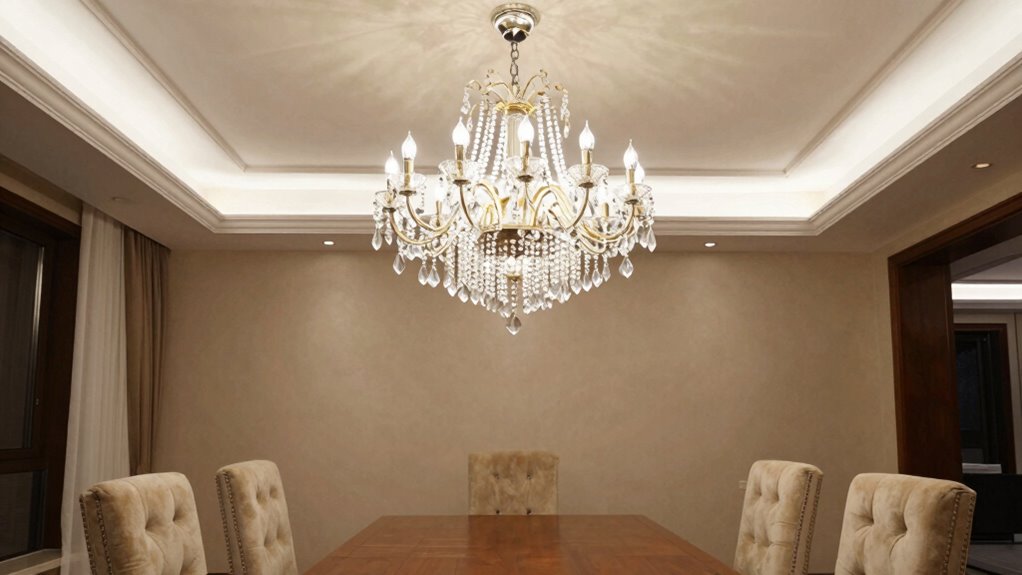
One of the most common mistakes people make when measuring for a chandelier is misjudging the size relative to the room. Incorrect lighting placement can cause your chandelier to overwhelm or underwhelm the space. Avoid choosing a fixture that’s too large, which can make the ceiling feel cramped, or too small, which may look out of place. Keep in mind that bulb brightness affects how much light the fixture provides, so a smaller chandelier with high-brightness bulbs might still adequately illuminate the room. Also, don’t forget to contemplate the height — hanging it too low can obstruct movement, while too high reduces its visual impact. Accurate measurements ensure your chandelier complements the space, balancing size, lighting, and style effectively. Be aware that AI tools can assist in calculating optimal chandelier dimensions based on room size and shape, helping you make more informed decisions. Additionally, understanding lighting design principles can improve your overall fixture selection and placement. Proper knowledge of room proportions can further enhance your ability to select the right size, ensuring your chandelier fits seamlessly within your interior design. Recognizing the impact of ceiling height on fixture selection is also essential to achieve the desired aesthetic and functional balance. For example, considering the room shape can help you choose a chandelier that enhances the overall flow and harmony of your space.
How to Match Chandelier Size With Your Interior Style
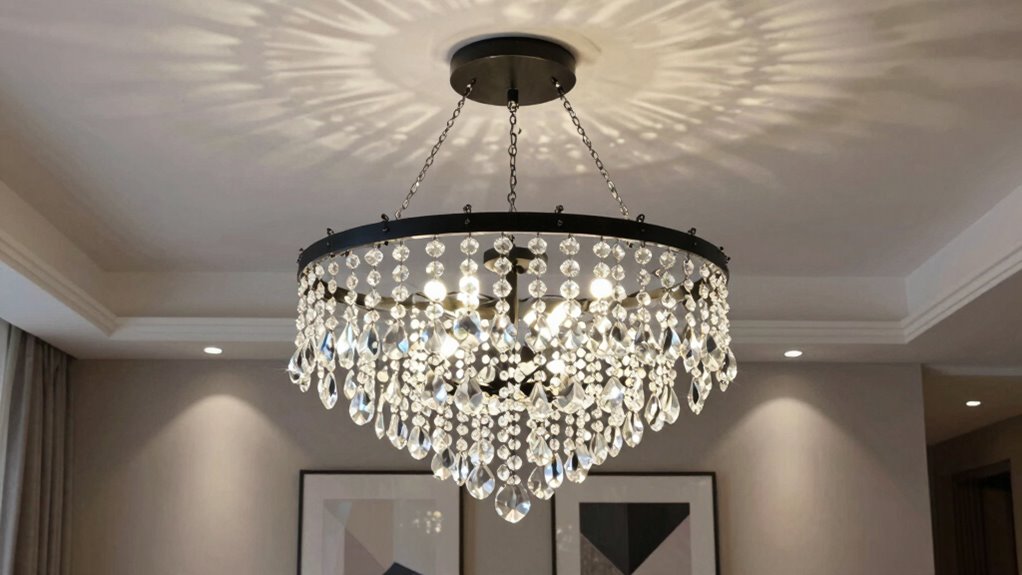
Choosing the right chandelier means considering how it complements your room’s overall look. You should match its material and finish to your existing decor and make certain its scale fits the style—whether modern or traditional. When these elements align, your chandelier enhances your space seamlessly. Additionally, understanding scaling and proportion ensures your chandelier harmonizes with the room’s size and furnishings, creating a balanced and cohesive aesthetic.
Complementing Room Aesthetics
Matching your chandelier size to your interior style creates a cohesive and polished look that enhances your space. Choose a fixture that complements your room’s aesthetic, whether it’s modern, traditional, or eclectic. Consider how your chandelier interacts with existing decor and lighting. For a sleek, contemporary vibe, opt for minimalist designs with clean lines and energy-efficient bulbs. In a classic setting, a chandelier with ornate details and warm tones works best. Visualize your space with:
- A statement chandelier that acts as a focal point, blending with modern or glam interiors
- A vintage-inspired fixture that adds charm to traditional or rustic decor
- A sleek, geometric light that complements minimalist or industrial styles
Matching size and style ensures your artificial lighting enhances the room without overpowering it, while also supporting precious metals investment and energy-efficient choices. Additionally, selecting the right size helps maintain a balanced visual weight, preventing your space from feeling cluttered or underwhelming. Incorporating vintage design elements can further harmonize your lighting with period-inspired decor, creating a timeless aesthetic. Understanding how zodiac traits and personalities influence your style preferences can also guide your selection, ensuring your chandelier reflects your unique taste. Moreover, considering appliance maintenance plans can help keep your fixtures in top condition over time.
Matching Material and Finish
The material and finish of your chandelier should seamlessly align with your room’s overall style to create a unified look. Material coordination is key—if your space features natural textures like wood or linen, choose a chandelier with similar elements. For a modern aesthetic, go for sleek metals like brushed nickel or chrome that match your furniture’s finish. Finish matching helps tie everything together; pairing a matte black chandelier with matte black fixtures ensures cohesion. Consider how the chandelier’s material and finish complement other design details, such as hardware or decorative accents. By paying attention to these elements, you’ll ensure your chandelier enhances your space without clashing, creating a harmonious and polished interior.
Aligning Scale With Style
To make certain your chandelier complements your interior style, it’s essential to take into account its scale carefully. Achieving scale consistency helps create style harmony across your space. For a modern, minimalist vibe, opt for a sleek, streamlined fixture that won’t overpower the room—think of a thin, elongated design that blends seamlessly. If your style is more traditional or ornate, choose a chandelier with a bold presence, featuring intricate details and a substantial size that commands attention. Visualize a grand crystal piece hanging in a formal dining room or a vintage-inspired fixture over a cozy seating area. By matching the chandelier’s scale with your overall decor, you ensure it feels intentional and balanced within your interior style.
Adjusting Chandelier Size for Unique Room Features

When dealing with rooms that have unusual shapes or distinctive features, adjusting your chandelier size becomes essential to achieve a balanced and harmonious look. In such spaces, the standard sizing rules might not apply perfectly, so you need to take into account how the chandelier interacts with the room’s architecture. If you have high ceilings or unique ceiling structures, opt for a larger chandelier to fill the space appropriately. For rooms with irregular layouts or features like vaulted ceilings, you may need to customize the chandelier’s height and diameter to avoid overpowering or underwhelming the room. Proper chandelier installation ensures the fixture complements artificial lighting needs without overwhelming the space. Adjusting size thoughtfully helps create a cohesive, well-lit environment that enhances your room’s character.
Frequently Asked Questions About Chandelier Sizing

Choosing the right chandelier size can seem complicated, especially with so many factors to contemplate. To help, here are common questions answered:
- How do I determine the correct diameter? Measure your room and aim for a chandelier that’s about one-third to one-half the room’s width, creating a balanced look.
- What height should I choose? For ceilings under 9 feet, add 3 inches per foot of ceiling height; higher ceilings require a longer chain or rod.
- How does lighting technology affect size? Modern LED options promote energy efficiency, allowing you to select larger fixtures without high energy costs while still providing ample illumination.
These guidelines help ensure your chandelier complements your space and aligns with energy-efficient lighting technology.
Frequently Asked Questions
Can I Install a Larger Chandelier in a Small Room?
Yes, you can install a larger chandelier in a small room, but consider your design aesthetics and energy efficiency. A bigger fixture can make a bold statement, but make certain it doesn’t overwhelm the space. Choose a chandelier with a sleek design to maintain balance and opt for energy-efficient bulbs to save power. Proper height placement is essential to keep the room feeling open and comfortable while enhancing your overall décor.
How Do I Choose a Chandelier for Uneven Ceiling Heights?
If your ceiling heights vary, don’t sweat it—you’re in luck. Opt for adjustable chandelier options that let you customize hanging lengths, making uneven ceilings a non-issue. Consider ceiling height considerations carefully, and choose fixtures that can be lengthened or shortened to suit each area. This way, your chandelier stays stunning and proportionate, even when the ceiling isn’t perfectly level—proof that flexibility beats perfection every time.
What Materials Are Best for Different Chandelier Sizes?
When selecting materials for different chandelier sizes, consider lighting styles and material durability. For larger chandeliers, opt for sturdy materials like wrought iron or brass, which support weight and add visual impact. Smaller chandeliers can feature delicate glass or crystal to enhance elegance. Always choose durable materials that withstand humidity and temperature changes, ensuring your chandelier remains beautiful and functional over time. Your choice should balance style with longevity.
How Often Should I Replace or Upgrade My Chandelier?
On average, homeowners replace or upgrade their chandelier every 10-15 years. To keep it looking fresh and functioning well, follow a regular maintenance schedule—cleaning and checking for damage annually. If your style preferences change or your chandelier shows signs of wear, consider upgrading sooner. Staying attentive guarantees your fixture stays beautiful and safe, making it a worthwhile investment for your space’s ambiance and overall style.
Are There Safety Considerations for Large or Heavy Chandeliers?
Yes, safety considerations are vital for large or heavy chandeliers. You should assess weight considerations carefully and make certain your ceiling and existing fixtures can support the chandelier’s weight. Proper installation safety measures include using strong mounting hardware and consulting a professional if needed. Avoid hanging heavy chandeliers yourself unless you’re confident in your skills. Prioritize safety to prevent accidents and damage, keeping your space secure and beautiful.
Conclusion
Getting your chandelier size just right can transform your room’s look and feel. Did you know that a properly sized chandelier can increase your room’s perceived space by up to 20%? By following the guidelines and measurements in this guide, you’ll guarantee your chandelier complements your room perfectly. Remember, a well-chosen chandelier not only enhances style but also improves ambiance—so take your time and measure carefully for stunning results.