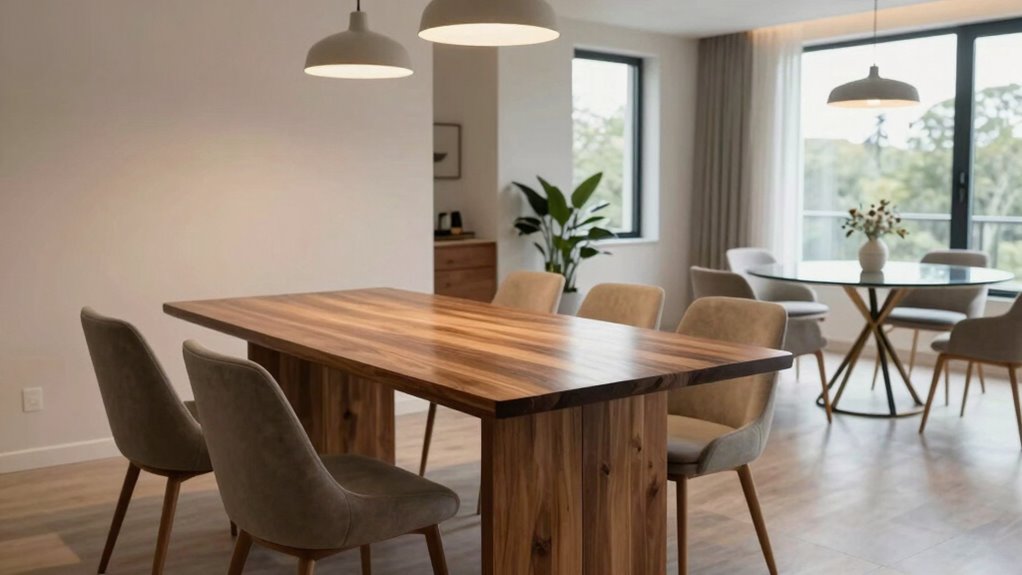

To choose a dining table shape for better flow, consider your space size and how people move around it. Round or oval tables work well in smaller or irregular spaces, making the room feel open and welcoming. Larger rooms can support rectangular tables that maximize seating. Think about your decor style and how the shape affects natural light and conversation. Keep traffic flow in mind to avoid crowding. If you want to learn more, you’ll find helpful tips to perfectly match your space.

Get your wardrobe favorites delivered free with Prime
- Fast, free delivery on millions of items
- Prime Video, Amazon Music and more included
- Member-only deals all year
Key Takeaways
- Consider room size and shape to select a table that enhances space and movement.
- Use round or oval tables in small or irregularly shaped rooms to maximize openness.
- Match table shape with existing decor style for visual harmony and flow.
- Ensure table proportions complement the room without obstructing pathways or natural light.
- Choose a shape that encourages social interaction and easy conversation flow.
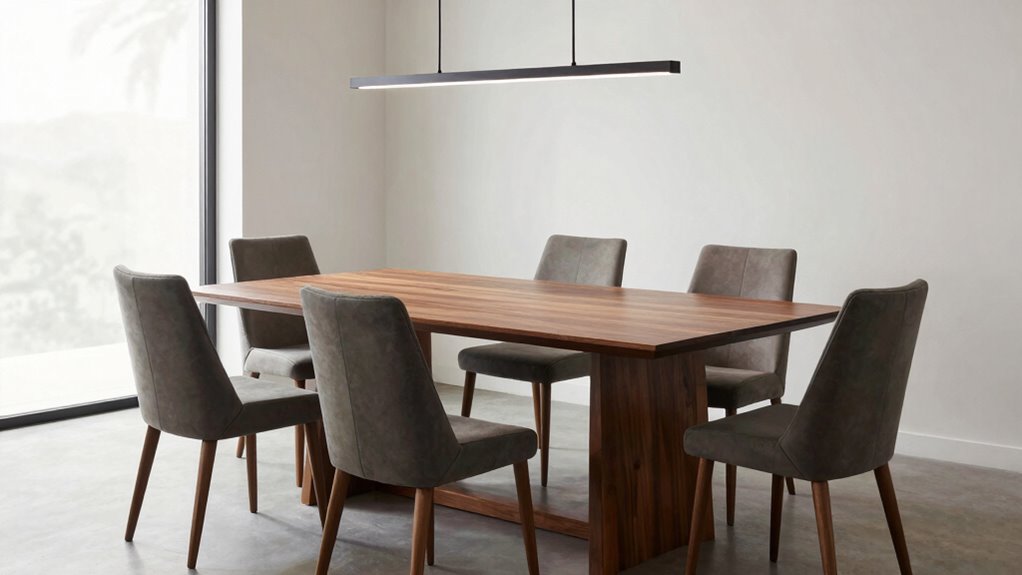
Choosing a Dining Table Shape can significantly impact both the functionality and aesthetic of your dining area. When you’re choosing a shape, it’s essential to contemplate how it will fit within your space and how it will complement your overall decor. One of the first things to think about is the material options available, as the material not only affects durability but also the visual appeal of your table. Wood offers warmth and timeless charm, making it versatile for various interior styles. Glass tables lend a modern, airy feel and can make smaller spaces seem larger, but they require more maintenance. Metal tables, often paired with glass or wood tops, provide industrial or contemporary vibes and tend to be highly durable. The right material choice will depend on your lifestyle, maintenance preferences, and the ambiance you want to create.
Style considerations are equally important when selecting a shape. The shape you pick should align with your personal taste and the existing decor in your dining area. For example, a rectangular table offers a classic look and maximizes seating, making it ideal for larger families or hosting dinners. Its linear form promotes easy flow and conversation across the table. Round tables, on the other hand, foster a more intimate and inclusive atmosphere, with everyone having equal access to the center. They’re perfect for smaller spaces or casual gatherings and help soften angular room layouts. If your space is irregular or you want flexibility, consider an oval table, which combines the benefits of both shapes—more seating than a round table with a softer, less rigid appearance. Additionally, understanding table shapes and their impact on room flow can help you make the best choice for your space. Considering how the spatial arrangement affects overall movement can further enhance your dining experience. Paying attention to furniture proportions can also ensure your table complements the scale of your room without overwhelming or feeling cramped. Being mindful of traffic flow can help prevent congestion and make your dining area more inviting. Furthermore, selecting the right shape can influence how natural light interacts with your space, enhancing the overall ambiance. Ultimately, your choice should balance style and practicality, creating a harmonious flow that invites people to gather comfortably while reflecting your personal taste and the character of your home.
round dining table for small spaces
As an affiliate, we earn on qualifying purchases.
As an affiliate, we earn on qualifying purchases.
Frequently Asked Questions
Which Table Shape Maximizes Space in Small Rooms?
A round table maximizes space in small rooms because it fits easily into tight corners and promotes better flow. You’ll find that round tables often require less room for movement, making them ideal for limited spaces. When choosing, consider material durability and maintenance requirements—wood tables are sturdy but may need regular polishing, while glass options are sleek but can show smudges. This shape helps you make the most of your space effortlessly.
How Does Table Shape Affect Social Interaction?
Your dining table’s shape acts like a social compass, guiding intimacy enhancement and conversational dynamics. Round tables create a cozy, inclusive circle where everyone feels equally close, sparking warm exchanges. Rectangular tables can foster longer, more formal conversations, but may hinder closeness. By choosing a shape that suits your social style, you set the tone for meaningful interactions, turning casual dinners into memorable gatherings.
Are Certain Shapes Better for Multi-Purpose Dining Areas?
Round and oval tables are ideal for multi-purpose dining areas because they facilitate easy interaction and flexible seating. When choosing, consider material options like wood, glass, or metal, which influence style and durability. Maintenance considerations also matter; for example, glass tables are sleek but may require frequent cleaning, while wood tables offer durability but need regular care. Select a shape and material that balance functionality, aesthetics, and ease of upkeep for your space.
How Do Different Shapes Influence Room Aesthetics?
Imagine your dining room as a canvas—each shape adds a stroke of character. Round tables soften the space, inviting conversation, while rectangular shapes create structure and formality. Oval tables blend these elements seamlessly. Decorative accents like unique bases or material options such as glass or wood enhance the visual appeal, influencing room aesthetics. Your choice shapes not just the look but the vibe, making your space both stylish and inviting.
What Shape Is Best for Irregularly Shaped Rooms?
In irregularly shaped rooms, a round or oval dining table offers the best design flexibility. These shapes adapt smoothly to uneven spaces, creating better flow and making the room feel more open. Their shape versatility allows you to maximize seating without crowding. Plus, round tables encourage conversation and foster a cozy atmosphere, making them ideal choices for unconventional layouts where traditional rectangular tables might feel out of place.
Conclusion
So, go ahead and pick that table shape—whether it’s the round that invites endless gossip or the rectangular that screams “formal feast.” Just remember, the right shape isn’t just about style; it’s about transforming your space into a culinary runway. Choose wisely, or you might find yourself awkwardly trying to fit everyone at a square table, like a jigsaw puzzle missing a few pieces—more comedy than comfort. Happy dining!
Fall Picks
fall essentials
As an affiliate, we earn on qualifying purchases.