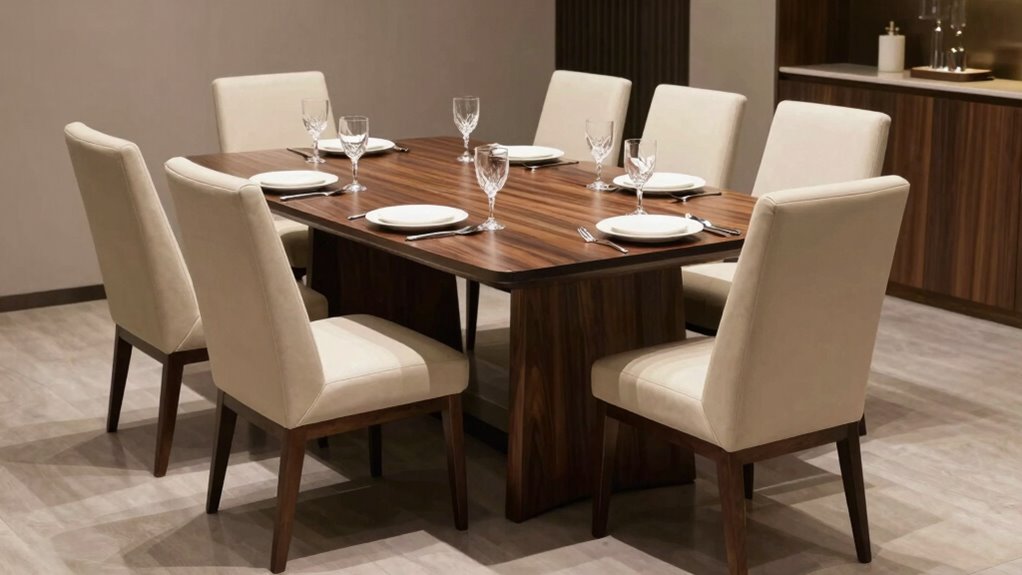

To determine the best dining table size, start by measuring your space and considering how many people you want to seat comfortably. Generally, allow 24 inches of clearance around the table for movement. For a typical 4-6 person setup, a 36-42 inch wide and 60-72 inch long rectangular table works well, or a 36-60 inch round table. Keep in mind material and style to match your space. If you keep these tips in mind, you’ll find the perfect fit—more details await if you continue.
Key Takeaways
- Allocate at least 24 inches of clearance around the table for comfortable movement and seating.
- Use standard sizes: 36-42 inches wide and 60-96 inches long for rectangular tables, accommodating 6-8 people.
- For round tables, choose diameters between 36-60 inches to seat 4-8 guests comfortably.
- Consider the table height (28-30 inches) to ensure proper seating and ease of use.
- Measure your space and room dimensions to select a table that fits and supports your desired seating capacity.
Why Choosing the Right Dining Table Size Matters
Choosing the right dining table size is essential because it directly affects your comfort and the functionality of your space. The furniture material you select influences both the table’s durability and how well it complements your interior design. For instance, a sleek glass table creates a modern look, while a sturdy wooden one adds warmth and traditional charm. An oversized table in a small room can feel overwhelming, making the space cluttered and uncomfortable, whereas a too-small table may limit your seating options. Proper sizing guarantees everyone has enough room to eat and socialize without feeling cramped. When you pick the right size, your dining area becomes inviting and functional, seamlessly blending with your interior design and enhancing your daily meals and gatherings. Additionally, understanding furniture sizing principles can help you make more informed decisions when selecting your dining table. Considering spatial planning principles ensures that your chosen table fits comfortably within your available space and allows for easy movement around it. Incorporating outdoor furniture options can also expand your dining possibilities, especially in flexible backyard setups.
How to Measure Your Space and Decide Your Seating Needs
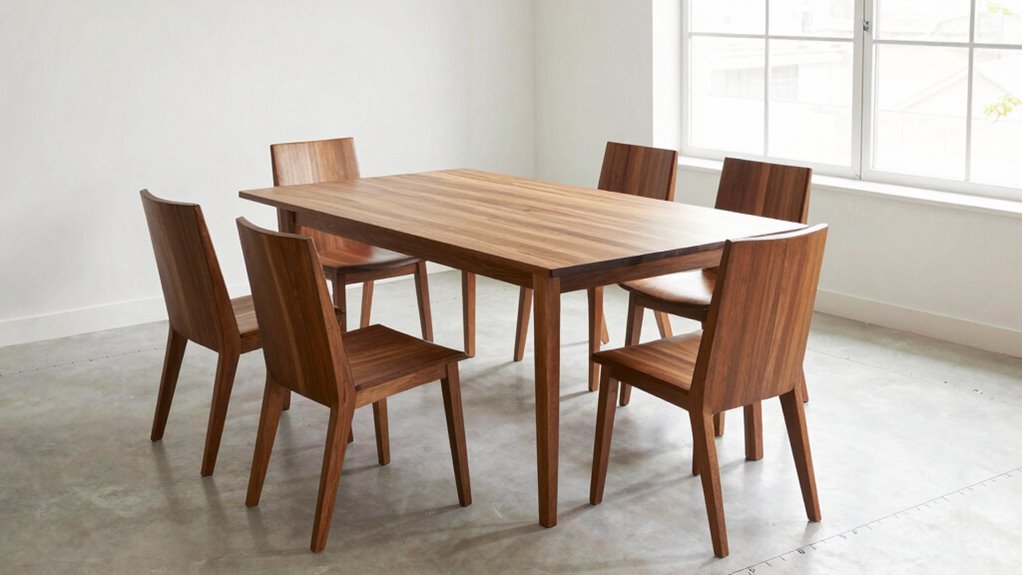
To guarantee your dining table fits comfortably in your space and meets your seating needs, start by measuring your room accurately. Measure the length, width, and height, noting any obstructions like windows or doorways. Think about your intended use, whether for outdoor dining or indoor gatherings, and consider convertible tables that can expand or contract. Use this table to visualize different arrangements:
| Room Size (ft) | Suitable Table Size (ft) | Seating Capacity |
|---|---|---|
| 8×10 | 3-4 ft diameter | 4-6 people |
| 10×12 | 4-5 ft diameter | 6-8 people |
| 12×14 | 5-6 ft diameter | 8-10 people |
| 14×16 | 6-7 ft diameter | 10-12 people |
| Outdoor | Similar indoor sizes | 4-12+ people |
Accurate measurement guarantees your table suits your space and seating needs perfectly, and understanding table sizing rules can help ensure optimal comfort and functionality. Additionally, considering the clearance space around the table will enhance comfort and ease of movement during meals. Planning for appropriate seating capacity based on your space ensures everyone can dine comfortably without feeling cramped. Remember that space planning is essential for creating a functional and inviting dining area.
Standard Dining Table Sizes and Space Recommendations

Standard dining tables come in a variety of sizes, but understanding typical dimensions helps you select the right fit for your space. Rectangular tables usually range from 36 to 42 inches wide and 60 to 96 inches long, accommodating 6 to 8 people comfortably. Round tables often measure 36 to 60 inches in diameter, fitting 4 to 8 guests. When considering custom table shapes, such as oval or boat-shaped designs, size flexibility can optimize your space. Material options like wood, glass, or metal influence size choices and overall aesthetics. Keep in mind that a standard height of 28 to 30 inches guarantees comfortable seating. Choosing the right size balances your seating needs with available space, making your dining area functional and inviting. Understanding size standards can help ensure your table fits perfectly in your dining area, especially when considering space planning to maximize comfort and style. Additionally, considering standard dimensions can streamline your selection process and prevent sizing mismatches. For optimal comfort and usability, it’s also important to account for the clearance space around the table to allow easy movement. A well-sized table ensures everyone has enough room to dine comfortably without crowding.
Tips for Planning Seating Arrangements Without Crowding
Planning your seating arrangement carefully guarantees guests have enough space to sit comfortably without feeling crowded. To achieve this, consider your decorating styles, as they influence your table’s shape and size. For example, rustic styles might favor larger wooden tables, while modern decor could lean toward sleek glass or metal options. Keep table materials in mind; sturdy materials like hardwood provide stability, allowing for flexible seating arrangements. Avoid overcrowding by ensuring each guest has at least 24 inches of space around the table for movement. When arranging seats, leave enough room for chairs to slide out comfortably. Additionally, incorporating European cloud servers into your planning process can provide innovative solutions for virtual event management and digital seating arrangements. Recognizing the importance of well-designed layouts can help create a harmonious balance between style and function, resulting in a welcoming atmosphere where guests feel relaxed and unhurried. Understanding zodiac traits can also inspire creative themes and personalized touches for your gathering. Properly managing cookie consent ensures a smooth guest experience both online and offline, especially when sharing digital invitations or event details. Incorporating digital planning tools can further streamline your seating arrangements and enhance overall coordination.
Common Mistakes to Avoid When Picking Your Dining Table Size
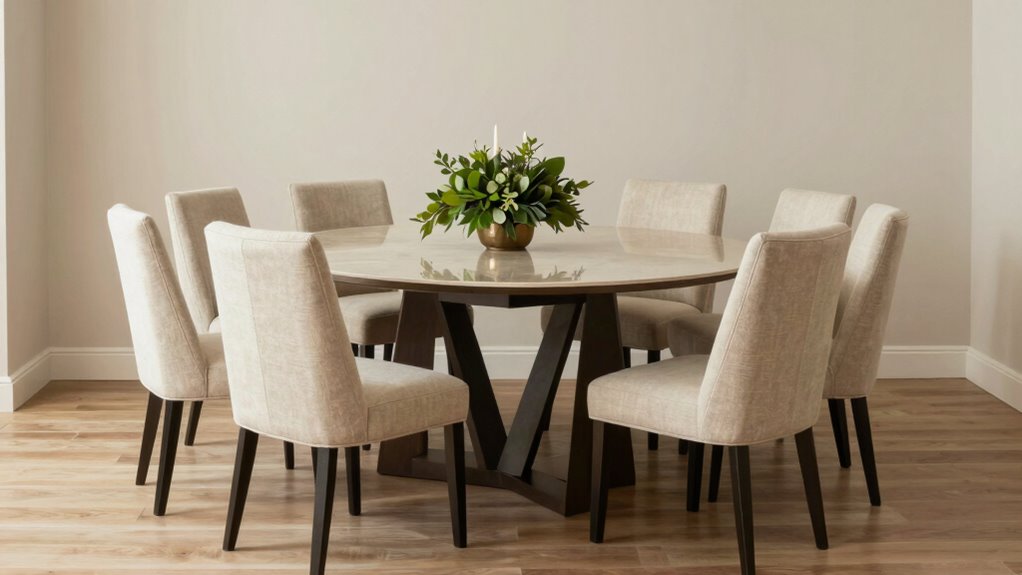
One common mistake people make when choosing a dining table size is underestimating how much space they need for comfortable movement and seating. Your decorating style influences this choice—sleek modern designs may require less space, while rustic or bulky tables need more clearance. Material choices also matter; heavier materials like solid wood can be less flexible if you plan to move or resize the table later. Avoid selecting a table that looks good but doesn’t fit your room’s dimensions or leaves guests cramped. Overlooking these factors can lead to a crowded feel and hinder conversation. Measure your space carefully, considering both the table size and the necessary clearance for chairs and movement, regardless of your decorating style or material choices. Additionally, safety considerations are crucial to prevent accidents and ensure a comfortable dining experience for everyone. Properly planning your table size can also help create a calmer, more organized dining area that feels welcoming and functional.
Frequently Asked Questions
How Do I Choose a Table Shape That Fits My Room Style?
You should select a table shape that complements your room’s space optimization and aesthetic harmony. For smaller or narrow rooms, a round or oval table maximizes seating without crowding. If you have a larger, rectangular space, go for a rectangular or extendable table to fit your style and needs. Consider your room’s layout and flow, ensuring the shape enhances both functionality and visual appeal.
What Materials Are Best for Durable Dining Tables?
For durability, you should consider tables with marble finishes or reclaimed wood. Marble finishes offer resilience against scratches and heat, making them ideal for everyday use. Reclaimed wood provides strength and character, plus it’s environmentally friendly. Both materials withstand daily wear better than softer options, ensuring your table stays beautiful over time. Choose based on your style preference and maintenance willingness, knowing these materials are built to last.
Can a Small Table Be Extended for Larger Gatherings?
Imagine a cozy dinner suddenly expanding to host more friends—that’s where a small table with convertible options shines. Yes, you can extend a small table using folding tables or leaf extensions, transforming it into a larger surface for gatherings. These versatile pieces are designed to adapt, making it easy to accommodate extra guests without sacrificing style or comfort, perfect for spontaneous celebrations or family dinners.
How Do I Balance Aesthetic and Function in Table Size?
To balance aesthetic and function in table size, focus on visual balance and proportional design. You want a table that complements your space without overwhelming it, so choose a size that fits comfortably while maintaining harmony with other furniture. Consider the room’s proportions and your seating needs, ensuring the table looks good and is practical. This approach helps create a stylish, functional dining area that feels balanced and inviting.
What Are the Best Chairs for Different Table Sizes?
You should choose chairs that match your table size by prioritizing comfort and table height. For small tables, opt for compact, cushioned chairs that promote intimacy. Medium tables benefit from versatile, ergonomic chairs that offer support. Large tables work best with spacious, sturdy chairs that provide ample comfort and stability. Always make certain the chair height complements your table height for a seamless dining experience, enhancing both style and function.
Conclusion
Choosing the right dining table size is like finding the perfect dance partner — it sets the rhythm for memorable gatherings. By measuring your space, knowing your seating needs, and avoiding common pitfalls, you’ll create a welcoming dining area that flows effortlessly. With these rules in hand, you’ll confidently pick a table that fits just right, turning your dining space into the heart of your home where every meal feels like a celebration.