
When comparing down and down-alternative comforters, down offers better warmth, breathability, and durability, but it can trigger allergies and needs more maintenance. Down-alternatives are hypoallergenic and easier to care for, though might be less warm and tend to flatten over time. If you prioritize allergy reduction and low maintenance, down-alternatives work best. On the other hand, if long-lasting warmth and comfort matter most, down is the better choice. To learn more about balancing these factors, keep exploring.
Key Takeaways
- Down offers superior warmth, breathability, and longevity but may contain allergens unless specially treated.
- Down-alternative is hypoallergenic, easier to clean, and less prone to clumping but generally less durable and warm.
- Higher fill power down provides better insulation with less bulk, enhancing longevity, while synthetic fillings tend to flatten over time.
- Proper maintenance and cleaning extend down comforters’ lifespan, whereas down-alternatives may need replacement sooner due to wear.
- Eco-friendly and hypoallergenic options are available in both types, but down generally has a longer lifespan with proper care.
What Are the Main Differences Between Down and Down-Alternative Comforters?
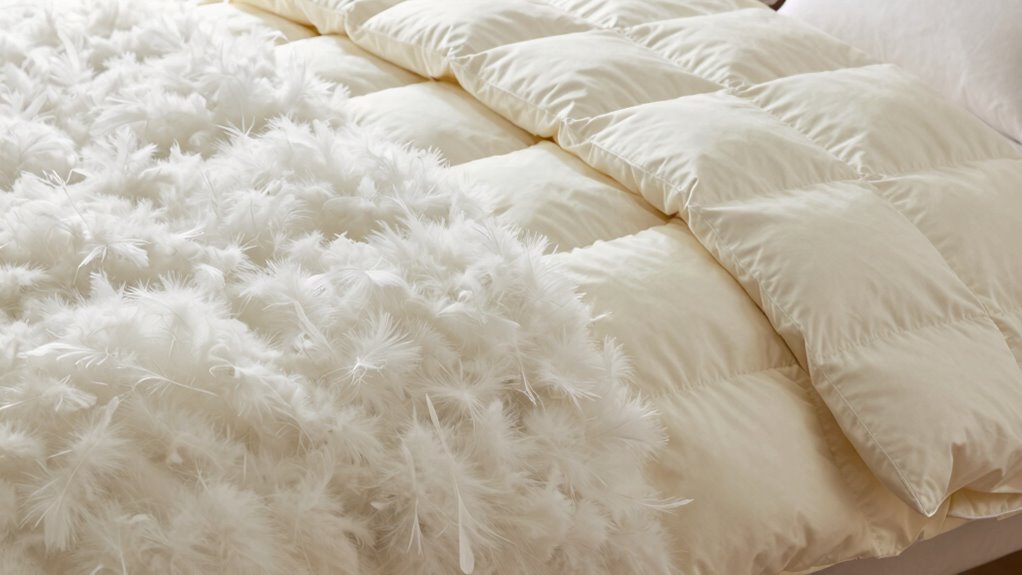
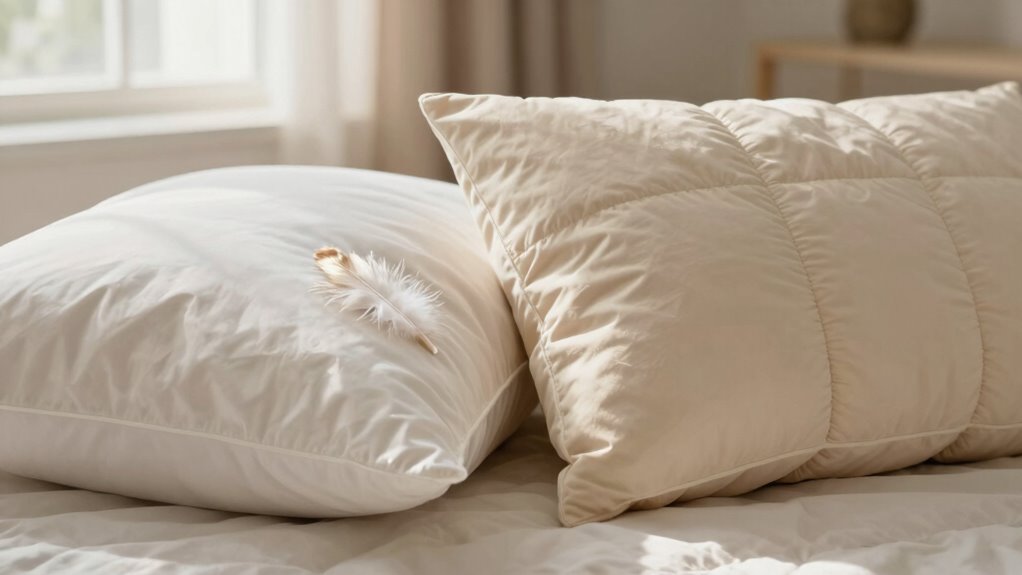
When choosing between down and down-alternative comforters, understanding their main differences can help you make an informed decision. Down comforters are characterized by their fill power, which measures how much loft and insulating ability the down provides. Higher fill power means more warmth with less material, making the comforter lighter and more breathable. Fill weight, on the other hand, indicates the total amount of down used, affecting the overall warmth and heft of the comforter. Down comforters typically have a higher fill power and lower fill weight, offering superior insulation in a lightweight package. Additionally, breathability varies between the two, with down generally providing better airflow and moisture regulation. Moreover, the durability and longevity of down comforters often surpass those of synthetic alternatives, making them a long-term investment for many users. Down-alternative comforters, however, use synthetic fibers that usually have lower fill power and higher fill weight, making them bulkier but often more affordable and hypoallergenic.
Which Comforter Is Warmer: Down or Down-Alternative?

Are down comforters truly warmer than down-alternative ones? Not necessarily. Down comforters often feel warmer because of their superior feather insulation, which traps heat effectively. Down-alternative comforters rely on synthetic fibers that mimic down but may not insulate as efficiently. Factors influencing warmth include:
- The loft of the filling, with higher loft providing more warmth
- The quality of the feather insulation in down comforters
- The density of synthetic fibers in down-alternative options
- Filling quality plays a significant role in the overall warmth and comfort of the comforter. Additionally, the construction and stitching can impact how well the fill stays evenly distributed and retains heat. Proper fill power measurement is essential for assessing insulation capabilities in down comforters. Moreover, insulation efficiency can vary depending on the specific materials and manufacturing techniques used. For example, the loft and fluffiness of the fill are critical in determining how well the comforter traps heat.
Are Down or Down-Alternative Comforters Better for Allergies?
If you suffer from allergies, choosing the right comforter can make a significant difference in your sleep quality. Down comforters often contain natural allergens, which can trigger reactions unless they’re specially processed to be hypoallergenic options. In contrast, down-alternative comforters are designed to reduce allergy risks, making them a better choice for sensitive sleepers. Many down-alternatives are made with synthetic fibers or sustainable materials that resist dust mites and mold. Additionally, some brands now offer hypoallergenic down products that undergo cleaning and treatment processes to minimize allergens. Proper materials and treatments can further enhance allergy protection. For those seeking additional peace of mind, understanding allergen reduction methods can help you select the most suitable comforter. If avoiding allergens is a priority, opting for down-alternative or hypoallergenic down comforters can help you enjoy a more restful, irritation-free sleep. Selecting products with verified allergy-friendly features can also provide added assurance for sensitive individuals. Furthermore, choosing comforters with certified hypoallergenic labels can provide extra confidence in their safety for allergy sufferers. Additionally, maintaining your bedding with proper aero guardians maintenance techniques can help keep allergens at bay and prolong the comforter’s effectiveness.
Which Comforter Lasts Longer: Down or Down-Alternative?
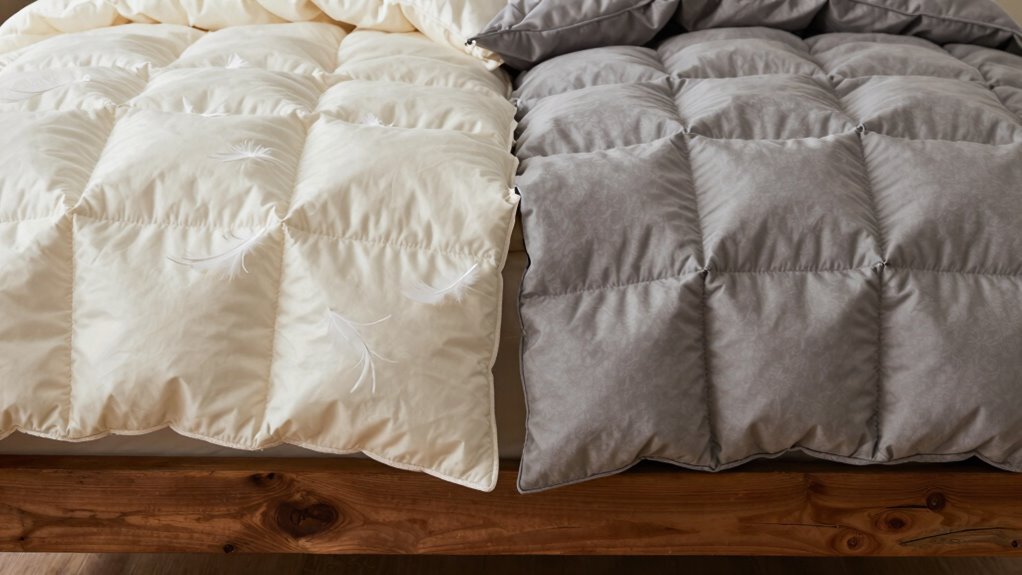
While down and down-alternative comforters both serve as cozy sleep essentials, their durability can vary considerably. In a durability comparison, down comforters often last longer if properly cared for, thanks to their natural resilience. However, longevity factors like filling quality, stitching, and cover material play a big role. For example, high-quality down retains loft longer, maintaining warmth and shape over years. Conversely, down-alternative comforters tend to flatten or clump more quickly, reducing lifespan. Consider these points:
- Down comforters with premium filling last longer with minimal maintenance
- Lower-quality down or synthetic fillings may need replacing sooner
- Regular care impacts longevity; proper washing and storage extend lifespan
- Proper maintenance practices can significantly influence the lifespan of your comforter
Additionally, selecting durable materials for the cover can enhance overall longevity. Choosing high-quality fillings and durable covers is essential to maximize your comforter’s lifespan. Ultimately, your comforter’s lifespan depends on materials and upkeep, with good-quality down generally outlasting down-alternatives.
How Do You Care for Your Down or Down-Alternative Comforter?
Proper care is essential to keep your down or down-alternative comforter in top condition and extend its lifespan. Follow care instructions carefully to maintain its loft, warmth, and cleanliness. Regularly fluff your comforter to prevent clumping and distribute filling evenly. When it’s time to clean, check the label for specific cleaning tips—most down comforters can be spot cleaned or washed in a gentle cycle with mild detergent. Use cold water and a low heat setting for drying, adding clean tennis balls to help restore fluff. For down-alternatives, machine washing is usually safe, but always ensure thorough drying to prevent mold. Proper care includes understanding piercing care and hygiene to avoid introducing bacteria or irritants that could affect your comforter if used in bedding. Avoid harsh chemicals and high heat, which can damage the filling. Proper care keeps your comforter cozy and prolongs its lifespan.
How to Choose the Best Comforter for Your Needs
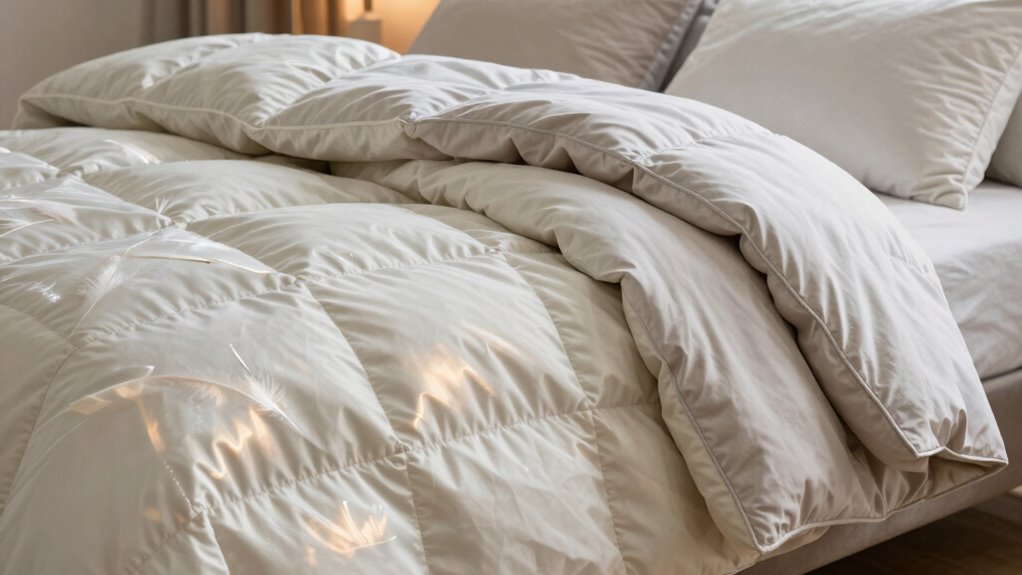
When selecting a comforter, you need to find the right balance between comfort and warmth to suit your sleep preferences. Consider any allergies or sensitivities, as well as how much maintenance you’re willing to manage. Making the right choice guarantees you’ll stay cozy and comfortable night after night. Additionally, understanding the types of comforters available can help you make an informed decision tailored to your needs. For example, a free floating fill might offer a different experience compared to traditional options, impacting both comfort and allergen exposure. To enhance your sleep environment, exploring best hybrid beds of 2025 can provide insight into combining support and comfort for better rest.
Comfort and Warmth Balance
Finding the right comforter involves balancing comfort and warmth to suit your preferences and sleeping environment. To do this effectively, consider how breathability factors impact your sleep quality and comfort level. A breathable comforter helps regulate temperature and prevents overheating, especially if you tend to sleep hot. Additionally, think about the environmental impact of your choice, as sustainable options can reduce your carbon footprint. When selecting a comforter, focus on:
- Material density and weight for warmth without sacrificing breathability
- Whether the fill offers insulation while allowing air circulation
- The manufacturing process’s environmental friendliness
- Breathability factors play a crucial role in ensuring your comfort and sleep quality. Incorporating sleep environment considerations can further enhance your overall sleep experience. Understanding how different fabrics and fills interact can help you make an informed decision that balances comfort and energy efficiency, ensuring you stay cozy without feeling too hot or too cold, providing a restful night’s sleep tailored to your needs.
Allergy and Maintenance Considerations
Choosing a comforter that suits your needs involves more than just warmth and breathability; it also requires considering allergies and ease of maintenance. If allergies are a concern, hypoallergenic considerations become critical. Look for comforters labeled as allergen-free or designed to reduce dust mites and mold growth. Implement allergen prevention techniques such as using a protective cover and washing your comforter regularly. Down comforters may require more diligent cleaning to prevent dust accumulation, while down-alternative options often resist dust mites better. Consider how easy it is to sustain the comforter over time, especially if you need to wash it frequently. Additionally, understanding quality assurance can help you select products that meet safety and durability standards. Ensuring the comforter has certifications and standards can further guarantee its safety and longevity. Ultimately, balancing allergy prevention with ease of care helps ensure you stay comfortable and allergen-free night after night.
Frequently Asked Questions
How Do Eco-Friendly Options Compare Between Down and Down-Alternative Comforters?
Eco-friendly options for down and down-alternative comforters both prioritize sustainability. Down comforters often use sustainable sourcing and biodegradable materials, making them eco-friendly if sourced responsibly. Down-alternatives typically use synthetic fibers that are recyclable, but may not be biodegradable. When choosing, look for certifications like GOLS or OEKO-TEX, which guarantee environmentally conscious manufacturing. Both options can be eco-friendly, but down comforters generally offer better biodegradability and sustainability if properly sourced.
Can Down or Down-Alternative Comforters Regulate Temperature Effectively?
Ever wondered if down or down-alternative comforters can truly regulate temperature? You’ll find that down comforters excel at temperature regulation, adapting to your body’s needs and maintaining a cozy comfort level. Down-alternatives, on the other hand, often provide more consistent warmth but might not breathe as well. If you want a comforter that responds to your body’s temperature fluctuations, down is usually the better choice.
Are There Specific Health Concerns Associated With Down or Synthetic Fillings?
You should be aware that down comforters can trigger allergy risks if you’re sensitive to feathers or dust mites, which may hide in the filling. If you have metal allergies, check for hypoallergenic covers, as some linings contain metal components. Synthetic fillings generally pose fewer allergy risks and are easier to clean. However, always read labels and consider your specific allergies to choose the safest option for your health.
How Do Costs Typically Compare Between High-Quality Down and Down-Alternative Comforters?
You’ll find that high-quality down comforters usually cost more than down-alternative ones. The cost comparison reflects durability factors, as down tends to last longer with proper care, making it a better investment over time. Down-alternative comforters are often more affordable upfront, but they might need replacing sooner. If longevity matters to you, paying more for down could be worth it, while budget-conscious shoppers might prefer the cost savings of synthetic options.
What Are the Best Seasonal Uses for Down Versus Down-Alternative Comforters?
For seasonal warmth, you should use a down comforter in winter, as it offers superior insulation and cozy warmth. Down-alternative comforters work well in spring and fall, providing lighter, breathable coverage that suits milder temperatures. If you have allergy sensitivity, opt for down-alternative year-round, especially in colder months, since it minimizes allergy issues while still offering comfortable warmth without sacrificing seasonal comfort.
Conclusion
Choosing between down and down-alternative comforters is like picking a trusty steed or a swift chariot—you’ll want what suits your needs best. If warmth and longevity are your quest, down’s your noble steed. For allergies and easier care, down-alternative is the swift chariot. Consider your lifestyle, allergies, and comfort preferences—then ride into your perfect sleep sanctuary, knowing you’ve made a choice that will serve you well through many seasons, just like a timeless story told around a crackling fire.