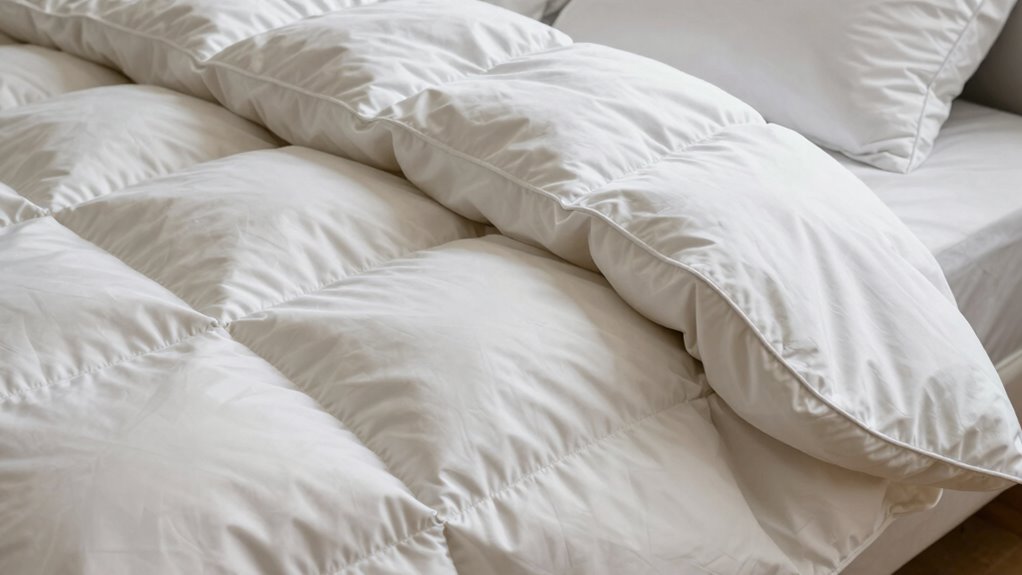

Duvet inserts are soft, fluffy layers placed inside duvet covers to give you warmth and comfort. Fill power measures how much space one ounce of fill takes; higher fill power means more loft and better insulation. Warmth levels vary from light for summer to heavy for winter, while loft refers to how thick and fluffy your duvet feels. Choosing the right fill and loft depends on your climate and sleep preferences—learn more to find the perfect fit.
Key Takeaways
- Fill power measures the volume of one ounce of fill, indicating its loft and insulation ability.
- Higher fill power results in a fluffier duvet with better warmth-to-weight ratio.
- Warmth levels depend on fill power, duvet weight, and loft, suitable for different climates and sleep preferences.
- Loft refers to the duvet’s thickness and fluffiness, affecting insulation and support.
- Proper care, fluffing, and choosing the right fill power enhance longevity and comfort of your duvet insert.
What Are Duvet Inserts and Why Are They Important?
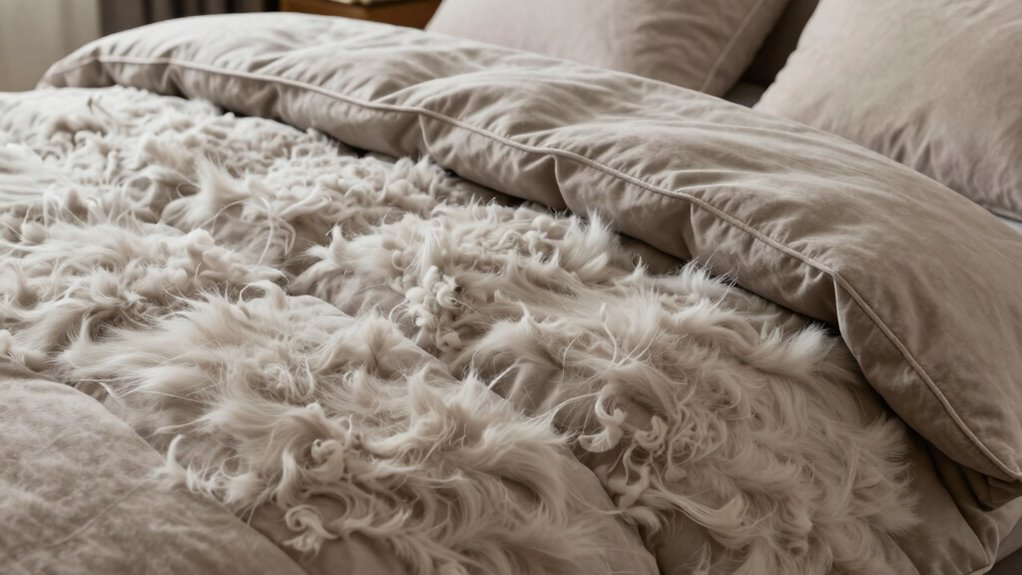
A duvet insert is a soft, fluffy layer that goes inside your duvet cover, providing warmth and comfort. The fabric types used in duvet inserts vary widely, including cotton, wool, microfiber, and silk, each offering different feel and durability. Manufacturing processes also influence quality; some inserts are made through quilting, which secures the fill evenly, while others are sewn with a baffle box construction to enhance loft. The choice of fabric and manufacturing method affects not only the softness and breathability but also the longevity of your duvet insert. Understanding these factors helps you select an insert that matches your comfort preferences and climate needs, ensuring you get restful sleep and a cozy, durable bedding investment.
How Does Fill Power Impact Warmth and Loft?
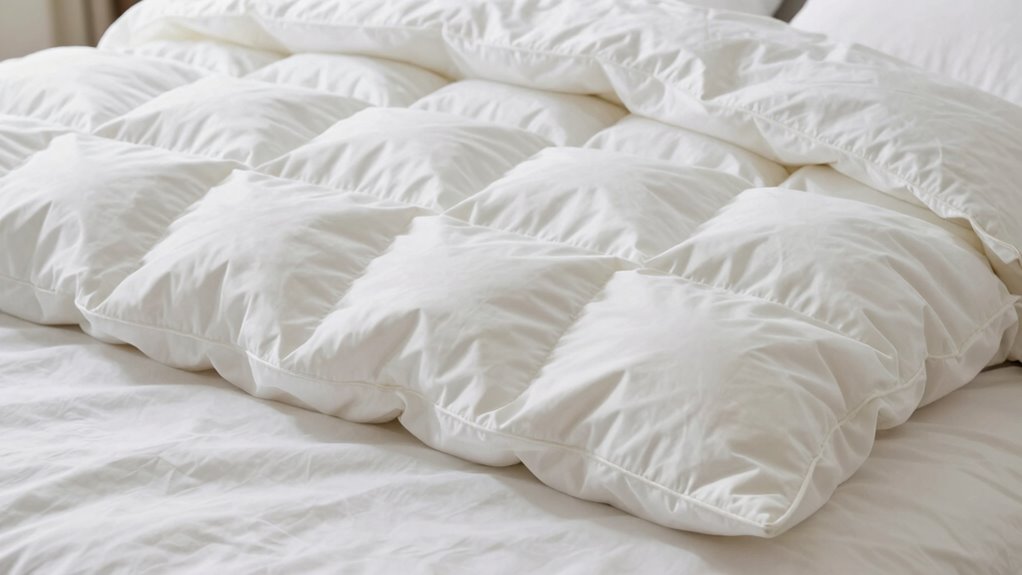
Fill power measures how much space one ounce of down or fill material occupies, directly influencing your duvet’s warmth and loft. A higher fill power means the down can expand more, creating a fluffier, more lofted duvet. This loft impact enhances insulation by trapping more air, which retains heat better. As a result, duvets with higher fill power feel warmer and provide a more luxurious, plush appearance. Down cluster structure also plays a role in how well the fill traps air, further affecting insulation performance. Conversely, lower fill power fills are less lofty and offer less insulation, making them suitable for warmer climates or lighter bedding needs. Understanding fill power helps you choose a duvet that matches your warmth preferences. The loft impact of higher fill power is key in achieving both warmth and comfort without adding extra weight or bulk. European cloud technology innovations are also influencing the development of more sustainable and energy-efficient bedding materials.
Which Warmth Level Is Right for Your Climate?
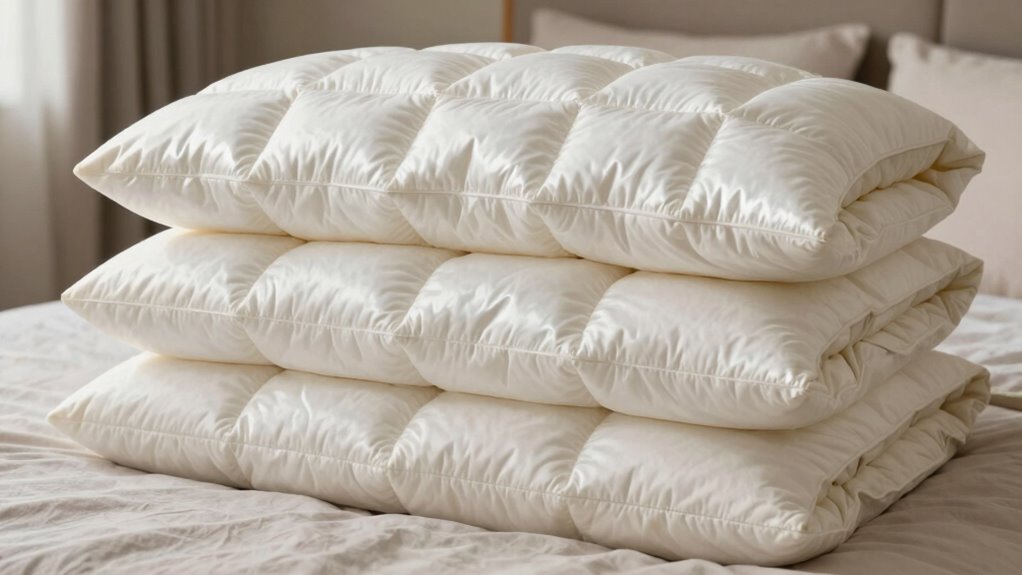
Choosing the right duvet warmth level depends largely on your local climate and personal comfort preferences. If you experience distinct seasons, selecting seasonal warmth guarantees you stay cozy without overheating. For colder climates, opt for higher warmth levels to provide better climate adaptation during winter. Conversely, milder areas benefit from lighter duvets that prevent night sweats and keep you comfortable year-round. Here’s a quick guide:
| Climate Type | Recommended Warmth Level | Seasonal Warmth Focus |
|---|---|---|
| Cold Winters | Heavy, high fill power | Perfect for winter chills |
| Mild Winters | Medium warmth | Balances cold and warm seasons |
| Warm Summers | Light, low fill power | Keeps you cool in heat |
| Year-round Use | Medium or light | Adapts to temperature swings |
| Transitional Seasons | Varies | Layer for flexibility |
Matching your duvet to your climate guarantees comfort and better sleep all year. Understanding fill power can help you choose the most suitable duvet for your needs. When selecting a duvet, consider the warmth levels and how they align with your sleeping environment to ensure optimal comfort.
What Does Loft Mean for Your Comfort and Sleep?

Loft affects how well your duvet traps heat and keeps you comfortable throughout the night. A higher loft provides more insulation, which is great for colder temperatures, while a lower loft offers a lighter feel for warmer nights. By understanding loft, you can choose a duvet that matches your personal comfort preferences and sleep environment. Additionally, selecting the appropriate loft can help improve sleep quality by maintaining the ideal temperature throughout the night. The fill power of the duvet is often correlated with loft, influencing its ability to insulate effectively.
Loft and Insulation Effect
When it comes to your sleep comfort, loft plays a crucial role in providing insulation and support. Feather loft, in particular, determines how well your duvet traps heat and retains warmth. Higher loft means more space between the feathers, creating better insulation effectiveness. This loft creates a barrier that prevents heat from escaping, keeping you cozy throughout the night. If your duvet has excellent feather loft, it will feel plush and lofty, giving you a sense of softness and security. Conversely, a low-loft duvet may feel flat and less insulating, leading to colder nights. The key is finding a balance where the loft provides enough warmth without feeling too bulky, ensuring your sleep environment stays comfortable and consistent. Additionally, proper air circulation within the duvet helps maintain its loft and insulation properties over time. Good maintenance practices can also extend the longevity of loft and insulation, preserving your duvet’s comfort for years. Regularly fluffing and airing your duvet enhances loft retention and helps prevent clumping, ensuring it remains plush and insulating. Maintaining proper fluffiness through regular shaking or airing can help sustain optimal loft and insulation levels.
Adjusting for Personal Comfort
Since personal comfort varies from person to person, understanding how loft affects your sleep experience can help you make better choices. Loft influences how cozy or supportive your duvet feels, directly impacting your sleep preferences. If you prefer a plush, cloud-like feel, a higher loft duvet offers softness and warmth. Conversely, if you like a more breathable, less bulky cover, a lower loft might be ideal. Adjusting loft allows you to tailor your bedding to your comfort needs, ensuring restful nights. Remember, your ideal loft depends on your body, climate, and sleep habits. Fill power plays a crucial role in determining how much loft a duvet can achieve, affecting its warmth and support. Finding the right balance can make a significant difference in how refreshed you wake up each morning. For example, sleep environment factors such as room temperature and humidity also influence your comfort level and preferred loft. Your personal comfort should always guide your duvet choice for better sleep quality, and understanding loft levels can help you select the perfect bedding for your needs.
Which Filling Material Is Best: Down, Down Alternative, or Other?
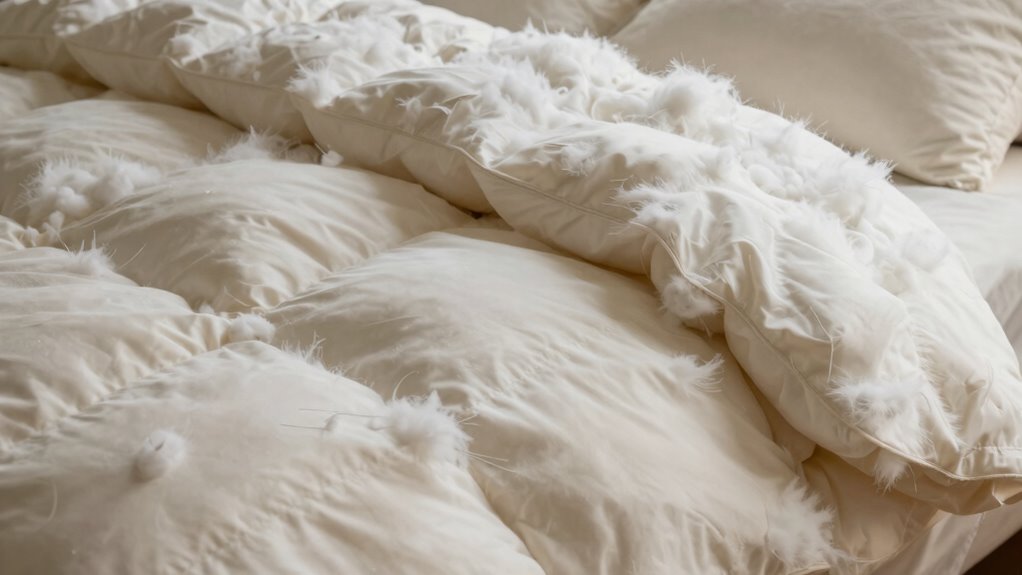
Choosing the right filling material for your duvet insert depends on your preferences for warmth, feel, and allergies. Down is known for its exceptional loft, lightness, and warmth, making it ideal if you want a luxurious feel. However, it’s not suitable for allergy sufferers unless you opt for hypoallergenic options, which use treated or synthetic fillings. Down alternative fillings mimic the softness of down but are typically more affordable and easier to maintain. They also offer hypoallergenic options, making them a great choice if allergies are a concern. Other fillings, like wool or silk, provide natural alternatives with unique benefits, such as moisture-wicking properties. Additionally, understanding the fill power of a duvet can help you assess its warmth and loft more accurately. Natural fillings like wool and silk also tend to be more breathable, which can help regulate temperature during sleep. Incorporating body-friendly materials into your bedding can further enhance comfort and reduce irritation, especially for sensitive skin. Moreover, allergy-friendly options are increasingly available, allowing allergy sufferers to enjoy the benefits of natural fillings without discomfort. Considering environmentally sustainable materials can also contribute to eco-friendly bedding choices, aligning comfort with sustainability.
How to Choose a Duvet Insert That Fits Your Sleep Style?

Your sleep style plays a crucial role in selecting the perfect duvet insert, as it directly affects comfort and temperature regulation throughout the night. Your sleep position influences how much warmth you need and how much loft you prefer under you. For side sleepers, a thicker, more supportive insert can prevent numbness, while stomach sleepers may favor a lighter, less bulky option. Consider your bedding aesthetics too; a duvet that complements your bedroom’s style creates a cozy, inviting space. Dual-flush systems can help conserve water while maintaining comfort. Feel the softness that matches your mood each night. Guarantee the warmth keeps you comfortable without overheating. An understanding of Free Floating techniques can also help in choosing a duvet that maintains its loft and shape over time, ensuring consistent comfort. Find a duvet that enhances your bedroom’s look and vibe.
Tips for Caring for Your Duvet Insert to Keep It Fresh and Durable
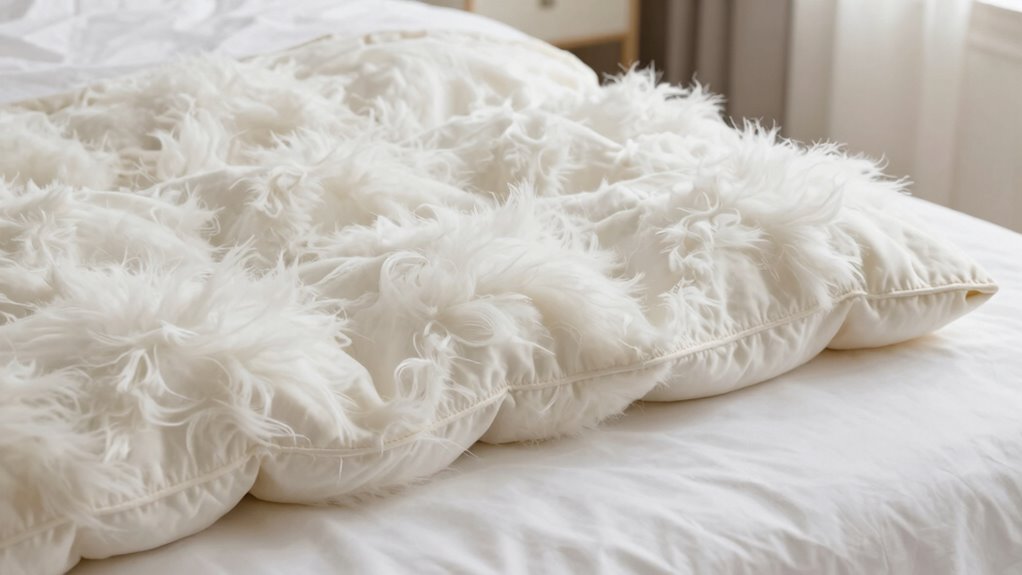
Regularly caring for your duvet insert is essential to keep it fresh, comfortable, and long-lasting. Proper duvet care involves simple maintenance tips that prevent dirt, dust, and allergens from building up. Always use a duvet cover to protect the insert and wash it regularly according to manufacturer instructions. Fluff your duvet daily to maintain loft and distribute fill evenly. When washing, opt for gentle cycles and mild detergents to preserve the fill’s integrity. Dry thoroughly to prevent mold or mustiness, either air drying or using a low-heat dryer. Spot clean stains promptly to avoid permanent marks. Following these maintenance tips guarantees your duvet insert stays inviting and durable, enhancing your sleep quality over time.
Frequently Asked Questions
How Does Fill Power Affect Duvet Weight and Bulkiness?
Higher fill power means your duvet will be lighter and less bulky, even if it’s warm. It indicates how much space one ounce of down occupies; more fill power equals better insulation with less weight. So, if you want a cozy yet lightweight duvet, look for one with high fill power. Conversely, lower fill power results in a heavier, puffier duvet that provides more warmth but feels bulkier.
Can Duvet Inserts Be Used Year-Round in Different Climates?
Yes, you can use duvet inserts year-round by adjusting your bedding with seasonal duvet layering. In warmer climates, opt for lightweight, low fill power duvets, while colder areas benefit from higher fill power options for extra warmth. Climate-specific duvet choices help you stay comfortable no matter the season. Layering or switching inserts guarantees you’re cozy during winter and cool in summer, making your bedding versatile and ideal for year-round use.
What Are the Environmental Impacts of Down Versus Synthetic Fillings?
They say “you are what you sleep on,” so choose wisely. Down fillings are eco-friendly since you can recycle down materials, reducing waste, but their sourcing raises animal welfare concerns. Synthetic fibers have a smaller initial eco footprint, but their production uses plastics and chemicals, contributing to pollution. Ultimately, you weigh animal welfare versus plastic pollution, and your choice impacts the environment in different ways.
How Do I Properly Store My Duvet Insert Off-Season?
To properly store your duvet insert off-season, start by cleaning it according to the care label. Use storage tips like a breathable cotton bag or a large pillowcase to prevent dust and moisture buildup. Avoid plastic bags, which trap humidity. Keep it in a cool, dry, and dark place to guarantee off-season preservation. This method maintains loft and prevents damage, so your duvet stays fresh and ready for use when needed.
Are There Hypoallergenic Options for Sensitive Sleepers?
If you’re a sensitive sleeper, you can definitely find hypoallergenic options that will change your nights from miserable to magical. Hypoallergenic materials like microfiber, organic cotton, and bamboo keep dust mites, pet dander, and allergens at bay, transforming your sleep experience. These sensitive sleeper options not only protect your health but also give you peace of mind, so you can finally enjoy restful, allergy-free sleep every night.
Conclusion
Choosing the right duvet insert isn’t just about warmth—it’s about creating a cozy sanctuary that welcomes you home. By understanding fill power, loft, and your climate needs, you can find your perfect match. Remember, a well-chosen duvet transforms sleep from routine to ritual, turning each night into a gentle embrace. So, invest in comfort, care for your duvet, and let restful nights become your everyday luxury—because you deserve nothing less.