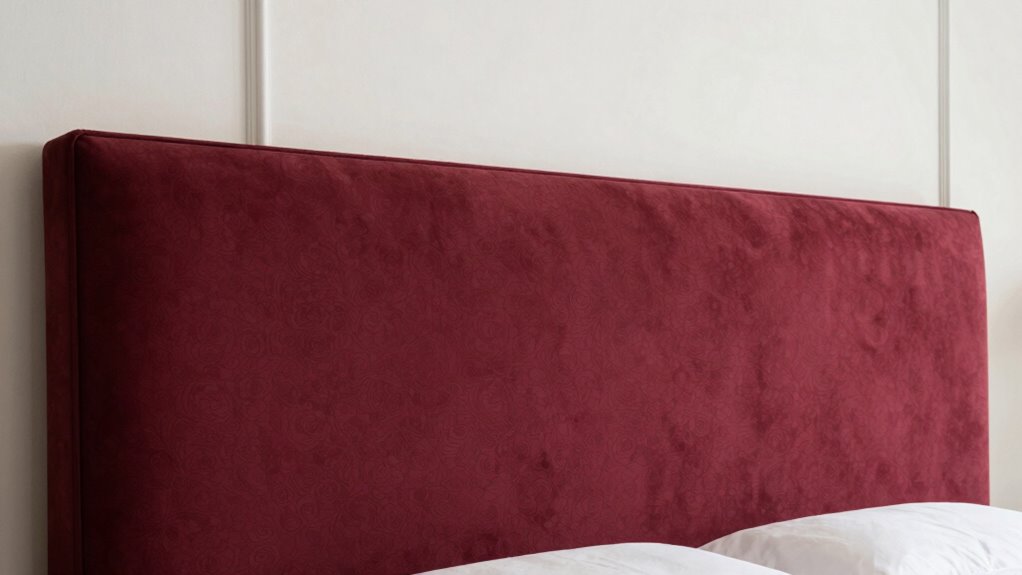

To choose the right headboard size, measure your bed’s width to make certain the headboard slightly exceeds the frame, typically by a few inches. For height, consider your room’s proportion and ceiling height—aim for a headboard that balances well without overwhelming or seeming too small. Allow enough wall space around the bed for decor and easy movement. If you keep these rules in mind, you’ll create a balanced, stylish look and discover more helpful tips ahead.
Key Takeaways
- Headboard width should slightly exceed bed frame width for balanced aesthetics and comfort.
- Height typically ranges from 48 to 60 inches, proportionate to bed size and room height.
- Measure wall space to ensure headboard fits without overwhelming or underwhelming the room.
- Consider headboard overhang beyond mattress for visual harmony and practical access.
- Ensure headboard placement does not block windows, outlets, or obstruct room functionality.
Why Headboard Size Matters for Bedroom Balance and Style
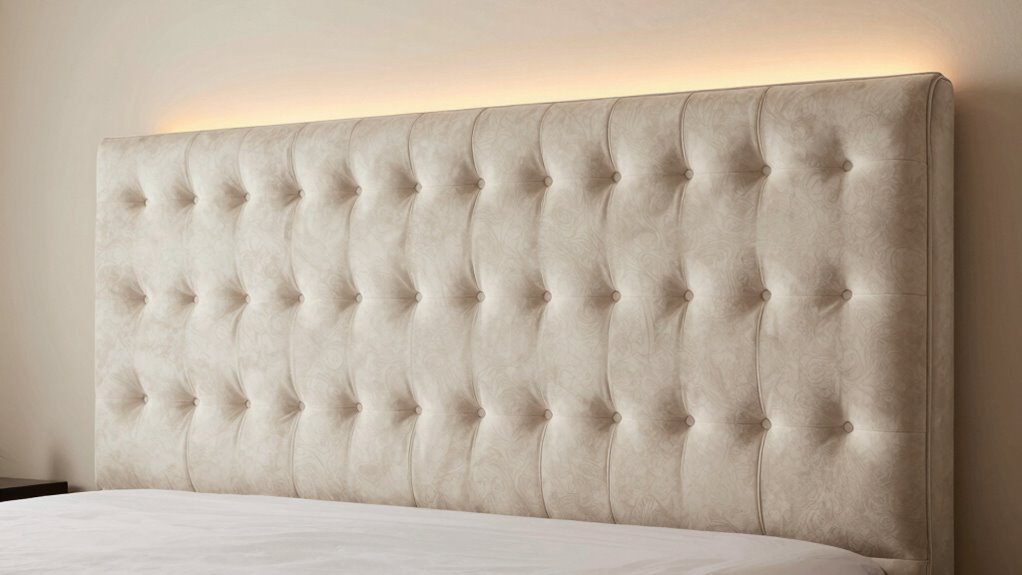
A well-chosen headboard size can considerably influence the overall balance and style of your bedroom. When selecting the right size, consider how it complements your bedroom lighting—an appropriately scaled headboard creates a focal point that enhances ambient light and shadows. It also frames your bedding accessories, making pillows, throws, and other decor stand out. A headboard that’s too tall can overwhelm the space, making the room feel cramped, while a too-small one may look out of place or insignificant. The right size balances the bed, wall space, and decor, creating harmony. This balance ensures your bedroom feels inviting and thoughtfully designed, making the entire space feel cohesive and stylish. Incorporating energy-efficient design principles can further optimize your bedroom’s comfort and aesthetic appeal.
How to Measure Your Bed Frame for Accurate Width and Height
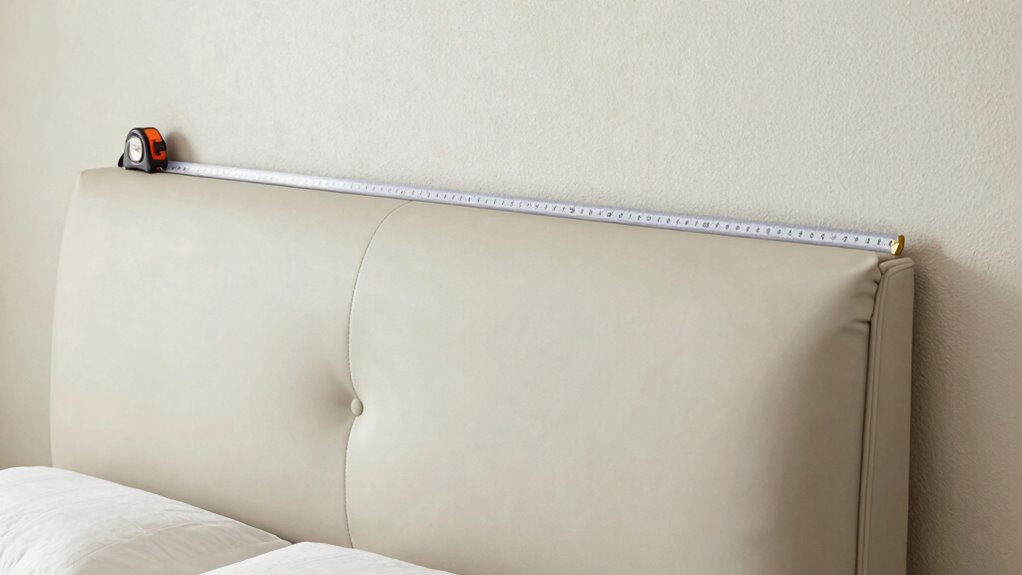
Start by measuring your bed frame’s width and height accurately to guarantee your headboard fits perfectly. Keep in mind the headboard overhang you want for style and comfort, and leave enough wall clearance so it doesn’t feel crowded. These measurements will help you choose a headboard that complements your space and looks just right. For a balanced look, consider the headboard sizing rules, which take into account both the proportions of your bed and the surrounding wall space. Additionally, understanding bed proportions can ensure your headboard enhances your bedroom’s overall aesthetic and functionality. Recognizing standard dimensions can further assist in selecting a headboard that aligns with common mattress sizes and room layouts. Incorporating sound healing science principles, such as choosing materials that promote relaxation, can also contribute to a calming bedroom environment. Being aware of family photoshoot fails can remind you to plan your decor carefully to avoid unintentional distractions or humorous mishaps that might detract from your room’s serenity.
Measure Bed Frame Dimensions
To guarantee your headboard fits perfectly, you need to measure your bed frame accurately. Start by checking the overall width: measure from one outer edge to the other. Next, determine the height by measuring from the floor to the top of the frame. Then, consider the depth—how far the frame extends from the wall—especially if you want a snug fit. Also, verify bed frame compatibility with your chosen headboard to ensure it attaches securely. Keep in mind that different headboard material options, like wood or metal, may require specific mounting styles. By taking precise measurements for width, height, and depth, you’ll select a headboard that complements your bed frame and wall space, making for a seamless, stylish addition. Additionally, understanding the importance of strong industry demand for sound design skills can help you choose the right materials and installation techniques for a durable, long-lasting headboard. Being aware of standard sizing guidelines can further streamline your selection process and prevent common fitting issues. Properly measuring wall space ensures your headboard fits well within your available room area and enhances overall bedroom aesthetics, especially when considering the size of the room and furniture placement. Also, considering seasonal maintenance tips can help keep your headboard and bedroom environment comfortable and in good condition over time.
Consider Headboard Overhang
When measuring your bed frame for headboard overhang, it’s important to account for how much the headboard will extend beyond the mattress and frame. The bed overhang determines the overall width and height of your headboard, so accurately measuring this extension ensures proper fit and visual balance. To do this, measure the distance from the edge of the mattress to where you want the headboard to end on each side, considering any desired overhang. Also, decide how tall you want the headboard to be beyond the mattress height, including the headboard extension. This approach helps prevent a headboard that looks too small or overwhelming. Properly accounting for the bed overhang guarantees your headboard complements your bed’s proportions and style. Additionally, understanding headboard sizing rules can help you select a design that aligns with your space and aesthetic preferences. Recognizing the importance of wall space and clearance can further ensure your headboard fits seamlessly into your room layout.
Account for Wall Clearance
Accurately measuring your bed frame for wall clearance guarantees your headboard fits well without obstructing windows, doors, or other furniture. To verify proper headboard aesthetics and functional wall clearance, consider these steps:
- Measure the distance from the bed frame to nearby walls or furniture to prevent overcrowding.
- Check the height of your ceiling and planned headboard placement to avoid hitting the ceiling or blocking light fixtures.
- Account for any moldings or wall features that might interfere with the headboard’s position.
- Leave enough space between the top of the headboard and the ceiling for visual balance and ease of installation.
- Incorporate at‑home tech solutions to ensure precise measurements and seamless installation.
What Is the Ideal Headboard Width for Your Bed?
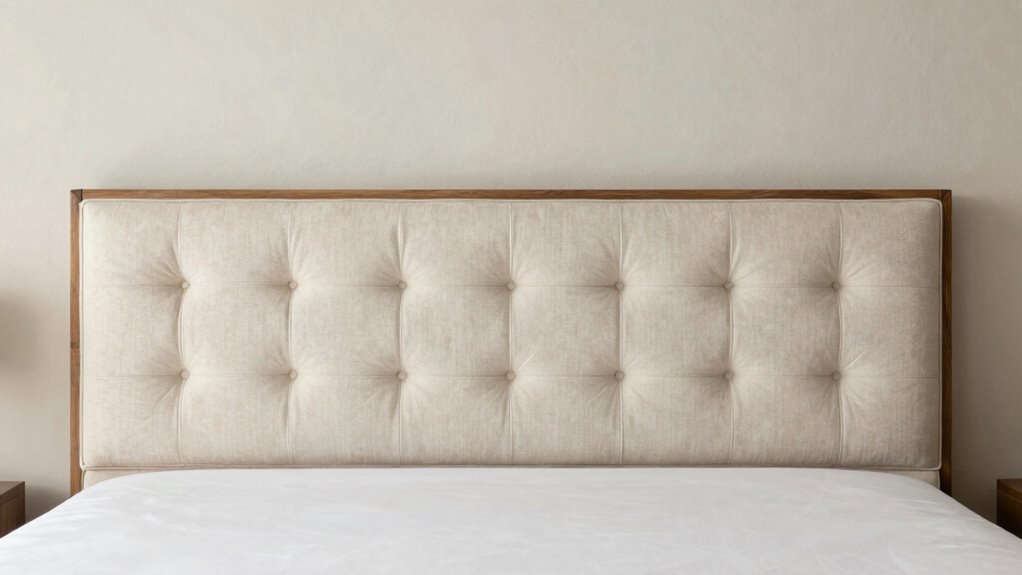
Wondering what the ideal headboard width is for your bed? The answer depends on your bed frame size and your aesthetic goals. Generally, a headboard should extend about 3 to 6 inches beyond each side of your bed frame to create a balanced look. For a standard queen, a headboard between 60 and 66 inches wide works well, while a king might need a 76-80 inch width for proper proportion. This ensures visual harmony and avoids overwhelming or underwhelming the space. Keep in mind that a headboard slightly wider than your bed enhances aesthetic balance, making the entire setup look cohesive and intentional. Additionally, understanding headboard sizing rules can help you choose the right dimensions for your space and style. Proper headboard proportions also contribute to room harmony and comfort. When selecting a headboard, consider the wall space available to ensure it complements your room’s dimensions and layout. Knowing how to balance scale and proportion in your bedroom design ultimately helps create a more inviting and harmonious environment. Ultimately, your choice should complement your room’s proportions and your personal style.
How to Choose the Right Headboard Height for Comfort and Proportion
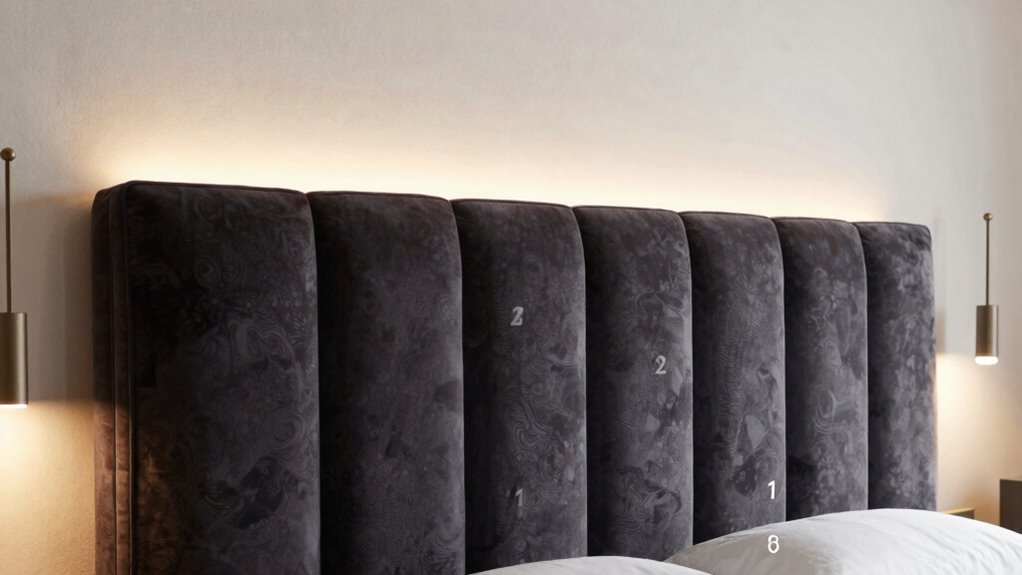
Choosing the right headboard height is essential for both comfort and visual balance in your bedroom. To achieve this, consider these factors:
- Match the height with your mattress thickness so decorative accessories like pillows or lamps don’t get lost.
- Choose a headboard that complements your color schemes, whether bold or neutral, for harmony.
- Keep the headboard at a height that allows easy access to bedside tables and reading lights.
- Balance proportion by avoiding headboards that are too tall or short compared to your bed frame and room size.
- Remember that traditional Italian designs often incorporate craftsmanship and proportion, emphasizing harmony in furniture selection.
A well-chosen height enhances comfort and creates a pleasing aesthetic, making your space feel cohesive and inviting.
How to Use Wall Space Wisely When Picking a Headboard Size
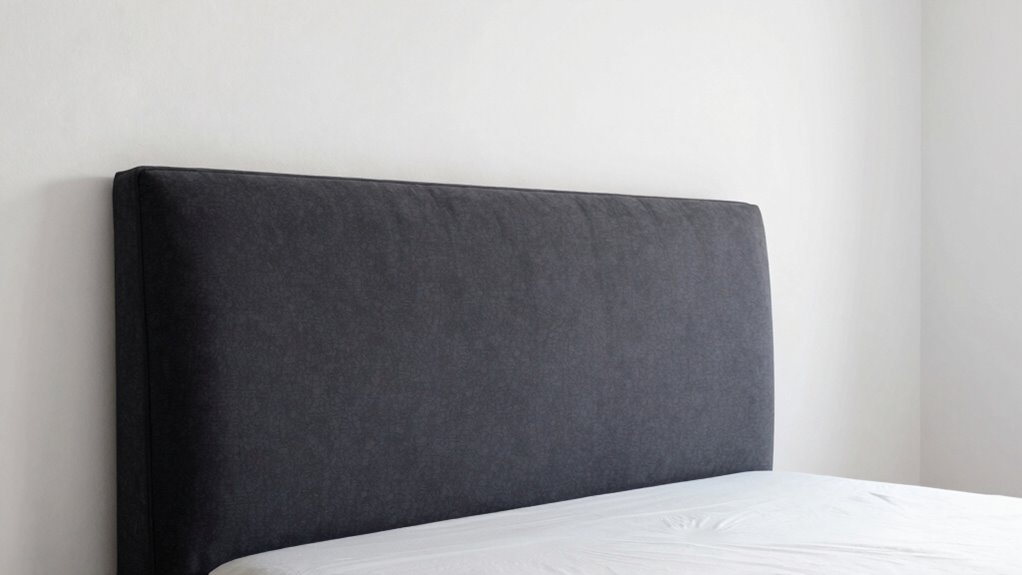
When selecting a headboard size, it’s important to contemplate how much wall space you have available. Measure the area around your bed to ensure the headboard fits comfortably without overwhelming the room. A wider headboard can serve as a bold focal point, especially if you include decorative accents like artwork or lighting nearby. Consider color coordination—choose a headboard that complements your wall color and existing decor to create a harmonious look. If wall space is limited, opt for a more streamlined design that doesn’t crowd the room. Conversely, larger spaces allow for expansive headboards that can frame the bed beautifully. Using wall space wisely helps balance functionality and aesthetics, making your bedroom feel cohesive and well-designed. Additionally, understanding the influence of celestial bodies on personal traits can inspire choices in color and style to reflect your unique personality. Being mindful of upfitting fundamentals can also influence how much space you need for accessories and lighting around your headboard. Incorporating space planning techniques ensures that your headboard and surrounding decor create a balanced and inviting environment. Recognizing the importance of room dimensions helps prevent overcrowding and promotes better layout decisions.
Common Headboard Sizing Mistakes and How to Avoid Them

One common mistake people make when selecting a headboard size is going too large or too small for their space. This can throw off the room’s balance and affect headboard material choices or maintenance. To avoid this, keep these tips in mind:
Avoid choosing headboards that are too large or small to maintain room balance and ease of maintenance.
- Choose a headboard width that complements your bed and wall space—too wide can crowd the room, too narrow looks off.
- Match the headboard height to your ceiling height and room style to prevent overwhelming or underwhelming the space.
- Consider wall space around the bed for headboard material maintenance; too close may hinder cleaning or repair.
- Avoid overly ornate or bulky headboards if your room is small, as they can make maintenance more difficult and clutter the visual flow.
Headboard Sizes for Twin, Queen, and King Beds

Understanding standard headboard dimensions helps you choose the right fit for your bed. You can explore custom sizing options if your space or style calls for something unique. Keep in mind the wall space around your bed to guarantee your headboard looks balanced and proportionate.
Standard Dimensions Overview
Headboards come in standard sizes designed to match common bed dimensions, ensuring a proper fit and a cohesive look. These sizes help you select decorative accents and material options that complement your room. Typically, you’ll find:
- Twin headboards measure about 38 inches wide and 48 inches high, perfect for small rooms or kids’ spaces.
- Queen headboards usually span 60 inches wide and stand around 48 inches tall, offering a balanced look.
- King headboards are approximately 76 inches wide and 48–60 inches high, ideal for spacious bedrooms.
- Some models may have variations in height or width to accommodate different styles.
Knowing these standard dimensions helps you choose the right headboard size, material options, and decorative accents that fit seamlessly and enhance your bedroom’s aesthetic.
Custom Sizing Options
While standard headboard sizes suit most needs, custom options give you the flexibility to create a perfect fit for your specific bed and room. A custom headboard allows you to choose tailored dimensions that match your bed’s exact width and height, ensuring a seamless look. Whether you have a non-standard twin, a luxurious king, or a uniquely sized bed, custom sizing lets you avoid gaps or overlaps. You can also select materials, styles, and finishes that reflect your personal taste. Working with a craftsman or retailer, you’ll specify your preferred dimensions to craft a headboard that complements your space perfectly. This tailored approach guarantees your headboard enhances your room’s aesthetic while fitting precisely within your available wall space.
Proportional Wall Space
To make certain your headboard complements your room without overwhelming or underwhelming the space, it’s important to take into account proportional wall coverage for different bed sizes. For twin, queen, and king beds, aim for a headboard that leaves about 12-18 inches of wall space on each side. Consider these points:
- Twin beds benefit from narrower headboards that don’t overpower small rooms, leaving room for artwork placement.
- Queen beds should have a headboard that balances width without dominating the wall, allowing space for layered lighting considerations.
- King beds need broader headboards, but still leave some wall for accent pieces or decorative lighting.
- Always measure wall space carefully to ensure headboards and artwork placement work together, creating a balanced, proportional look.
Styling Tips: Matching Headboard Size to Your Room and Wall Space
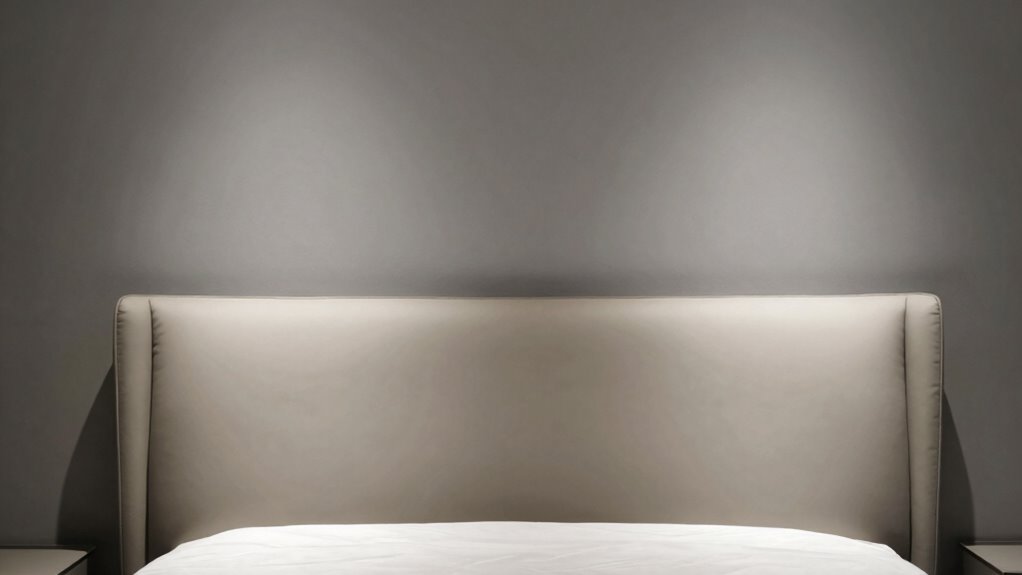
Choosing the right headboard size starts with understanding your room’s dimensions and wall space. To create a balanced look, consider how the headboard’s width relates to the wall and furniture around it. For a cohesive style, focus on color coordination; a headboard that matches or complements your wall color or bedding creates harmony. Material selection also plays a key role—wood, fabric, or metal can set different moods and match your room’s decor style. Larger rooms can handle bigger, statement headboards, while smaller spaces benefit from proportionate sizes that avoid overwhelming the room. Keep in mind that a well-chosen headboard enhances your space’s aesthetic and comfort, making your bedroom feel intentional and inviting.
Adjusting Headboard Size for Low Ceilings or Unique Room Layouts
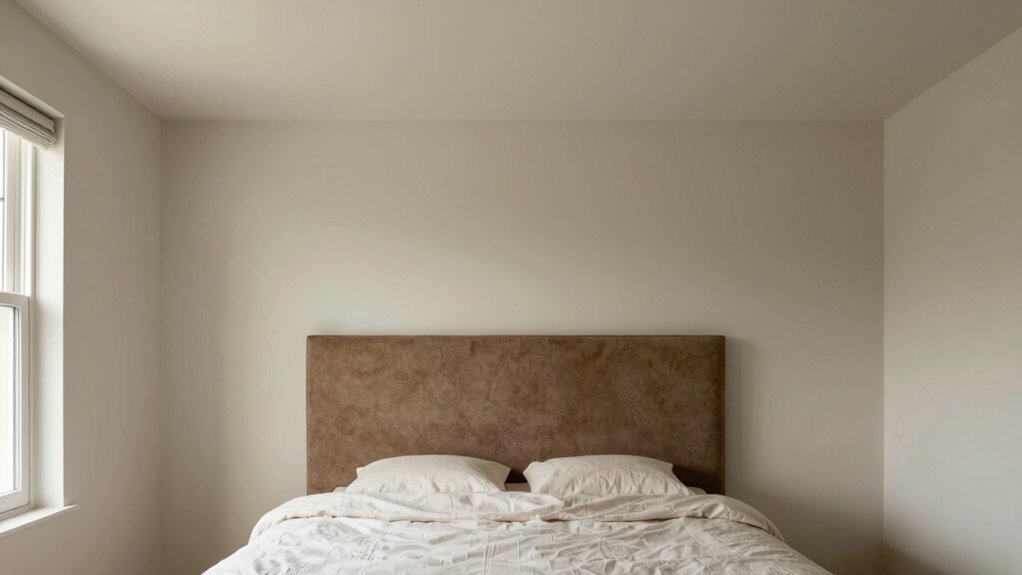
If your room has low ceilings or a unique layout, adjusting your headboard size can make a significant difference in how the space feels. To optimize your room shape and ceiling height, consider these tips:
- Choose a low-profile headboard that doesn’t extend too high, creating the illusion of more space.
- Opt for a narrower headboard if your room is small or oddly shaped, avoiding overwhelming the space.
- Use wall-mounted headboards to save vertical space and add a modern touch.
- Consider a headboard that ends just below eye level for low ceilings, preventing the room from feeling cramped.
Final Checklist: Ensuring Your Headboard Fits Perfectly and Looks Great

Before finalizing your headboard, you need to double-check a few key points. Measure your wall space accurately, confirm the headboard’s dimensions, and verify it’s compatible with your bed frame. Taking these steps helps you achieve a perfect fit that looks great and functions well.
Measure Wall Space
To guarantee your headboard fits perfectly and enhances your room’s appearance, start by measuring the wall space where you plan to place it. This helps you visualize how the headboard will integrate with your decorative accents and overall furniture placement.
Here’s what to do:
- Measure the width of your wall to ensure the headboard isn’t too narrow or wide.
- Check the height from the floor to the ceiling to confirm the headboard won’t overwhelm the space.
- Note the space above the bed for decorative accents like artwork or lighting.
- Consider the clearance around the bed for easy movement and balanced furniture placement.
Accurate measurements prevent surprises and help you create a harmonious, stylish look.
Confirm Headboard Dimensions
Once you’ve measured your wall space, it’s time to double-check that your chosen headboard’s dimensions will fit perfectly and look great in your room. Confirm the width complements your bed frame materials, whether wood, metal, or upholstered. The height should suit your room’s style—too tall might overwhelm, too short may look out of place. Verify that the headboard won’t block windows or outlets. Consider headboard maintenance; choose materials that are easy to clean and maintain. Use the table below to compare key dimensions:
| Dimension | Ideal Range | Purpose |
|---|---|---|
| Width | Slightly wider than bed frame | Comfort and aesthetics |
| Height | 48-60 inches (or personal style) | Visual balance and style |
| Wall Space | Clear of obstructions | Safety and appearance |
Check Bed Compatibility
Ensuring your headboard fits your bed frame perfectly is essential for both comfort and style. To check bed compatibility, consider these key points:
- Verify your bed frame type—whether it’s platform, adjustable, or box spring—to ensure the headboard matches.
- Measure your bed’s width to select a headboard that aligns with your frame’s dimensions.
- Think about headboard material options—wood, metal, or upholstered—that complement your bedroom decor and are compatible with your frame.
- Confirm the mounting method required for your headboard, whether wall-mounted or attached directly to the bed frame, for a secure fit.
Frequently Asked Questions
How Do Headboard Sizes Affect Room Acoustics and Noise Levels?
Your headboard size impacts room acoustics and noise levels by influencing sound absorption and noise reduction. A larger headboard with plush or fabric materials can absorb sound waves, reducing echoes and ambient noise. Conversely, a smaller or hard headboard may reflect sound, making noise more noticeable. Choosing the right size and material helps create a quieter, more comfortable sleeping environment by optimizing sound absorption and minimizing disruptive noise.
Can an Oversized Headboard Make a Room Feel Smaller?
Yes, an oversized headboard can make a room feel smaller by overwhelming the space and reducing open wall areas. It can also draw attention away from decorative accents and other furniture. When considering headboard installation, keep in mind the room’s proportions to avoid clutter. Choosing a well-sized headboard that complements the room’s scale helps maintain an open feel and highlights your decorative accents.
Are There Specific Headboard Sizes Recommended for Small Bedrooms?
For small bedrooms, opt for a headboard that’s proportional to your bed, usually around 3-4 inches wider on each side. This maintains bedroom feng shui by avoiding clutter and creating balance. Keep headboard installation simple, choosing low-profile designs that don’t overwhelm the space. Smaller headboards boost visual openness, making your room feel larger and more inviting, while still providing a stylish focal point.
How Does Headboard Height Influence Lighting and Ambiance?
A taller headboard can create a cozy, luxurious feel in your bedroom decor, especially if paired with soft lighting. It draws the eye upward, enhancing the ambiance and making your space feel more intimate. Conversely, a low headboard keeps the room feeling open and airy. Your headboard design and height directly influence the mood, so choose a size that complements your lighting choices and desired atmosphere.
What Materials Are Best for Headboards of Different Sizes?
For different headboard sizes, choose materials that suit their scale and your style. Fabric headboards work well for smaller to medium sizes, adding softness and coziness. Wood headboards are sturdy and timeless, perfect for larger beds, creating a bold statement. Consider the room’s decor and maintenance needs when selecting materials. Ultimately, your choice of fabric vs. wood should enhance comfort, durability, and the overall look of your space.
Conclusion
When choosing your headboard, remember it’s all about balancing style and comfort while fitting your space perfectly. Measure carefully, consider your room’s proportions, and don’t forget to leave some wall space for a polished look. Sometimes, the best choices happen when you stumble upon the perfect size by chance—like finding that one piece that just clicks. Trust your instincts, follow the rules, and enjoy creating a cozy, stylish bedroom that feels uniquely yours.