
When comparing hybrid, memory foam, and latex mattresses, you’ll find that hybrids combine support from coils with foam or latex layers for comfort, memories foam mold to your body and provide pressure relief, while latex offers resilient, durable support with natural breathability. Each suits different sleep styles and preferences, balancing comfort, support, and price. If you want to discover which one matches your needs best, keep exploring the key differences below.
Key Takeaways
- Latex is the most durable material, lasting 10-15 years, followed by memory foam (7-10 years), with hybrids lasting 6-8 years.
- Latex offers natural breathability and responsiveness, while memory foam contours closely to the body, and hybrids balance support with comfort.
- Memory foam tends to trap heat without cooling features, latex naturally regulates temperature, and hybrids combine airflow with cooling layers.
- Hybrids provide customizable support and layered comfort, memory foam excels in pressure relief, and latex offers high resilience and bounce.
- Price-wise, latex is the most expensive, hybrids are mid-range, and memory foam is the most affordable for pressure relief and support.
What Are Hybrid, Memory Foam, and Latex Mattresses? A Quick Comparison
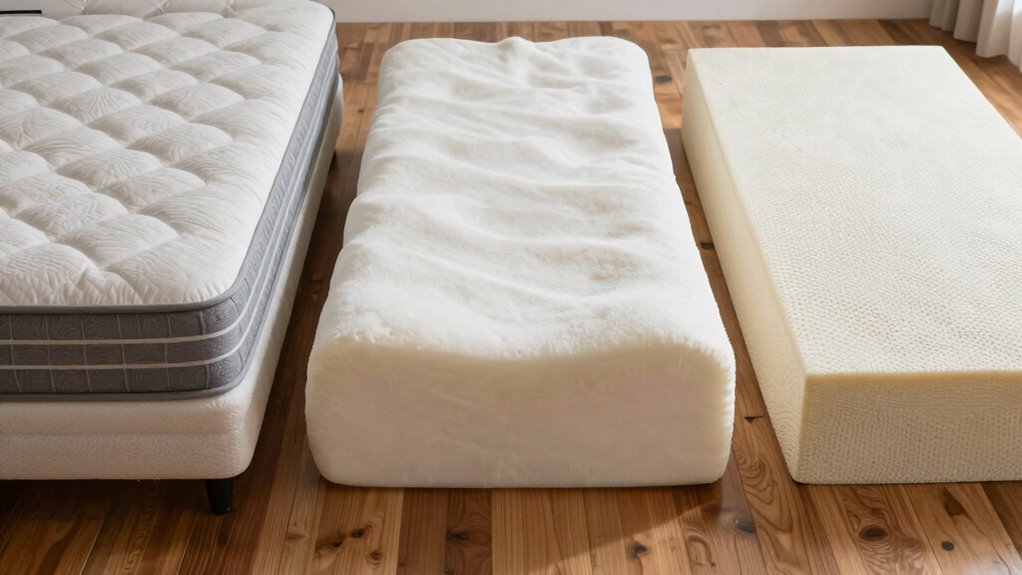
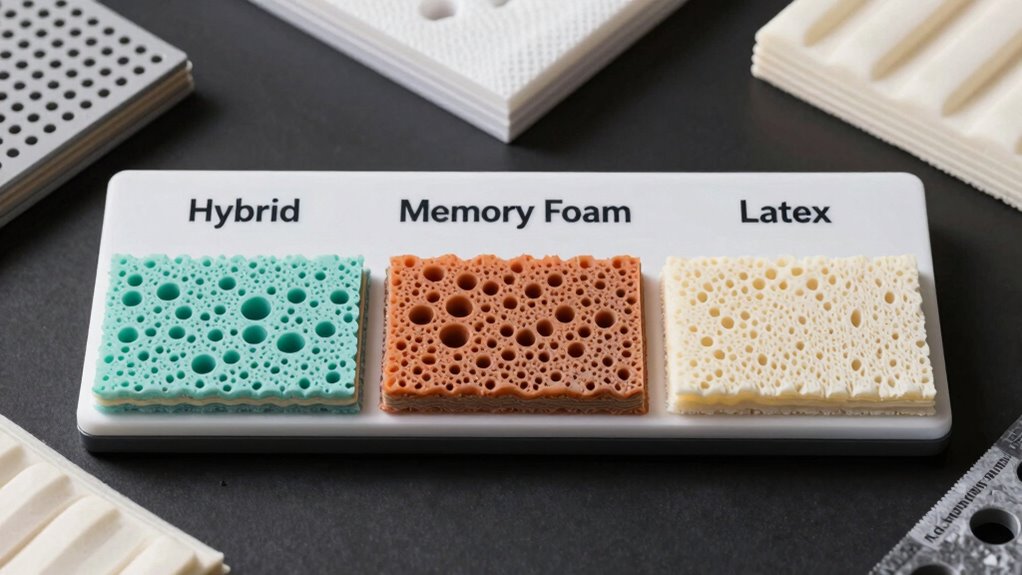
When choosing a mattress, understanding the differences between hybrid, memory foam, and latex options can help you make an informed decision. Hybrid mattresses combine innerspring coils with layers of foam or latex, using manufacturing processes that integrate metal springs with foam layers for durability and support. Memory foam mattresses are made from viscoelastic polyurethane, formed through chemical processes that create a dense, contouring material known for pressure relief. Latex mattresses are crafted from natural or synthetic latex, produced via Dunlop or Talalay processes, resulting in a resilient, breathable material. Each type’s material composition influences its feel and durability, while the manufacturing processes determine factors like responsiveness, breathability, and longevity. European manufacturing techniques also contribute to the quality and sustainability of these materials. Understanding these differences helps you choose a mattress that aligns with your comfort and support needs.
Which Mattress Material Offers the Best Comfort and Support for You?
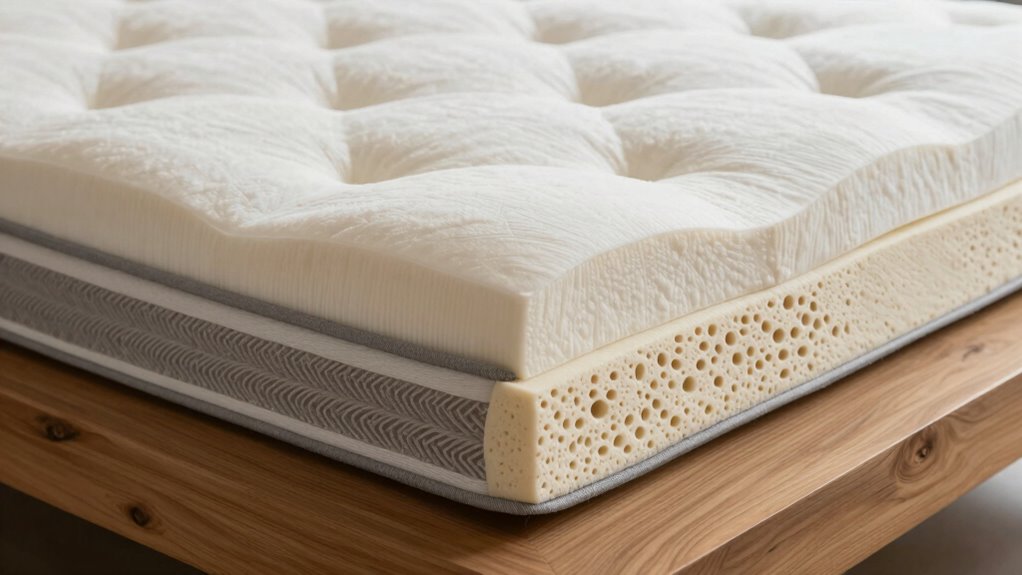
Choosing the right mattress depends on how you prioritize comfort, support, and temperature control. Different materials offer varying comfort levels and supportive features to suit your sleeping style. Considering these factors will help you find the mattress that feels best and keeps you comfortable all night long. Exploring your inner wisdom can also guide you toward making choices that align with your personal needs and values. Understanding the material properties of each mattress type can further inform your decision, ensuring you select a sleep surface that promotes overall health and well-being. Additionally, awareness of water filtration systems can be relevant if you’re considering overall home comfort and health, as clean water contributes to better sleep quality. Recognizing the latest product innovations in mattress materials can also help you choose the most advanced options for enhanced comfort and durability. Incorporating technology-driven designs can further enhance sleep quality by adapting to your specific comfort preferences.
Comfort Level Variations
The comfort and support a mattress provides can vary considerably depending on its material, making it essential to find one that matches your sleep preferences. Your sleep posture and firmness preferences play a big role in this choice. For example:
- If you prefer a softer feel, memory foam molds to your body, offering plush comfort but still supporting your curves.
- For those who like a firmer surface, latex provides a bouncy, resilient feel suitable for stomach and back sleepers.
- Hybrid mattresses combine foam and coils, offering a balance of comfort and support tailored to different sleep postures and firmness levels.
- Understanding the role of AI ethics in developing mattress technology can help ensure safety and transparency in new sleep products.
- Considering natural materials can also influence your comfort and environmental impact when selecting a mattress.
- Additionally, advancements in AI-driven customization are beginning to enable the development of mattresses that adapt dynamically to individual sleep patterns, enhancing personalized comfort.
- The integration of smart technology into mattresses is another emerging trend, aiming to optimize sleep quality through real-time adjustments.
- Incorporating safety standards in mattress design ensures that new materials and technologies meet health and safety regulations, giving consumers peace of mind.
Understanding these variations helps you choose a mattress that feels just right, providing the comfort you need for restful sleep without sacrificing support.
Supportive Features Differences
Different mattress materials offer varying levels of support to suit your sleep needs. Supportive features depend largely on mattress firmness and construction. Hybrid mattresses combine foam and coils, providing a balanced mix of support and bounce, ideal for those who need both pressure relief and stability. Memory foam offers superior contouring, hugging your body to reduce pressure points, but may feel softer or firmer depending on the density. Latex mattresses deliver resilient support with a natural bounce, maintaining firmness while offering responsive comfort. Your choice hinges on how much support you need for spinal alignment and pressure relief. Consider your preferred firmness level and whether you want more responsive support or a softer, body-conforming feel to find the best mattress material for your support needs. Additionally, understanding the supportive features of each material can help you make a more informed decision to achieve optimal sleep quality, as attention to detail in mattress construction significantly impacts overall comfort. Recognizing the material properties can help you select a mattress that offers the right balance of support and comfort tailored to your individual needs. For example, when selecting a mattress, it’s important to consider how material composition influences durability and long-term support, especially given the reputation of certain materials in the Gold IRA Markets for their reliability and value.
Temperature Regulation Abilities
If maintaining a comfortable sleep temperature is important to you, understanding how various mattress materials regulate heat can make a big difference. Different materials excel at temperature control and heat dissipation, affecting your sleep quality. Hybrid mattresses often combine cooling innersprings with breathable foam, promoting better airflow. Memory foam tends to trap heat, which can cause discomfort, but cooling gel-infused options help improve heat dissipation. Latex naturally offers excellent temperature regulation due to its breathable, open-cell structure. Additionally, material breathability plays a crucial role in preventing heat buildup and ensuring a cooler sleep experience. The density and composition of mattress materials significantly influence their heat dissipation efficiency, which varies based on the specific design and construction, impacting overall comfort during warm nights. For example, airflow channels integrated into certain designs can further enhance heat management. Choosing the right material depends on your sleep temperature needs for a cooler, more comfortable night, with effective heat transfer being a key factor in material performance.
What Are the Best Mattress Options for Different Sleep Positions?
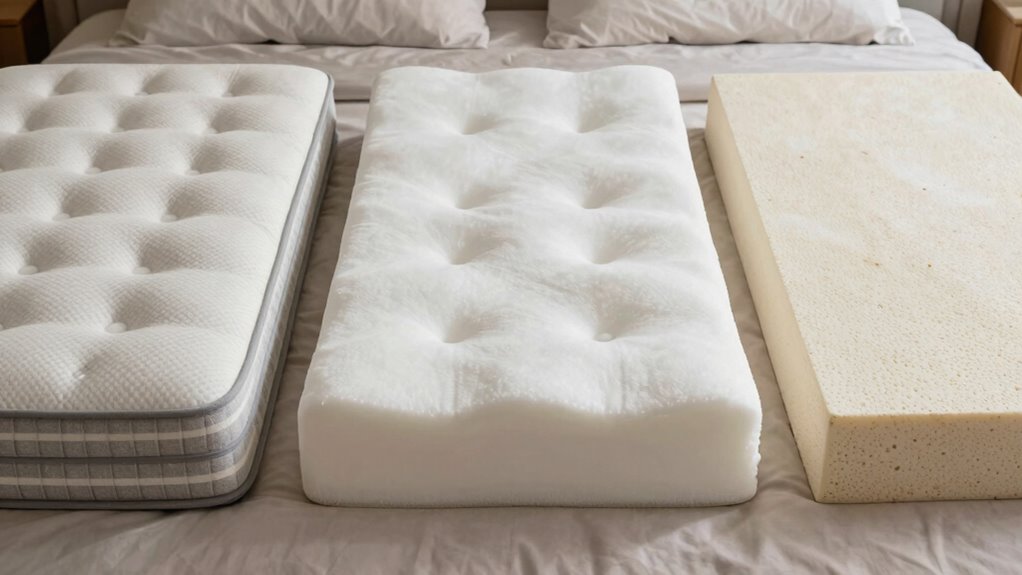
Your sleep position influences the mattress type that will keep you comfortable and supported. Side sleepers need cushioning to relieve pressure points, while back sleepers require balanced support for proper spinal alignment. Stomach sleepers often prefer firmer surfaces that prevent their hips from sinking in too much. Additionally, selecting a mattress with appropriate firmness levels can enhance sleep quality and reduce discomfort for different sleep postures. Understanding how mattress materials affect pressure relief and support can help you choose the best option for your sleep style. For example, floating on water concepts in water parks illustrate how different densities and materials can influence buoyancy and support, providing insight into how mattress compositions impact comfort. Moreover, knowing how material density and resilience influence pressure distribution can guide you in selecting the most supportive mattress for your needs.
Side Sleepers’ Comfort Needs
Side sleepers need a mattress that balances pressure relief and support to keep the spine aligned comfortably. You should look for a surface that contours to your body’s curves, reducing shoulder and hip pressure. Your pillow compatibility plays a role; a pillow that supports proper neck alignment enhances comfort. The sleeping surface texture matters too—softer, plush materials provide cushioning, while a slight firmness prevents sinking too deeply. Consider these factors:
- Adequate contouring that cushions shoulders and hips
- Compatibility with your preferred pillow for neck support
- A sleeping surface texture that offers a gentle, pressure-relieving feel
Choosing a mattress with these qualities ensures you wake up refreshed, free from aches, and properly supported throughout the night.
Back Sleepers’ Support Level
Back sleepers require a mattress that offers balanced support to maintain proper spinal alignment while preventing pressure points. The right support level ensures your hips and shoulders are adequately supported without sagging. Memory foam often provides excellent pressure relief, conforming to your curves, but may lack enough support for heavier sleepers. Latex offers a responsive feel with good support and pressure relief, while hybrids combine the best of both worlds with supportive coils and soft comfort layers. Consider this quick overview:
| Mattress Type | Support Level | Pressure Relief |
|---|---|---|
| Memory Foam | Moderate to high | Excellent |
| Latex | High support, responsive | Good |
| Hybrid | Supportive, balanced | Very good |
Choose based on your support needs and preferred pressure relief.
Stomach Sleepers’ Firmness Preference
Stomach sleepers generally prefer a firmer mattress to prevent the hips from sinking too deeply, which can misalign the spine and cause discomfort. Your firmness preferences should support proper sleep posture considerations, guaranteeing your back stays aligned. A medium-firm to firm mattress helps keep your hips elevated and prevents lower back strain.
Picture yourself lying comfortably, with your shoulders and hips supported evenly. Think about:
- A surface that resists sagging under your stomach’s weight
- Maintaining a neutral spine without feeling trapped
- Preventing pressure points on your abdomen and pelvis
Choosing the right firmness level assures your sleep posture remains healthy, reducing the risk of aches and pains. For stomach sleepers, a mattress that balances support and comfort is key to a restful, pain-free night.
How Long Do Hybrid, Memory Foam, and Latex Mattresses Last?
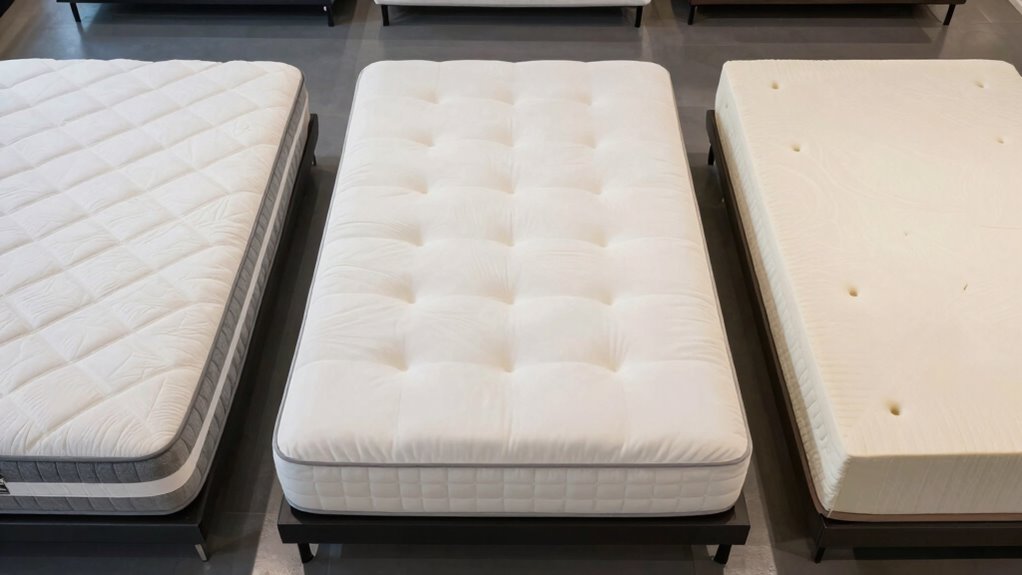
The lifespan of a mattress depends largely on its material, with each type offering different durability levels. Hybrid mattresses typically last around 6 to 8 years, thanks to their combination of foam and coils, but their longevity can be affected by daily wear and tear. Memory foam mattresses usually last 7 to 10 years, with dense foam providing better durability, though they may sag over time. Latex mattresses are the most durable, often lasting 10 to 15 years, thanks to their natural resilience. Consider bed frame compatibility to ensure your mattress remains in good condition longer. When it’s time to replace, look into mattress recycling options to dispose of your old mattress responsibly, reducing environmental impact. Proper care extends your mattress’s lifespan regardless of material.
What Features Matter Most? Breathability, Allergies, and Motion Isolation
When choosing a mattress, breathability and airflow are key to staying cool all night. You also want materials that resist allergens and keep your sleeping environment clean. Understanding how these features impact your comfort can help you pick the best mattress for your needs.
Breathability and Airflow
Breathability and airflow play essential roles in ensuring a comfortable night’s sleep, especially if you tend to overheat or suffer from allergies. A mattress with good ventilation enhancements helps dissipate heat and moisture, keeping you cooler throughout the night. Materials like latex naturally feature open-cell structures, promoting better airflow channels. Hybrid mattresses often incorporate breathable coil systems that improve ventilation, reducing heat buildup. Memory foam, on the other hand, can trap heat unless it includes cooling technologies or perforations. Proper airflow prevents sweat accumulation, discourages mold, and enhances overall hygiene. To optimize comfort, look for mattresses designed with ventilation enhancements and airflow channels that promote consistent, healthy airflow while you rest.
Allergy Resistance and Hygiene
Choosing a mattress that resists allergens and maintains hygiene is essential for a healthier sleep environment. Dust mites thrive in moist, warm areas, so materials that inhibit their growth help reduce allergens. Latex mattresses naturally resist dust mites and mold, making allergen reduction easier. Memory foam can also block dust mites but requires regular cleaning to stay hygienic. Hybrid mattresses often feature covers or materials that improve breathability and discourage allergen buildup. To improve hygiene further, look for mattresses with removable, washable covers. Good airflow prevents moisture accumulation, reducing mold and dust mite habitats. Prioritizing allergen resistance and hygiene helps minimize allergy symptoms, ensuring you wake up feeling refreshed and healthy.
How Much Do These Mattresses Cost? Pricing and Value Breakdown
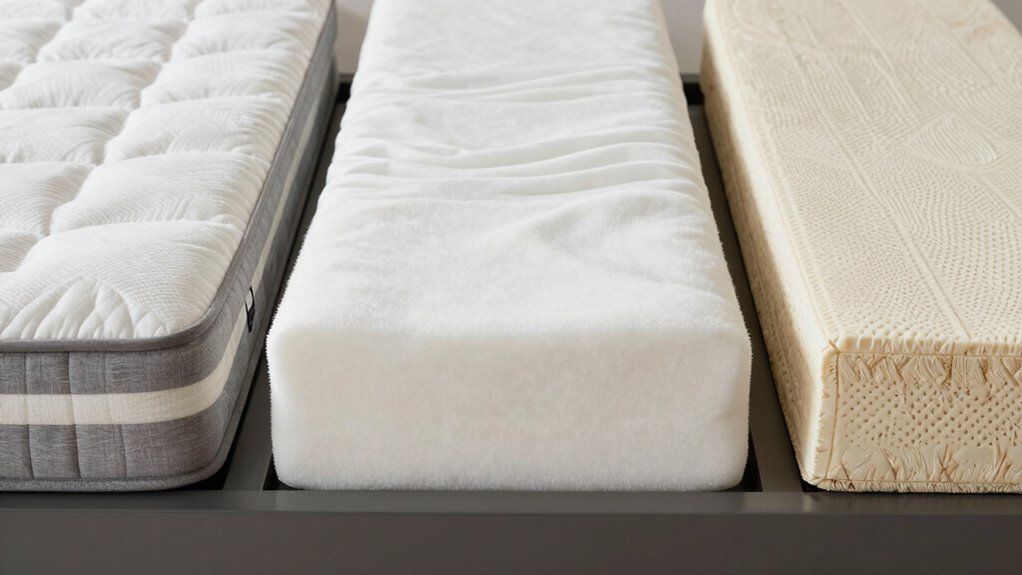
Mattress prices can vary widely depending on the material, brand, and features, making it important to understand the value behind each option. A thorough pricing comparison helps you determine which mattress offers the best balance of cost and benefits. Generally, hybrid mattresses range from $800 to $2,000, memory foam beds from $500 to $1,500, and latex mattresses from $1,000 to $3,000. Keep in mind, higher prices often reflect better durability, comfort, and longevity. To make an informed value assessment, consider factors like warranty coverage, mattress lifespan, and added features.
- Hybrid mattresses often cost more upfront but provide a mix of support and comfort.
- Memory foam offers affordability with excellent pressure relief.
- Latex mattresses tend to be the most expensive but promise durability and natural materials.
How to Maintain Your Mattress and What Warranties Cover
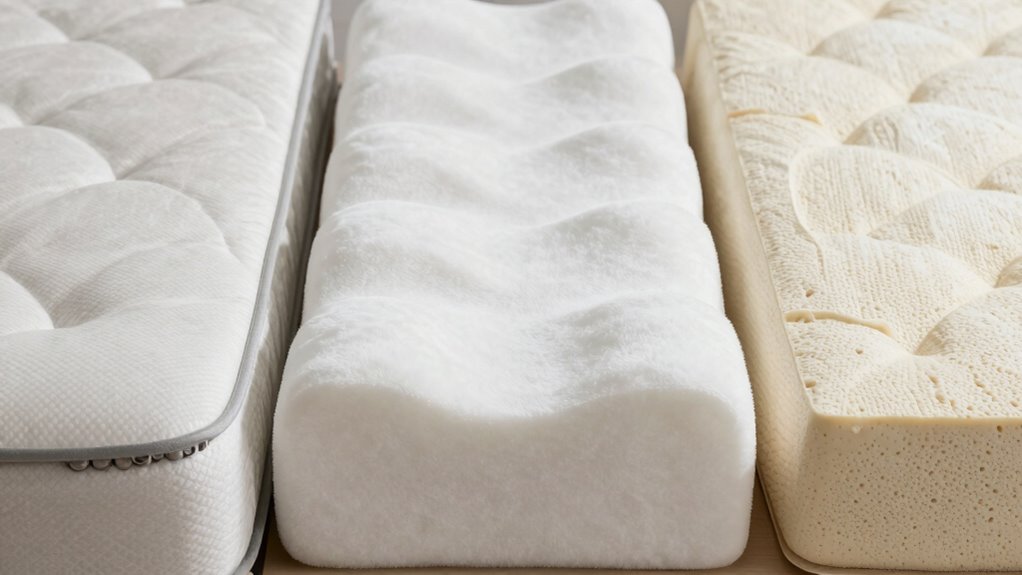
To keep your mattress in top condition and guarantee it lasts as long as possible, regular maintenance is essential. Good sleep hygiene starts with a clean, supportive mattress. Regular mattress cleaning helps prevent dust, allergens, and bacteria buildup, which can affect sleep quality. Use a vacuum to remove debris and spot-clean stains promptly. Rotate your mattress every three to six months to promote even wear, especially with memory foam or latex. Check your warranty details; most cover manufacturing defects but exclude damage from neglect or misuse. Protect your investment with a mattress protector to guard against spills and allergens. Proper maintenance prolongs your mattress’s lifespan, ensures better sleep hygiene, and preserves your warranty coverage.
Which Mattress Material Is the Best Balance of Comfort, Durability, and Price?
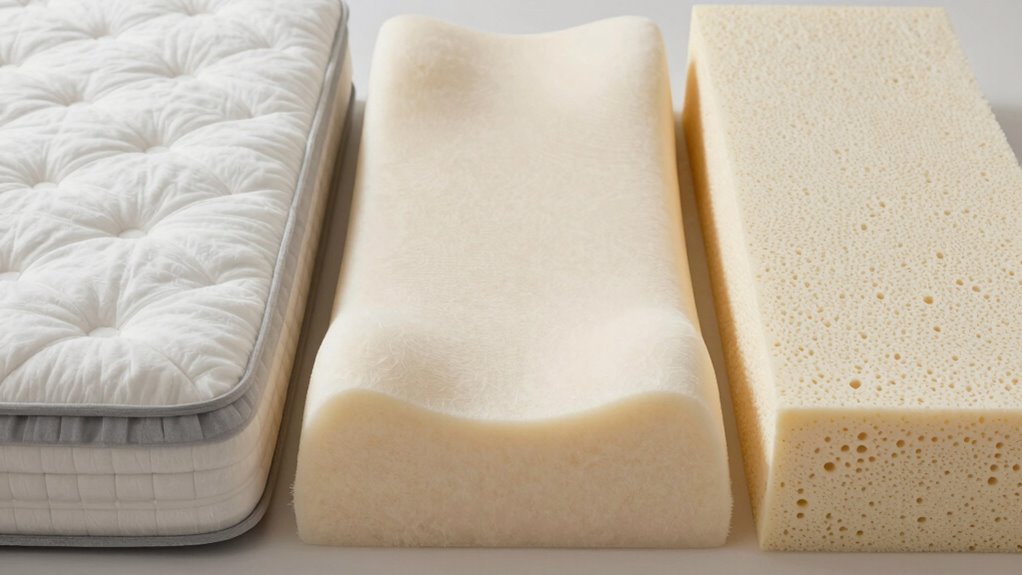
When considering different mattress materials, finding the right balance of comfort, durability, and price can make a significant difference in your sleep quality and long-term satisfaction. Among options like hybrid, memory foam, and latex, hybrid mattresses often strike this balance well. They combine supportive coil layers with foam or latex top layers, promoting a healthy sleep cycle by offering both pressure relief and responsiveness. This layered approach enhances comfort while maintaining durability and affordability.
- You get the contouring comfort of foam with the bounce and airflow of coils.
- The mattress layering allows for better temperature regulation.
- Hybrid mattresses tend to last longer without a high price tag, making them a practical choice for sustained comfort and value.
How to Decide Which Mattress Is Right for Your Sleep Style and Budget
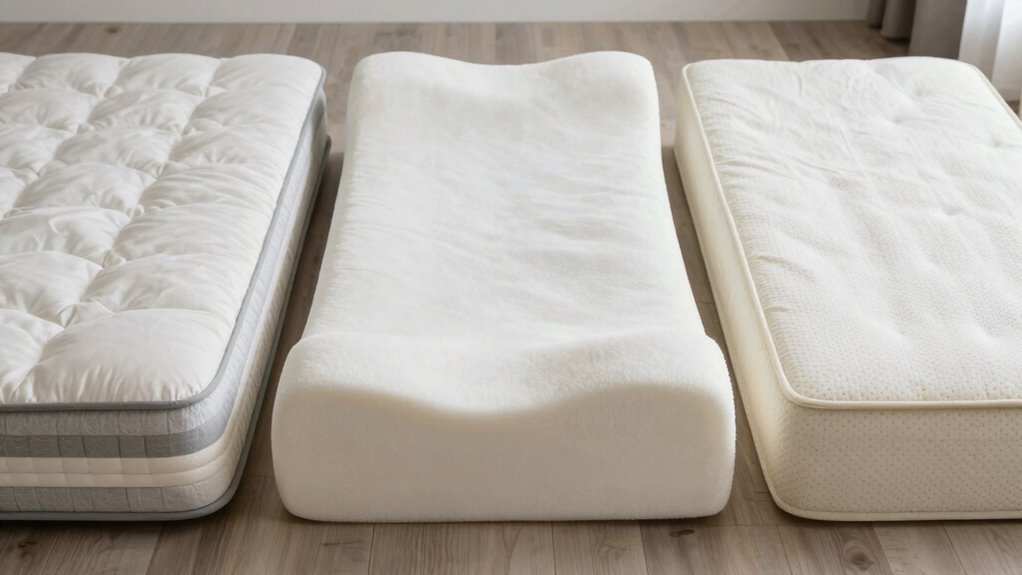
Choosing the right mattress hinges on understanding your sleep style and budget, as these factors directly influence comfort and value. Your sleep position, firmness preference, and budget determine which material suits you best. Use bed size comparisons to ensure the mattress fits your space and needs. Consider these mattress shopping tips: set a realistic budget, test different firmness levels, and prioritize quality.
| Sleep Style | Best Mattress Type |
|---|---|
| Side Sleeper | Memory Foam or Latex |
| Back Sleeper | Hybrid or Latex |
| Stomach Sleeper | Firm Mattress, Hybrid or Latex |
| Budget-Conscious | Memory Foam or Budget Hybrid |
Matching your sleep style with the right material guarantees better rest and longer-lasting comfort.
Final Tips: Choosing the Perfect Mattress for a Better Night’s Sleep
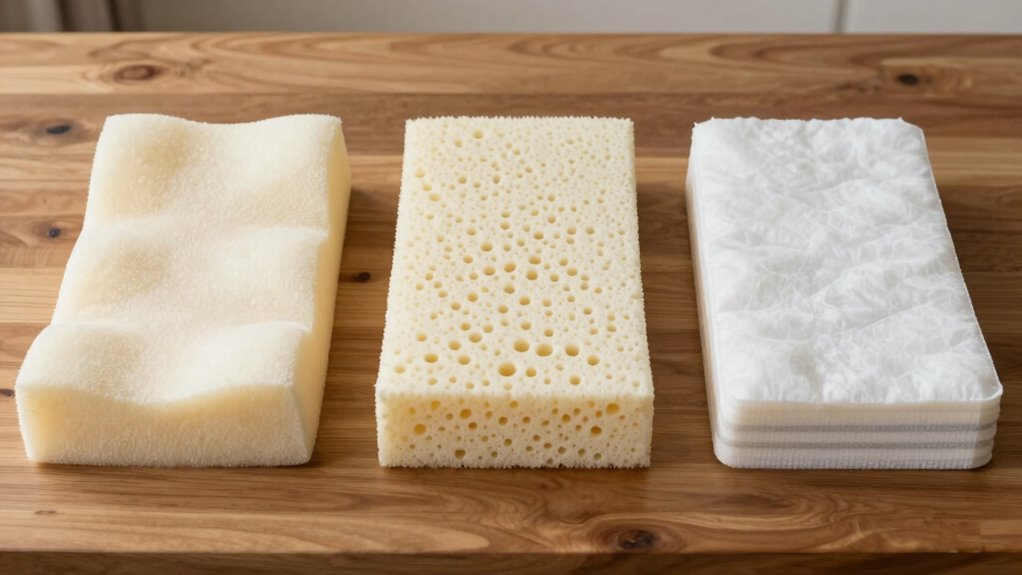
Finding the perfect mattress can greatly improve your sleep quality, so it’s essential to take into account a few final tips before making your purchase. First, consider your sleep environment—ensure your room is cool, dark, and quiet to enhance comfort. Next, prioritize mattress customization options like adjustable firmness or layered designs, so you can tailor your sleep surface to your needs. Finally, test your chosen mattress in-store or through a trial period, paying attention to how it supports your body and relieves pressure points. Remember, a well-suited mattress not only fits your preferences but also complements your sleep environment, leading to better rest and overall health. By focusing on these factors, you’ll make a smarter choice for a more restful night.
Frequently Asked Questions
Are Hybrid Mattresses Suitable for People With Allergies?
Hybrid mattresses can be suitable for allergy prevention if you choose hypoallergenic options. Many hybrids feature allergen-resistant materials like tightly woven covers and hypoallergenic foam or latex layers, reducing dust mites and mold risks. However, since hybrids combine various materials, check for specific allergy-friendly features. If you have severe allergies, explore hypoallergenic mattresses designed to minimize allergens, ensuring you find a safe, comfortable sleep environment.
Can Memory Foam Mattresses Cause Overheating During Sleep?
Yes, memory foam mattresses can cause overheating during sleep because they often have high heat retention, which traps your body heat. This can make you feel uncomfortably warm, especially if you tend to sleep hot. To improve temperature regulation, consider choosing a memory foam mattress with cooling gel infusions or open-cell technology. Using breathable sheets and keeping your bedroom cool can also help prevent overheating during the night.
How Environmentally Friendly Are Latex Mattresses?
Latex mattresses are generally quite environmentally friendly, especially if made from sustainably sourced latex. You benefit from biodegradability benefits, as natural latex breaks down more easily than synthetic options. By choosing a sustainably sourced latex mattress, you help reduce environmental impact and support eco-friendly practices. Plus, natural latex often has fewer chemicals, making it a healthier and greener choice for both you and the planet.
Do Hybrid Mattresses Require More Maintenance Than Other Types?
Hold onto your bicycle, because hybrid mattresses do require more maintenance than other types. You’ll need to check the maintenance frequency to prevent durability concerns, such as sagging or uneven wear. Regularly rotating the mattress helps, but hybrids with coils can also need more attention to keep the comfort layers intact. Overall, they demand a bit more upkeep, but many find the extra effort worth it for the comfort and support.
Which Mattress Material Is Best for Side Sleepers With Back Pain?
You should choose memory foam if you’re a side sleeper with back pain. It contours to your body, reducing pressure points and supporting proper spinal alignment. This helps ease discomfort and keeps your spine in a healthy position. Latex mattresses are also good for pressure relief and are more responsive, but memory foam’s contouring is especially beneficial for alleviating side sleeper back pain.
Conclusion
Choosing the right mattress feels like finding a soulmate—once you do, every night becomes a peaceful retreat. Remember, the perfect mattress isn’t just about comfort; it’s about aligning with your sleep style, budget, and needs. By understanding the differences between hybrid, memory foam, and latex, you’re equipped to make a choice that will transform your sleep and your days. Don’t settle for less—your best night’s sleep is waiting just beneath the surface.