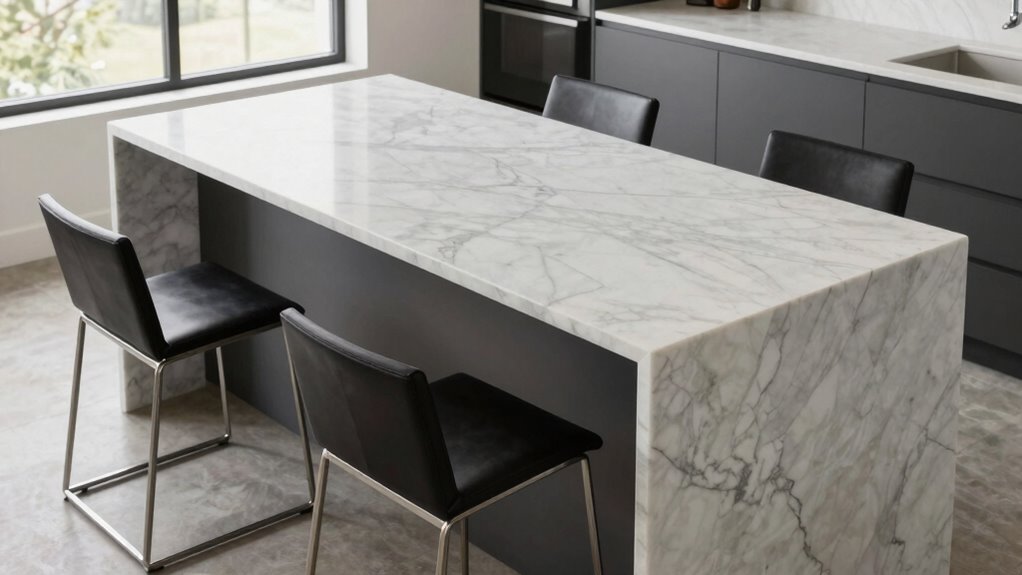

To guarantee safety and functionality around your kitchen island with seating, you need to measure proper clearance. Typically, leave at least 36-48 inches of space on all sides for easy movement and access, and around 24-30 inches for comfortable seating. Accurate measurements help prevent crowding and accommodate appliances or doors. Failing to measure correctly can lead to cramped spaces. Keep exploring for more tips on creating an ideal kitchen layout that’s both practical and stylish.
Key Takeaways
- Maintain at least 36-48 inches of clearance around the island for comfortable seating and easy movement.
- Measure the total available space, accounting for obstructions, to ensure proper clearance and seating placement.
- Ensure 24-30 inches of space behind seats for comfortable access and movement.
- Check that the seat depth (15-18 inches) and knee clearance (at least 9 inches) allow for comfortable seating.
- Use accurate measurement tools and visual markers to plan and verify proper clearance before installing seating.
Why Proper Clearance Matters for Kitchen Islands With Seating
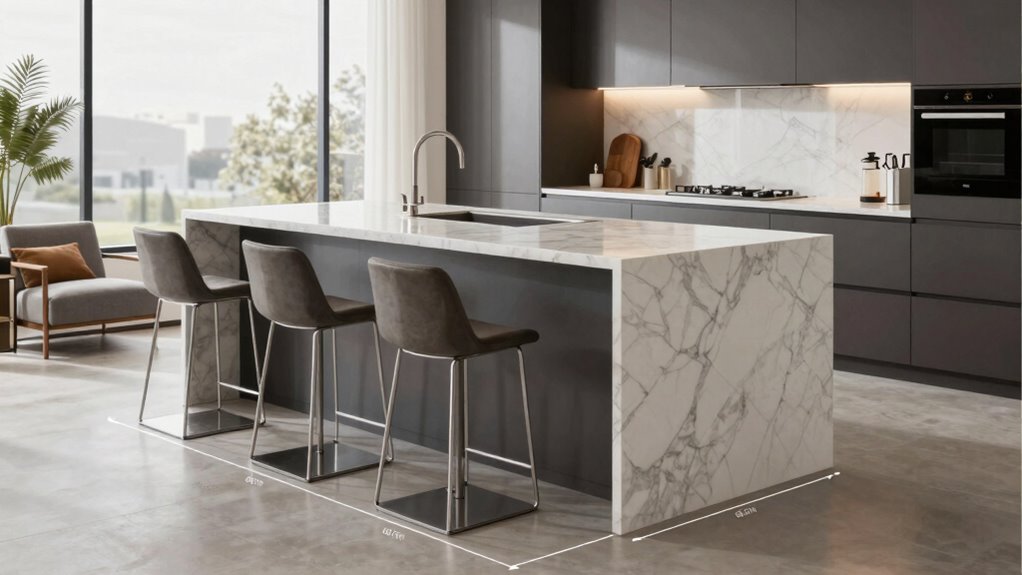
When planning a kitchen island with seating, proper clearance is essential for comfort and safety. Adequate space guarantees you can move freely without feeling cramped or risking accidents. It also helps maintain the kitchen’s overall design aesthetics, allowing your space to look balanced and inviting. When considering material choices for your island, think about surfaces that are durable and easy to clean, especially in high-traffic areas. Proper clearance allows for smooth interactions between the seating area and surrounding countertops, making your kitchen more functional. Without enough space, your island can feel cluttered and uncomfortable, detracting from the room’s style. Prioritizing clearance ensures your kitchen remains both stylish and practical, providing a comfortable environment for cooking, socializing, and relaxing. Additionally, understanding clearance standards can help you optimize your layout for maximum efficiency and comfort. Ensuring your design adheres to spacing guidelines can prevent congestion and improve overall flow. Good design principles also emphasize the importance of measuring your space carefully before installation. Recognizing ergonomic considerations further enhances the usability and safety of your kitchen layout, and incorporating visual balance can make your space more aesthetically pleasing.
How to Measure Your Kitchen Space for the Perfect Island
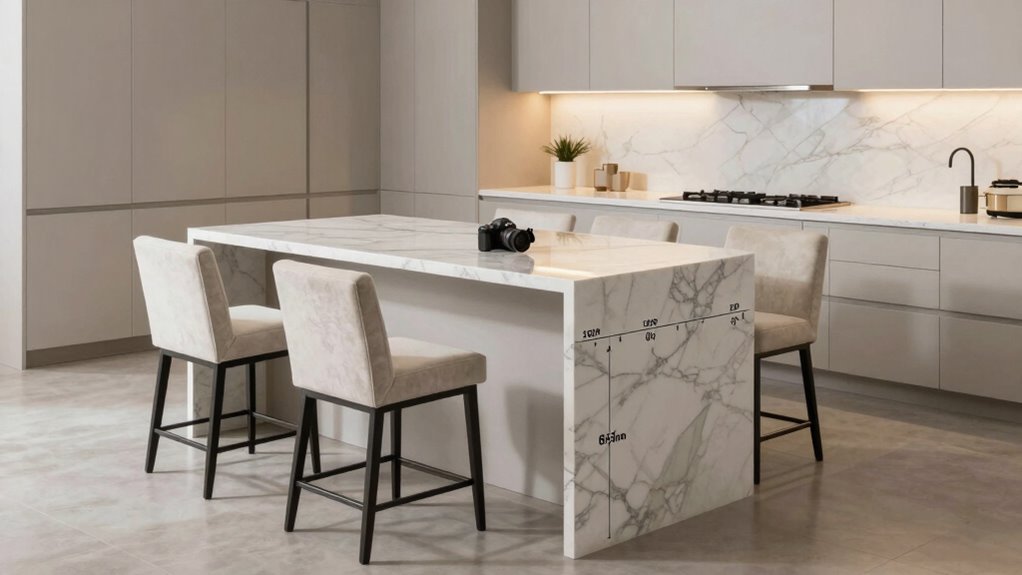
To guarantee your kitchen island fits perfectly, you need to measure your space accurately and consider ideal clearance. Use a tape measure to record the dimensions and leave enough room for comfortable movement and seating. Getting these measurements right helps you create a functional, inviting centerpiece that works seamlessly in your kitchen. Remember to account for clearance rules to ensure safe and easy access around your island. Additionally, understanding power tool safety and proper setup can help prevent accidents during installation or modifications. Proper measurement techniques are essential for kitchen layout planning, ensuring your island complements your existing space efficiently. Incorporating document organization tips can also help you keep track of measurements and project details for future reference. Being aware of environmental considerations can help you choose sustainable materials and reduce your ecological footprint during the process.
Optimal Clearance Space
Measuring your kitchen space accurately is essential to make certain your island fits comfortably and maintains functionality. Proper clearance guarantees smooth movement, safe navigation, and a cohesive design aesthetic. Typically, leave at least 36 inches of space around the island for open access, but consider 42 inches if your kitchen sees heavy traffic or multiple cooks. Your material selection impacts the island’s size and placement, so account for edges, overhangs, and finishes. Use this table to plan your clearance:
| Area | Recommended Clearance |
|---|---|
| Walkways | 36-42 inches |
| Seating | 24-30 inches |
| Appliance Access | 36 inches |
Careful measurement guarantees your island complements your kitchen’s flow and style. Additionally, understanding clearance space is vital to ensure your kitchen is both functional and safe.
Accurate Measurement Techniques
Getting accurate measurements of your kitchen is the foundation for installing a well-fitting island. Start by measuring the available space, including length, width, and ceiling height. Use a tape measure for precise dimensions and note any obstructions like cabinets or appliances. Consider your chosen countertop materials—some may require extra clearance for overhangs or edge details. Don’t forget lighting considerations; assess the placement of existing fixtures or where new lighting will be installed to avoid conflicts. Mark measurements on a floor plan or use painter’s tape on the floor for visual clarity. Double-check all measurements before purchasing or building. Incorporating proper measurement techniques ensures your island fits comfortably, accommodates seating, and allows for proper clearance. Accurate measurements ensure your island fits comfortably, accommodates seating, and allows for proper clearance. This step is essential for a seamless, functional kitchen design, especially when applying simple, effective measurement techniques to achieve the best results. Additionally, consulting standard clearance guidelines can help you determine the ideal spacing around your island for safety and usability.
Standard Guidelines for Comfortable Seating and Movement
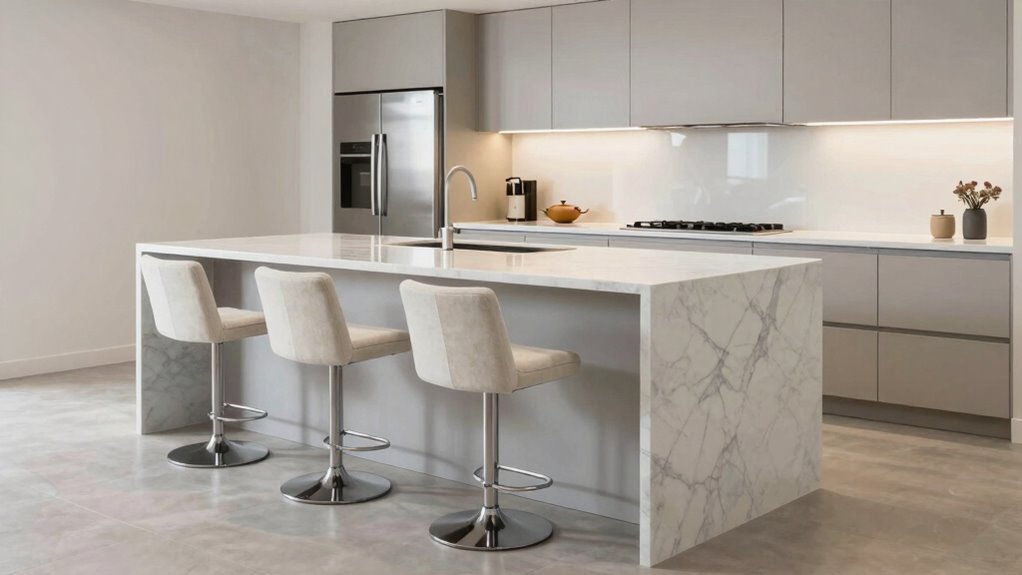
To guarantee your kitchen island is both comfortable and functional, you need to contemplate key guidelines for seating and movement. Make sure there’s enough knee clearance so guests can sit easily, and choose seat depths that provide comfort without crowding. Additionally, leave a clear path around the island to allow smooth movement and easy access from all sides. Proper space allocation is essential to prevent congestion and ensure an enjoyable cooking and socializing experience. Considering wellness-focused design principles can also help create a healthier and more comfortable environment in your kitchen space. Incorporating ergonomic considerations can further enhance comfort and reduce fatigue during extended use, especially as many designers now emphasize the importance of ethnic diversity in interior design to reflect a broader range of needs and preferences. Incorporating auditory processing awareness into your kitchen design can also help accommodate diverse sensory sensitivities, promoting a more inclusive environment.
Minimum Knee Clearance
Ensuring adequate knee clearance is essential for comfortable seating at your kitchen island. To optimize this space, consider these key points:
- Maintain a minimum of 9 inches (23 cm) between the bottom of the countertop and the top of the seat cushion, allowing your knees to move freely.
- Choose countertop materials that are smooth and durable, like quartz or granite, to prevent discomfort against your knees.
- Incorporate adjustable lighting options under the countertop to improve visibility without affecting knee space or comfort.
Optimal Seat Depth
Choosing the right seat depth for your kitchen island helps promote comfort and safe movement. An ideal seat depth typically ranges from 15 to 18 inches, ensuring you sit comfortably without feeling cramped or overly extended. Proper seat depth enhances seat comfort by supporting your thighs while allowing your knees enough space underneath. This ergonomic design contributes to reducing strain during extended sitting periods. If the seat is too deep, you might struggle to sit back comfortably, which can lead to poor posture. Conversely, a shallow seat may lack support. Measure carefully to match your height and the available legroom. Additionally, understanding seat depth standards can help you select the most suitable size for your space. Being aware of standard measurements helps ensure your seating arrangement is both functional and comfortable. Properly considering ergonomic principles can further improve overall comfort and usability. Incorporating natural back support can also enhance comfort during longer periods of sitting. By selecting the right seat depth, you create a welcoming space that encourages relaxed seating and easy movement around your kitchen island.
Clear Path for Movement
Maintaining a clear path around your kitchen island is essential for safe and comfortable movement. Proper clearance prevents accidents and ensures functionality. To achieve this, consider these guidelines:
- Keep at least 36 inches of space between the island and surrounding cabinets or appliances for ease of movement.
- Leave enough room for decorative accents without obstructing walkways, enhancing aesthetics without sacrificing accessibility.
- Pay attention to appliance placement, ensuring doors won’t interfere with seating areas or block pathways when opened.
- Remember that ergonomic space can help promote better posture and reduce strain during meal prep and socializing.
Tips for Creating Enough Space Around Your Kitchen Island
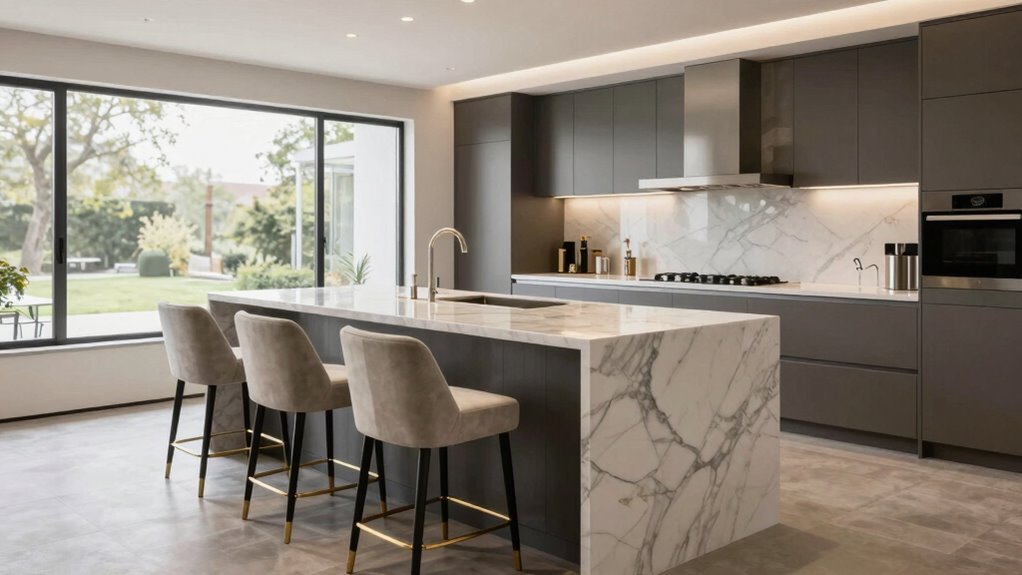
Creating enough space around your kitchen island is essential for a functional and comfortable layout. To achieve this, prioritize maintaining sufficient counter space for prep work and easy movement. Keep at least 36 to 48 inches of clearance on all sides of the island to ensure you can walk freely and access appliances without obstruction. Incorporate smart storage options within or near the island to reduce clutter and maximize efficiency. For example, use cabinets or drawers underneath to store utensils, pots, and pans, keeping your countertop clear. Avoid overcrowding the area, which can hinder movement and workspace. By carefully planning the spacing and utilizing effective storage, your kitchen remains practical, inviting, and easy to navigate around your island.
Common Mistakes When Planning Kitchen Island Clearance
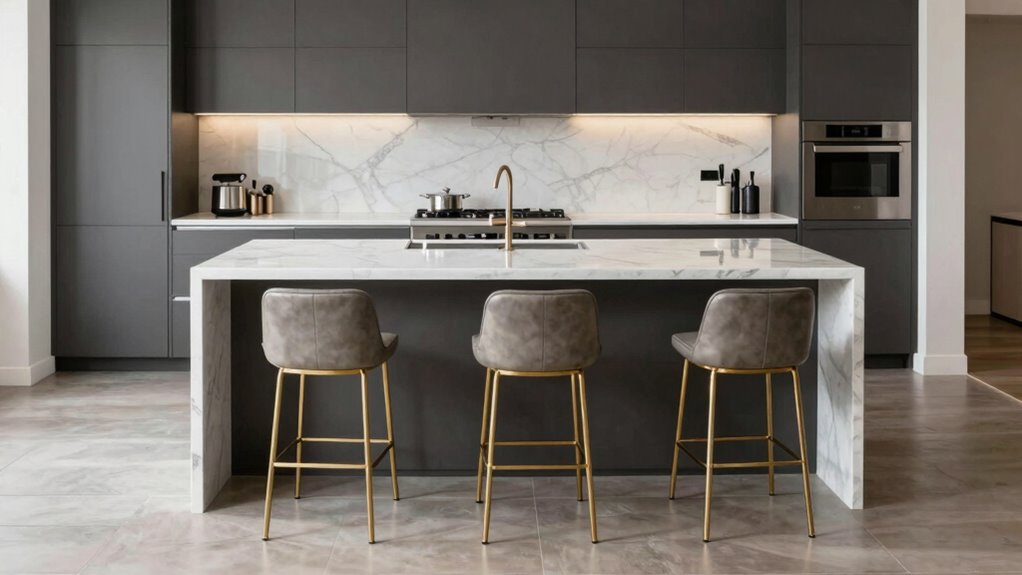
One common mistake homeowners make when planning their kitchen island clearance is neglecting to account for enough space on all sides. This oversight can hinder movement and limit decorating styles or countertop materials you want to incorporate. To avoid this, consider these points:
- Failing to leave at least 36 inches of clearance on all sides, which can restrict seating and access.
- Overlooking how different decorating styles, from modern to rustic, require varying space for accessories and decor.
- Ignoring the thickness of countertop materials, such as thick granite or thin quartz, which affects overall clearance needs.
Best Tools and Resources to Ensure Proper Clearance
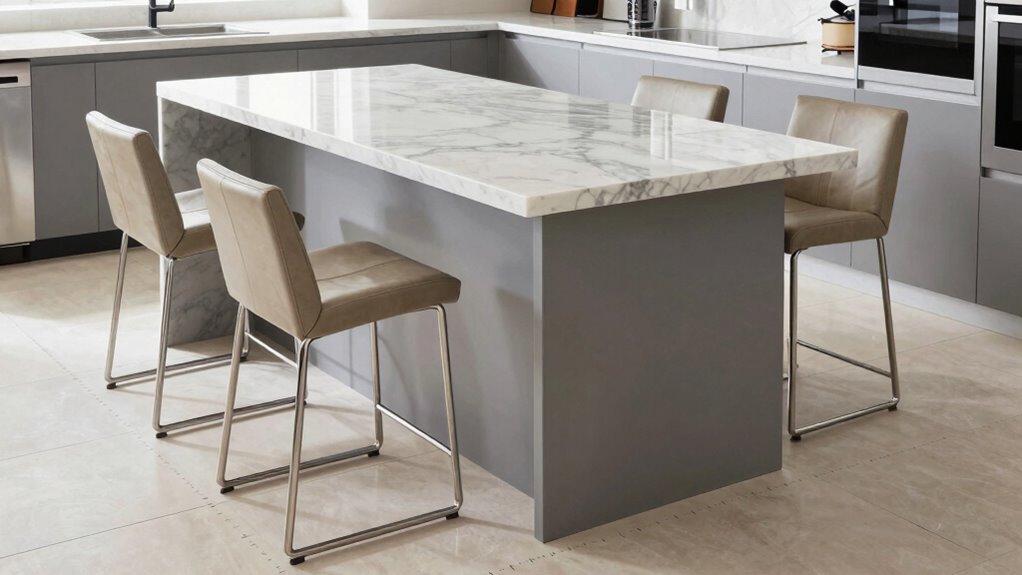
To guarantee your kitchen island has adequate clearance, leveraging the right tools and resources is essential. A laser distance measurer helps you accurately capture space, ensuring sufficient room for movement and seating. Use a tape measure for quick checks on dimensions and clearance zones. Digital design apps allow you to visualize different layouts, balancing design aesthetics with functionality while considering material selection. These tools help you plan effectively, avoiding tight spots that hinder movement or disrupt the kitchen’s flow. Resources like online calculators or clearance guidelines from professional associations provide standards to follow. Combining these tools with your design knowledge ensures your island not only looks great but also offers comfortable, functional seating space, meeting all clearance rules seamlessly.
Frequently Asked Questions
What Are the Ideal Heights for Kitchen Island Seating?
You should aim for a kitchen island seating height of about 24 to 26 inches for comfortable counter space and ergonomic design. This height allows you to sit comfortably without straining your back or neck while working or socializing. Measure carefully to make certain of enough clearance between the seat and the underside of the counter, typically around 10 to 12 inches, so you have ample space to move and enjoy your kitchen area.
How Does Island Shape Affect Clearance Space Requirements?
Your island shape directly affects clearance requirements. A rectangular or elongated shape needs about 36-48 inches of space around it for comfortable movement. If you choose a round or curved island, you can often reduce the clearance slightly but should still aim for at least 36 inches to avoid congestion. Consider the shape carefully to guarantee enough room for seating, cooking, and walking without feeling cramped.
Can Multiple Seating Areas Impact Overall Clearance Rules?
Adding multiple seating areas can notably impact clearance rules. In fact, a kitchen with three or more seats requires at least 24 inches of space per person for comfortable ergonomic design. This means you’ll need to carefully consider seating capacity and layout, ensuring each area maintains proper clearance. Failing to do so could make your kitchen cramped and less functional, especially when hosting guests or preparing meals.
What Are the Safety Considerations for High-Traffic Kitchens?
In a high-traffic kitchen, safety is key. You should carefully plan appliance placement to prevent congestion and guarantee easy access. Keep walkways clear of clutter and avoid placing appliances or seating too close to doorways or walkways. Good lighting considerations are also essential; make sure all areas are well-lit to prevent accidents. Regularly check for sharp corners and secure heavy items to maintain a safe environment for everyone.
How Do Local Building Codes Influence Island Clearance Measurements?
Did you know that 85% of home renovations face code violations? Local building codes directly influence island clearance measurements, ensuring safety and functionality. They mandate specific distances for electrical safety and plumbing regulations, which you must follow to prevent hazards. Always check your local codes before planning your kitchen island, as they dictate minimum clearances for seating and movement, helping you create a safe, compliant space that’s perfect for cooking and socializing.
Conclusion
Getting your kitchen island clearance right isn’t just a detail—it’s the secret to transforming your entire cooking space into a seamless, stress-free paradise. Imagine never bumping into a chair or feeling cramped again—your mornings will feel like a dream, and every meal will be a celebration. Don’t settle for a cramped chaos; measure, plan, and create the kitchen of your dreams. Your perfect, spacious oasis is just a measurement away—make it happen today!