
Lighting temperature, measured in Kelvin (K), shows the color appearance of your lights, from warm to cool tones. Warm light (2700K–3000K) creates cozy, relaxing spaces, while neutral (3500K) offers a balanced feel, and cool light (5000K+) energizes and sharpens environments like offices or kitchens. Choosing the right temperature depends on your space’s purpose and mood you want to set. To find out how to pick the perfect light for every room, keep exploring.
Key Takeaways
- Warm light (2700K–3000K) creates cozy, relaxing atmospheres, ideal for living rooms and bedrooms.
- Neutral light (3500K) offers a balanced tone suitable for offices, kitchens, and general areas.
- Cool light (4000K–6500K) promotes alertness and is perfect for workspaces, studios, and modern aesthetics.
- Kelvin values determine the color appearance, ranging from yellowish warm to bluish cool tones.
- Proper lighting choices enhance mood, functionality, and energy efficiency based on room purpose and natural light.
What Is Lighting Temperature and Why Is It Important?
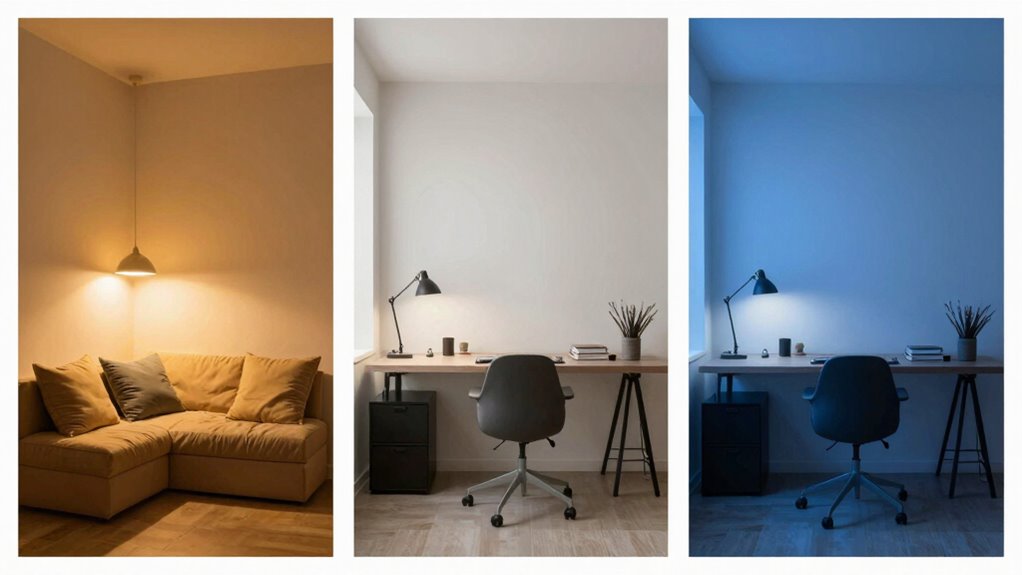
Have you ever noticed how different light bulbs cast varying shades of light? That’s because lighting temperature influences the mood and functionality of a space. Understanding lighting temperature is essential for effective lighting design, as it helps you choose the right bulbs for different areas. Warm light creates a cozy atmosphere, while cool light promotes alertness. Additionally, selecting bulbs with the right lighting temperature can boost energy efficiency by reducing the need for additional lighting or adjustments. When you pay attention to this aspect, you guarantee your space is both inviting and practical. Proper lighting temperature enhances the overall ambiance, supports your activities, and can even save you money by optimizing energy use. It’s a simple yet critical element of good lighting design. Interestingly, awareness of lighting temperature also ties into broader environmental and health considerations, ensuring your space supports well-being and sustainability. Incorporating the appropriate lighting temperature can also complement the home theater setup, creating an immersive viewing experience tailored to your preferences. Choosing the right lighting temperature can also help reduce light pollution, contributing to a more sustainable environment. Being mindful of lighting temperature can also improve productivity and relaxation, depending on your needs and the setting.
How Do You Read Kelvin Numbers for Lighting?

Understanding how to read Kelvin numbers is key to selecting the right lighting for your space. Kelvin (K) refers to the color temperature of a bulb, which influences its appearance and mood. Lower Kelvin numbers, around 2700K to 3000K, produce warm, yellowish light ideal for cozy lighting design. Higher numbers, like 4000K to 6500K, create cooler, bluish light suitable for task lighting or modern aesthetics. To interpret these numbers, look at the bulb packaging or product description; the Kelvin value indicates the light’s hue. When choosing bulbs for your space, consider how the Kelvin number aligns with your desired atmosphere and functionality. Additionally, understanding the lighting industry terminology can help you better communicate your preferences with retailers and designers. color temperature is also important to consider in relation to other lighting features such as brightness and fixture type. By understanding Kelvin readings, you can make informed bulb selection decisions that enhance your overall lighting design. For example, selecting the appropriate Kelvin level can also impact the perceived ambiance and comfort of a room. Being aware of professional services like lighting consultation can further assist in achieving the perfect lighting setup for your space. Incorporating high-quality glassware and decanters can further elevate the presentation and experience of your well-lit space.
What Does the Light Spectrum Mean for Your Space?
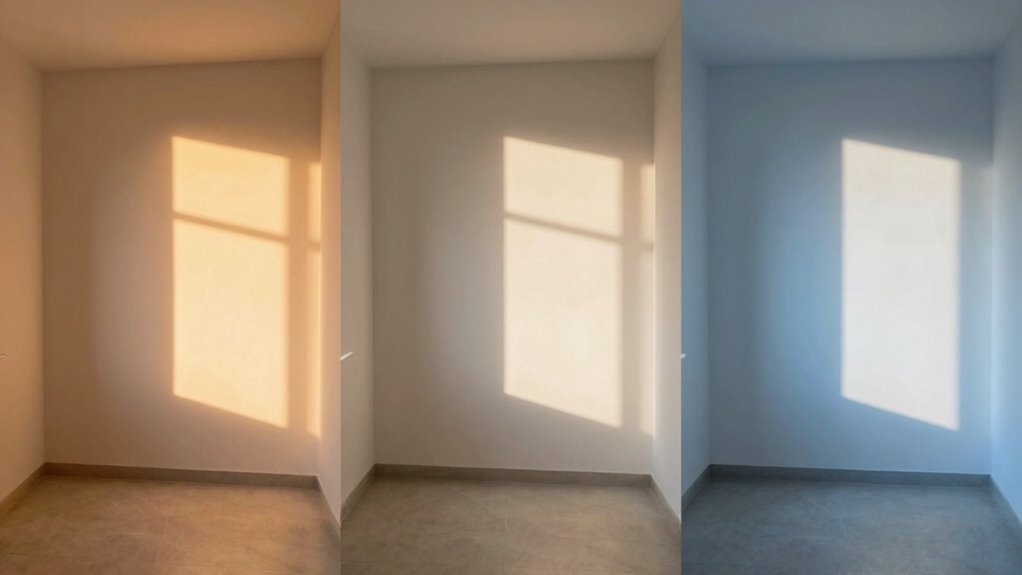
The light spectrum you choose affects how colors appear and sets the overall mood of your space. Different spectrum ranges can enhance or diminish color accuracy, influencing the atmosphere you want to create. Understanding these aspects helps you select lighting that complements your environment and desired ambiance. For example, selecting Free Floating lighting options can add a sense of openness and flexibility to outdoor areas.
Light Spectrum Range
Ever wondered how different types of light can change the mood or functionality of a space? The light spectrum range refers to the variety of light wavelengths that lamps emit. These wavelengths determine the color and intensity of the light you see. For example, some lights emit longer wavelengths, producing warm, yellowish hues, while others emit shorter wavelengths, creating cooler, bluish tones. Understanding this spectrum helps you choose lighting that matches your needs—whether you want a cozy atmosphere or a bright, energizing environment. The spectrum also influences how colors appear under different lights, affecting the overall look of your space. Additionally, considering the color temperature of the light can help you create specific environments, such as relaxing or invigorating ones. By paying attention to the light spectrum range, you can optimize both the ambiance and practicality of your lighting setup.
Color Rendering Quality
Color rendering quality determines how accurately a light source reveals the true colors of objects in your space. Good color rendering enhances color accuracy, allowing you to see items as they truly are without distortion or dullness. This impacts your visual perception, making tasks like cooking, choosing clothes, or appreciating artwork more precise. If the light has a low color rendering index (CRI), colors may appear washed out or off, leading to misinterpretation of your environment. High-quality lighting with a high CRI ensures vibrant, natural-looking colors, improving overall clarity. Whether you’re working, relaxing, or entertaining, understanding color rendering helps you select lighting that faithfully displays colors and enhances your space’s visual appeal. Additionally, light spectrum influences how well colors are rendered, affecting the overall ambiance and functionality of your lighting choices. For optimal lighting, selecting sources with a high CRI can greatly improve the accuracy of color perception in your environment, which is essential for visual clarity and color-dependent tasks. Recognizing how different light spectra impact color perception can further optimize your lighting setup for various activities.
Mood and Atmosphere
Lighting temperature shapes the mood and atmosphere of your space by influencing how warm or cool the environment feels. The right spectrum creates a specific lighting ambiance that impacts your emotional response. Warm light evokes coziness and relaxation, perfect for living rooms or bedrooms. Cool light energizes and enhances focus, ideal for workspaces or kitchens. Neutral lighting offers a balanced environment, suitable for general use. Here’s a quick overview:
| Temperature | Mood/Atmosphere | Best For |
|---|---|---|
| Warm (2700K) | Cozy, inviting | Living rooms, bedrooms |
| Neutral (3500K) | Balanced, calm | Offices, kitchens |
| Cool (5000K) | Energizing, sharp | Workspaces, garages |
| Very Cool (6500K) | Clinical, bright | Medical settings, studios |
Choose wisely to craft the desired emotional impact and lighting ambiance.
What Are Warm, Neutral, and Cool Light?

Have you ever wondered how different light colors can affect the mood of a room? Understanding what warm, neutral, and cool light mean helps you grasp the Color temperature and light spectrum. Color temperature plays a crucial role in setting the ambiance and ensuring optimal visibility in various settings. A good understanding of lighting categories allows you to choose the right lighting for different activities and environments. Additionally, recognizing the light spectrum helps in selecting the most suitable lighting for specific tasks and spaces. For example, spectral distribution impacts how colors appear under different lights, influencing both aesthetics and functionality. 1. Warm light has a lower Color temperature, around 2700K-3000K, giving off a soft, yellowish glow. It creates a cozy, inviting atmosphere. 2. Neutral light sits in the middle, around 3500K-4100K, offering a balanced white that’s ideal for workspaces. 3. cool light features a higher color temperature, around 5000K-6500K, resulting in a bluish hue that energizes a space. These categories shape how you perceive a room’s ambiance and influence your comfort and productivity based on the light spectrum.
How to Choose the Best Lighting Temperature for Different Rooms
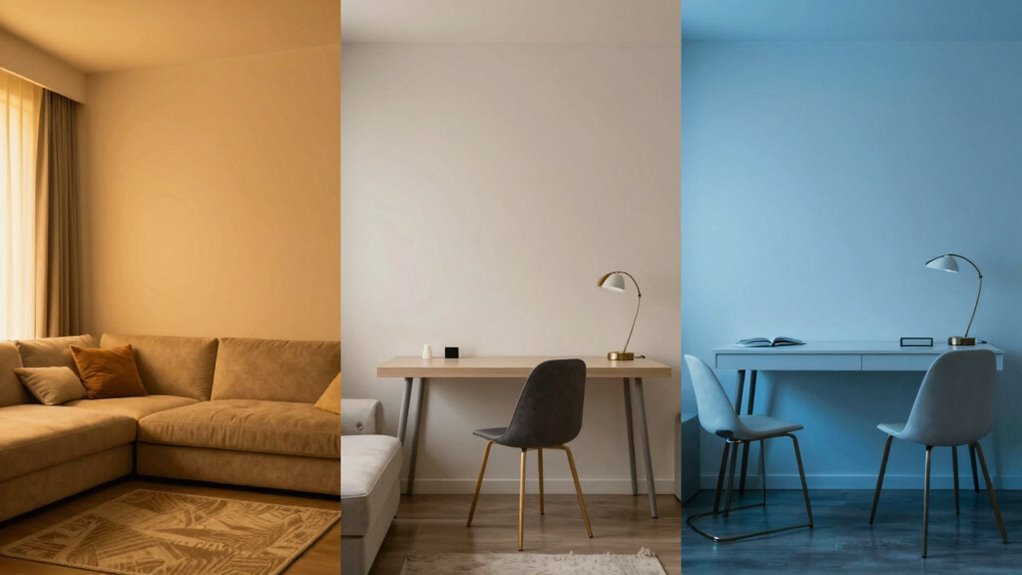
When choosing lighting temperature, consider the room’s function and the mood you want to create. Think about how natural light interacts with the space, and match your lighting choices accordingly. Also, take into account room size and ceiling height to guarantee your lighting feels balanced and comfortable.
Room Function and Mood
Choosing the right lighting temperature can considerably influence the mood and functionality of a room. For example, warm light creates a cozy, inviting atmosphere ideal for living rooms and bedrooms. Neutral light balances brightness without affecting color accuracy, perfect for kitchens and workspaces. Cool light energizes a space, making it suitable for task areas like home offices or bathrooms. When selecting lighting, consider:
- The room’s purpose, to set the right ambiance.
- Decorative fixtures, which can enhance mood through design and light temperature.
- Energy efficiency, ensuring you choose bulbs that save power while providing the desired atmosphere.
Matching lighting temperature with room function helps you create a comfortable, functional environment that supports both mood and practicality.
Natural Light Compatibility
Natural light plays a crucial role in determining the ideal lighting temperature for each room, as it influences how artificial light interacts with your environment. Matching your lighting to natural light enhances comfort and creates a seamless flow throughout the day. For rooms with abundant natural light, like kitchens or living rooms, neutral or cool temperatures mimic daylight and improve clarity. In darker spaces, warm tones complement limited natural light, making the room feel cozy. Consider daylight simulation when choosing bulbs—this replicates natural light and maintains consistency. Use the table below to help select the best lighting temperature based on natural light exposure:
| Room Type | Natural Light Level | Recommended Temperature | Benefits |
|---|---|---|---|
| Living Room | Bright | Neutral or Cool | Enhances clarity and alertness |
| Bedroom | Moderate | Warm | Creates a cozy, relaxing atmosphere |
| Kitchen | Bright | Neutral or Cool | Improves visibility for tasks |
| Bathroom | Moderate to Bright | Neutral | Promotes freshness and cleanliness |
| Basement | Limited | Warm or Neutral | Adds warmth and comfort |
Additionally, understanding natural light exposure can help you optimize your lighting choices for maximum comfort and efficiency. Recognizing how natural light varies throughout the day can further refine your lighting strategy, ensuring each space feels balanced and inviting. Being aware of seasonal changes in natural light can also influence your selection of lighting temperature to adapt to different times of the year.
Room Size and Ceiling Height
Room size and ceiling height considerably influence your choice of lighting temperature because larger spaces and higher ceilings require different lighting strategies to achieve comfort and functionality. If your room has high ceilings, you might prefer cooler or neutral lighting to brighten the space without creating a harsh atmosphere. Conversely, smaller rooms benefit from warmer tones that promote coziness. Here are key considerations:
- Larger rooms with high ceilings often need brighter, cooler lighting to prevent the space from feeling dull.
- Smaller rooms may feel more inviting with warm or neutral lighting that adds warmth and intimacy.
- The room size and ceiling height together determine the light intensity and temperature that will make the space feel balanced and comfortable.
- Lighting strategies can be tailored based on these factors to enhance both the ambiance and functionality of your space.
Common Mistakes When Picking Lighting Temperature and How to Avoid Them
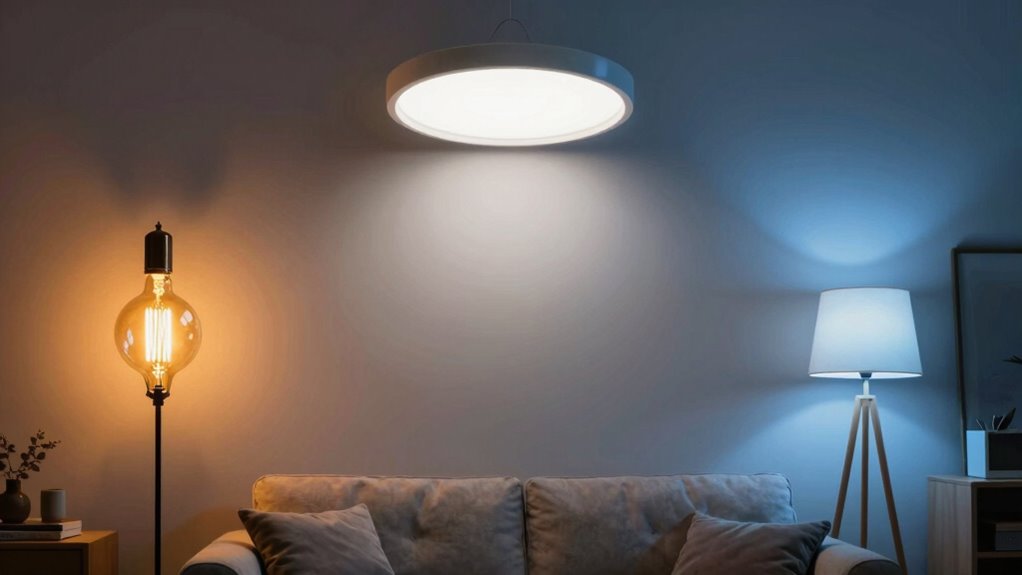
Many people make the mistake of selecting lighting temperatures based solely on aesthetics without considering the mood or function of the space. This oversight can lead to poor lighting design choices that don’t support the room’s purpose or create unwanted atmospheres. For example, choosing overly warm light in a workspace can reduce alertness, while cool lighting in relaxation areas may feel sterile. Additionally, neglecting energy efficiency when selecting lighting temperatures can cause higher electricity bills and unnecessary waste. To avoid these mistakes, consider the room’s function and how different temperatures influence mood and productivity. Focus on a balanced approach that enhances both aesthetics and practicality, ensuring your lighting choices support your needs while being energy-conscious.
Tips for Mixing Different Lighting Temperatures Effectively
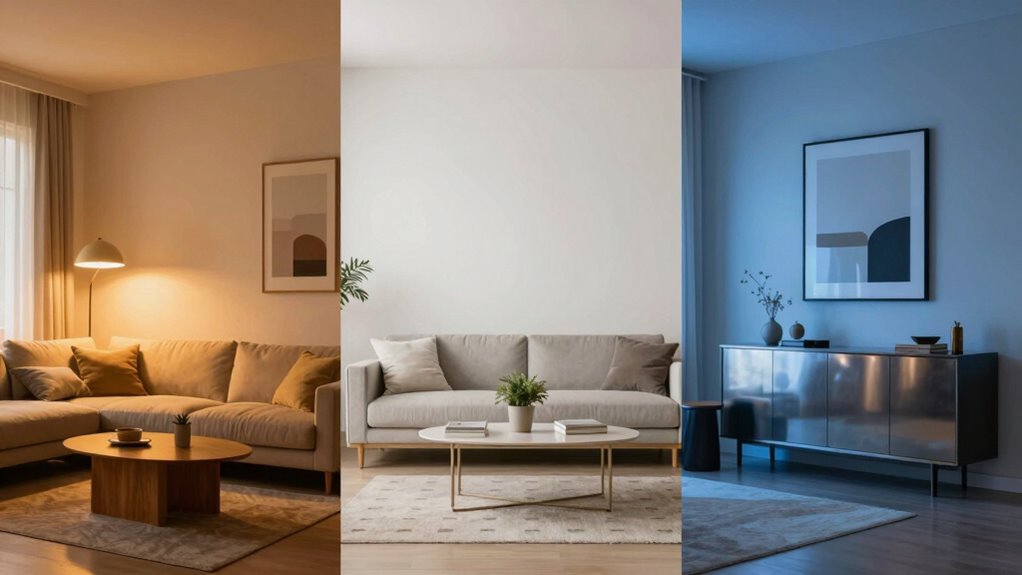
Mixing different lighting temperatures can create a dynamic and functional space when done thoughtfully. To do this effectively, focus on strategic fixture selection and lighting design principles. First, choose fixtures that complement each other; for example, pair warm-toned fixtures with neutral ones to avoid jarring contrasts. Second, consider the purpose of each area—use cooler temperatures for task lighting and warmer for ambiance. Third, balance the overall lighting by layering sources, ensuring no area feels overly stark or dull. Combining different lighting temperatures intentionally enhances visual interest and functionality. Keep in mind that your fixture choices and placement influence how the space feels and operates, so plan ahead to achieve harmony and practicality in your lighting design.
What Is the Best Lighting Temperature for Your Living Room or Office?
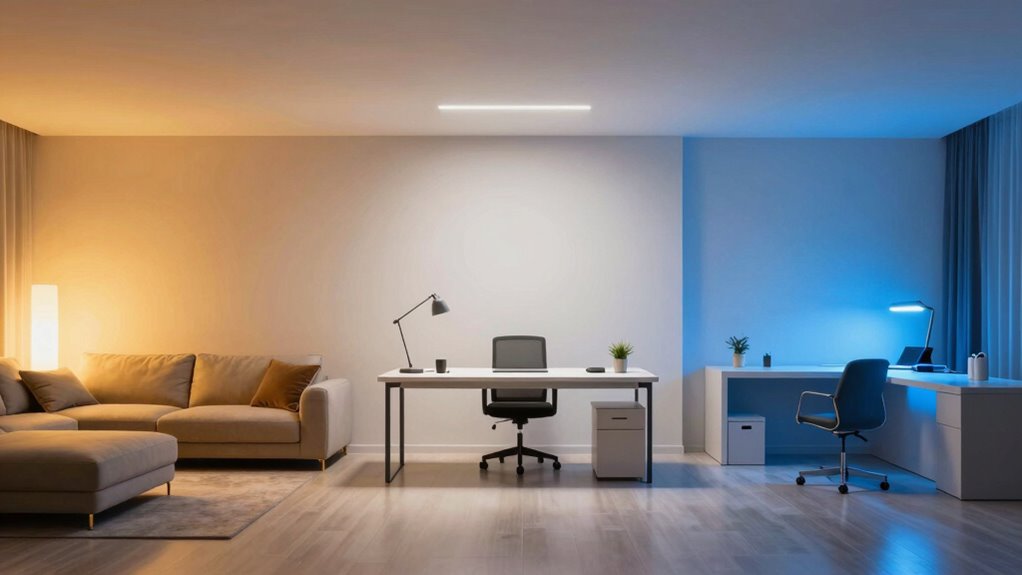
Choosing the right lighting temperature for your living room or office can profoundly impact the space’s comfort and functionality. For living rooms, a warm white (around 2700K to 3000K) creates a cozy, inviting atmosphere perfect for relaxation and socializing. In contrast, cooler temperatures (4000K to 5000K) work well in offices, promoting focus and alertness. When designing your lighting, consider energy efficiency—LED bulbs with adjustable temperatures let you customize the ambiance while saving energy. The best lighting temperature enhances your lighting design by balancing brightness with mood, ensuring the space feels comfortable and functional. Ultimately, selecting the right temperature depends on your specific needs and activities, helping you create a space that’s both efficient and welcoming.
Final Tips: Creating the Perfect Ambiance With Lighting Temperature

To create the perfect ambiance with lighting temperature, start by considering the mood you want to establish in each area of your space. Your lighting design should reflect the atmosphere you desire, whether warm for coziness or cool for focus. Here are three tips to help you achieve this:
- Balance warmth and coolness to enhance comfort and productivity.
- Use layered lighting to create depth and flexibility for different activities.
- Opt for energy-efficient bulbs that match your preferred color temperature to save costs and reduce environmental impact.
Frequently Asked Questions
How Does Lighting Temperature Affect Color Accuracy in Photography?
Lighting temperature directly impacts color accuracy in photography by influencing the light spectrum and color rendering. When you choose the right temperature, your camera captures true-to-life colors; warm light enhances reds and oranges, while cool light emphasizes blues and greens. Using incorrect temperature settings can distort colors, making images look unnatural. To guarantee accurate photographs, match your lighting temperature to your scene, optimizing the light spectrum for proper color rendering.
Can Adjustable Lighting Temperatures Improve Productivity or Mood?
Adjustable lighting temperatures can dramatically boost your productivity and mood, almost like unblocking superpowers. By aligning your lighting with your circadian rhythms, you enhance your cognitive performance and emotional well-being. Warm light comforts and relaxes, while cool light energizes and sharpens focus. You control your environment, optimizing your day for peak performance and happiness—making every moment feel like a breakthrough.
Are Certain Lighting Temperatures Better for Energy Efficiency?
Certain lighting temperatures can boost energy efficiency by reducing power consumption and optimizing light quality. Cooler temperatures, like daylight, often require higher energy use, but using warm or neutral tones with energy-saving LEDs can lower energy bills. You’ll also support sustainability considerations by choosing lighting that lasts longer and consumes less energy. Adjusting your lighting to the right temperature not only saves energy but also promotes a greener, more eco-friendly environment.
How Does Lighting Temperature Influence Perceived Space Size?
Lighting temperature profoundly influences perceived space and room perception. Cool lighting makes a room feel larger and more open by enhancing brightness and clarity, while warm lighting creates a cozy, intimate atmosphere that can make a space seem smaller. Neutral lighting strikes a balance, offering a natural look. By choosing the right lighting temperature, you can manipulate how big or small your space appears, shaping the overall ambiance effectively.
What Are the Environmental Impacts of Different Lighting Temperatures?
Different lighting temperatures can impact the environment by contributing to environmental pollution and affecting ecological systems. Cool, harsh lighting often consumes more energy, increasing carbon emissions, while warm lighting may reduce energy use. Bright, high-temperature lights can disturb nocturnal wildlife and disrupt ecosystems. Choosing energy-efficient lighting with appropriate temperature settings minimizes ecological effects, reduces pollution, and supports a healthier environment overall.
Conclusion
By understanding lighting temperature, you hold the brush to paint your space’s mood with precision. Whether you choose warm, neutral, or cool tones, you’re crafting an atmosphere that feels just right — like a symphony of light and shadow. Let your choices flow seamlessly, transforming your rooms into inviting havens or energizing hubs. With this knowledge, your lighting becomes the poetry that breathes life into every corner, elevating your space to a masterpiece of ambiance.