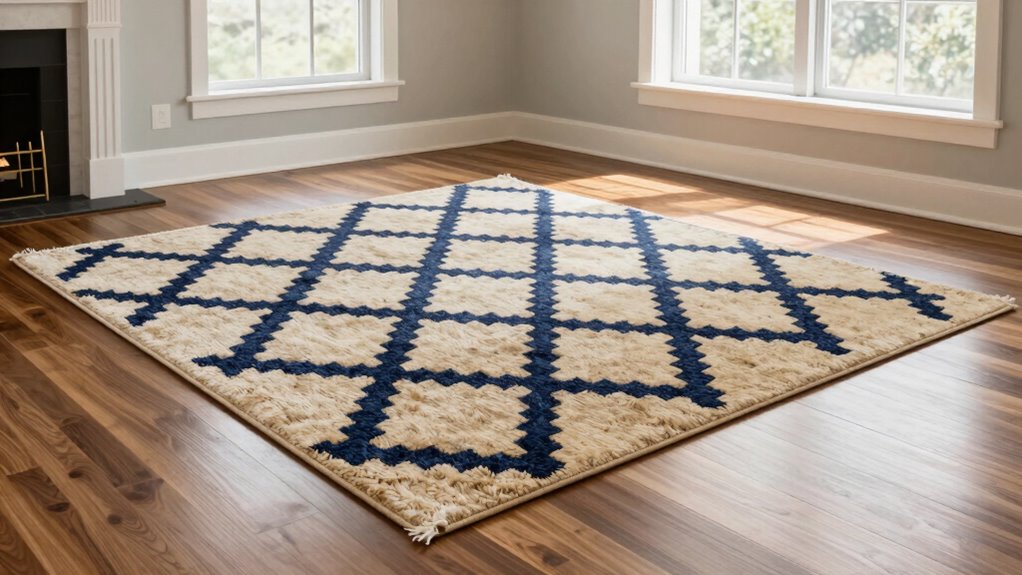
To avoid buying rugs that make your rooms look smaller, focus on understanding rug size charts and selecting the right size for your space. Measure your room and furniture first, then choose a rug that complements your layout—larger rugs tend to open up spaces, while small ones cut them off. Proper sizing creates visual balance and harmony. Keep in mind common sizes for different rooms to make smarter choices—stick with this guide, and you’ll discover how to enhance your room’s openness.
Key Takeaways
- Use accurate room measurements and furniture dimensions to select appropriately sized rugs that enhance space perception.
- Refer to standard rug size charts (e.g., 5×8, 8×10, 9×12) to match room function and size for optimal visual harmony.
- Avoid small rugs that fragment furniture and make rooms appear smaller; opt for larger rugs that anchor furniture and expand space.
- Choose light-colored or neutral rugs to reflect natural light, creating an airy, spacious feel in the room.
- Use virtual tools and design apps to visualize rug placement, preventing size mistakes that can shrink or clutter the space.
Why Picking the Right Rug Size Is Key to Making Your Room Look Bigger
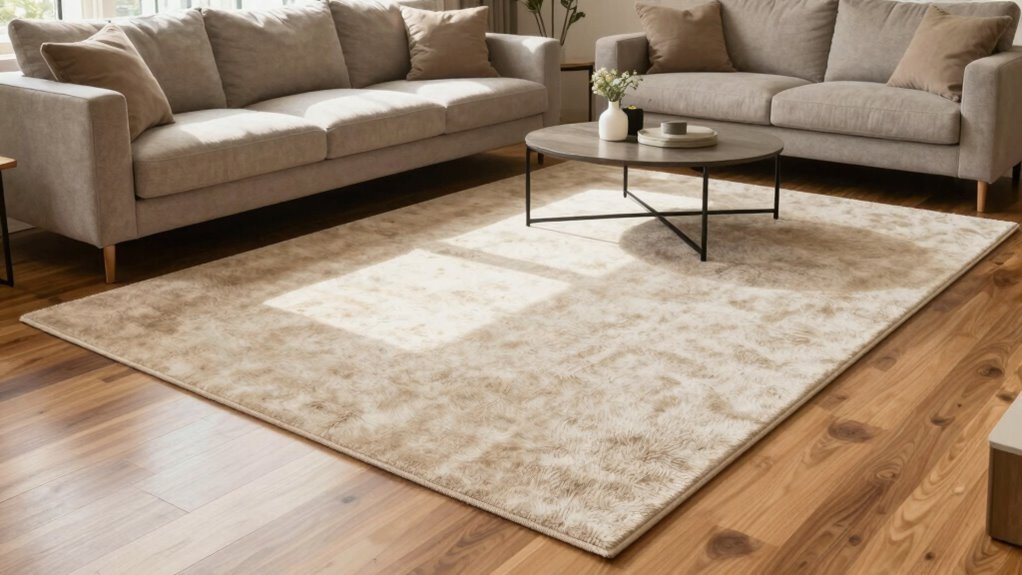
Choosing the right rug size can markedly impact how spacious your room feels. When selecting a rug, focus on color coordination; lighter shades can brighten small spaces, making them seem larger, while bold patterns may add depth. Material selection also matters—thin, low-pile rugs create a seamless look, expanding visual space, whereas thick, plush rugs can make a room feel cozier but smaller. Properly sizing your rug ensures your furniture sits comfortably on it, avoiding the visual disruption of tiny rugs or oversized ones that overwhelm the room. By harmonizing color choices with your room’s palette and choosing materials that enhance the sense of space, you’ll create a balanced, open atmosphere. The right size isn’t just about fit—it’s about maximizing your room’s potential to appear bigger. Additionally, considering contrast ratios can help improve the overall visual clarity and perception of space within your room. Incorporating visual perception principles can further optimize the room’s openness and harmony.
How to Measure Your Room and Furniture Before Buying a Rug
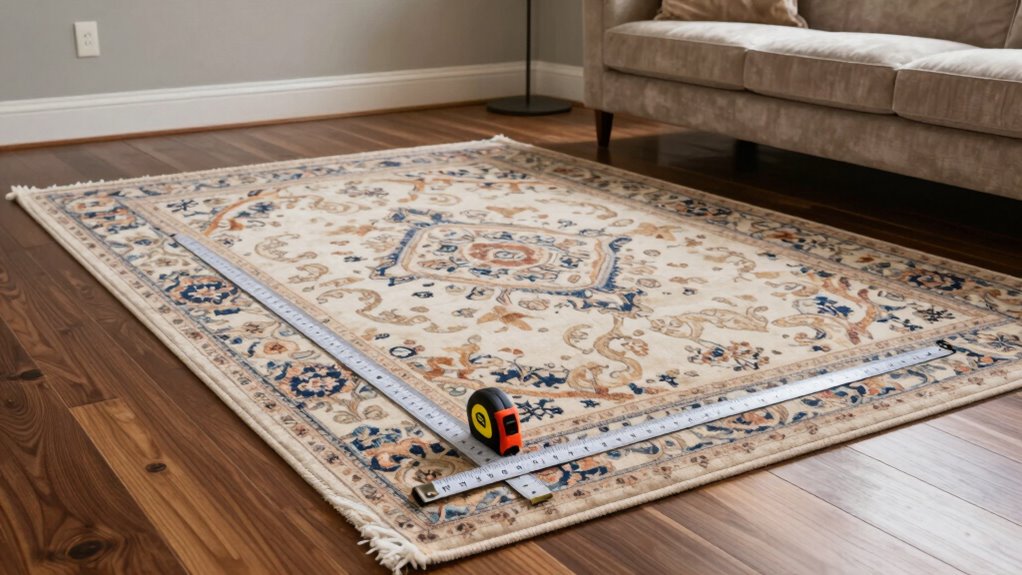
Before buying a rug, you need to measure your room and furniture accurately to guarantee a proper fit. This guarantees your area rugs don’t overwhelm or underwhelm the space. Here are three essential steps:
Measuring your space and furniture ensures the perfect rug fit and a cohesive room design.
- Measure the room’s length and width, noting any irregularities like alcoves or doorways.
- Measure your main furniture pieces, especially sofas and beds, to determine rug placement and size.
- Consider pattern coordination—choose a rug size that complements your furniture layout without making the room feel cramped or empty.
Accurate measurements help you select a rug that enhances your space, making it appear larger and more cohesive. Proper sizing also ensures pattern coordination, so your rugs tie the room’s design together without overpowering or fractioning the space.
Mastering Rug Size Charts: How to Read Dimensions and Pick the Best Fit
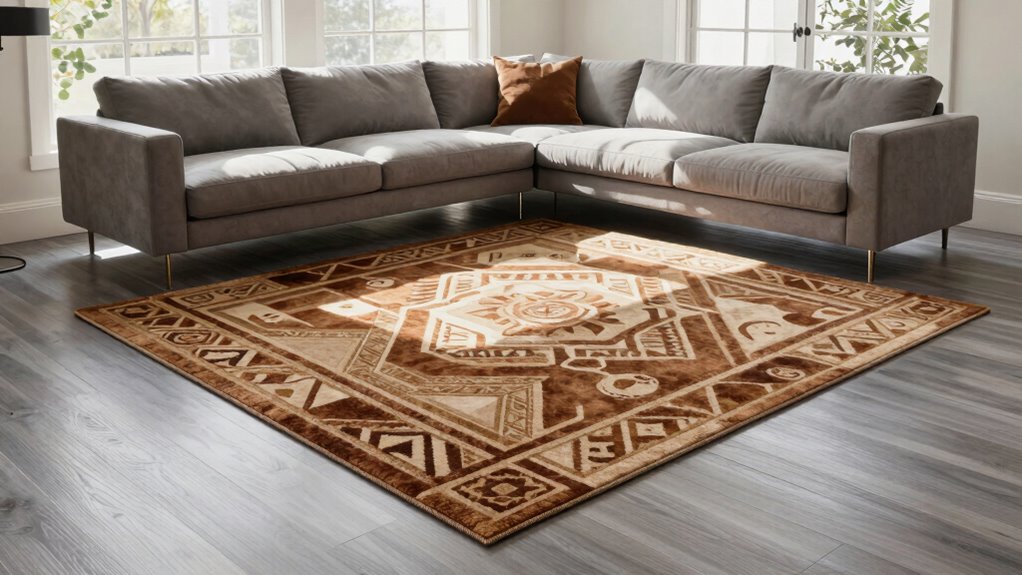
Understanding how to read rug size charts is essential for selecting the perfect rug for your space. When choosing area rugs, pay attention to dimensions to guarantee they complement your furniture and room size. Most charts list sizes in feet or inches, helping you visualize placement. For example, a 5×8 rug works well under a sofa, while a 9×12 can define a large living area. Use this table to decode common sizes:
| Rug Size | Ideal Room Use |
|---|---|
| 3×5 | Accent rug or small entryway |
| 5×8 | Under coffee tables or small living rooms |
| 8×10 | Main rug for medium-sized spaces |
| 9×12 | Large living rooms or open-plan areas |
| 12×15 | Formal dining rooms or expansive spaces |
Choosing the right size enhances color coordination and guarantees your room from feeling cramped.
Common Rug Sizes and Which Rooms They Work Best For
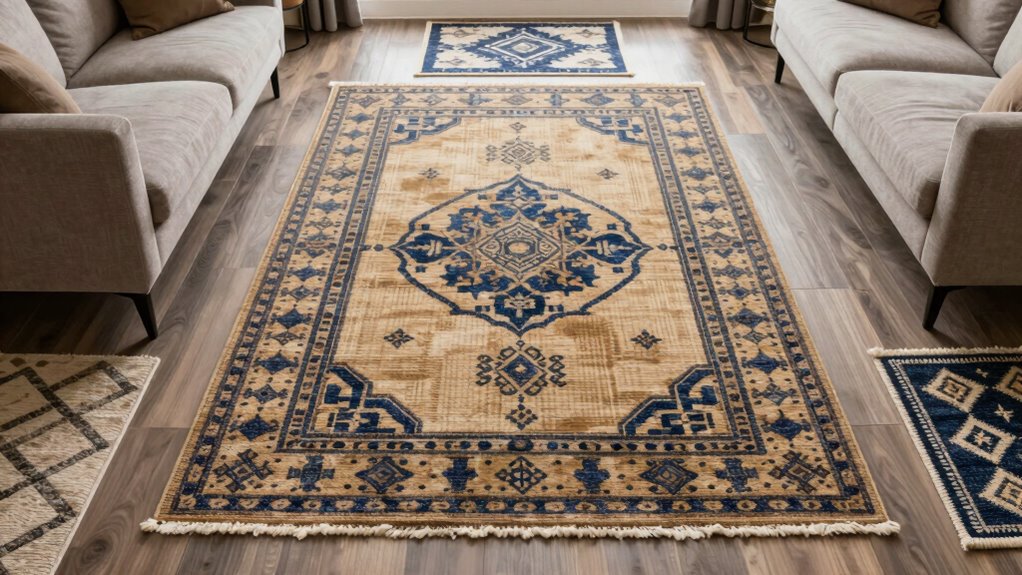
Choosing the right rug size can transform your space, especially in your living room and bedroom. For the living room, larger rugs help anchor the furniture, while smaller rugs work for defined areas or accents. In bedrooms, the rug dimensions should complement your bed size to create a cozy and balanced look. Additionally, selecting well-sized rugs that match the best rug sizes for different rooms can prevent making spaces appear smaller or cluttered. Properly proportioned rugs also enhance overall sleep environment by creating a more inviting and comfortable atmosphere. Being aware of furniture placement ensures that your rug complements your layout and maintains an open, airy feel. Careful consideration of client satisfaction can lead to a more personalized and harmonious interior design. It’s also helpful to consider the halal status of materials used in rug manufacturing if you are mindful of dietary laws and cleanliness standards.
Living Room Rug Sizes
Living room rug sizes vary widely, but selecting the right one can considerably enhance your space. The goal is to create a balanced look that complements your furniture. Common sizes include:
- 8×10 feet – ideal for positioning under the sofa and coffee table, leaving space for rug padding. Using an appropriately sized rug helps maintain proportions that make the room feel harmonious.
- 9×12 feet – perfect for larger living rooms, anchoring all furniture with a cohesive look.
- 5×8 feet – suitable for smaller spaces or defining a seating area.
When choosing area rugs, consider how much of the floor you want visible. Avoid rugs that make the room feel smaller; instead, opt for sizes that expand the space visually. Proper rug padding adds comfort and stability without shrinking your room’s appearance. Additionally, understanding rug size proportions can help you select the most appropriate size to ensure your space feels open and inviting.
Bedroom Rug Dimensions
When selecting a rug for your bedroom, size matters just as much as style. Choosing the right area rug can anchor your space and highlight your rug patterns. Common bedroom rug sizes include 5×8, 6×9, and 8×10 feet. The 5×8 works well under a single bed or as a bedside accent. The 6×9 is ideal for larger beds or to frame the furniture. An 8×10 rug can fit a king or queen bed with space to spare, making the room feel balanced. Here’s a quick guide:
| Rug Size | Best For |
|---|---|
| 5×8 | Small bedrooms, twin beds |
| 6×9 | Full or queen beds, seating areas |
| 8×10 | King beds, spacious layouts |
| 9×12 | Large master bedrooms, room definition |
| 4×6 | Accent rugs, bedside options |
Matching rug size to your room ensures your rug patterns enhance your space without shrinking it.
How Rug Size Affects Your Room’s Feel : Too Small or Too Large?
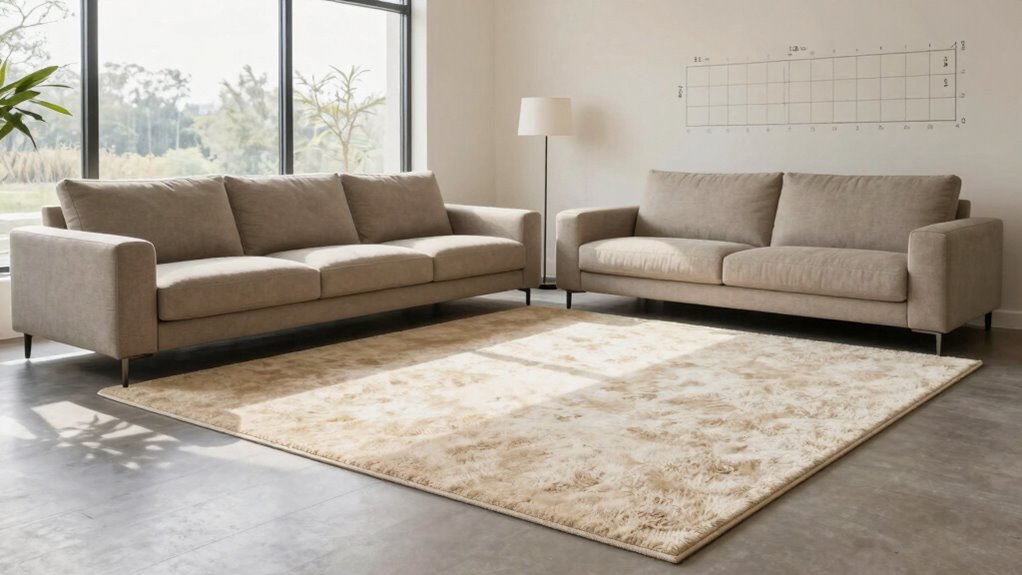
The size of your rug can dramatically influence how a room feels, making it seem more spacious or cramped depending on your choice. A too-small rug can disconnect furniture and make the space look fragmented, while a too-large rug might overwhelm the room. To get it right, focus on these key points:
- Confirm your rug’s edges extend under key furniture pieces for a cohesive look.
- Choose a rug with a texture that complements your room’s style—soft for cozy spaces, flat-woven for modern rooms.
- Maintain color harmony by selecting a rug that blends with your walls and furniture, avoiding jarring contrasts.
- Proper rug sizing enhances your room’s flow, making it feel open and inviting rather than cluttered.
- Understand how rug size charts can help you choose the perfect fit for your space, and consider consulting interior design principles to ensure your selection enhances the room’s overall aesthetic. Additionally, reviewing precise measurements can prevent common sizing mistakes and optimize your room’s layout.
- Utilizing accurate sizing guides can further assist you in making informed decisions and achieving the desired room proportions. Incorporating insulated jackets for winter can also be beneficial in creating a warm and inviting atmosphere in colder months.
Tips for Choosing Rugs That Make Your Rooms Feel Spacious and Bright

Choosing the right rug can instantly brighten a room and make it feel more spacious. Focus on color coordination by selecting rugs in light, neutral shades like beige, cream, or soft pastels, which reflect light and open up the space. Avoid dark, heavy patterns that can make a room feel smaller and more confined. To enhance the sense of openness, consider rug layering—placing a smaller rug over a larger, neutral base rug—to add dimension without cluttering the space. Keep the rug size proportional to the room, ensuring it doesn’t overwhelm or underwhelm the area. When pairing colors and layering rugs thoughtfully, you create a bright, airy atmosphere that visually expands your room and invites a welcoming feel. Incorporating positive change into your decorating choices can also foster a more inviting environment. Additionally, paying attention to visual balance helps ensure your space feels harmonious and open rather than crowded.
Styling Rugs in Different Room Layouts for Maximum Impact
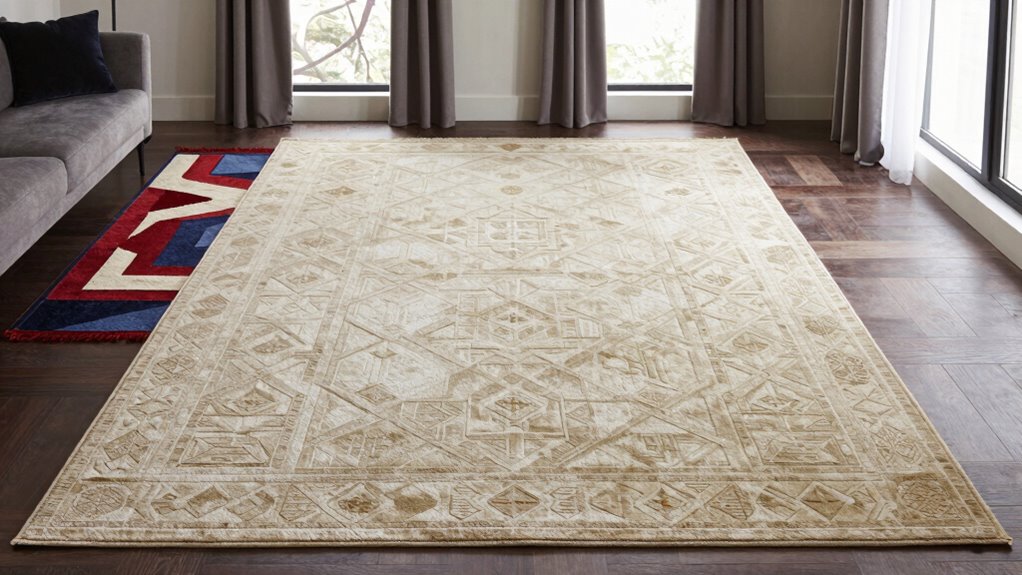
Maximizing the impact of your rug placement depends on understanding your room’s layout and function. To create a cohesive look, consider these key tips:
- Match rug color with your room’s palette for harmony and visual flow.
- Choose materials that suit your space—soft rugs for cozy areas, durable options for high-traffic zones.
- Position rugs to define different zones or anchor furniture, enhancing room balance.
For different layouts, adjust size and placement accordingly. In open-plan spaces, large rugs work best to unify areas, while smaller rugs suit cozy corners. Always prioritize color coordination and material selection to ensure your rug complements your furniture and decor, making your room feel more inviting and spacious.
Top Mistakes to Avoid When Picking Rug Sizes
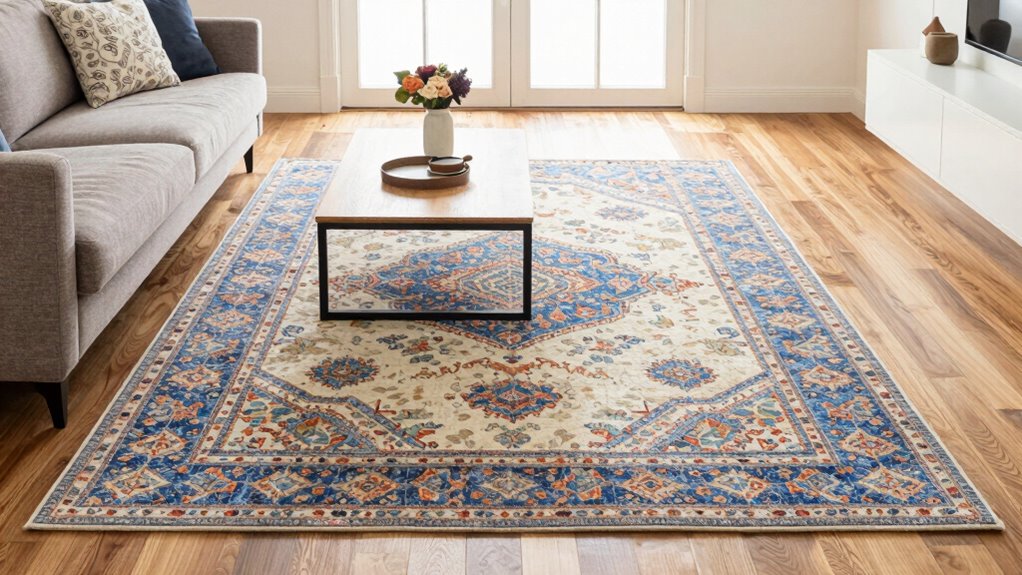
One common mistake is ignoring your room’s proportions, which can make a rug look out of place. You also need to contemplate furniture placement so the rug complements your space rather than clashes. Additionally, understanding AI-powered design tools can assist in visualizing how different rug sizes will look in your room. Incorporating spatial awareness techniques can further help you gauge the appropriate rug dimensions for your space. Finally, choosing the wrong rug shape can disrupt the flow and balance of your room. To ensure optimal rug sizing, it’s helpful to understand study techniques that can guide your decision-making process. Considering visual balance can help you select a rug size that enhances room harmony and prevents overstated or understated effects.
Ignoring Room Proportions
Ignoring room proportions is a common mistake that can make your space feel awkward or unbalanced. When you overlook how a rug’s size relates to your room, you fall into proportion pitfalls and scale misconceptions that distort the overall harmony. To avoid this, consider these key points:
- Avoid choosing a rug that’s too small, which can make the room look disjointed.
- Don’t pick a rug that overwhelms the space, creating a cramped or cluttered feel.
- Be mindful of furniture placement—your rug should complement, not compete with, your furniture scale.
- Remember that correct rug sizing can help enhance the perceived size and balance of your room.
- Understanding space planning fundamentals is essential for selecting the right rug size and achieving a cohesive look.
- Incorporating off-road vehicle specifications such as size and scale can serve as a useful analogy for understanding proper rug proportions in your space.
Overlooking Furniture Placement
When selecting a rug, paying attention to furniture placement is essential to creating a balanced and cohesive space. Improper furniture arrangement can lead to a rug that feels out of sync or disrupts traffic flow. Make sure your rug complements the placement of sofas, tables, and chairs, so they sit comfortably on or around it. Avoid choosing a rug that’s too small, forcing furniture to float and making the room appear disjointed. Consider how people will move through the space; a rug that blocks walkways or feels disconnected from furniture hampers traffic flow. Proper placement anchors your furniture and enhances the room’s harmony. Additionally, understanding size guidelines can help you select the most appropriate rug dimensions for your room. By aligning your rug with your furniture arrangement, you create a welcoming, functional environment that visually expands the space. Paying attention to nutritional information can also help you make more mindful choices, even in home decor decisions.
Choosing Wrong Rug Shape
Choosing the wrong rug shape can instantly disrupt the harmony of your space and make your room feel unbalanced. The shape of your rug influences the aesthetic appeal and how your furniture fits together. To avoid mistakes, consider these key points:
- Avoid round rugs in long, narrow rooms, as they can make the space feel cramped.
- Steer clear of rectangular rugs that are too small or too large for your area, disrupting visual flow.
- Choose shapes that complement your furniture layout—square or rectangular for formal spaces, round for casual or softening corners.
Selecting the right rug shape enhances your room’s overall aesthetic appeal, creating a balanced, inviting atmosphere. Being mindful of shape helps your rug serve as a cohesive design element rather than an awkward addition.
Tools and Resources to Help You Measure and Select the Perfect Rug
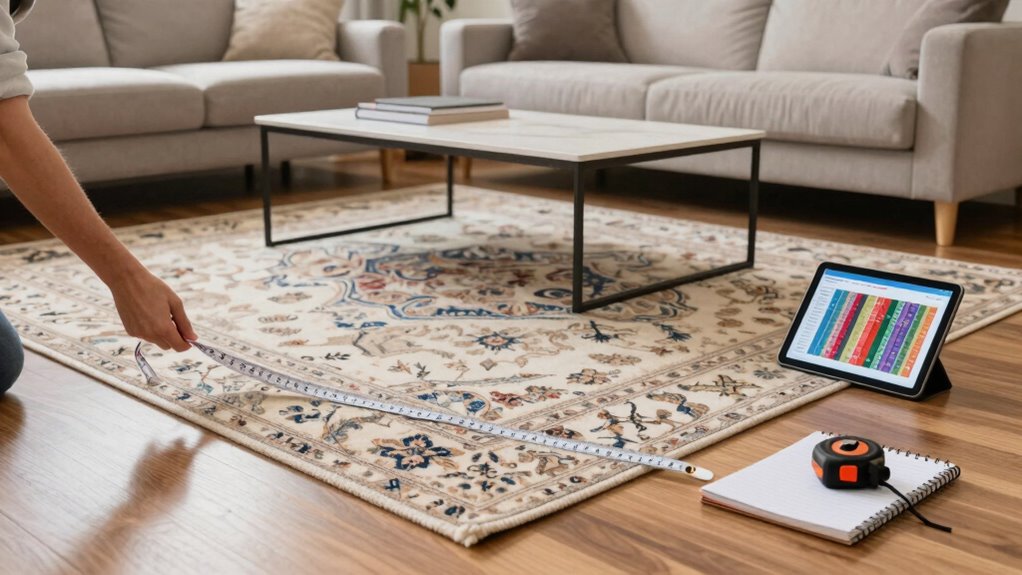
Have you ever struggled to find the right rug size because measurements felt confusing? Luckily, there are tools and resources to simplify the process. Use a tape measure or a laser distance measurer to get accurate room dimensions. Online rug size calculators can help you visualize how different sizes fit your space. When selecting a rug, consider color coordination to match your existing decor and pattern matching to ensure the rug complements or enhances your room’s style. Many design apps offer virtual room visualization, allowing you to experiment with various rug sizes and patterns before buying. These tools help you avoid common mistakes, guaranteeing your rug makes your space look larger and more inviting. Taking advantage of these resources makes the process easier and more confident.
Before and After: How Correct Rug Sizing Transforms Your Space
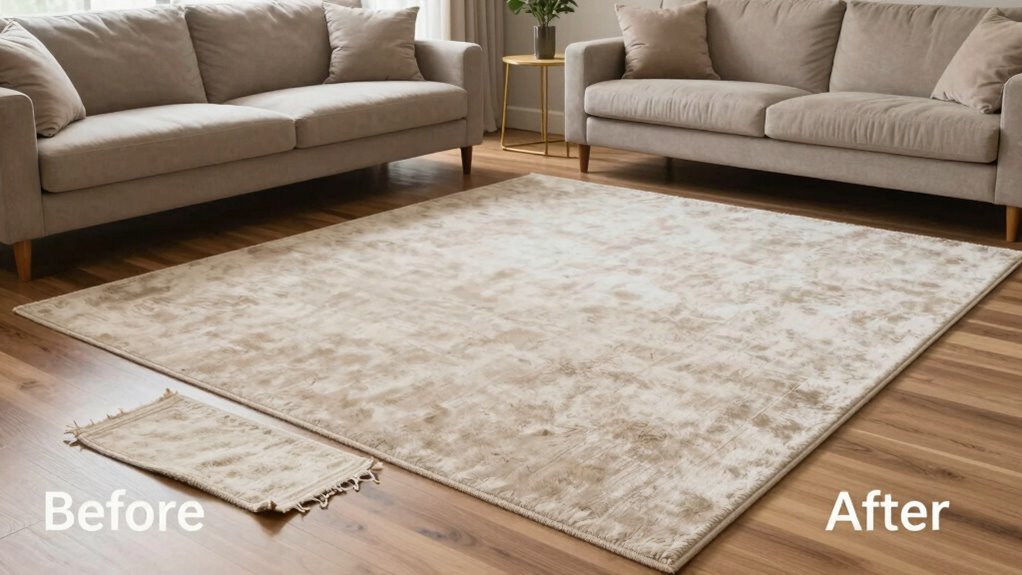
A well-sized rug can instantly redefine your space, making it feel more balanced and inviting. When you choose the correct rug size, you’ll notice a significant transformation:
- The room appears larger and more cohesive through effective color coordination, tying furniture and decor together seamlessly.
- Proper rug sizing highlights your space’s best features, creating a focal point that enhances overall design.
- Regular rug cleaning keeps the new size looking fresh and vibrant, preventing dirt from dulling your carefully chosen color palette.
Frequently Asked Questions
How Do Rug Shapes Influence Room Perception Besides Size?
You can influence room perception with rug shapes by creating visual balance and highlighting focal points. Rectangular rugs elongate spaces, making them feel larger, while round rugs soften sharp angles and add cozy charm. Using a unique shape draws attention to specific areas, guiding the eye and enhancing the room’s overall harmony. Choose shapes that complement your furniture and layout to optimize both style and spatial flow.
Can Rug Padding Affect the Appearance of Size?
Ever wonder if rug padding affects how large your rug appears? It definitely can. Using thick rug padding or overly cushioned rug padding adds extra height, making the rug seem smaller or more cluttered. Conversely, thinner rug padding keeps the rug closer to the floor, enhancing the perception of space and size. So, choose your rug padding and rug thickness carefully to maximize your room’s openness and balance.
What’s the Best Way to Layer Multiple Rugs Effectively?
To layer rugs effectively, start with a large, neutral base rug that defines the space using layering techniques. Then, add smaller, contrasting rugs on top to create visual cohesion and interest. Make sure the rugs complement each other in color and style, with edges slightly overlapping or aligned for a cohesive look. This approach enhances your room’s aesthetic without making it look cluttered or smaller.
How Does Rug Pile Height Impact Room Spaciousness?
A higher rug pile height can make your room feel cozier, but it might reduce the sense of spaciousness because it alters visual perception and creates different spatial illusions. Conversely, low pile or flat rugs keep the room feeling open and airy by reflecting light better and maintaining clean lines. To maximize room size, choose rugs with shorter piles, which help preserve that spacious, uncluttered look.
Are There Seasonal or Color Considerations That Influence Rug Size Choices?
Hold your horses, like an ancient knight, seasonal color and furniture pairing are key in choosing rug size. During festive seasons, opt for smaller, vibrant rugs to add warmth, while in spring, go for larger, pastel-hued rugs that open up your space. Consider your furniture’s scale and color palette, ensuring your rug complements rather than overwhelms. Seasonal trends guide you to balance aesthetics and room spaciousness effortlessly.
Conclusion
Choosing the right rug size is like finding the perfect pair of shoes—you want it to fit just right to boost your room’s confidence. When you measure carefully and use size charts wisely, you’ll avoid the trap of a rug that shrinks your space or overwhelms it. With the right fit, your room will feel open and inviting, transforming your home into a showcase of style and comfort. Trust your measurements and let your space shine.