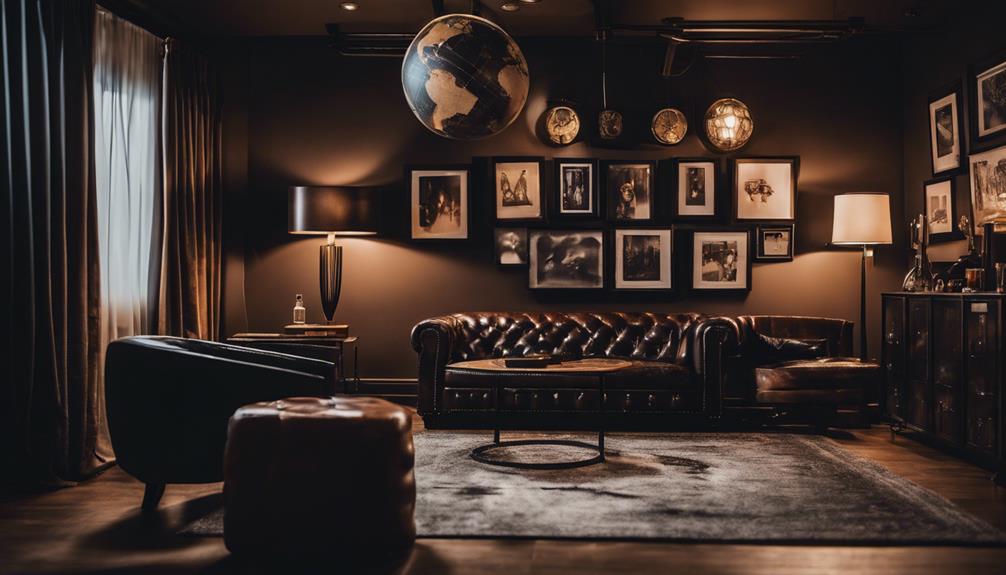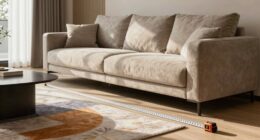
Getting furniture size right is key to creating balanced and inviting spaces. You should focus on matching furniture proportions to your room’s dimensions, avoiding pieces that are too overwhelming or too tiny for the area. Paying attention to height, width, and depth helps achieve visual harmony and flow. When furniture fits well, your space looks cohesive and feels comfortable. Keep exploring ways to perfect scale and proportion to make your home truly inviting.
Key Takeaways
- Measure room dimensions accurately to determine appropriate furniture sizes that complement the space.
- Match furniture scale with room size to maintain visual balance and avoid overwhelming or underwhelming the space.
- Consider the proportions of furniture height, width, and depth relative to other elements like windows and doors.
- Use multi-functional and well-scaled furniture to maximize space and enhance functionality in smaller rooms.
- Pay attention to detail in sizing, ensuring pieces relate harmoniously to each other for a cohesive and inviting environment.

Scale and proportion are fundamental principles in art, architecture, and design that influence how we perceive and interpret objects and spaces. When it comes to furniture, understanding these concepts helps you create environments that feel balanced and inviting. If furniture is too large or too small, it disrupts the visual balance of a room, making it feel awkward or uncomfortable. Conversely, furniture that’s appropriately scaled enhances spatial harmony, making the space feel cohesive and well-designed. The key is to match furniture size with the room’s dimensions, ensuring each piece complements the overall environment.
Proper scale and proportion create balanced, inviting spaces that feel cohesive and comfortable.
Visual balance is vital in achieving the right scale. You want your furniture to feel neither overwhelming nor insignificant. For example, a massive sofa in a tiny living room will dominate the space, creating a sense of imbalance. In contrast, a petite loveseat in a large, open area might seem out of place. Striking the right balance involves considering how furniture visually interacts with other elements, like the size of windows, doors, and other furnishings. When everything is proportionate, your room feels harmonious rather than chaotic. This balance guides the eye naturally through the space, making it more comfortable and inviting.
Spatial harmony is also about creating a sense of flow in your room. You shouldn’t just focus on individual pieces but consider how they relate to the whole. For instance, a large sectional sofa might work well in a spacious family room, fostering a sense of unity. But in a smaller space, breaking up the furniture with a mix of chairs and tables can help maintain spatial harmony. Properly scaled furniture ensures that pathways are clear, and there’s enough room to move comfortably. When all elements are proportionate, the room feels intentional, calm, and cohesive.
Getting the scale right also involves paying attention to details like height, width, and depth. For example, a dining table that’s too tall or too short can throw off the entire dining experience. Similarly, oversized lamps can overpower a side table, disrupting visual balance. You can achieve better results by measuring your space carefully and considering the size of each piece in relation to its surroundings. Remember, the goal is to create a flow that feels natural and effortless. When furniture fits well within the space, it enhances both its functionality and aesthetic appeal, making your room not just beautiful but also comfortable and practical.
Additionally, incorporating multi-functional furniture can maximize your space and improve overall room organization, especially in smaller areas. When you pay attention to scale and proportion, you create a space that feels both welcoming and functional, tailored perfectly to your needs and lifestyle.
Frequently Asked Questions
How Do I Measure My Space Accurately Before Choosing Furniture?
To measure your space accurately, start by gathering essential measuring tools like a tape measure and a ruler. Use these to record the length, width, and height of your room, noting doorways, windows, and other features. Incorporate these measurements into your layout planning, ensuring furniture will fit comfortably and proportionally. Double-check your measurements to avoid surprises, and consider leaving space for movement and accessories.
What Are Common Mistakes in Matching Furniture Scale to Room Size?
You often fall into proportion pitfalls when selecting furniture, like choosing pieces too large or small for your space. Scale mismatches happen when furniture overwhelms or gets lost in the room, making it feel awkward. To avoid this, measure your space carefully and compare those measurements with furniture dimensions. Keep in mind that balancing scale and proportion creates harmony, so opt for pieces that complement your room’s size without overpowering or underwhelming it.
How Can I Make Small Rooms Appear Larger With Furniture?
Imagine your small room as a canvas—use furniture to create visual balance. Opt for multi-functional pieces that are proportionate to the space, avoiding bulky items. Choose light colors and coordinate hues to reflect more light, making the room seem larger. Keep clutter minimal and arrange furniture to maximize open areas. These steps help your room appear more spacious, inviting, and balanced, transforming a tiny space into a cozy retreat.
Are There Universal Guidelines for Proportion in Furniture Design?
Yes, there are universal guidelines for proportion in furniture design. You should follow proportion standards that guarantee each piece complements the space and other furniture. Aim for design harmony by balancing size, shape, and scale, so your furniture feels cohesive. Keep in mind that larger pieces work well in bigger rooms, while smaller, more delicate furniture suits cozy spaces. These principles help create a balanced, visually pleasing environment.
How Does Furniture Scale Influence Overall Room Aesthetics?
Ever wondered how furniture scale impacts your room’s vibe? When you choose pieces that match the room’s size, you create visual balance, making the space feel harmonious. Larger furniture can act as focal points, drawing attention and anchoring the room, while smaller pieces keep the space open and inviting. Proper scale guarantees your room looks thoughtfully designed, not cluttered or empty. Isn’t that what makes a room truly appealing?
Conclusion
When you get scale and proportion right, your space naturally feels more inviting and balanced. It’s funny how a perfectly sized piece can transform a room, almost as if it was meant to be there all along. So, trust your eye and don’t be afraid to experiment. Sometimes, the right size just sneaks in when you least expect it, making your home truly feel like it was designed just for you.