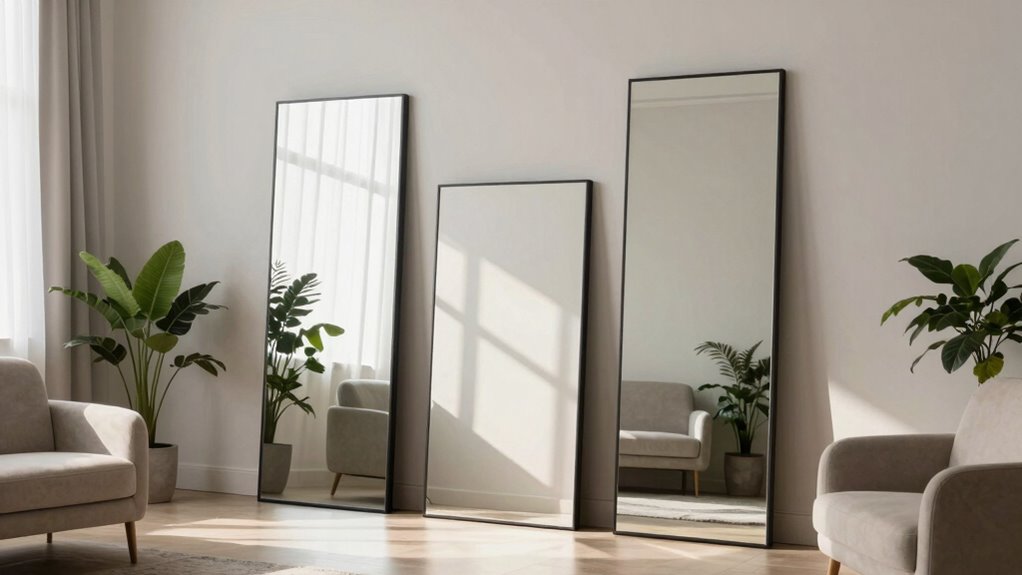

To use mirrors without glare, carefully place them to reflect light away from your seating or work areas, avoiding direct opposition to windows or light fixtures. Choose frames with matte or textured finishes to diffuse light and hide bright light sources. Incorporate adjustable or dimmable lighting to control brightness and position lights to the sides of the mirror. By balancing placement, framing, and lighting, you can minimize glare and enhance your space. Keep exploring—there’s more to perfecting your mirror setup.

Get your wardrobe favorites delivered free with Prime
- Fast, free delivery on millions of items
- Prime Video, Amazon Music and more included
- Member-only deals all year
Key Takeaways
- Use decorative, matte, or textured frames to diffuse light and reduce harsh reflections.
- Position mirrors to avoid direct alignment with windows or bright light sources.
- Incorporate adjustable, dimmable lighting to control brightness and minimize glare.
- Angle mirrors away from light sources to reflect light safely and reduce reflection points.
- Combine strategic placement with stylish framing for a functional, glare-free mirror setup.
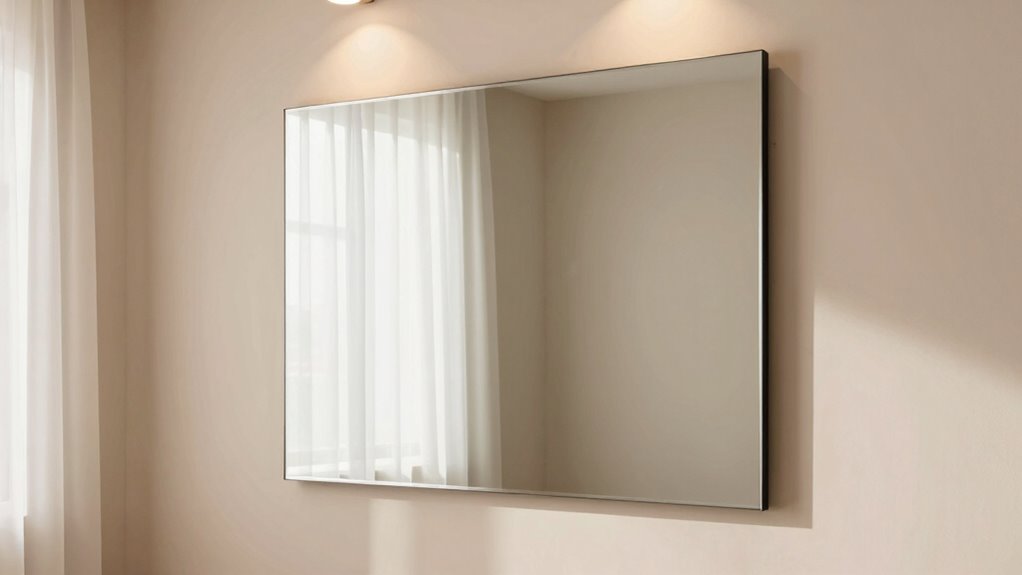
Mirrors can enhance your space and improve visibility, but they also pose a common problem: glare. When sunlight or artificial light hits a mirror at certain angles, it creates reflections that can be harsh or distracting. To prevent this, you need to think about how and where you place your mirrors. One effective strategy is choosing decorative framing that complements your room’s design. A well-chosen frame not only adds aesthetic appeal but also helps regulate how light interacts with the mirror. For example, thicker or matte-finished frames can diffuse light, reducing glare and making reflections softer.
Decorative frames can enhance style and reduce glare by diffusing light and softening reflections.
Another key element is smart lighting. Instead of relying solely on overhead or direct lighting, incorporate adjustable fixtures that allow you to control brightness and direction. By positioning smart lights carefully, you can minimize their reflection in the mirror. For instance, placing lights to the sides or installing dimmable options gives you flexibility to adapt the lighting to different times of day or activities. This way, you prevent bright light sources from bouncing directly into your eyes or creating disruptive glare. Combining smart lighting with strategic mirror placement ensures you get the benefits of reflected light without the discomfort.
When positioning your mirror, consider the angles of natural and artificial light in your space. Avoid placing mirrors directly opposite windows or light fixtures, since that’s where glare is most likely to occur. Instead, angle your mirrors so they reflect light away from your seating or work areas. If you’re using decorative framing, take advantage of its design to hide or block certain light sources, further reducing glare. You might also opt for textured or matte finishes on the frame, which can absorb some light and prevent harsh reflections. Additionally, understanding the importance of biodiversity can inspire you to create a more harmonious and balanced environment, both visually and environmentally. Incorporating proper lighting design strategies can also help optimize the overall ambiance and function of your space.
Furthermore, considering the angle of light when positioning your mirror can significantly decrease glare, as it allows for better control over reflection points. Proper placement considering light direction can make a noticeable difference in minimizing unwanted reflections. Incorporating these techniques doesn’t mean sacrificing style for function. You can select decorative framing that enhances your decor while also serving as a practical tool against glare. Pair this with smart lighting solutions that give you control over brightness and positioning. The combination allows you to enjoy the visual benefits of mirrors—such as making rooms look larger or brighter—without the annoyance of glare. By paying attention to placement, framing, and lighting, you create a harmonious environment where mirrors serve their purpose beautifully and comfortably.
Popular right now

Hisense 75U6SF Pro 75-Inch U6 Pro Mini-LED 4K UHD Smart Fire TV

Ninja Espresso and Coffee Maker with Built-In Frother, CFN601

De'Longhi COM530M All-in-One Coffee and Espresso Machine, 47 oz
As an affiliate, we earn on qualifying purchases.
Frequently Asked Questions
Can Mirror Placement Affect Room Temperature?
Yes, mirror placement can affect room temperature. Positioning mirrors to reflect sunlight or heat sources, following Feng shui principles, can help distribute warmth and light more evenly. Decorative accents like strategically placed mirrors can enhance comfort by bouncing heat from radiators or sunlight, reducing cold spots. Proper placement prevents glare and optimizes warmth, making your space more inviting without increasing energy costs.
Are There Specific Mirror Shapes That Reduce Glare?
Yes, certain mirror shapes can reduce glare effectively. Opt for mirrors with decorative patterns or beveled edges, which diffuse light and minimize harsh reflections. Shapes like oval, rounded, or irregular forms help break up light, especially when paired with color contrasts in the frame or surrounding decor. These design choices direct light away from your eyes, creating a softer, glare-free reflection and enhancing the room’s aesthetic appeal.
Do Anti-Reflective Coatings Work on All Mirror Types?
Anti-reflective coatings do work on most mirror types, but their effectiveness depends on proper coating application and durability. When applied correctly, these coatings reduce glare considerably. However, some mirrors, especially those exposed to harsh conditions, may experience coating wear over time. To guarantee long-lasting performance, choose high-quality coatings and professional application. This way, you’ll enjoy improved glare reduction without sacrificing the mirror’s durability.
How Does Mirror Size Influence Glare Intensity?
Larger mirrors tend to produce more glare because they reflect more light across their surface. The size of the mirror surface directly influences glare intensity, with bigger surfaces amplifying light reflections. To reduce glare, opt for smaller mirrors or those with glare reduction coatings. Proper positioning also helps, ensuring the mirror isn’t directly facing light sources, which minimizes reflected glare and enhances your viewing comfort.
Can Lighting Adjustments Eliminate Mirror Glare Entirely?
Lighting adjustments can markedly reduce mirror glare, but eliminating it entirely is challenging. Focus on smart lighting design by positioning lights at angles that minimize direct reflection, and use diffused or softer bulbs to reduce harsh shadows. Incorporate dimmers or adjustable fixtures to control light intensity, enhancing glare reduction. While these measures greatly improve comfort, some residual glare may still occur, especially in highly reflective environments.
Conclusion
Now that you know how to minimize glare, you can enjoy the beauty of mirrors without the harsh reflections that can be distracting or even dangerous. It’s like having a clear, calm lake instead of a choppy, sun-drenched surface—both reflect, but one offers serenity while the other sparks discomfort. By applying these simple tips, you create a space where mirrors enhance your environment rather than hinder it, turning a potential annoyance into a subtle touch of elegance.