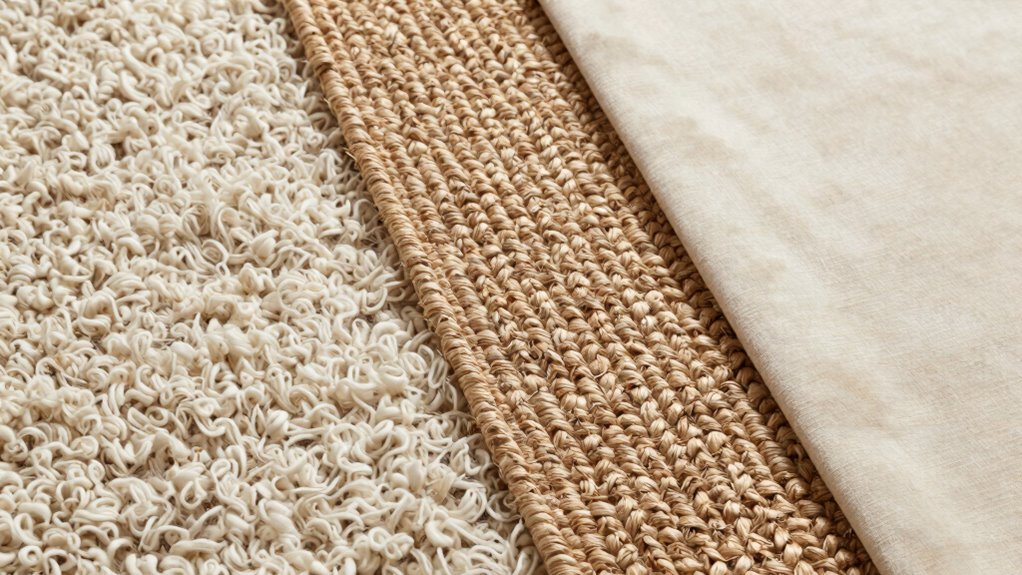

Wool, jute, and synthetic rugs behave very differently regarding comfort, durability, and care. Wool rugs feel soft and provide insulation, but require gentle cleaning and regular maintenance. Jute rugs have a coarse texture and a rustic look but need careful moisture control to prevent mold. Synthetic rugs are often less eco-friendly but are usually more stain-resistant and low-maintenance. Keep exploring to understand how each type can best fit your lifestyle and environment.

Get your wardrobe favorites delivered free with Prime
- Fast, free delivery on millions of items
- Prime Video, Amazon Music and more included
- Member-only deals all year
Key Takeaways
- Wool and jute rugs are natural, biodegradable materials, whereas synthetic rugs are made from non-renewable, synthetic fibers.
- Wool offers insulation and durability; jute provides a coarse, rustic look; synthetic rugs typically have different fiber properties.
- Wool and jute require specific maintenance to prevent mold, mildew, and damage, unlike many synthetic options that need less delicate care.
- Wool’s elasticity resists wear and tear better than jute, which is more prone to shedding and fiber degradation over time.
- Synthetic rugs often resist moisture and stains but lack the eco-friendly benefits and natural characteristics of wool and jute.
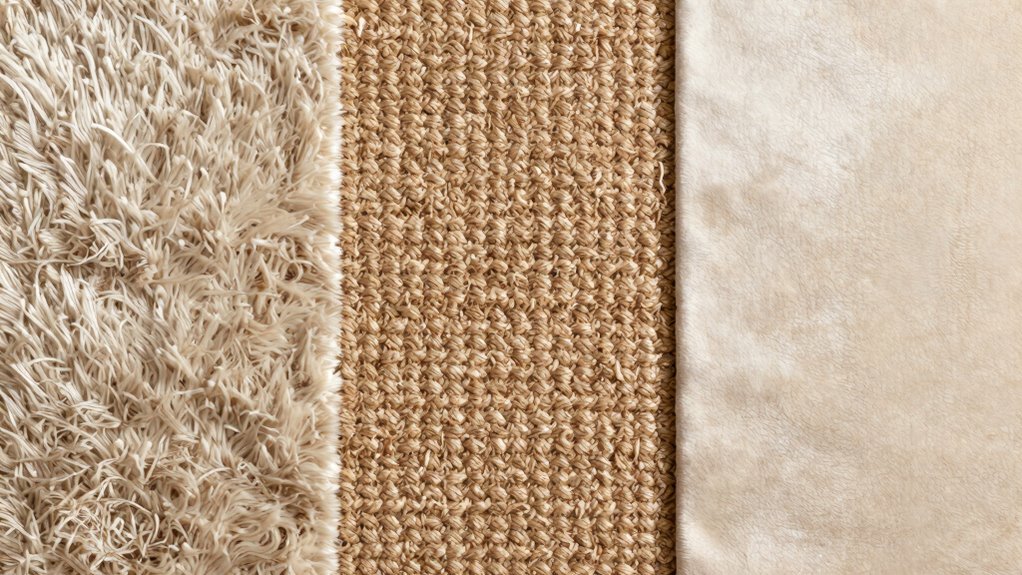
When choosing a rug for your space, understanding the differences between wool, jute, and synthetic options can help you make an informed decision. Each type behaves very differently, with unique characteristics that influence their eco-friendly benefits and maintenance needs. Wool rugs are prized for their natural comfort and durability. Made from sheep’s wool, they’re biodegradable and renewable, making them an eco-friendly choice for environmentally conscious homeowners. Wool’s natural fibers trap air, providing insulation and adding warmth to your space, which can reduce energy costs. They’re also resistant to stains to some extent, and their elasticity helps prevent wear and tear over time. To keep your wool rug looking its best, regular vacuuming is essential, ideally with a suction-only vacuum to avoid damaging the fibers. Spot cleaning spills immediately with a damp cloth and mild detergent prevents stains from setting. Professional cleaning every 12 to 18 months will help maintain their appearance and longevity. Additionally, wool’s natural resistance to mold and mildew makes it a good option for many environments. Using appropriate cleaning techniques can further extend the life of your wool rug and maintain its natural properties. Proper care techniques can also help prevent pilling and shedding, keeping your wool rug looking fresh longer. Moreover, choosing appropriate cleaning methods can significantly impact the longevity of your wool rug.
Wool rugs offer natural comfort, durability, insulation, and eco-friendliness with simple maintenance.
Jute rugs, on the other hand, are also eco-friendly benefits. They’re made from natural plant fibers, making them biodegradable and sustainable. Jute’s coarse texture gives a rustic, earthy feel, which suits casual or bohemian interiors. However, jute is more delicate than wool and tends to absorb moisture quickly, making it prone to mold and mildew if not kept dry. They require a bit more maintenance to preserve their look: avoid placing jute rugs in high-humidity areas, and clean spills immediately to prevent staining. Regular gentle vacuuming helps remove dirt and debris from their coarse fibers. Because jute isn’t naturally stain-resistant, it’s wise to use a protective pad or rug underlay to prevent slipping and reduce wear. For cleaning, avoid harsh chemicals; instead, use a dry or lightly damp cloth, and allow the rug to air out periodically to prevent mustiness. Proper rug care is essential for maintaining jute’s natural appearance and durability over time. When properly cared for, jute rugs can last many years and add a charming, eco-conscious touch to your home. Proper air circulation also helps prevent moisture buildup, further protecting the fibers from damage. Maintaining good air circulation is especially important for preventing moisture-related issues in natural fiber rugs.
As an affiliate, we earn on qualifying purchases.
Frequently Asked Questions
How Do Rug Materials Affect Indoor Air Quality?
Your rug material directly impacts indoor air quality by influencing airborne allergens and chemical off gassing. Wool rugs tend to trap allergens like dust mites, potentially improving air quality, but may also emit natural odors. Jute rugs usually have low emissions but can release dust. Synthetic rugs often off-gas chemicals, which can affect air quality negatively. Choosing the right material depends on your sensitivity and air quality concerns.
Are Synthetic Rugs Eco-Friendly?
Sure, synthetic rugs seem eco-friendly with their vibrant colors and affordability. But they often fall short, given their eco-conscious manufacturing processes and concerns about synthetic dye safety. While they might be convenient, they usually aren’t sustainable long-term options. If you want a truly eco-conscious choice, look for rugs made from recycled materials or natural fibers, which offer better environmental benefits and reduce chemical exposure.
Can Wool Rugs Be Used Outdoors?
Wool rugs aren’t ideal for outdoor use because they lack outdoor durability and moisture resistance. You might find that exposure to moisture, sun, and dirt causes wool to fade, stain, or even develop mold over time. If you want a rug outdoors, look for options specifically designed for outdoor durability, such as synthetic or specially treated rugs, which handle moisture and weather conditions much better and last longer in outdoor settings.
How Do Rug Fibers Impact Allergy Sufferers?
Are rug fibers making your allergy symptoms worse? Fiber allergies can cause sneezing, itchy eyes, and respiratory issues. Wool, jute, and synthetic fibers each have different impacts; wool might trap irritant triggers, while synthetic fibers can release particles into the air. If you’re sensitive, choosing hypoallergenic rugs with tightly woven, low-pile fibers can help reduce exposure to irritant triggers and improve your indoor air quality.
What Is the Best Rug for High-Traffic Areas?
For high-traffic areas, synthetic rugs are your best choice due to their durability comparison and resistance to wear and stains. They handle heavy foot traffic well and are easier to clean. Plus, synthetic rugs offer great aesthetic versatility, fitting various styles and color schemes. You’ll find them practical and attractive, maintaining their look longer in busy spaces. Choose a synthetic rug for longevity and a versatile, stylish finish.
Conclusion
Think of rugs as your home’s heartbeat, each type pulsing with its own rhythm. Wool rugs feel like a warm hug, jute rugs bring earthy grounding, and synthetic rugs offer vibrant energy. By understanding their unique personalities, you’ll choose the perfect one to dance in harmony with your space. Remember, your rug isn’t just decor—it’s the foundation of your home’s story, setting the tone for comfort and style.
Halloween Picks
halloween
As an affiliate, we earn on qualifying purchases.