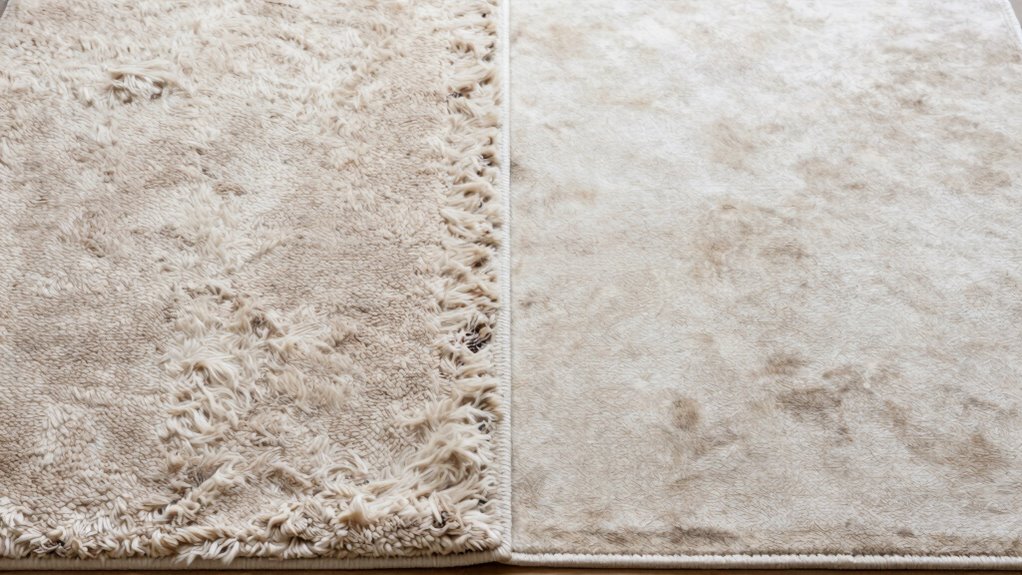

Wool rugs shed more initially, but shedding decreases over time as fibers settle, while synthetic rugs shed less thanks to tighter weaving. Synthetic rugs resist stains better because their fibers repel liquids, making cleaning easier. Durability favors synthetics in high-traffic areas, as they resist wear and fading longer, although wool maintains shape well with proper care. For a detailed look at how each material performs in different spaces, check out the full story.
Key Takeaways
- Wool rugs shed more initially but shed decreases over time, while synthetic rugs shed less overall.
- Synthetic rugs resist stains better and are easier to clean due to their dense fibers and water-repellent surface.
- Synthetic fibers withstand high traffic and wear longer, making them more durable for busy areas compared to wool.
- Wool rugs offer natural elegance with vibrant colors and plush textures, but may require more careful maintenance.
- Synthetic rugs are cost-effective, versatile, and suited for high-traffic spaces, with less shedding and stain susceptibility.
How Do Wool and Synthetic Rugs Differ in Shedding?
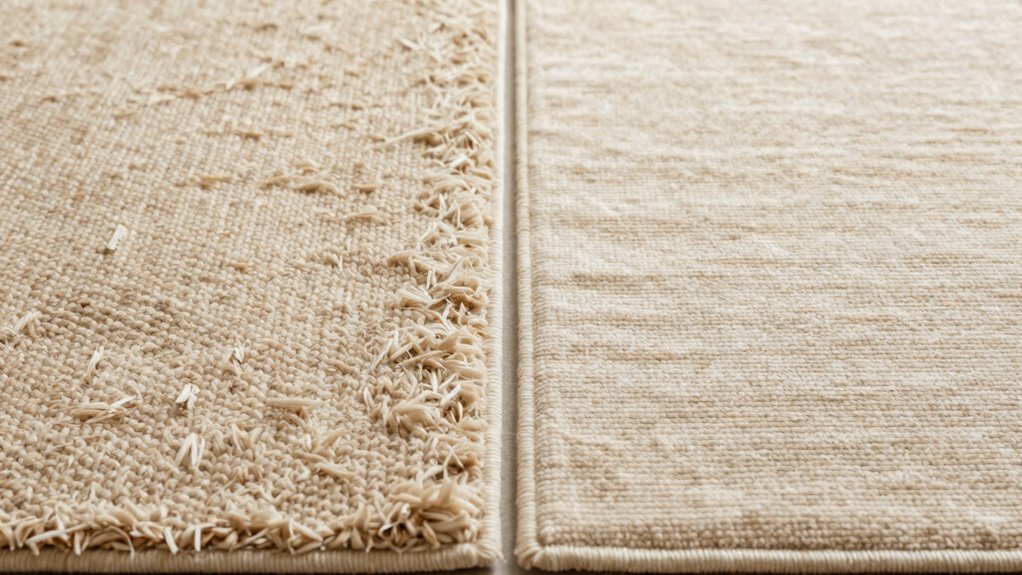
Wool rugs tend to shed more initially than synthetic rugs, especially during the first few months of use. This shedding is linked to the fiber texture, as wool fibers are natural and have a looser structure that releases loose fibers as the rug settles. In terms of softness comparison, wool rugs often feel plush and luxurious, but this softness can be temporarily reduced by shedding. Over time, shedding decreases markedly as the fibers settle and the rug’s surface smooths out. Synthetic rugs, on the other hand, shed less because their fibers are more tightly woven and less prone to fraying. Knowing this initial shedding phase helps you set realistic expectations, ensuring you’re prepared for a bit of cleanup early on while enjoying the natural fiber texture of wool. Additionally, understanding the fiber quality of the rug can also influence how quickly shedding diminishes and the rug’s overall durability. Recognizing the shedding process can help you choose the right rug for your lifestyle and maintenance preferences. Furthermore, the wear resistance of synthetic fibers often makes them more suitable for high-traffic areas where durability is a priority.
Which Material Resists Stains Better: Wool or Synthetic?
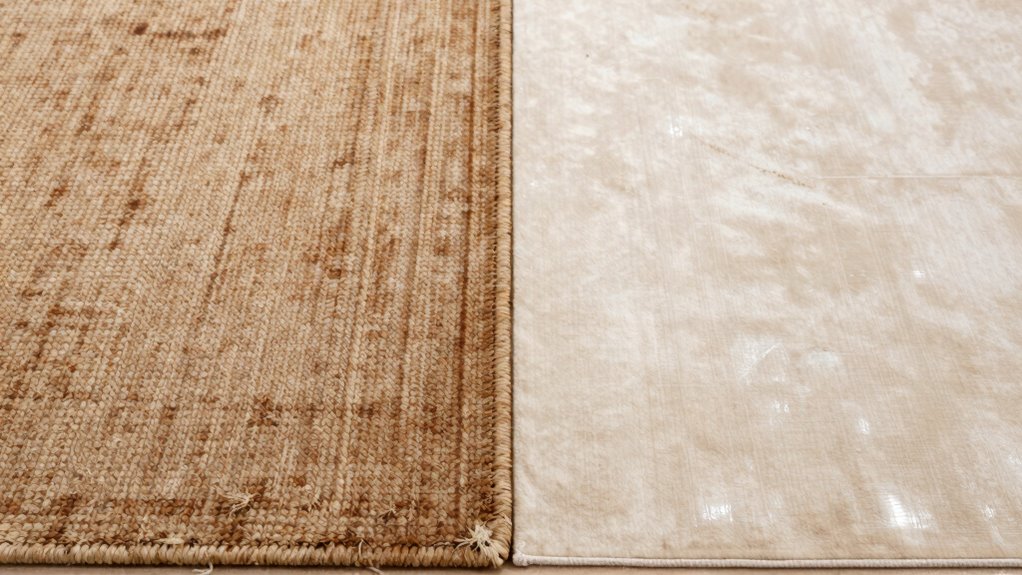
When it comes to stain resistance, you’ll find that synthetic rugs generally repel spills better than wool. They’re easier to clean because liquids sit on the surface, making cleanup quicker. Wool, while naturally more resistant than many natural fibers, may absorb stains more readily and require more effort to maintain. Additionally, the durability of synthetic fibers often makes them a more practical choice for high-traffic areas prone to stains. It’s also important to consider halal standards when choosing materials, especially if the rug’s production involves processing methods or additives that need to comply with Islamic dietary laws. Being aware of the manufacturing processes can help ensure the rug aligns with your ethical and cultural preferences, and understanding certification standards can further guide your selection to meet specific ethical considerations. Furthermore, the environmental impact of synthetic versus wool rugs may influence your decision based on sustainability concerns.
Stain Resistance Levels
Synthetic rugs generally resist stains better than wool because their fibers are less absorbent and easier to clean. Their fiber density plays a vital role; higher density means fewer spaces for liquids to seep in. Synthetic fibers often require less intensive stain treatment, making cleanup quicker and more effective. Wool, being more porous, absorbs liquids more readily, increasing staining potential. To visualize this, fiber properties influence how well the rug withstands staining and wear, which can vary based on fiber type and treatment. The porosity level of fibers also significantly impacts stain susceptibility and cleaning ease. Additionally, the fiber treatment processes can further enhance stain resistance in synthetic options, especially when combined with protective coatings that are applied during manufacturing.
Ease of Cleaning
Because synthetic rugs have fibers that are less porous and more densely packed, they are generally easier to clean after staining. This means you can often address spills quickly without the stain setting in too deeply, reducing the need for frequent cleaning. Synthetic fibers resist absorbing liquids, making stain removal more straightforward and effective. As a result, you may find that cleaning frequency decreases since stains are less likely to penetrate deeply. Additionally, their resistance to liquids contributes to their durability and long-term appearance. Moreover, the maintenance requirements for synthetic rugs are typically lower, making them a practical choice for busy households. Their ease of cleaning also minimizes the need for harsh cleaning agents, helping to preserve the rug’s appearance over time. An understanding of fiber porosity can further help in choosing the most suitable rug material for your cleaning needs, as it influences how well a rug can withstand wear and tear.
How Durable Are Wool Versus Synthetic Rugs Over Time?
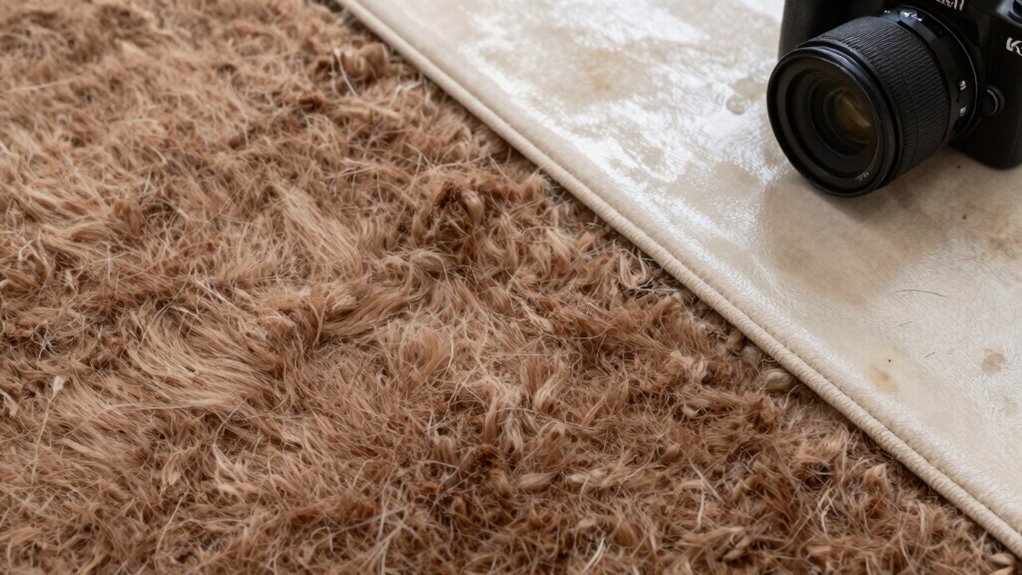
Wool rugs are known for their natural resilience, but over time, they can show signs of wear if not properly maintained. Their fiber elasticity helps them bounce back from foot traffic, maintaining their shape longer than some synthetic options. However, exposure to sunlight or harsh cleaning agents can affect their colorfastness, leading to fading. While wool’s durability is impressive initially, it may soften or develop worn areas with years of heavy use. Synthetic rugs often resist wear and tear better over extended periods due to their resilient fibers and less susceptibility to UV damage. Additionally, fiber elasticity plays a key role in their ability to withstand repeated stress without losing shape. Ultimately, wool offers excellent durability when cared for correctly, but synthetics tend to hold up better under constant, demanding use, especially in high-traffic areas.
How Can You Minimize Shedding and Stains on Your Rug?
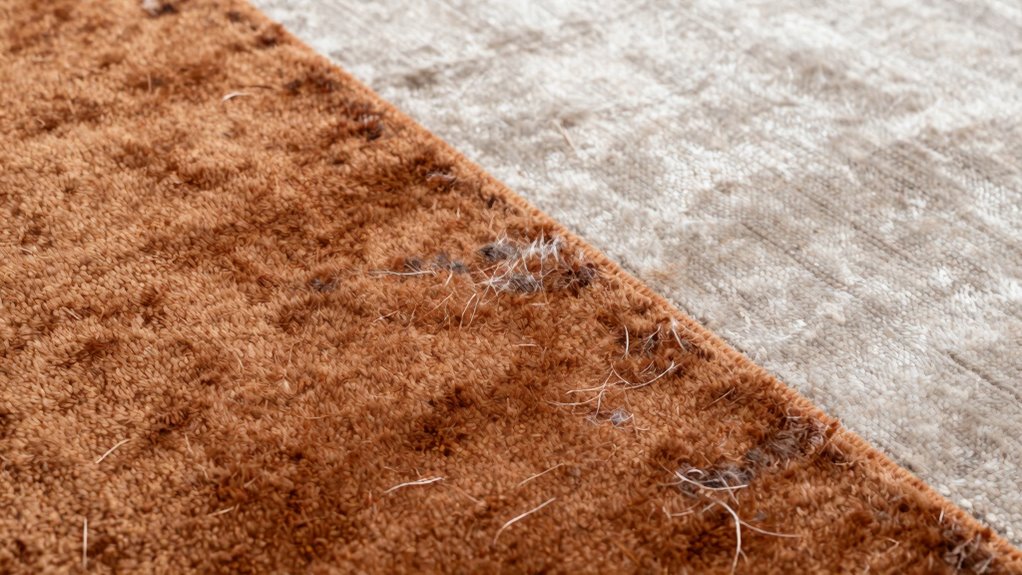
To keep your rug looking its best, it’s essential to take steps to minimize shedding and stains. Start by choosing a rug with a fiber texture that’s less prone to shedding, like tightly woven wool or synthetic fibers. Regular vacuuming helps remove loose fibers and dirt that can cause additional shedding and stains. Use a gentle, consistent pattern to avoid damaging the fibers. To address odor control, clean spills immediately and avoid letting stains set in. Consider using a rug pad to prevent slipping and reduce fiber friction, which can lead to shedding. Periodic professional cleaning can also help maintain fiber integrity, reducing both shedding and staining over time. Additionally, selecting appropriate cleaning methods based on the rug material can help preserve its appearance and longevity. Incorporating sound cleaning techniques can further ensure your rug remains in excellent condition. Proper care keeps your rug looking fresh and extends its lifespan, especially when combined with preventative maintenance to minimize long-term damage.
Are Wool or Synthetic Rugs Better for High-Traffic Areas?
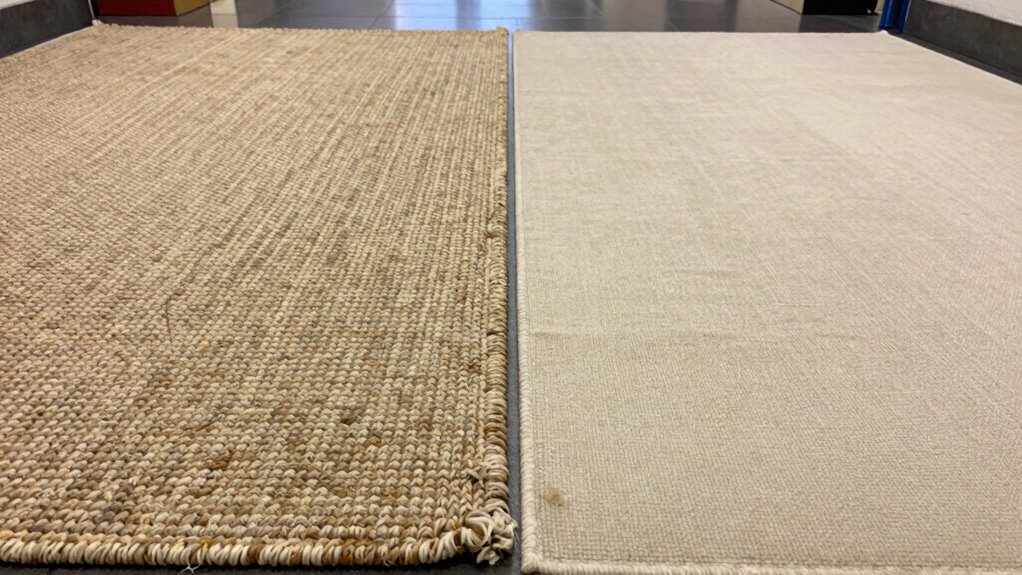
When choosing a rug for busy spaces, durability and easy maintenance are key. Wool rugs often stand up well over time, but synthetic options can resist stains and wear even better. Consider how the look and feel of each type match your style and comfort needs for high-traffic areas. Additionally, vacuum features to consider like strong suction and effective filters can help keep both types of rugs clean and allergen-free over time. Proper cleaning techniques tailored to each material can further prolong their lifespan and appearance, ensuring your investment remains attractive and functional.
Durability and Maintenance
If you’re choosing a rug for high-traffic areas, durability and ease of maintenance are key factors to contemplate. Wool rugs excel in fiber resilience, bouncing back from foot traffic, and often maintain vibrant color retention longer. Synthetic rugs, on the other hand, are designed for durability and are easier to clean, resisting stains and fading. Consider this comparison:
| Feature | Wool Rugs | Synthetic Rugs |
|---|---|---|
| Fiber Resilience | Natural elasticity, durable | Resists crushing and wear |
| Color Retention | Maintains hues over time | Excellent fade resistance |
| Maintenance | Requires careful cleaning | Low-maintenance, easy to clean |
| Wear & Durability | Great for high-traffic areas | Built for heavy use |
Choose based on your need for resilience or low-maintenance convenience.
Aesthetic and Comfort
While durability guarantees your rug withstands high traffic, its aesthetic appeal and comfort also matter for a busy space. Wool rugs often offer rich texture options, from plush to looped styles, adding depth and warmth that enhance comfort underfoot. Their natural fibers tend to hold color vibrancy well, maintaining a vibrant appearance over time. Synthetic rugs, on the other hand, can feature a wide range of textures, including soft or low-profile options, and are often designed to mimic natural fibers. They typically come in brighter, more varied color palettes, which can brighten a room instantly. If comfort and visual impact are priorities in high-traffic areas, wool provides a cozy, sophisticated feel, while synthetic options may deliver bold colors and diverse textures at a more budget-friendly price point.
Which Rug Is Best for Your Home: Wool or Synthetic?
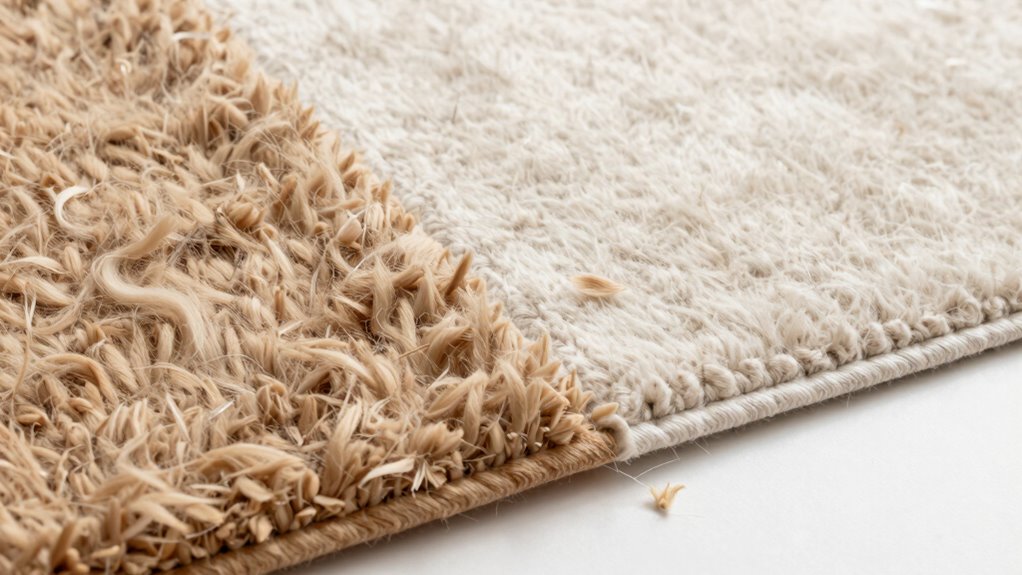
Choosing between wool and synthetic rugs ultimately depends on your priorities and lifestyle. If you want a wide range of color options, synthetic rugs often come in brighter, more varied hues, making it easier to match your decor. Wool rugs tend to have more subdued, natural tones but offer timeless elegance. Cost considerations are also key—synthetic rugs are generally more affordable upfront, making them attractive for budget-conscious buyers. Wool rugs, while pricier, provide durability and a natural feel that can justify the investment over time. Think about how much maintenance you’re willing to handle and how long you want the rug to last. Your choice ultimately hinges on balancing aesthetics, budget, and practicality to find the best fit for your home.
Frequently Asked Questions
Are Wool Rugs More Environmentally Friendly Than Synthetic Rugs?
Yes, wool rugs are more eco-friendly than synthetic rugs. You’ll appreciate that wool is a natural, biodegradable material, making it a sustainable choice. Wool rugs often come from renewable resources and require less energy to produce. By choosing wool, you support sustainability benefits like reduced pollution and waste. Plus, wool’s durability means you’ll enjoy your rug longer, lowering the environmental impact over time.
Can Synthetic Rugs Be Recycled Easily?
Synthetic rugs are not easily recycled due to recycling challenges, which makes disposal difficult and less eco-friendly. You might find that they often end up in landfills, contributing to environmental issues. If you’re seeking eco-friendly alternatives, consider wool or natural fiber rugs, as they are biodegradable and easier to recycle. Choosing sustainable options helps reduce waste and supports a healthier planet.
How Do Price Differences Affect Long-Term Maintenance Costs?
Imagine you’re a savvy shopper from the 1920s, weighing the cost benefit analysis of rugs today. Price differences markedly impact long-term maintenance costs; cheaper synthetic rugs often require frequent replacements and specialized cleaning, raising expenses. Conversely, wool rugs, though pricier initially, boast a better price performance ratio, lasting longer and resisting stains better. Your choice hinges on balancing upfront costs with ongoing upkeep, ultimately saving money over time.
Do Wool Rugs Require Special Cleaning Methods?
Yes, wool rugs require special cleaning methods. You should use gentle cleaning techniques, like vacuuming regularly with a good suction and avoiding harsh brushes. When it comes to stain removal, act quickly with a mild detergent or specialized wool cleaner to prevent damage. Avoid excessive water, as wool fibers can shrink or become misshapen. Proper care guarantees your wool rug stays beautiful and durable over time.
Are There Hypoallergenic Options Within Wool or Synthetic Rugs?
Imagine a family with allergy sensitivities choosing a rug; they opt for an allergy-friendly option. Yes, both wool and synthetic rugs can be hypoallergenic if made from hypoallergenic materials or treated to resist allergens. Look for rugs labeled as hypoallergenic or allergy-friendly, featuring natural fibers like wool processed to minimize allergens or synthetic options designed with hypoallergenic materials, ensuring a safer, more comfortable environment for allergy sufferers.
Conclusion
Choosing between wool and synthetic rugs is like picking between a trusty old friend and a new adventure. Wool offers timeless charm and resilience, while synthetic options bring affordability and stain resistance. Consider your space, foot traffic, and maintenance preferences—your perfect rug awaits. Remember, the right choice can transform your home into a cozy haven or a stylish showcase, turning everyday floors into the heart of your home’s story.