
To stay warm without bulk, layer smartly by starting with a snug-fitting base layer that wicks moisture away from your skin. Add a lightweight mid-layer to trap heat, and top it with a breathable, waterproof outer shell to protect from wind and snow. Focus on layers that work together seamlessly, allowing flexibility and avoiding unnecessary bulk. Keep exploring more tips to turn your outdoor gear into an efficient, warm system without the added weight.
Key Takeaways
- Choose close-fitting, moisture-wicking base layers like merino wool to keep skin dry without added bulk.
- Opt for lightweight, insulated mid-layers such as fleece or thin down to trap heat without bulkiness.
- Use slim, waterproof outer shells with breathability to protect from weather while maintaining mobility.
- Layer strategically, removing or adding pieces as weather conditions change to avoid unnecessary bulk.
- Select multi-functional, high-performance fabrics that combine insulation, moisture management, and protection.
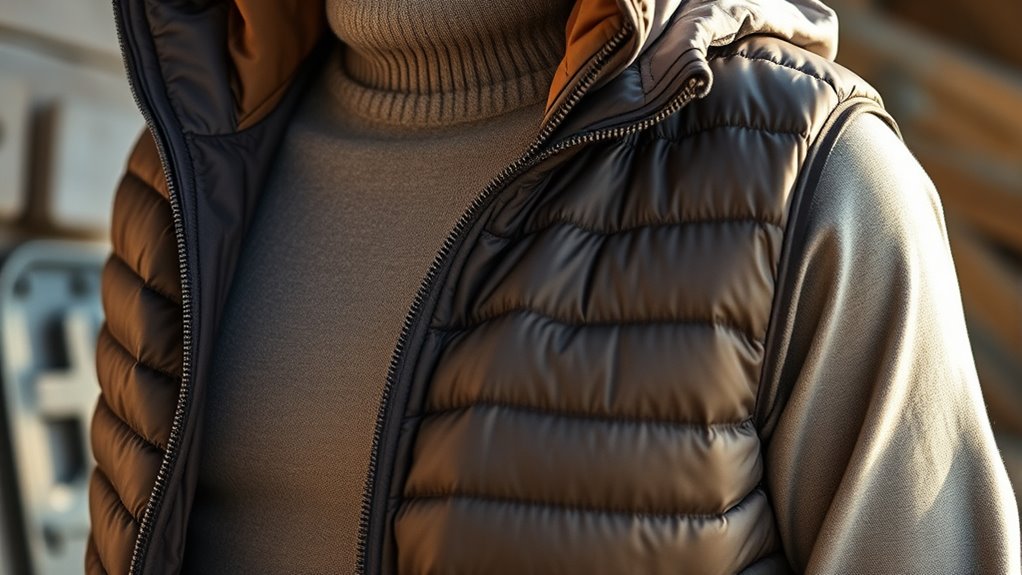
When the cold weather hits, layering becomes essential for staying warm without feeling bulky. The key lies in choosing the right materials and arranging your clothing strategically. You want each layer to work together to trap heat, wick away moisture, and provide thermal insulation, all while maintaining mobility and comfort. The base layer is your foundation; it should fit snugly against your skin and focus on moisture management. Look for moisture-wicking fabrics like merino wool or synthetic blends designed to pull sweat away from your body, keeping you dry and preventing chills. Keeping your skin dry is critical because moisture can quickly sap your body heat, making you feel colder even if you’re dressed warmly.
Layering correctly keeps you warm and mobile by trapping heat and managing moisture effectively.
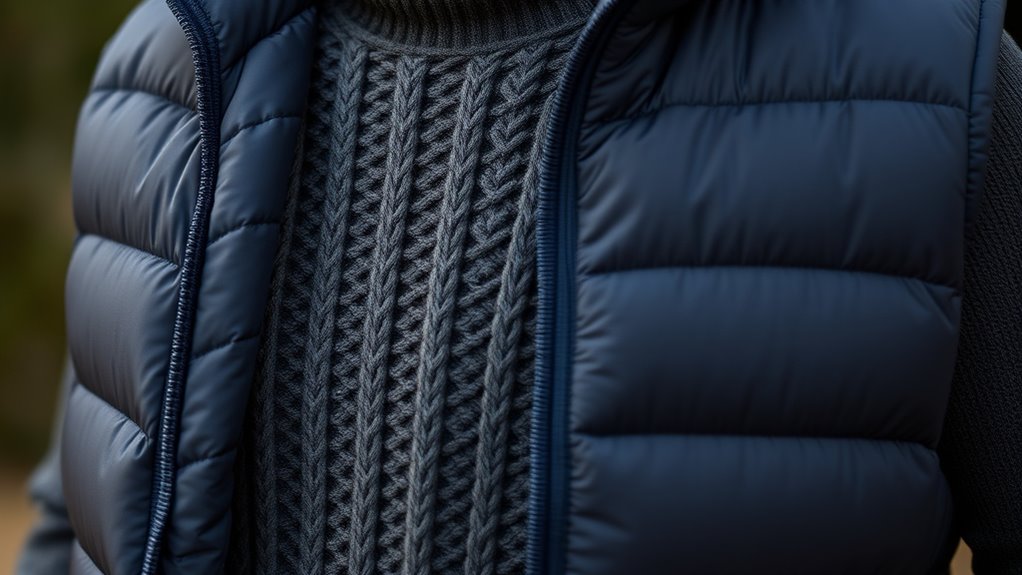
Over this, the mid-layer provides thermal insulation. This layer should trap warm air close to your body without adding unnecessary bulk. Fleece or lightweight down jackets are excellent options, as they offer high thermal insulation without weighing you down. The material’s ability to retain heat while remaining lightweight allows you to stay warm during physical activity or when stationary. Pay attention to the fabric’s breathability; a good mid-layer manages moisture from your base layer while trapping heat, preventing moisture buildup that can compromise your insulation. Incorporating versatile layers can also help you adapt quickly to changing conditions throughout the day.
The outer layer, or shell, shields you from wind, rain, or snow. It should be breathable enough to allow moisture to escape but sturdy enough to block the elements. Materials like Gore-Tex or other waterproof, windproof fabrics provide this balance. An effective outer layer complements the inner layers by preventing external moisture from penetrating and by reducing heat loss due to wind chill. When choosing your outer shell, ensure it fits comfortably over your mid-layer without restricting movement.
Strategically layering with these considerations ensures you maximize thermal insulation and moisture management without adding bulk. Each layer has its distinct purpose, working together seamlessly. As you move around in cold weather, you’ll notice how this system keeps you warm, dry, and comfortable without the sensation of wearing heavy clothing. Remember, the goal is to trap heat close to your body, wick away moisture efficiently, and protect yourself from the elements—all while remaining agile and comfortable. Proper layering is an art that, once mastered, allows you to adapt quickly to changing weather conditions and stay warm without sacrificing mobility or comfort. Learning layering techniques can make a significant difference in how effectively you stay warm during outdoor activities.
Frequently Asked Questions
What Fabrics Are Best for Lightweight Warmth?
You should choose thermal fabrics and moisture-wicking materials for lightweight warmth. Thermal fabrics trap heat effectively without adding bulk, keeping you warm and comfortable. Moisture-wicking materials draw sweat away from your skin, helping you stay dry and cozy even during active outdoor pursuits. Look for thin, high-performance fabrics like merino wool or synthetic blends designed for warmth and breathability, so you stay warm without feeling bulky.
How Do I Prevent Bulk in Tight Spaces?
To prevent bulk in tight spaces, focus on using thin insulation materials like merino wool or lightweight synthetic fibers. Incorporate effective layering techniques, such as a slim base layer under a fitted insulating layer, to trap heat without adding bulk. Opt for form-fitting garments and avoid oversized pieces. This way, you stay warm and comfortable without sacrificing mobility or feeling cramped.
Can Layering Reduce the Need for Heavy Coats?
Yes, layering can reduce the need for heavy coats. You can use thermal insulation layers to trap heat and moisture-wicking fabrics to keep you dry and comfortable. By stacking lightweight, snug-fitting pieces, you maintain warmth without bulk, making it easier to move and stay agile. Proper layering adapts to changing conditions, so you stay warm and dry without the weight of a bulky coat.
What’s the Ideal Order for Layering?
You start with moisture-wicking fabrics next to your skin, keeping sweat away and dry. Add a thermal insulation layer for cozy warmth, like a fuzzy fleece or lightweight down. Top it with a breathable shell to protect against wind and rain. This order guarantees moisture escapes, warmth stays in, and you avoid bulk, letting you move freely and stay comfortable in chilly weather without feeling weighed down.
How Do I Adjust Layers for Indoor Versus Outdoor?
You should adjust your layers based on indoor or outdoor settings by adding or removing layering accessories like scarves, hats, or gloves to improve temperature regulation. Indoors, keep it minimal with breathable, lightweight pieces, while outdoors, add an extra layer or two for insulation. Use your layers to fine-tune comfort, ensuring you stay warm without bulk. Always be ready to adapt your clothing as the temperature changes throughout the day.
Conclusion
By choosing the right fabrics, adjusting your layers, and staying mindful of fit, you can stay warm without the bulk. Focus on layering smartly, combining lightweight pieces for insulation, and ensuring each layer works together seamlessly. Keep your movements unrestricted, your comfort high, and your style intact. With these tips, you’ll stay cozy, confident, and ready to face the cold—without feeling weighed down. Embrace the art of layering, and stay warm in every way that matters.