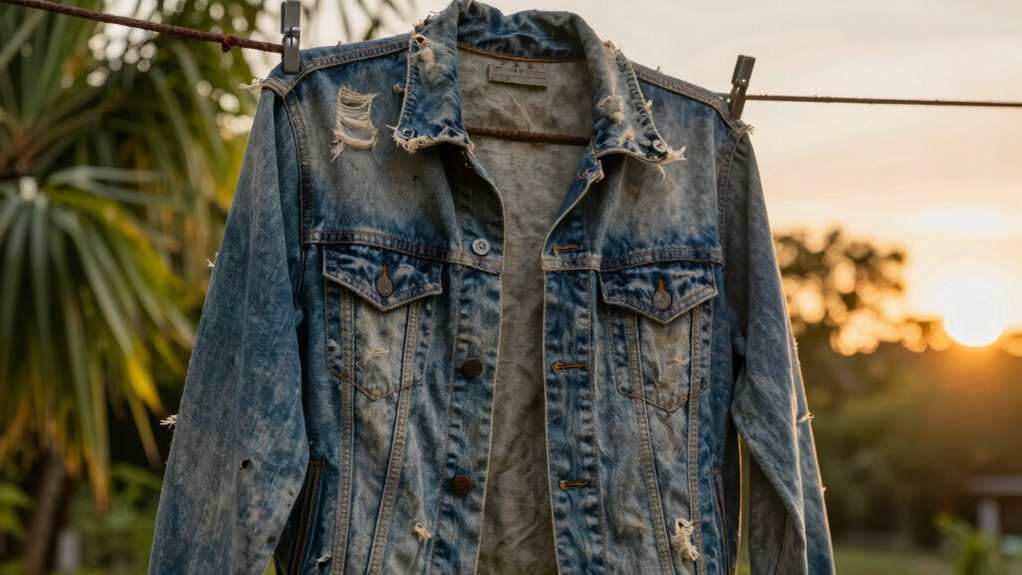

Air-drying extends your clothes’ lifespan more than you realize because it reduces the wear and tear caused by machine heat and agitation. It prevents fibers from weakening, shrinking, or fading, helping fabrics stay soft and intact longer. Proper air-drying techniques also improve fabric texture and appearance. Plus, it’s more energy-efficient and eco-friendly, saving you money. Stick around to discover how simple changes can make a big difference for your wardrobe’s durability.

Get your wardrobe favorites delivered free with Prime
- Fast, free delivery on millions of items
- Prime Video, Amazon Music and more included
- Member-only deals all year
Key Takeaways
- Air-drying minimizes mechanical stress and heat exposure, preventing fiber weakening and fabric thinning over time.
- Proper air-drying techniques help maintain clothing shape, reducing fabric deformation and extending lifespan.
- Gentle air-drying preserves fabric softness and prevents stiffness or roughness, keeping clothes comfortable longer.
- Air-drying reduces static cling and wrinkles, decreasing the need for ironing and associated fabric wear.
- Using eco-friendly air-drying methods contributes to energy savings, indirectly prolonging clothing durability.

Air-drying clothes can extend the lifespan of your garments by reducing wear and tear caused by machine agitation and high heat. When you skip the dryer and hang your clothes out to dry, you prevent the constant tumbling that can weaken fibers over time. This gentler drying process helps preserve the fabric’s integrity, keeping your clothes looking newer longer. The repetitive motion inside a dryer causes friction, which gradually wears down fibers, leading to thinning fabric and fraying edges. By air-drying, you minimize this mechanical stress, allowing your clothes to retain their original fabric softness much longer. Plus, reduced heat exposure prevents the shrinking, fading, or weakening of dyes, which often happens when garments are subjected to high temperatures in the dryer. Additionally, proper drying techniques can further enhance garment longevity by ensuring clothes dry evenly and thoroughly. Proper air circulation plays a crucial role in preventing mold and mildew growth on damp clothes, especially when drying indoors. Using appropriate hangers and drying methods can also help maintain the shape and structure of your clothes, preventing stretching or misshaping over time. Good clothing care habits, such as turning garments inside out before drying, can also contribute to longer-lasting clothes. Furthermore, employing gentle drying practices can help minimize stress on delicate fabrics, extending their usability. Beyond durability, air-drying also influences the overall feel of your clothing. When clothes dry naturally, they tend to maintain their natural fabric softness better than when dried in a machine. The gentle air circulation allows fibers to settle and retain their original texture, making your garments more comfortable against your skin. This is especially true for delicate fabrics like wool, silk, or linen, which can become stiff or rough after repeated machine drying. As a result, you get clothes that feel better and look fresher for longer.
From an energy efficiency standpoint, air-drying is a smart choice that saves you money and reduces your carbon footprint. Using a dryer consumes a significant amount of electricity or gas, contributing to energy bills and environmental impact. Hanging your clothes to dry uses no energy, making it an eco-friendly alternative that aligns with sustainable living goals. Over time, those savings add up, especially if you regularly air-dry your laundry. In addition to protecting your clothes and saving energy, air-drying can also be more convenient. You can hang clothes outside or on a drying rack inside, freeing up your laundry appliances for other tasks. It also reduces the risk of static cling and reduces wrinkles, so clothes often require less ironing afterward. While certain fabrics might take longer to dry and outdoor conditions can influence drying time, the benefits outweigh the inconvenience. By making air-drying a regular habit, you not only extend your clothing’s lifespan with better fabric softness but also contribute to a more energy-efficient household.
As an affiliate, we earn on qualifying purchases.
Frequently Asked Questions
Does Air-Drying Prevent Color Fading Better Than Machine Drying?
Yes, air-drying generally prevents color fading better than machine drying. It’s gentler on your clothes, helping preserve vibrant colors and preventing fabric elasticity loss. Machine dryers expose clothes to high heat and tumbling, which can fade dyes and weaken fibers over time. By air-drying, you reduce these stressors, keeping your clothes looking newer longer, with their colors brighter and fabric more elastic.
How Does Humidity Affect Air-Drying Impact on Clothes?
Humidity levels greatly influence how your clothes dry in an air-drying environment. High humidity slows down the evaporation process, making clothes take longer to dry and potentially leading to musty odors. Conversely, low humidity speeds up drying, helping clothes maintain their color and fabric quality. To optimize your air-drying, choose a well-ventilated space with low humidity, ensuring your clothes dry faster and stay in better condition over time.
Can Air-Drying Cause More Fabric Wrinkles Than Machine Drying?
Air-drying can cause more fabric wrinkles than machine drying because it relies on fabric tension during hanging, which often leads to uneven stretching. As clothes dry, wrinkles form from the tension and folds in the fabric, especially if you hang items improperly or leave them in one position for too long. To minimize wrinkle formation, smooth out clothing before hanging and avoid overloading the drying space.
Is Air-Drying Suitable for All Fabric Types?
Some fabrics suit air-drying, while others struggle with it. Cotton and linen love the leisurely process, thriving with minimal damage. However, delicate fabrics like silk or wool may suffer from longer drying times, risking damage or distortion. To guarantee fabric compatibility, check labels and consider drying times before air-drying. This approach ensures your clothes stay in shape, saving energy and extending their lifespan.
How Does Air-Drying Influence the Energy Efficiency of Laundry Routines?
Air-drying boosts your laundry routine’s energy efficiency by eliminating the need for electric dryers, which consume significant power. This method promotes energy conservation, saving you money on electricity bills and reducing your carbon footprint. Plus, it offers environmental benefits by lowering greenhouse gas emissions. By choosing air-drying whenever possible, you contribute to a more sustainable lifestyle, making your laundry habits more eco-friendly and cost-effective.
Conclusion
By air-drying your clothes, you can considerably extend their lifespan—sometimes by up to 50% longer than machine drying. This simple change reduces fabric wear and tear caused by heat and tumbling. So next time you hang your laundry, remember that those extra few hours of sun and breeze don’t just save energy—they keep your favorite shirts looking new longer. Small habits like this can make a big difference in how long your clothes last.
Evergreen bestsellers Picks
bestsellers
As an affiliate, we earn on qualifying purchases.