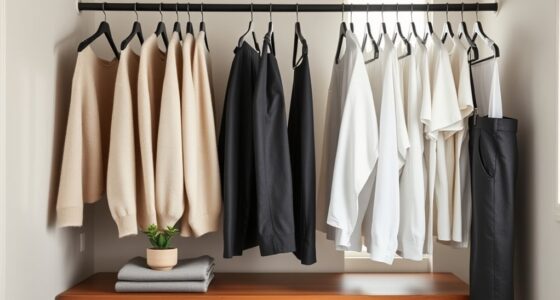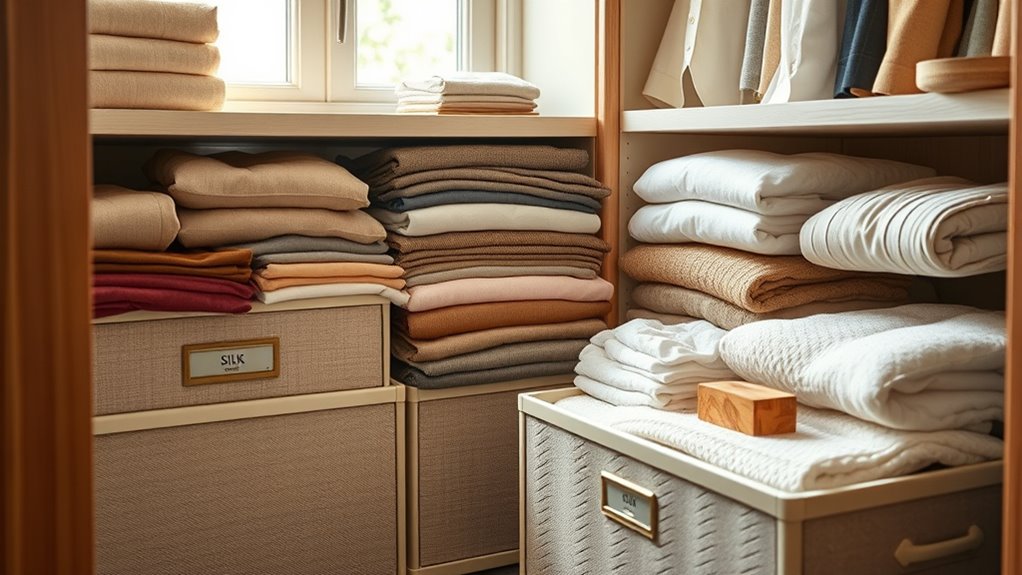

To care for wool, silk, and cotton, use gentle cleaning methods tailored to each fabric, like cold water and mild detergents for silk and pre-treating stains carefully. Store your garments properly by folding or hanging them in breathable containers, keeping them cool and dry away from sunlight. Regular inspections and natural repellents like cedar or lavender can prevent damage from pests. For more tips on maintaining your favorite fabrics, keep exploring how to extend their lifespan and look great longer.
Key Takeaways
- Use gentle washing methods and appropriate detergents for each fabric, avoiding harsh rubbing or high temperatures.
- Store wool, silk, and cotton in breathable containers, folded carefully, and away from direct sunlight to prevent damage and fading.
- Air dry delicate fabrics flat or on padded hangers, avoiding direct sunlight and heat to maintain fabric integrity.
- Incorporate natural repellents like cedar or lavender sachets in wool storage to prevent moth damage.
- Regularly inspect stored garments for signs of pests or damage, and handle fabrics gently to prolong their lifespan.
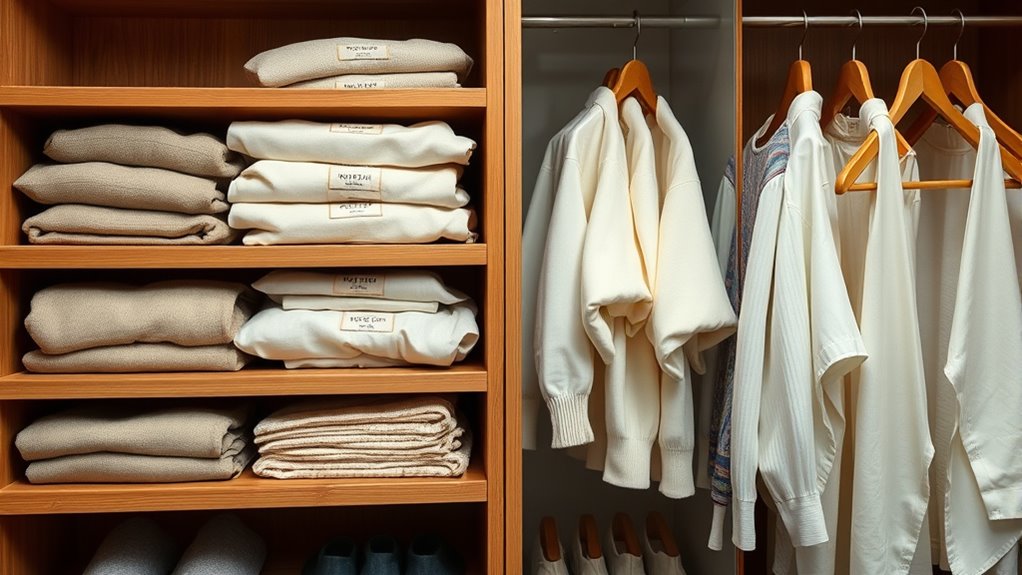
Taking proper care of your wool, silk, and cotton garments guarantees they stay beautiful and last longer. One key aspect is understanding how to clean and maintain these fabrics properly. For delicate fabrics like silk, avoid harsh detergents; instead, opt for gentle washing solutions that promote fabric softening without damaging the fibers. When washing your silk pieces, use cold water and a mild detergent formulated for delicate fabrics. This approach not only preserves the fabric’s natural sheen but also helps maintain its softness. If you notice stains, act quickly with stain removal techniques suitable for silk—blot the stain gently with a clean, damp cloth rather than rubbing, which can damage the fibers. For cotton and wool, pre-treat stains with appropriate stain removers, but always test a small area first to ensure the fabric won’t be affected. Proper drying methods, such as air drying flat or hanging on padded hangers, can prevent stretching or shrinkage, especially for wool and silk fabrics. Fabric softening is essential for maintaining the texture of your garments, especially for wool and cotton. Use fabric conditioners designed for these materials to keep them soft and comfortable, but avoid overuse, which can lead to buildup and reduce breathability. For wool, consider using wool-specific conditioners or natural options like a vinegar rinse to keep fibers soft and prevent itching. Silk, being delicate, benefits from gentle handling and minimal product use—sometimes just a rinse with cold water is enough to keep it soft and fresh. Proper storage complements cleaning by preventing fabric stiffness and damage. Always fold your wool, silk, and cotton items carefully and store them in breathable containers or garment bags to prevent dust buildup and fabric deterioration. Avoid plastic bags for long-term storage, as they trap moisture and can lead to mold or fiber damage. When storing your garments, keep them in a cool, dry place away from direct sunlight, which can cause fading and weaken fibers over time. For wool, consider adding cedar balls or lavender sachets to repel moths naturally. Silk garments should be stored flat or on padded hangers to prevent stretching, and cotton items can be folded neatly without stressing the fabric. Regularly inspect your stored clothing to catch any signs of pests or damage early. Additionally, understanding sleep environment and storage conditions can help prolong the life of your fabrics. By combining proper washing techniques, attentive stain removal, gentle fabric softening, and strategic storage, you ensure your wool, silk, and cotton pieces stay in excellent condition, looking vibrant and feeling comfortable for years to come.
Frequently Asked Questions
Can I Mix Different Fabric Types When Storing Them Together?
You shouldn’t mix different fabric types when storing them together. Fabric separation is essential to prevent damage, especially between delicate materials like silk and coarser ones like wool. Use appropriate storage container types, such as breathable fabric bins or acid-free boxes, to keep fabrics in good condition. Keeping them separate helps avoid color transfer, fabric snagging, or other harm, ensuring your textiles stay beautiful and intact over time.
How Often Should I Rotate Stored Garments to Prevent Damage?
You should rotate your stored garments at least every six months to prevent damage. During seasonal rotation, inspect each piece for signs of pests, mold, or fabric deterioration. This routine helps guarantee your clothes stay fresh and in good condition. Regularly moving and checking your garments also allows you to address any issues early, extending their lifespan and keeping your wardrobe in ideal shape.
Are There Eco-Friendly Storage Options for Delicate Fabrics?
Think of eco-friendly storage options as nurturing a garden, where your delicate fabrics bloom safely. You can choose natural fiber alternatives like linen or hemp storage bags, which are breathable and gentle. Biodegradable storage materials, such as organic cotton or recycled paper, allow your garments to rest without harm. These eco-conscious choices protect your fabrics and the planet, making your wardrobe a symbol of sustainable care and respect for nature.
What Are Common Pests That Damage Wool, Silk, and Cotton?
You should watch out for moths, beetles, and silverfish, as they commonly damage wool, silk, and cotton. To prevent pests, practice regular pest prevention measures like cleaning your storage area and using natural repellents. Proper fabric protection also involves storing your delicate fabrics in airtight containers and ensuring they stay dry and well-ventilated. This keeps pests away and preserves your fabrics’ quality over time.
How Do I Remove Musty Odors From Stored Fabrics?
Think of musty odors as stubborn weeds in your garden; they cling until you act. To remove them from fabrics, air them out in fresh air, then place fragrance sachets with natural deodorizing properties nearby. You can also gently sprinkle baking soda, let it sit, then vacuum. These simple steps refresh your fabrics, leaving them smelling clean and inviting, just like a blooming garden after a rainstorm.
Conclusion
By giving your wool, silk, and cotton the proper care and storage, you safeguard their delicate beauty and longevity. Imagine your cozy wool sweater tucked away safely, ready to keep you warm, alongside your elegant silk scarf, shimmering quietly in storage. Meanwhile, your cotton garments stay fresh and vibrant, waiting patiently in your closet. Properly caring for each fabric ensures they remain treasures, contrasting their humble appearance with the lasting elegance they bring to your wardrobe.