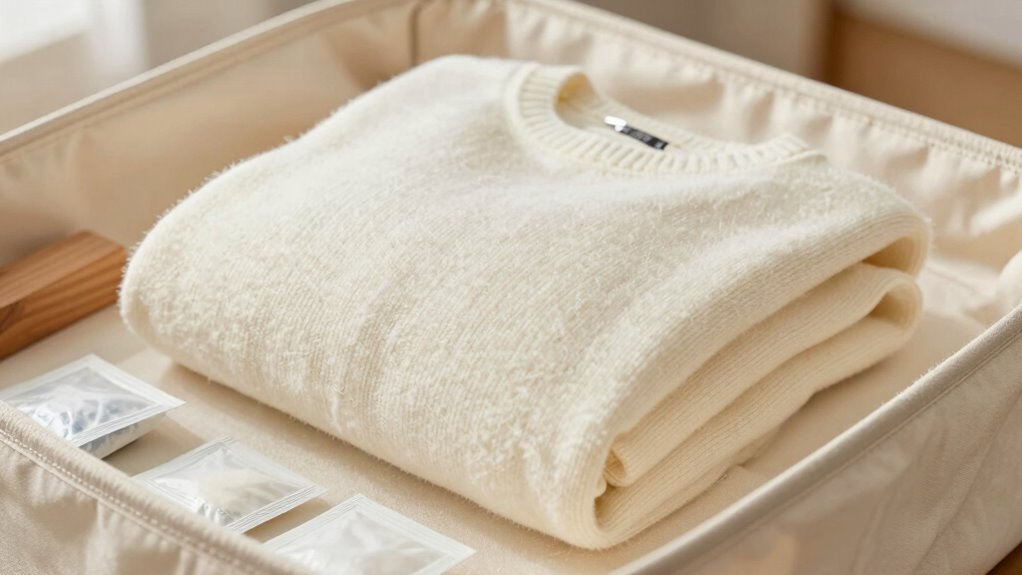
To prevent holes and pilling, store your cashmere properly by using breathable containers like cotton or linen, avoiding plastic bags. Fold your garments gently instead of hanging them long-term, and keep them in a cool, dry, dark environment with natural pest repellents like cedar or lavender. Regularly check for pests or damage and avoid overcrowding to reduce friction. Keep your cashmere soft and damage-free—discover more tips to make certain your delicate pieces stay beautiful longer.
Key Takeaways
- Use breathable, natural fabric containers like cotton or linen to prevent moisture and mold during storage.
- Fold cashmere carefully and store in a cool, dry, dark place to avoid stretching, wrinkles, and pilling.
- Incorporate natural pest repellents such as cedar blocks or lavender sachets to deter moths without chemicals.
- Avoid plastic bags and overcrowding to reduce friction, snags, and fiber damage.
- Regularly check stored garments for pests and damage, maintaining optimal environmental conditions for preservation.
Why Proper Storage Is Essential to Keep Your Cashmere Smooth and Holes-Free
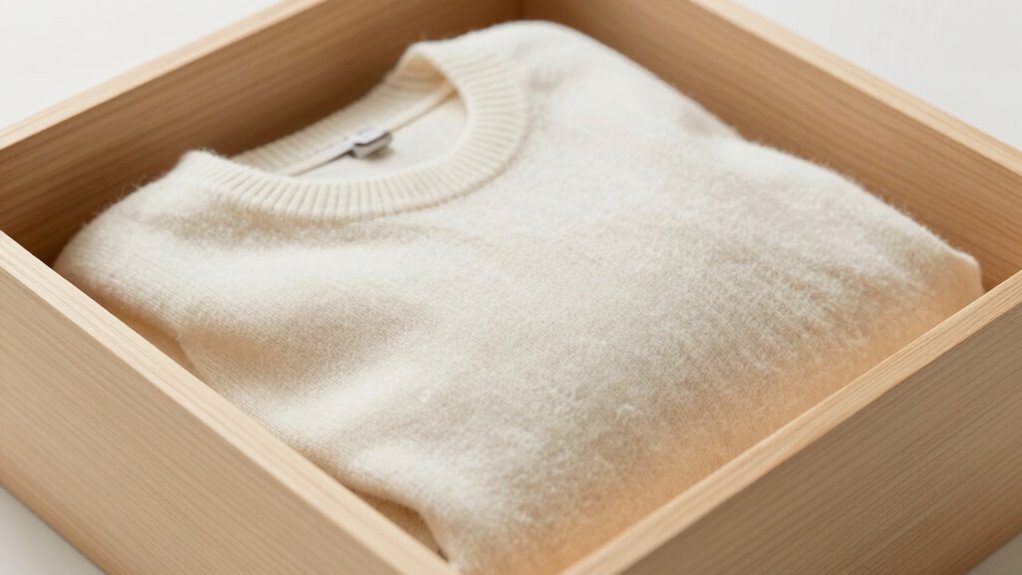
Proper storage is key to keeping your cashmere looking its best. Using decorative storage solutions not only adds style but also helps protect your garments. When you store cashmere properly, you prevent it from stretching or developing holes caused by pests or friction. Choose breathable containers that allow air circulation, which helps maintain the fabric’s softness and prevents mold. Additionally, well-designed storage keeps your cashmere vibrant by preserving its color. Avoid overcrowding your closet, as this can lead to wrinkling and pilling. Folding your cashmere neatly and placing it in attractive storage boxes or drawers keeps it safe and visually appealing. Ensuring proper fabric care during storage can significantly extend the life of your cashmere. Incorporating climate-controlled storage can further protect delicate fibers from moisture and temperature fluctuations, ensuring your cashmere remains pristine over time. Understanding fiber technology can guide you in selecting the best storage conditions to preserve your cashmere’s softness and appearance. Furthermore, selecting storage solutions with moisture regulation helps prevent damage caused by excess humidity, safeguarding your delicate fibers. Using proper storage techniques can also help prevent pilling and maintain the smooth texture of your cashmere over the years.
How to Choose Safe Storage Materials for Cashmere Garments

When selecting storage materials for your cashmere, prioritize breathable fabrics like cotton or linen to prevent moisture buildup. Steer clear of sharp edges or rough textures that could snag or damage the fibers. Opt for soft, natural fibers that gently cushion your garments and keep them safe over time. Incorporating breathable storage options can also help maintain proper airflow and reduce the risk of mold or mildew. Using containers made from natural fibers can further protect your garments from chemical exposure and environmental stress. Additionally, choosing sustainable storage options can help reduce environmental impact and ensure the longevity of your fine wardrobe pieces. Ensuring your storage methods are aligned with lifestyle sustainability can also promote eco-friendly practices that benefit both your wardrobe and the environment. Selecting eco-friendly materials for storage can contribute to a more sustainable wardrobe management routine.
Breathable Materials Matter
Choosing the right storage materials for your cashmere garments is essential to keep them in pristine condition. Breathable fabrics allow air circulation, preventing moisture buildup that can lead to mold or mildew. When selecting storage materials, opt for natural fibers like cotton or linen, which promote fiber breathability and help maintain knit durability. These materials prevent trapping excess humidity and reduce the risk of pilling caused by trapped moisture or friction. Avoid synthetic fabrics that can trap heat and moisture, compromising your cashmere’s softness and longevity. Proper breathable storage guarantees your cashmere remains fresh, supple, and free from damage caused by trapped moisture or improper airflow. Prioritizing fiber breathability is a simple yet effective way to extend the life of your cherished cashmere pieces.
Avoid Sharp Edges
Avoiding sharp edges in your storage materials is essential to prevent damaging your cashmere garments. Sharp edges pose storage hazards that can cause holes, snags, or pilling over time. When selecting storage containers, verify they have smooth, rounded edges and no rough seams or corners that could catch on delicate fibers. Avoid cardboard boxes with torn or jagged edges, and opt for fabric or plastic bins with soft rims. Additionally, check that any shelving or hooks used for hanging garments don’t have sharp points. By choosing storage options free of sharp edges, you reduce the risk of accidental tears or snags that compromise your cashmere’s softness and appearance. Prioritize smooth, gentle surfaces to keep your garments safe and pristine.
Use Soft, Natural Fibers
Opting for storage materials made from soft, natural fibers helps protect your cashmere from unnecessary damage. These fibers provide better fiber quality, reducing the risk of pilling or holes, and enhance storage durability over time. When choosing storage options, look for materials like unbleached cotton, wool, or linen. These natural fibers breathe well and are gentle on delicate cashmere. Avoid synthetic fabrics that can trap moisture or cause pilling. Additionally, selecting materials with astrological significance can be an interesting way to align your storage choices with your personal traits.
Should You Fold or Hang Your Cashmere? Best Practices Explained
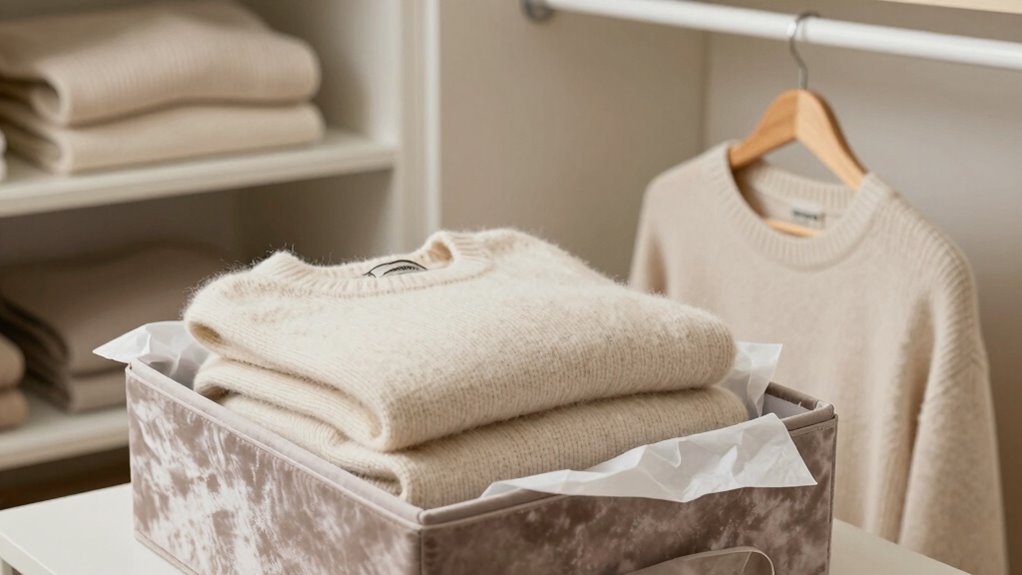
Deciding whether to fold or hang your cashmere depends on space, fabric stretch, and how easily you want to access your pieces. Folding can save space and reduce stretching, but hanging offers better visibility and quick access. Consider your storage area and how often you wear each item to choose the best method.
Space Efficiency Considerations
Ever wondered whether folding or hanging your cashmere is more space-efficient? When it comes to garment organization and space optimization, folding generally wins. Folding allows you to stack multiple sweaters neatly in drawers or on shelves, maximizing vertical space and reducing clutter. Hanging cashmere can take up more room, especially if you don’t have a closet with ample space. However, hanging prevents wrinkles and maintains shape, which can save space in the long run by avoiding bulky creases. Additionally, proper garment storage techniques can extend the life of your cashmere. Using the right storage methods can help prevent pilling and holes, preserving your sweaters’ quality. Consider your available storage area and how often you wear your pieces. For limited space, folding and stacking is the best approach. If your closet has room, hanging can be more convenient. Ultimately, choose the method that balances space efficiency with garment care.
Fabric Stretch Factors
When it comes to preventing fabric stretch in your cashmere, how you store it makes a significant difference. The way you hang or fold impacts fabric elasticity and fiber resilience. Hanging can cause the fibers to stretch over time, especially if the garment is heavy or poorly supported, leading to misshapen shoulders or elongated areas. Folding, on the other hand, helps maintain the garment’s original shape by evenly distributing the fiber’s natural resilience. Cashmere is delicate but resilient when stored correctly. To preserve its form, fold your cashmere carefully along the seams and avoid hanging it for long periods. This minimizes unnecessary stress on the fibers, keeping your cashmere looking perfect and preventing unwanted stretch or distortion.
Access and Visibility
How you access and display your cashmere greatly influences its shape and longevity. When deciding whether to fold or hang, consider storage organization and how you want to see your pieces. Hanging cashmere can save space and prevent wrinkles, but it may stretch the fabric over time if not done carefully. If you prefer visibility, hanging allows for easy color coordination, making outfit planning simpler. Folding minimizes stretching and helps maintain your garments’ original shape, especially if stored in drawers or on shelves. For better organization, store your cashmere by color, which simplifies selection and keeps your wardrobe tidy. Additionally, using proper storage techniques can further protect delicate fibers and extend the life of your cashmere. Proper folding or hanging techniques are essential to prevent damage and preserve the softness of your garments over time. Whether you fold or hang, ensure your storage method supports easy access and clear visibility, helping your cashmere stay beautiful and lasting longer. To optimize your storage, consider incorporating clothing dividers or bins, which keep items neatly separated and reduce the risk of damage. Implementing air circulation around your stored cashmere can also help prevent mustiness and fiber deterioration.
How to Store Cashmere in the Off-Season Without Losing Its Softness
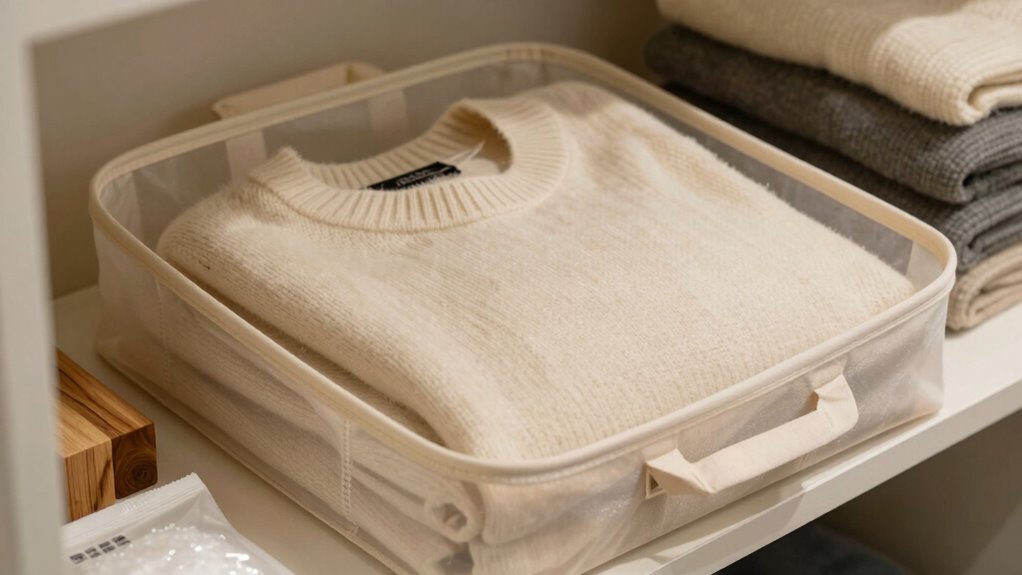
To keep your cashmere soft and luxurious during the off-season, proper storage is essential. Start by cleaning your cashmere thoroughly, as dirt and oils can damage fibers over time. For added protection, consider using wool blends or specialized storage bags that breathe, preventing moisture buildup. Fold your cashmere gently, avoiding hanging, which can stretch delicate fibers. Use storage hacks like placing lavender sachets or cedar blocks to deter pests naturally, without risking damage. Keep your cashmere in a cool, dry place away from direct sunlight to prevent fading and fiber weakening. Avoid plastic containers that trap humidity; instead, opt for breathable fabric bins or cotton storage bags. Following these steps guarantees your cashmere stays soft, retains its shape, and remains ready to wear when the season changes.
How to Protect Your Cashmere From Moths and Pests During Storage
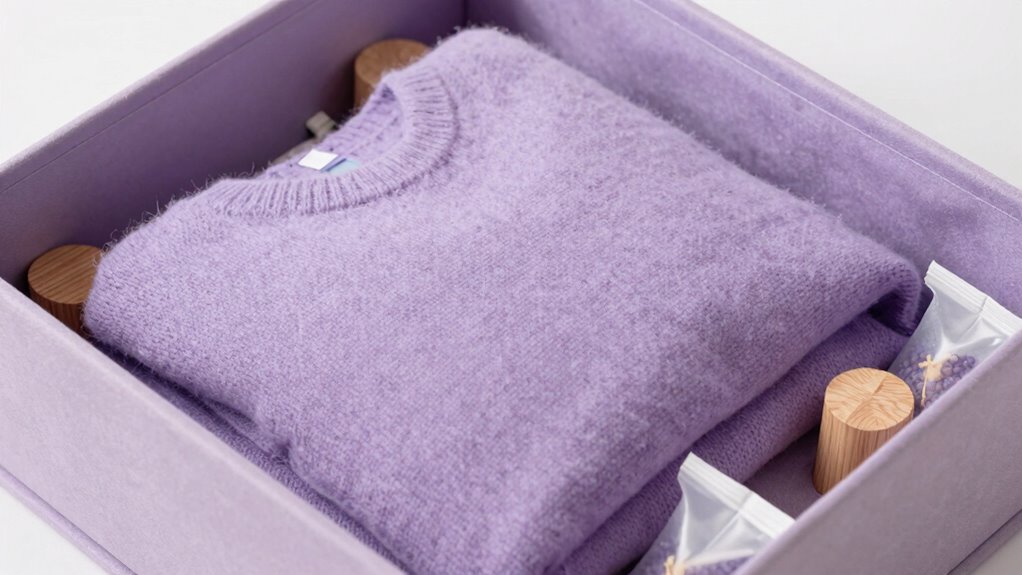
Protecting your cashmere from moths and pests begins with choosing the right storage methods. Start by ensuring your cashmere is clean and completely dry before storing, as pests are attracted to stains and odors. Use pest deterrents like cedar blocks, lavender sachets, or specialized mothballs to repel moths effectively. These natural or chemical deterrents create an environment that pests avoid, reducing the risk of damage. Properly maintaining fabric cleanliness and storing your cashmere in airtight containers or garment bags to prevent pests from getting in. Additionally, selecting appropriate storage environments, such as cool, dry, and dark spaces, can further deter pest activity. Regularly check your stored items for signs of pests or holes, and replace pest deterrents as needed. Incorporating proper storage techniques ensures your cashmere remains in pristine condition over time. Properly protecting your cashmere during storage keeps it soft, hole-free, and pest-free, ensuring it stays beautiful for seasons to come. Proper storage methods are essential for maintaining the quality of delicate fabrics like cashmere.
What Are the Best Ways to Use Storage Containers and Garment Bags?

Choosing the right storage containers and garment bags is essential for keeping your cashmere safe and pristine. First, opt for breathable fabric garment bags to prevent moisture buildup and allow air circulation. Second, use sturdy, airtight storage containers to protect against pests and dust. Third, make certain your containers are clean and dry before storing your cashmere to avoid mold or stains. Fold sweaters neatly, avoiding tight compression that can cause wrinkles or pilling. Place the folded garments inside breathable garment bags or containers, avoiding plastic bags that trap moisture. Keep your storage in a cool, dark place to reduce fabric aging. Proper use of these storage containers and garment bags helps maintain your cashmere’s softness, shape, and overall quality over time.
Common Mistakes When Storing Cashmere and How to Avoid Them

Are you aware of the common mistakes that can damage your cashmere during storage? Many overlook simple errors that lead to holes or pilling. One mistake is storing cashmere in tight or overcrowded spaces, which causes friction and snags. Avoid using plastic bags for long-term storage, as they trap moisture and can lead to mold. Instead, opt for breathable storage options like cotton bags or garment containers. Another error is hanging your cashmere, which can stretch fibers over time; fold instead. To prevent damage, follow preservation tips such as using cedar blocks or lavender sachets to deter moths without chemicals. Employing these storage hacks guarantees your cashmere remains soft, hole-free, and pristine for seasons to come. Additionally, understanding the importance of proper storage materials can significantly impact the longevity of your cashmere. Incorporating breathable fabrics in your storage solutions helps maintain the fiber integrity and prevents moisture buildup, which is essential for keeping cashmere in top condition.
How Do Temperature, Humidity, and Light Affect Cashmere Storage?

Temperature, humidity, and light levels play a crucial role in maintaining your cashmere’s quality during storage. Proper temperature control prevents fibers from weakening or shrinking, while low humidity reduces the risk of mold and moth damage. Light exposure, especially to direct sunlight, can cause fading and fiber deterioration over time. To protect your cashmere, keep the storage area cool, ideally between 60-70°F. Use a dehumidifier if needed to maintain ideal humidity levels below 50%. Store your cashmere in a dark, breathable container to shield it from light exposure. This helps preserve the fabric’s softness, color, and overall integrity, ensuring your cashmere remains luxurious and damage-free for years to come. Additionally, understanding the science of fiber care can help you make informed decisions about storage conditions, including environmental factors that affect fibers.
How Regular Checks and Refreshing Your Stored Cashmere Can Extend Its Life
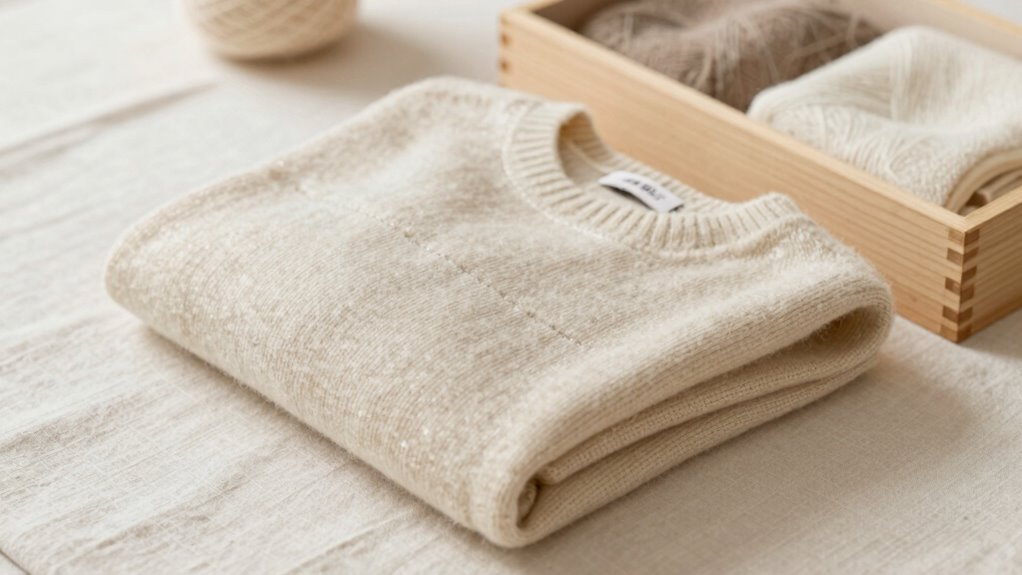
Regularly inspecting your stored cashmere helps catch potential issues early before they cause lasting damage. Check for signs of pests, stains, or fabric wear that could compromise its quality. Revitalizing your cashmere involves gently airing it out and revisiting your storage accessories, like cedar blocks or lavender sachets, to maintain ideal cashmere hygiene. These accessories help deter moths and keep your fibers fresh, prolonging the garment’s lifespan. If you notice any small holes or pilling, address them promptly by carefully repairing or removing affected areas. Regular checks ensure your cashmere remains in good condition, reducing the risk of damage over time. Keeping your storage environment clean and revitalized not only preserves the softness but also guards against unwanted surprises, helping your cashmere stay beautiful for years.
Frequently Asked Questions
Can Washing Cashmere Before Storage Prevent Moth Damage?
Washing your cashmere before storage can help prevent moth damage by removing oils, dirt, and food residues that attract moths. It also enhances fabric freshness, making it less appealing for pests. Make sure to wash gently with mild detergent and let it dry completely. Proper cleaning reduces the risk of moths settling in, ensuring your cashmere stays cozy and hole-free during storage.
What Are the Signs of Damage Caused by Improper Storage?
Ever noticed your cashmere looking dull or feeling rough? Improper storage can cause fiber deterioration, leading to holes, pilling, and color fading. You might also see stretched-out areas or weakened fabric, which indicate damage. These signs show your cashmere wasn’t stored properly. To keep your beloved pieces in top shape, always store them folded in a cool, dry place, and use breathable bags to prevent damage from moisture or pests.
How Long Can Cashmere Be Stored Without Losing Quality?
You can store cashmere for up to a year without losing quality if you follow proper seasonal rotation and climate considerations. Guarantee your storage area is cool, dry, and dark to prevent damage. Rotate your cashmere pieces seasonally, and use breathable storage solutions like cotton bags. This approach helps maintain softness, prevents holes and pilling, and keeps your cashmere looking new for many seasons to come.
Are Special Treatments Needed for Cashmere Stored for Long Periods?
Think of your cashmere as a fine wine needing proper aging. For long-term storage, you should perform a seasonal rotation, ensuring it stays fresh and undamaged. Use pest prevention methods like cedar blocks or lavender sachets to keep moths away. No special treatments are necessary beyond this, but regularly inspecting your cashmere helps catch issues early. Proper storage preserves its softness and prevents holes and pilling, keeping your investment pristine for years.
Is It Better to Store Cashmere in Plastic or Natural Fiber Containers?
You should opt for natural fiber storage containers, like cotton or linen, over plastic. Natural materials breathe better, preventing moisture buildup that can damage your cashmere. Plastic containers trap humidity and can cause pilling or holes over time. Choose breathable storage options to keep your cashmere in top condition, and always make certain your storage containers are clean and dry before packing your delicate pieces.
Conclusion
When you take the time to store your cashmere properly, you’re not just protecting a sweater—you’re preserving cozy memories and quiet mornings. A gentle fold, a moth-free container, and a cool, dark spot can make all the difference. Sometimes, it’s the small, thoughtful steps that turn a simple wardrobe item into a lasting treasure. So, next winter, as you reach for your favorite piece, you’ll find it just as soft and hole-free as the day you bought it.