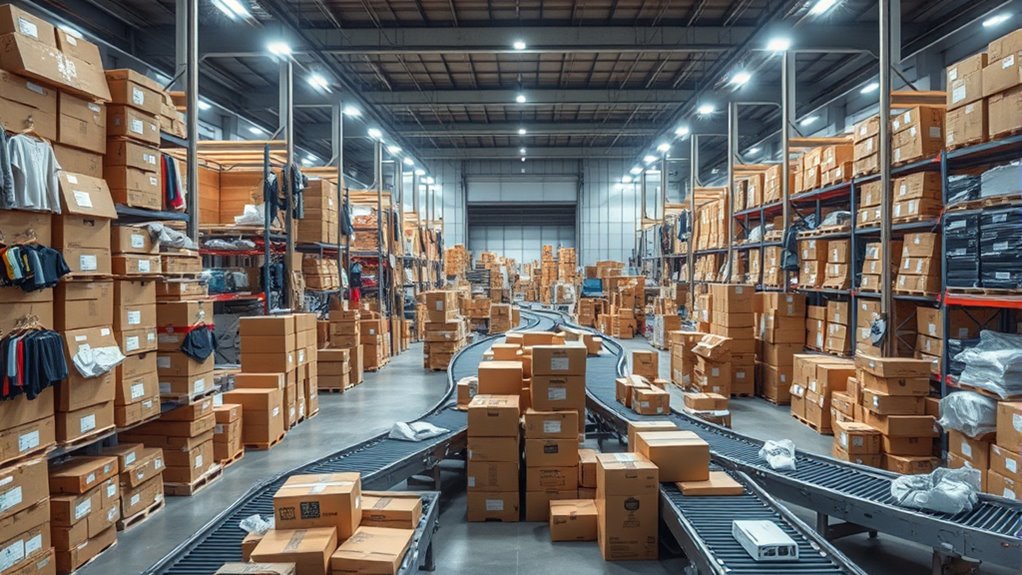

Returns can heavily impact the environment by increasing transportation emissions, generating excessive packaging waste, and filling landfills. To cut these costs, consider choosing brands that use sustainable packaging, support companies that optimize logistics, and minimize your own returns by selecting the right products. Streamlining shipping, reusing items, and making thoughtful purchases help reduce your carbon footprint. Keep exploring to discover more effective ways to make your shopping more eco-friendly.

Get your wardrobe favorites delivered free — and shop member deals
- Fast, free delivery on millions of items
- Access to Prime Big Deal Days deals on October 6–7
- Prime Video, Amazon Music and more included
Key Takeaways
- Returns increase transportation and packaging, leading to higher carbon emissions and environmental degradation.
- Implementing sustainable, biodegradable, or recyclable packaging reduces waste from returned goods.
- Optimizing logistics through route planning and demand forecasting minimizes unnecessary shipments and emissions.
- Promoting reuse and refurbishment within the circular economy extends product life cycles and cuts waste.
- Consumers and businesses can reduce returns and choose eco-friendly options to lower the overall environmental impact.

Have you ever wondered what happens to all those packages you return? Every time you send back an item, it sparks a chain reaction that impacts the environment more than you might realize. Returns often lead to increased transportation, discarded packaging, and waste, all of which contribute to carbon emissions and environmental degradation. To counteract this, many companies are turning to sustainable packaging, which reduces waste and minimizes the ecological footprint of each shipment. Sustainable packaging uses eco-friendly materials that are biodegradable or recyclable, helping to limit the amount of landfill waste generated by returned goods. It’s an essential step in reducing the environmental cost of returns, but packaging alone isn’t enough. Companies are increasingly focusing on logistics optimization to make the entire process more efficient. By streamlining operations—such as consolidating shipments, improving route planning, and utilizing advanced forecasting—they can reduce the number of trips needed, cutting down on fuel consumption and emissions. Logistics optimization also involves better inventory management, so fewer products are shipped unnecessarily or returned due to sizing errors or mismatched expectations. When companies use data analytics to anticipate demand and optimize stock levels, they prevent overproduction and reduce the need for frequent, inefficient returns. Additionally, integrating return processes into a circular economy model allows for the reuse or refurbishment of returned items, further decreasing waste. This approach not only cuts down on unnecessary packaging and transportation but also promotes sustainability by extending the life cycle of products. You, as a consumer, can contribute by choosing brands that prioritize sustainable packaging and support companies that optimize their logistics. Opting for retailers that provide clear sizing info or flexible return policies can also help reduce unnecessary returns. When returns are minimized, the environmental impact considerably drops because fewer shipments are required, and less packaging material is used overall. Companies adopting these strategies are motivated not just by environmental concerns but also by cost savings and improved customer loyalty. The integration of sustainable packaging with logistics optimization creates a more responsible, eco-conscious approach to handling returns. It’s about making smarter choices at every step—reducing waste, conserving resources, and lowering carbon footprints. As you become more aware of the environmental costs linked to returns, you can encourage businesses to adopt these practices and make more conscious decisions yourself. Ultimately, reducing the environmental impact of returns requires a collective effort—improving packaging, optimizing logistics, and making smarter consumer choices—to create a more sustainable future for everyone.
eco-friendly packaging materials
As an affiliate, we earn on qualifying purchases.
As an affiliate, we earn on qualifying purchases.
Frequently Asked Questions
How Do Return Rates Vary Across Different Industries?
Return rates vary widely across industries due to seasonal fluctuations and regional differences. You’ll see higher return rates in fashion and electronics, especially during seasonal sales or holiday periods. Regional differences also influence return behavior, with some areas more prone to returns due to local preferences or shipping challenges. Understanding these patterns helps you better manage logistics, reduce environmental impact, and improve customer satisfaction by tailoring your return policies accordingly.
What Are the Most Eco-Friendly Return Policies Companies Can Adopt?
You can adopt eco-friendly return policies by offering free returns with reusable packaging, encouraging customers to choose sustainable options, and implementing streamlined processes to reduce transportation emissions. Incorporate sustainability initiatives like local return centers to cut carbon footprints and promote incentives for customers who consolidate returns. Clear communication about eco-friendly practices also encourages responsible behavior, making your return policies more environmentally conscious and aligning your brand with sustainability goals.
How Does Packaging Impact the Environmental Footprint of Returns?
Packaging substantially impacts the environmental footprint of returns. When you choose sustainable packaging and biodegradable materials, you reduce waste and pollution. Opting for eco-friendly boxes and fillers helps minimize plastic use and guarantees materials break down naturally. By prioritizing biodegradable options, you lessen your company’s environmental impact, encouraging responsible consumption. This approach not only supports sustainability goals but also appeals to eco-conscious customers, making your return process more environmentally friendly and sustainable.
Are There Technological Solutions to Reduce Returns Altogether?
Think of technology as a lighthouse guiding your shopping journey. AI optimization and virtual fitting are your beacons, helping you make accurate choices before clicking “buy.” These tools act like a crystal ball, reducing returns by predicting fit and style, saving resources, and lowering environmental impact. Embracing these solutions means you’re not just shopping smarter but also shining a light on a more sustainable future.
What Role Do Consumer Education and Awareness Play in Decreasing Returns?
Consumer education and awareness play a crucial role in decreasing returns by promoting sustainable shopping habits. When you stay informed through awareness campaigns, you’re more likely to understand product details, fit, and quality, reducing the need for returns. This helps lower the environmental impact. By making conscious choices, you support eco-friendly practices and encourage retailers to prioritize sustainability, ultimately minimizing waste and reducing the ecological footprint associated with returns.
Conclusion
So, next time you keenly return that sweater or gadget, remember you’re not just sending it back—you’re fueling a tiny eco-apocalypse. Sure, shopping feels great, but your carbon footprint’s doing a happy dance in the background. Maybe, just maybe, you could save the planet by thinking twice before clicking “return.” Who knew that a little delay in gratification could be the hero Earth desperately needs? Or is convenience really worth the cost?
Evergreen bestsellers Picks
bestsellers
As an affiliate, we earn on qualifying purchases.