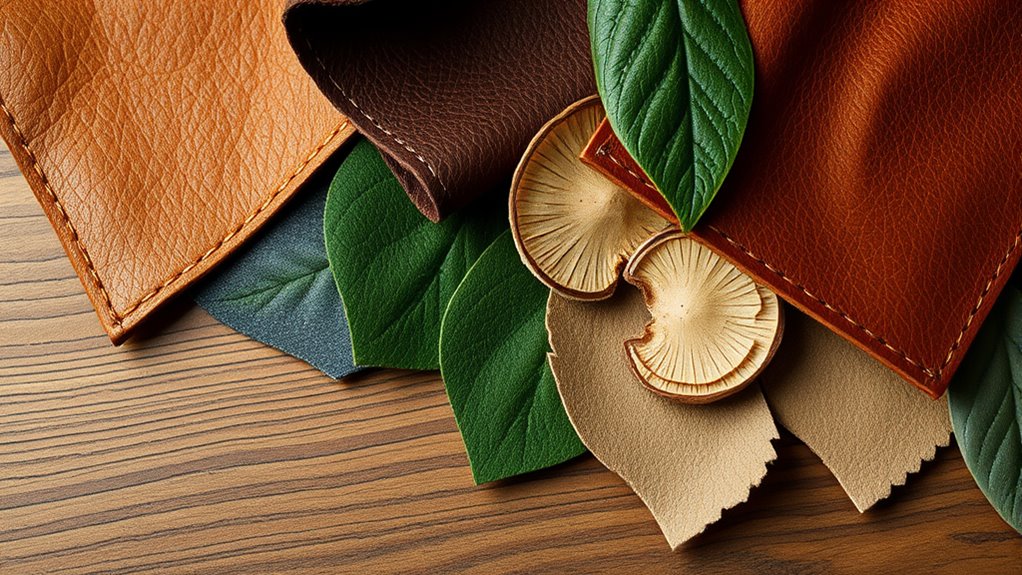

To choose ethical leather or eco-friendly alternatives, look for brands committed to sustainable sourcing and transparent supply chains. Vegan options like plant-based leather, mushroom mycelium, and recycled plastics offer stylish, animal-free choices with a lower environmental impact. When shopping, check for certifications indicating responsible practices. Making informed choices helps reduce harm to animals and minimize ecological footprints. Keep exploring to discover how you can make even more conscious fashion decisions that align with your values.
Key Takeaways
- Prioritize brands with transparent supply chains and certifications like “responsibly sourced” or “cruelty-free.”
- Explore vegan leather options such as plant-based, mushroom mycelium, or recycled plastics for ethical alternatives.
- Choose sustainably sourced genuine leather with eco-friendly tanning to combine durability with eco-consciousness.
- Educate yourself on product origins and manufacturing practices to make informed, ethical purchasing decisions.
- Support innovative brands advancing sustainable materials and practices to promote responsible fashion development.
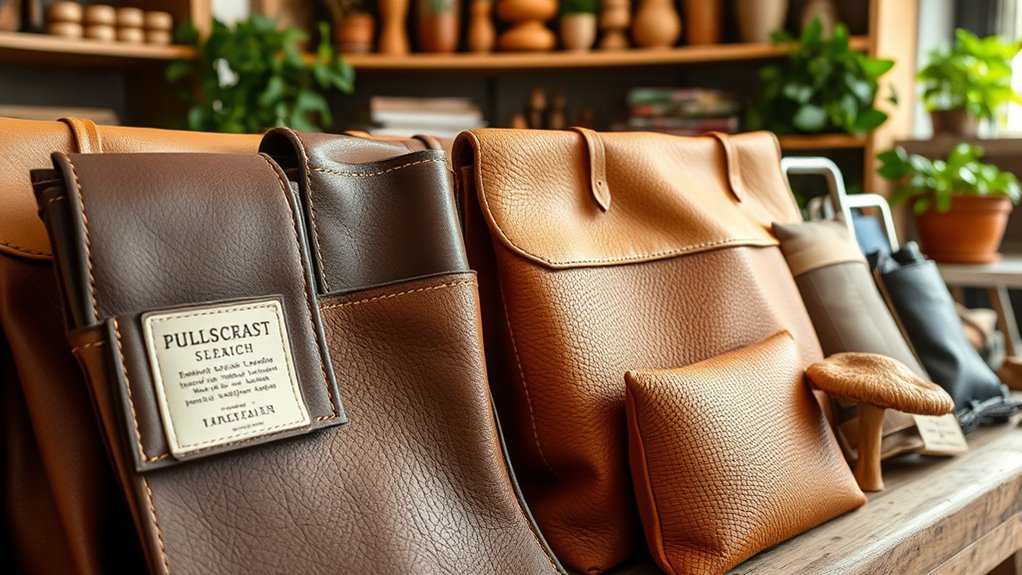
Have you ever wondered if it’s possible to enjoy stylish, durable leather without compromising your ethics? The good news is, it is. Today, many brands prioritize sustainable sourcing, ensuring that their leather, or leather-like materials, are produced with minimal environmental impact and fair labor practices. When you look for ethically sourced leather, you’re supporting companies that consider the full lifecycle of their products, from responsible animal management to eco-friendly tanning processes. This reduces the ecological footprint and aligns your fashion choices with your values. Additionally, understanding raw food principles can inspire more conscious decisions in all areas of life, including fashion. But what if you prefer to avoid animal products altogether? Luckily, there are plenty of vegan options that look and feel just as luxurious as traditional leather. These alternatives are often made from innovative materials like plant-based leather, mushroom mycelium, or recycled plastics. Not only do they sidestep animal suffering, but they also tend to have a smaller environmental impact, especially when sourced responsibly. Many brands now emphasize transparent supply chains and ethical manufacturing practices for their vegan options, so you can be confident you’re making a positive choice. Choosing between genuine leather with sustainable sourcing and vegan alternatives depends on your priorities. If you’re committed to reducing harm to animals and lowering environmental impact, exploring vegan options is a smart move. These options are increasingly sophisticated, offering a wide range of textures, colors, and finishes that rival traditional leather. Plus, they often require less water and chemicals during production, making them a more eco-friendly choice overall. On the other hand, if you appreciate the craftsmanship and durability of leather and want to support ethical sourcing, seek out brands that emphasize transparency and responsible practices. Some companies even combine the use of sustainably sourced leather with eco-friendly tanning methods to deliver products that are both beautiful and conscientious. Regardless of which route you choose, educating yourself about the origins of your products is key. Look for certifications or labels indicating sustainable sourcing, cruelty-free manufacturing, or vegan credentials. This helps ensure your purchase aligns with your ethics. Remember, making informed choices doesn’t mean sacrificing style or quality—in fact, it can enhance your sense of satisfaction knowing your fashion choices reflect your values. The landscape of ethical leather and alternatives is constantly evolving, so staying updated and supporting innovative brands is a great way to promote sustainable fashion. Whether you opt for responsibly sourced leather or cutting-edge vegan options, your thoughtful decision contributes to a more compassionate and sustainable future.
Frequently Asked Questions
How Can Consumers Verify the Authenticity of Ethical Leather Products?
To verify the authenticity of ethical leather products, you should check for certification labels like Fair Trade or Leather Working Group, which ensure ethical standards. Additionally, look for sourcing transparency from brands—trustworthy companies openly share their supply chain details. Do your research, ask questions, and visit brand websites to confirm they prioritize ethical practices. This way, you can confidently select products that align with your values.
What Are the Environmental Impacts of Synthetic Leather Alternatives?
Synthetic leather alternatives can substantially impact the environment through environmental pollution caused by chemical runoff during production. They also drive resource consumption, especially when deriving plastics like PVC and polyurethane from fossil fuels. While these options may reduce animal cruelty, you should be aware that their production can contribute to pollution and resource depletion. Opt for eco-friendly options or plant-based alternatives to lessen these environmental impacts when choosing synthetic leather.
Are There Affordable Ethical Leather Options for Everyday Use?
Yes, you can find affordable ethical leather options for everyday use. Look for cost-effective options like vegetable-tanned leather or recycled leather, which are often budget-friendly choices. Many brands now offer sustainable, ethically sourced leather at reasonable prices, so you don’t have to break the bank. Shopping during sales or choosing small, local producers can also help you find stylish, ethical leather products that fit your budget.
How Long Do Vegan Leather Products Typically Last Compared to Traditional Leather?
Vegan leather usually lasts about 3 to 5 years, while traditional leather can last 10 or more with proper care. For example, a vegan bag may show signs of wear after a few years, especially if not maintained well, whereas genuine leather ages gracefully. Product durability depends heavily on quality and maintenance requirements, so regular cleaning and avoiding excessive exposure help extend the lifespan of both vegan and traditional leather items.
Can Ethical Leather Be Recycled or Repurposed Effectively?
Yes, ethical leather can be recycled or repurposed effectively. Recycling processes help extend its lifespan, but material durability varies depending on the type of leather and treatment used. You can repurpose ethical leather into new products, reducing waste and environmental impact. To maximize recycling benefits, choose high-quality, durable options, and consider working with brands that prioritize sustainable disposal methods. This approach supports eco-friendly practices and minimizes waste.
Conclusion
Ultimately, understanding ethical leather and its alternatives empowers you to make mindful, meaningful choices. By balancing beauty with responsibility, you can cultivate compassion and curb cruelty. Embrace eco-friendly options that elevate your ethics and environment alike. With conscious commitment, you create a compassionate, conscientious closet. Your decisions matter—make them matter more. Choose compassion over convenience, ethics over ease, and let your lifestyle lead by loving, lasting, and responsible leather and alternatives.