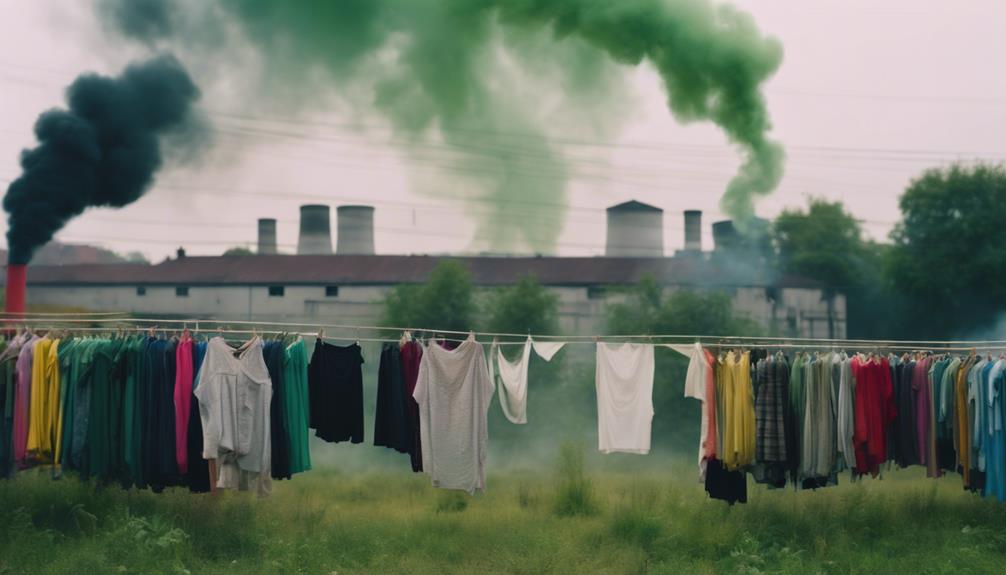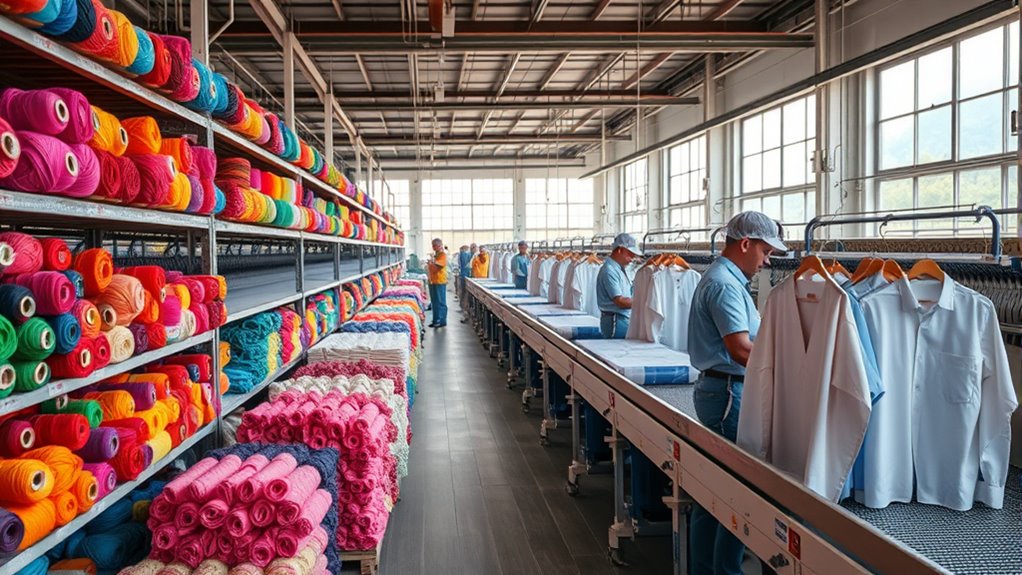

Your journey from fiber to finished garment involves a complex supply chain that emphasizes responsible sourcing and innovative tech. You start with ethically obtained raw materials, like organic or recycled fibers, and use advanced tools such as blockchain and AI for transparency and efficiency. This process connects designers, producers, and artisans worldwide, ensuring fair practices and sustainability. If you explore further, you’ll discover how these elements come together to create ethical and eco-friendly fashion.
Key Takeaways
- The supply chain starts with sourcing raw materials responsibly, including organic and recycled fibers.
- Textile production involves processing raw materials into fabrics through sustainable practices.
- Garment manufacturing assembles fabrics into finished products, often involving global factories.
- Quality control and digital inspections ensure products meet standards before distribution.
- Finally, finished garments are distributed to retailers, completing the fiber-to-finished-product journey.
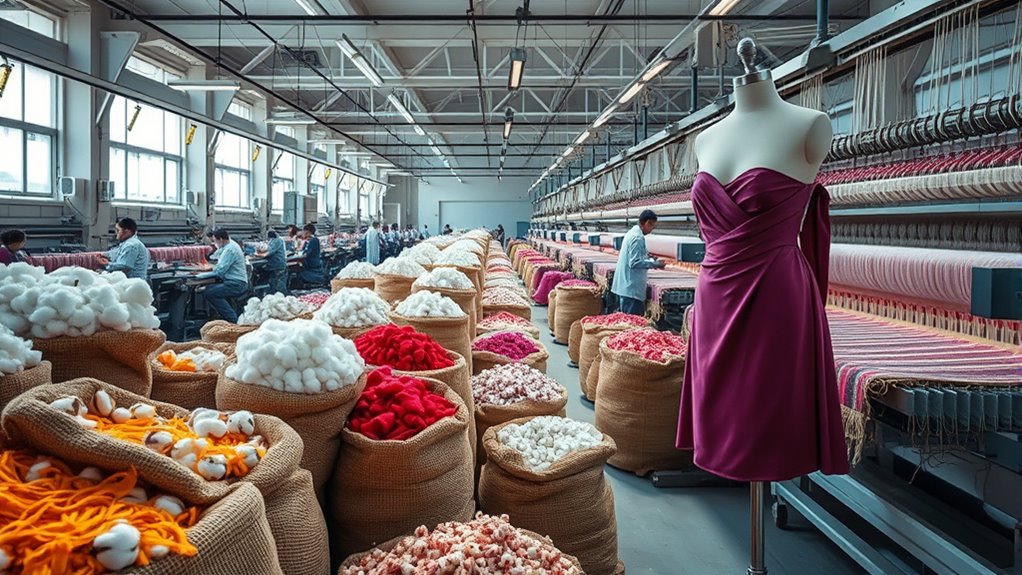
Have you ever wondered how your favorite clothes make their way from design studios to your wardrobe? The journey starts long before you see the final product on store shelves. It involves a complex network of suppliers, factories, and logistics, all working behind the scenes. One of the most essential aspects of this process is sustainable sourcing, which ensures that the raw materials are obtained responsibly, minimizing environmental impact and supporting fair labor practices. Brands that prioritize sustainable sourcing commit to using organic fibers, recycled materials, and ethically harvested fabrics. This not only reduces their ecological footprint but also aligns with consumers’ growing demand for ethical fashion. As you shop, you’re increasingly supporting companies that are conscious of their supply chain choices.
Alongside sustainable sourcing, technology integration plays an indispensable role in streamlining the entire supply chain. Advanced software systems enable brands to track materials from their origin to finished garments, providing transparency and accountability. Real-time data helps identify inefficiencies, reduce waste, and optimize inventory management. Automated processes, such as digital fabric inspection and 3D prototyping, accelerate development cycles while maintaining high quality standards. Technology also facilitates better communication between different stakeholders, from farmers and textile producers to designers and manufacturers. This integration makes the supply chain more agile, responsive, and less prone to disruptions. Additionally, the use of blockchain technology enhances traceability and trust throughout the supply chain.
As you consider the journey of your clothes, it’s clear that innovation is reshaping how garments are produced. Companies are now leveraging data analytics and AI to forecast demand more accurately, reducing excess production and waste. Blockchain technology is increasingly used to verify the authenticity of sustainable sourcing claims, giving you confidence in the ethical credentials of your purchases. Furthermore, digital platforms connect artisans and small-scale suppliers directly with brands, promoting fair trade practices and supporting local communities. These technological advances make it possible for fashion brands to be more transparent and accountable, aligning their business models with sustainability goals.
Ultimately, the combination of sustainable sourcing and technology integration is transforming fashion supply chains into more responsible and efficient systems. As a consumer, your choices influence these changes, encouraging brands to prioritize ethical practices and innovative solutions. Your wardrobe becomes a reflection of a broader shift towards sustainability, where every step—from fiber to finished garment—is designed to minimize harm and maximize positive impact. By understanding this intricate process, you can make more informed decisions and support brands that are committed to creating fashion that’s both stylish and sustainable.
Frequently Asked Questions
How Do Natural and Synthetic Fibers Impact Supply Chain Sustainability?
Natural and synthetic fibers impact supply chain sustainability by influencing environmental impact and resource management. Natural fibers, like cotton or wool, often require more water and land, increasing environmental strain, but they’re biodegradable. Synthetic fibers, such as polyester, use less land but rely on fossil fuels, causing pollution and waste issues. Your choices affect resource management and environmental impact, shaping a more sustainable fashion supply chain.
What Are the Key Challenges in Managing Global Fashion Logistics?
Did you know that global fashion logistics involve moving over 80 billion pieces annually? Managing this complex system is tough, especially with inventory optimization challenges and coordinating suppliers across multiple countries. You need to guarantee timely deliveries, reduce costs, and stay flexible to market changes. Effective supplier collaboration helps you streamline operations, minimize delays, and improve sustainability, making global logistics a critical yet challenging part of fashion supply chain management.
How Does Technology Improve Transparency in Fashion Supply Chains?
Technology improves transparency in fashion supply chains by enabling you to track products more accurately. Blockchain tracking offers an immutable record of each step, making it easier for you to verify authenticity and ethical practices. RFID technology allows real-time inventory management, reducing errors and increasing visibility. Together, these tools help you guarantee responsible sourcing, build trust with consumers, and streamline operations from fiber to finished garment.
What Are the Ethical Considerations in Garment Manufacturing?
When you think about ethical garment manufacturing, you should consider issues like sweatshop labor and animal rights. You’re responsible for ensuring fair wages, decent working conditions, and no exploitation of workers. Respect animal rights by avoiding materials sourced from cruelty or unsafe practices. Making conscious choices helps promote sustainability and fairness in the industry, ensuring your fashion choices don’t support unethical practices or harm vulnerable groups or animals.
How Do Trade Policies Influence Fashion Supply Chain Decisions?
Trade policies can dramatically shape your fashion supply chain decisions, sometimes more than you’d imagine. Trade agreements simplify cross-border transactions, making sourcing easier and more predictable, while tariff impacts can either boost or crush your profit margins. You might find yourself adjusting supplier locations or production volumes based on changing regulations. Staying informed about these policies guarantees you navigate the complex world of fashion manufacturing smoothly and keep your brand competitive.
Conclusion
As you follow the journey from fiber to finished garment, remember that every choice you make impacts the entire supply chain. But what if the true story isn’t just about production? Behind the scenes, hidden challenges and unseen decisions shape the future of fashion. Stay aware, because the next chapter could change everything you thought you knew—if you dare to look closer. The end might just be the beginning of something even bigger.