

Watch out for greenwashing red flags in fashion marketing like vague language such as “eco-friendly” without specifics, unsupported claims, or unverified eco labels. Be cautious if a brand refuses to share transparent supply chain details, promotes multiple sustainability claims without proof, or sells products with questionable ethics despite claims of eco-consciousness. Superficial marketing often lacks third-party validation or concrete evidence. Staying alert to these signs helps you identify authentic sustainability efforts—more insights await if you keep exploring.
Key Takeaways
- Vague claims like “eco-friendly” without supporting data or transparent certification.
- Use of unverified eco labels or self-created seals lacking third-party oversight.
- Lack of transparency about supply chains, environmental impact, or manufacturing practices.
- Marketing inconsistencies that contradict actual product practices or ethical standards.
- Failure to provide verifiable evidence or third-party validation for sustainability claims.
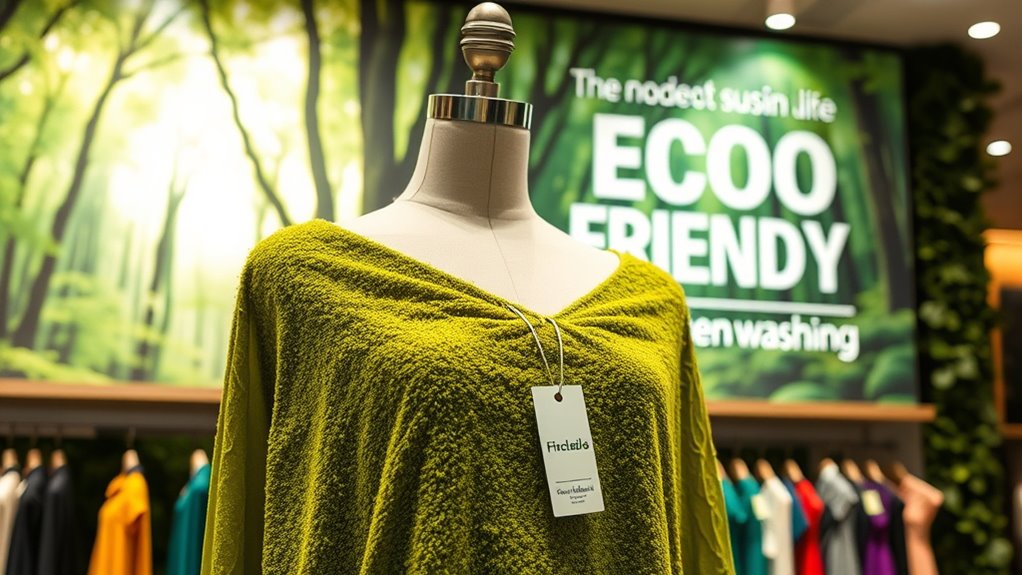
Many fashion brands claim to prioritize sustainability, but not all of these claims are genuine. When you see a brand advertising eco-friendly materials or ethical practices, it’s tempting to believe they’re truly committed to making a difference. However, it’s essential to be cautious and scrutinize their sustainable claims carefully. Not all claims are backed by verifiable data, and some brands engage in greenwashing—using misleading marketing tactics to appear more eco-conscious than they really are. One clear red flag is vague language, like “green,” “natural,” or “eco-friendly,” without providing specific details or proof. If a company refuses to share transparent information about their supply chain or environmental impact, their eco label authenticity is questionable. Genuine sustainable claims are supported by clear certifications or third-party audits that verify their environmental and social practices. When a brand displays recognized eco labels, you can be more confident that their claims aren’t just empty words but are backed by credible standards. But beware: not all eco labels are created equal. Some may be self-created or lack rigorous oversight, which diminishes their reliability. Before buying, do some research on the labels they display. Check whether these labels are recognized by reputable organizations or if they have been independently verified. If a brand touts multiple sustainability claims but offers little concrete evidence or third-party validation, it’s a warning sign that they may be more interested in marketing than genuine responsibility. You should also look for consistency across their messaging and product lines. If a company promotes sustainability but continues to sell items with questionable environmental impacts or unethical labor practices, their claims don’t hold water. Authentic brands tend to be transparent about their supply chain, disclose their environmental metrics, and openly address challenges they face in improving sustainability. Conducting due diligence can help you better assess the authenticity of their claims. When you exercise critical thinking and demand proof, you can better distinguish brands that are truly committed from those that are just riding the eco-conscious wave. Remember, sustainable claims should be meaningful, measurable, and verifiable. If it feels like a brand is more interested in marketing buzzwords than in real change, trust your instincts and dig deeper. Ultimately, protecting yourself from greenwashing involves being informed about what genuine eco label authenticity looks like and not settling for superficial marketing. Your choices matter, and supporting brands with transparent, verifiable sustainability efforts encourages the industry to move toward real change rather than just green marketing tricks.
Frequently Asked Questions
How Can Consumers Identify Genuine Eco-Friendly Fashion Brands?
You can identify genuine eco-friendly fashion brands by checking their eco label reliability and transparency practices. Look for certifications from reputable organizations, as these indicate credible eco claims. Review the brand’s transparency practices, such as detailed supply chain information and clear environmental policies. If a brand openly shares their sourcing, manufacturing processes, and sustainability goals, it’s a good sign they’re genuinely committed to eco-friendly practices.
What Legal Consequences Exist for Greenwashing in Fashion Marketing?
Did you know that over 60% of consumers feel misled by greenwashing claims? If fashion brands engage in greenwashing, they face legal sanctions like fines or penalties, and consumers can file lawsuits for false advertising. These consequences aim to protect your rights and guarantee honesty. So, when brands deceive you about their eco-claims, they risk serious legal trouble, making transparency essential in sustainable fashion marketing.
Are There Certifications That Reliably Verify Sustainability Claims?
You should look for certifications that reliably verify sustainability claims, such as those with strict certification standards and transparent verification processes. Certifications like GOTS, Fair Trade, and B Corp ensure that brands meet rigorous environmental and social criteria. By choosing products with these verified certifications, you can confidently support genuinely sustainable fashion, avoiding greenwashing. Always check for recognized and credible seals to confirm the claims are trustworthy.
How Do Fashion Brands Typically Deceive Consumers About Sustainability?
You might think fashion brands are honest about sustainability, but many deceive you through misleading labeling and superficial sustainable storytelling. They often highlight vague eco-friendly claims or use buzzwords without real backing, creating a false image of environmental responsibility. By doing so, they lure eco-conscious consumers while avoiding genuine sustainability efforts. Always scrutinize labels and look for transparent, verified information to see through these greenwashing tactics.
What Impact Does Greenwashing Have on Environmental Efforts?
Greenwashing undermines environmental efforts by misleading consumers and reducing accountability. When brands deceive you with false sustainability claims, it weakens corporate accountability and stalls real progress toward eco-friendly practices. This diminishes your environmental awareness, making it harder to support genuinely sustainable brands. As a result, greenwashing hampers collective efforts to combat climate change and protect resources, ultimately delaying meaningful change and damaging trust in fashion industry commitments.
Conclusion
So, next time you see a brand boasting about being eco-friendly, pause and look closer. Sometimes, the greenwashing red flags are right there, quietly hiding behind pretty words. Remember, your choices matter—your voice can tell the difference between genuine sustainability and just clever marketing. Just like spotting a rare flower in a sea of green, your awareness can spark real change. Trust your instincts; they’re more powerful than any shiny label.