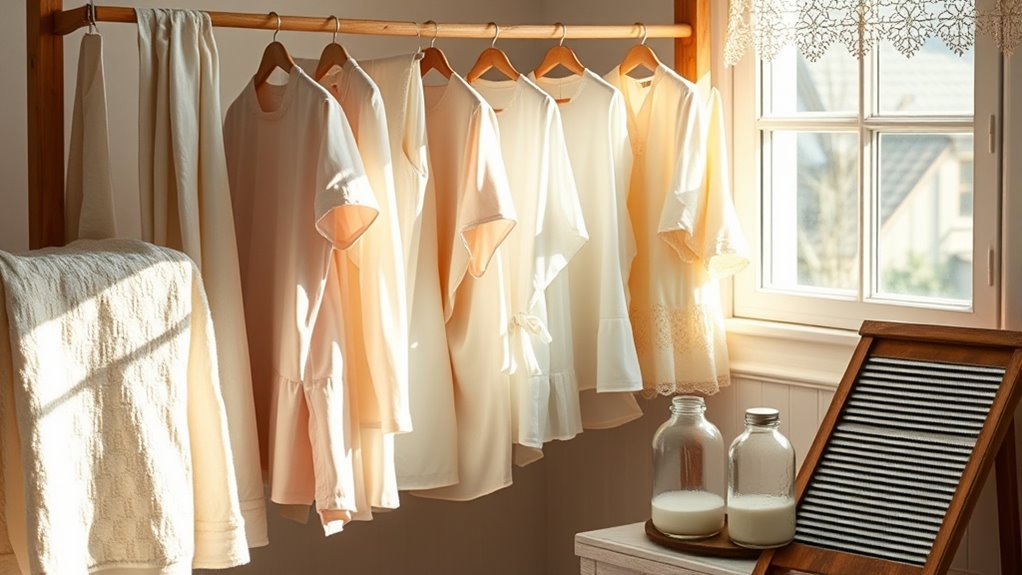
To extend your clothes’ lifespan, follow gentle laundry routines like using appropriate detergents and fabric softeners tailored to each fabric type. Avoid harsh chemicals and opt for air drying or low-heat cycles to prevent damage. Handle garments carefully by not overloading the machine and removing clothes promptly after drying. These simple steps help preserve fabric quality and color. Keep going to discover more tips that keep your clothes looking fresh and lasting longer.
Key Takeaways
- Use appropriate detergents and fabric softeners tailored to fabric types to prevent damage and extend garment life.
- Opt for gentle drying methods like air drying or low-heat machine cycles to preserve fabric integrity.
- Add fabric softeners during the rinse cycle to reduce static, soften fibers, and minimize wear over time.
- Handle clothes carefully during washing and drying to avoid stretching, tearing, or unnecessary stress on fibers.
- Maintain consistent laundry routines and proper product usage to reduce deterioration and prolong clothing lifespan.
Taking care of your laundry isn’t just about cleanliness; it can also boost your longevity. When you pay attention to how you handle your clothes, you extend their lifespan and keep them looking fresh longer. One simple way to do this is by using fabric softeners. These products help reduce static and soften fibers, which minimizes wear and tear over time. When you add fabric softener during the rinse cycle, you’re not just making your clothes more comfortable but also protecting the fabric structure, preventing fibers from breaking down prematurely. Be mindful not to overuse them, especially on moisture-wicking or performance fabrics, as some softeners can leave residues that diminish their effectiveness. Using the right amount and choosing gentle, high-quality fabric softeners can make a noticeable difference in how long your clothes stay in good shape. Additionally, selecting appropriate laundry products that are suitable for different fabric types can further enhance garment longevity.
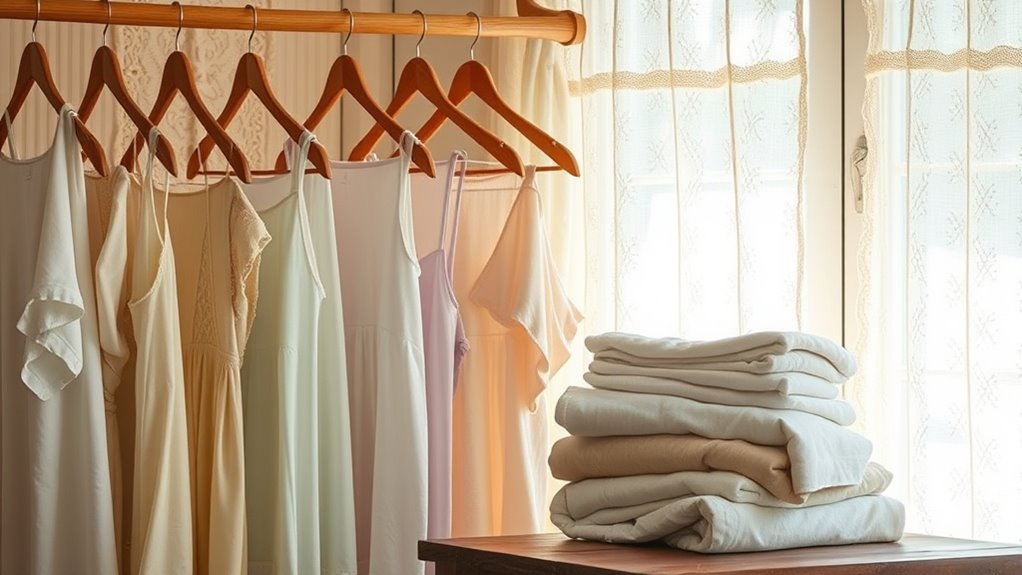
Drying techniques play an essential role in maintaining your clothes’ integrity. Air drying, for instance, is gentler than machine drying and helps preserve fabric elasticity and color vibrancy. When you hang your garments properly—using hangers for shirts and dresses or laying flat for sweaters—you reduce stretching and distortion. If you prefer machine drying, opt for a low heat or delicate cycle. High heat can weaken fibers, cause shrinking, or fade colors faster. Removing clothes promptly after the cycle ends also prevents excessive wrinkling and reduces the need for harsh ironing, which can wear out fabrics over time. Consider using a drying rack or a breathable garment bag for delicate items, further protecting them from unnecessary stress. Additionally, avoid over-drying, as it can make fabrics brittle and prone to tearing.
Combining these practices—using fabric softeners appropriately and adopting gentle drying techniques—can considerably extend the life of your wardrobe. It’s about more than just washing; it’s about treating your clothes with care at every step. When you’re mindful of these routines, you’re not only saving money by reducing the frequency of replacements but also helping the environment by conserving resources. Investing a little extra attention during laundry might seem small, but it has a lasting impact. By understanding how fabric softeners and drying techniques influence fabric health, you empower yourself to make smarter choices that keep your clothes looking new and feeling comfortable for years to come. Ultimately, consistent, thoughtful laundry routines are a simple yet effective way to guarantee your clothes serve you well far beyond their initial wear.
Frequently Asked Questions
How Often Should I Replace My Laundry Detergents?
You should replace your laundry detergent every six months to a year, especially if it’s been opened, to prevent detergent expiration and maintain its effectiveness. Over time, scents can fade, so freshening up with new detergent helps preserve the scent and ensures your clothes stay clean. If you notice a change in smell or consistency, it’s time to get new detergent. Regular replacement keeps your laundry routine fresh and effective.
Are Eco-Friendly Detergents Better for Clothing Longevity?
Yes, eco-friendly detergents are better for your clothes’ longevity. Think of biodegradable formulas and fragrance-free options as gentle guardians that protect your fabrics from harsh chemicals. These formulas reduce wear and tear, helping your garments stay vibrant longer. Choosing eco-friendly options isn’t just kind to the planet but also preserves your wardrobe’s quality, making your clothes last as long as your memories with them.
Can Fabric Softeners Damage Clothes Over Time?
Yes, fabric softeners can damage your clothes over time. They leave fabric softener buildup that can clog fibers, leading to fiber weakening. This buildup reduces the fabric’s durability, causing clothes to wear out faster. To protect your garments, consider using natural alternatives or skipping softeners altogether. Regularly washing clothes without softeners helps maintain their integrity and prolongs their lifespan, keeping your wardrobe looking newer longer.
What’s the Best Way to Remove Stubborn Stains Without Wear?
Think of stubborn stains as uninvited guests; you need a gentle but firm approach. Start with a stain pre-treatment to loosen the stain’s grip. Use gentle washing techniques, like cold water and delicate cycles, to prevent wear. Avoid harsh scrubbing, which can damage fibers. With patience and the right care, your clothes remain vibrant and intact, letting you extend their life and keep them looking fresh longer.
How Does Water Temperature Affect Fabric Lifespan?
Using hot water can accelerate water damage and fiber deterioration, shortening your clothes’ lifespan. Opt for cold or warm water settings to gently clean fabrics, preserving their fibers and preventing unnecessary wear. Hot water may seem effective, but it weakens fibers over time, leading to fraying and fading. By choosing the right temperature, you help your clothes stay vibrant and intact longer, saving you money and effort on replacements.
Conclusion
By following these simple care routines, you’ll extend your clothes’ lifespan like a trusted friend who never lets you down. Think of each gentle wash and careful fold as a small act of love that keeps your wardrobe vibrant and ready for years to come. Remember, taking care of your clothes is like tending a garden—your patience and attention will reward you with garments that last much longer. So, cherish your wardrobe; it’s worth every effort.