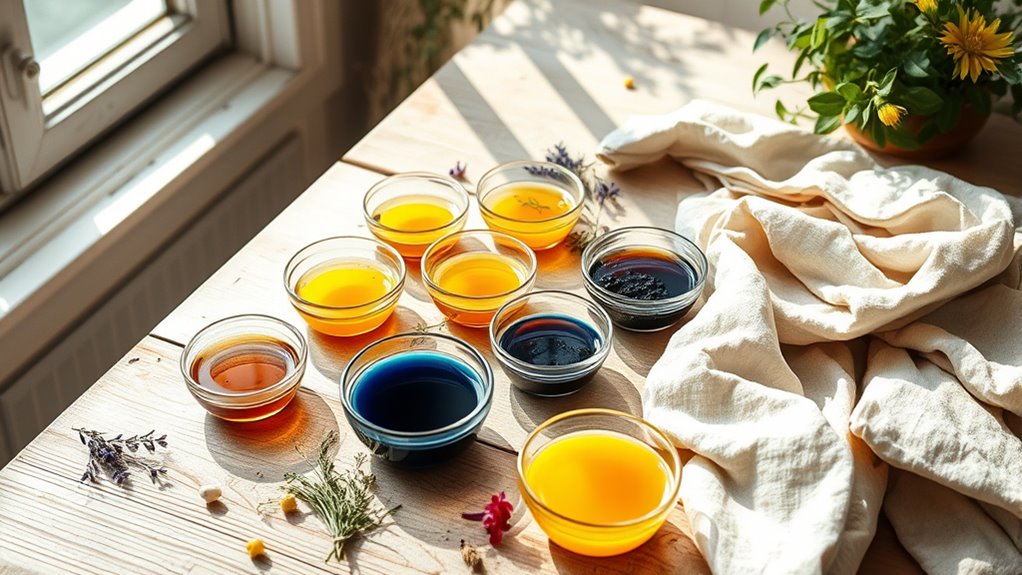

Using natural and low-impact dyes at home allows you to create beautiful, earthy-colored textiles sustainably. You can gather plant materials like berries, roots, or leaves, and simmer them to make dye baths. Experiment with mordants to adjust shades and achieve unique results. Since natural dyes are eco-friendly and biodegradable, your projects support sustainability. Keep exploring different techniques, and you’ll discover how simple it is to craft vibrant, environmentally conscious textiles with ease.
Key Takeaways
- Use locally sourced plant materials like roots, berries, and leaves for eco-friendly dyeing.
- Prepare dye baths by simmering plant matter, then strain before immersing fabrics for vibrant colors.
- Apply mordants such as alum or iron to enhance color shades and improve dye fastness.
- Experiment with dip-dyeing and partial immersions for custom, unique effects on textiles.
- Natural dyes produce earthy, rich hues that vary with plant type, water pH, and soaking time, ensuring each piece is unique.
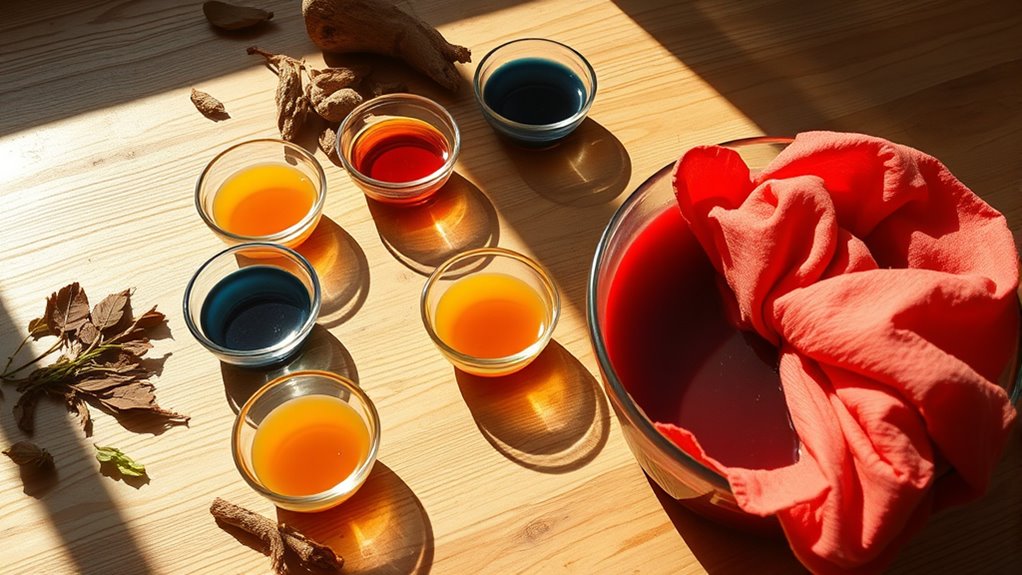
Dyeing fabrics at home with natural colors is an enjoyable and eco-friendly way to refresh your textiles. It allows you to craft vibrant, unique pieces while reducing your environmental footprint. When you explore sustainable dye sources, you tap into a wealth of natural materials that are often abundant and easy to find. Think about using plant-based dyes from roots, leaves, berries, or bark. For example, madder root produces a warm red hue, while turmeric offers a bright yellow. These natural dyes are renewable and biodegradable, making them an excellent choice for eco-conscious crafters.
Getting started with DIY dyeing techniques is straightforward once you understand the basics. First, gather your sustainable dye sources—whatever plants or materials are available locally or seasonally. Prepare your fabric by washing it thoroughly to remove any finishes or residues that might interfere with dye absorption. Next, create your dye bath by simmering your plant material in water, usually for about an hour or more, to extract the color. Strain out the plant matter, then submerge your fabric, ensuring it’s fully immersed. Keep in mind that natural dyes often require patience, as colors may deepen with longer soaking times. You can also experiment with mordants—substances like alum or iron— to alter the resulting shades or improve colorfastness.
Throughout the process, you’ll find that DIY dyeing techniques can be customized to achieve different effects. For instance, you can dip your fabric partially for tie-dye effects or mordant different sections to create varied hues on a single piece. The key is to be patient and attentive, adjusting simmer times and mordant amounts to get the desired tone. The beauty of natural dyeing lies in its unpredictability—slight variations in plant material, water pH, or fabric type can produce a spectrum of rich, earthy colors that are impossible to replicate with synthetic dyes.
Frequently Asked Questions
Can Natural Dyes Produce Vibrant, Long-Lasting Colors?
Yes, natural dyes can produce vibrant, long-lasting colors when you consider their chemical stability and colorfastness. By carefully preparing your dyes and mordants, you enhance their ability to resist fading over time. Although some natural dyes might not initially seem as intense as synthetic ones, proper techniques ensure your colors stay vivid and durable. With patience and proper care, your natural dye projects will remain beautiful for a long time.
Are Low-Impact Dyes Safe for Sensitive Skin?
You’re in luck—low-impact dyes are generally safe for sensitive skin, but keep allergy concerns in mind. Since you’re walking a tightrope with skin sensitivity, it’s wise to do a patch test first. These dyes tend to be gentler than synthetic options, but everyone’s skin reacts differently. If you notice irritation, stop immediately. With proper precautions, you can enjoy vibrant colors without risking your skin’s health.
How Do I Store Natural Dyes for Future Use?
To store natural dyes for future use, you should focus on dye storage techniques that maintain their color and potency. Transfer the dye into airtight containers, like glass jars or bottles, and keep them in a cool, dark place to prevent degradation. Proper natural dye preservation ensures you can reuse the dyes repeatedly without losing vibrancy. Label your containers clearly to keep track of different dye types and batches for future projects.
Can Natural Dyeing Be Done With Synthetic Fabrics?
Sure, you can dye synthetic fabrics, if you’re prepared for the irony. Synthetic fabrics aren’t naturally compatible with natural dyes, mainly because of their chemical makeup, which resists dye absorption. You’ll notice stark differences in how these fabrics take on color compared to natural fibers. So, don’t expect vibrant, lasting results—unless you love a challenge and don’t mind the dyeing process fighting against the fabric’s chemistry.
What Are Eco-Friendly Mordants for Natural Dyes?
You can use eco-friendly mordants like plant-based mordants, such as alum, cream of tartar, or iron mordants made from rusty iron or ferrous sulfate, which are mineral alternatives. These options are safer for the environment and your skin compared to traditional metal mordants. Always choose sustainable, natural sources to minimize your ecological impact, and test small samples first to ensure vibrant, lasting colors in your natural dye projects.
Conclusion
By exploring low-impact dyes and natural dyeing at home, you can reduce environmental harm while creating beautiful, unique fabrics. Think of it like mixing colors on a palette—each natural dye offers a distinct hue, transforming simple materials into vibrant art. When you test and compare these dyes, you see how nature’s palette can be both sustainable and stunning. Embrace this eco-friendly approach, and you’ll make a positive impact, one dye bath at a time.