To reduce microfiber pollution, start by using specialized filters attached to your washing machine or microfiber laundry bags like Guppyfriend, which trap fibers before they reach water systems. Wash clothes in cold water on gentle cycles, and avoid fabric softeners that can increase shedding. Air dry instead of tumble drying to minimize wear. Making these simple changes helps protect waterways, and exploring more tips can further improve your eco-friendly laundry routine.
Key Takeaways
- Microfiber filters attached to washing machine outlets trap tiny synthetic fibers before they reach wastewater.
- Microfiber laundry bags, like Guppyfriend, act as barriers during washing to prevent fiber shedding.
- Washing clothes in cold water on gentle cycles reduces microfiber release from fabrics.
- Using liquid detergents and avoiding fabric softeners can minimize fiber shedding during laundry.
- Choosing natural fibers and air drying clothes help decrease microfiber pollution and environmental impact.
Microfibers are tiny synthetic fibers that shed from clothing, textiles, and other fabric products during washing and wear. These minuscule particles are a byproduct of synthetic fabrics like polyester, nylon, and acrylic, which are widely used because of their durability and affordability. However, as convenient as these fabrics are, they come with a notable environmental impact. When you wash synthetic garments, microfibers are released into the water, eventually making their way into oceans, rivers, and lakes. This pollution poses a threat to marine life and ecosystems, as small creatures ingest these fibers, mistaking them for food. The persistence of microfibers in the environment means they don’t biodegrade easily, leading to long-term pollution issues.
Microfibers shed from clothing during washing threaten aquatic ecosystems and persist in the environment.
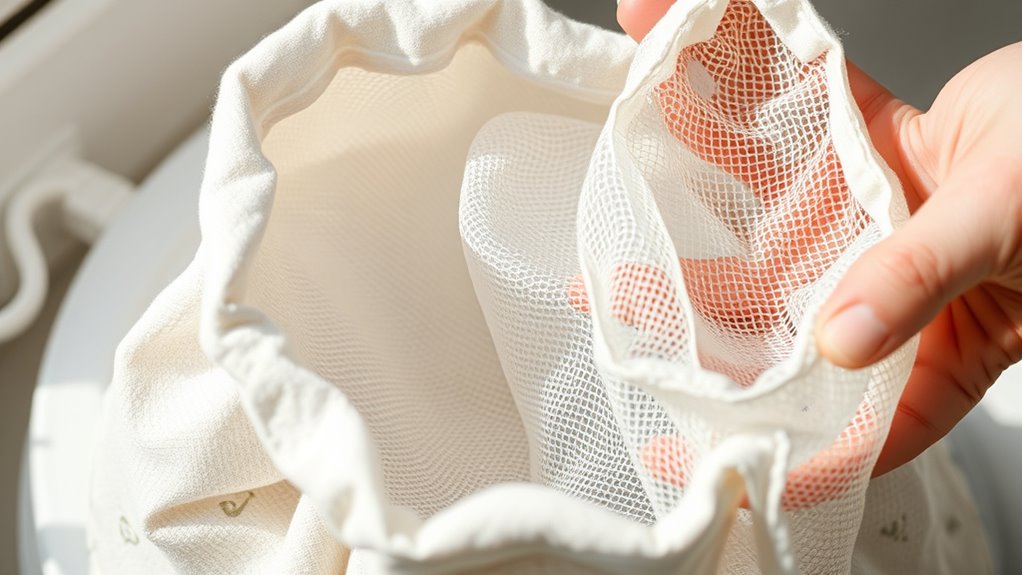
Understanding this, you might wonder how to minimize your contribution to microfiber pollution. One effective step is using specialized filters and bags designed to catch microfibers during laundry. Microfiber filters, for instance, attach to your washing machine’s outlet or drain, trapping tiny fibers before they escape into wastewater systems. These filters are easy to install and can considerably reduce microfiber release, making your laundry routine more eco-friendly. Additionally, microfiber laundry bags—like the popular Guppyfriend—act as a barrier, capturing fibers as you wash your clothes. When you use these bags, you not only prevent fibers from entering the water system but also make it easier to dispose of the collected fibers properly. Regularly cleaning and maintaining these filters and bags ensures they work efficiently and last longer.
Beyond using filters and bags, adopting better washing practices can further reduce microfiber shedding. Washing clothes in cold water and on gentle cycles can lessen fiber release, as aggressive agitation tends to break fibers loose more easily. Using liquid detergents instead of powders can also help, since powders sometimes cause more friction. Avoiding fabric softeners is another smart move, as they can coat fibers and make them more prone to shedding. When it’s time to dry your clothes, air drying instead of using a tumble dryer can cut down on fiber release caused by high heat and mechanical action. Every small change in your laundry routine adds up, helping protect the environment from microplastic pollution. Incorporating microfiber filters into your laundry setup is an effective way to significantly reduce the number of fibers released during washing.
Being aware of the environmental impact of synthetic fabrics can motivate you to make sustainable choices. Opting for natural fibers like cotton, wool, or hemp whenever possible decreases your reliance on synthetic textiles that shed microfibers. When you do choose synthetic clothing, taking steps to wash and care for them responsibly can make a difference. By incorporating microfiber filters, using laundry bags, and adjusting your washing habits, you actively contribute to reducing microfiber pollution and protecting our waterways. Every fiber caught and every change made is a step toward a healthier planet, where the effects of synthetic fabrics are less damaging and more manageable.
Frequently Asked Questions
How Do Microfibers Affect Marine Life?
Microfibers harm marine life by becoming marine debris that pollutes aquatic ecosystems. When you wash synthetic clothes, tiny fibers shed and enter water systems, where fish and other creatures mistake them for food. These microfibers can accumulate in their bodies, causing health issues and disrupting food chains. By reducing microfiber release, you help protect marine ecosystems and prevent microplastics from harming aquatic life.
Are Microfiber Filters Reusable or Disposable?
Reusable filters are designed to be used multiple times, making them eco-friendly and cost-effective. You simply wash and dry them after each use. Disposable microfiber filters, on the other hand, are meant for single use and should be discarded once they’re dirty or no longer effective. Choosing reusable filters helps reduce waste and minimizes microplastic pollution, whereas disposable options add to landfill waste and environmental impact.
What Materials Are Best for Microfiber Cleaning Bags?
You should choose microfiber cleaning bags made from eco-friendly fabrics like organic cotton or recycled polyester, as they offer good material durability and reduce environmental impact. These materials are strong enough to withstand multiple washings and maintain their integrity over time. By selecting eco-friendly fabrics, you guarantee your microfiber cleaning bags are both durable and sustainable, helping you to clean effectively while minimizing your ecological footprint.
Can Washing Machine Settings Reduce Microfiber Shedding?
Yes, you can reduce microfiber shedding by choosing gentle washing machine cycles and using less harsh laundry detergent. Opt for delicate or wool cycles to minimize fiber loss, and avoid high heat settings. Using a liquid detergent designed for delicate fabrics helps prevent fiber breakage. These adjustments help keep microfibers contained, protecting your clothing and the environment, while maintaining your garments’ quality.
Do Microfiber Products Release Chemicals During Washing?
Ever wondered if microfiber products release chemicals during washing? Yes, they can undergo chemical leaching, especially if made with certain dyes or treatments. This not only affects your health but also increases the environmental impact. To minimize this, wash microfiber items with gentle detergents and avoid harsh chemicals. Are you ready to make smarter choices that protect both your skin and the planet? Small steps can lead to big environmental benefits.
Conclusion
Now that you know the basics of microfibers, you’re better equipped to reduce their impact. Think of your efforts like a tiny drop in a vast ocean—powerful when combined with others. Using filters, choosing reusable bags, and washing smarter can make a real difference. Every small action counts, and together, we can help protect our planet from microfiber pollution. So, go ahead, make those eco-friendly choices, and be part of the solution!