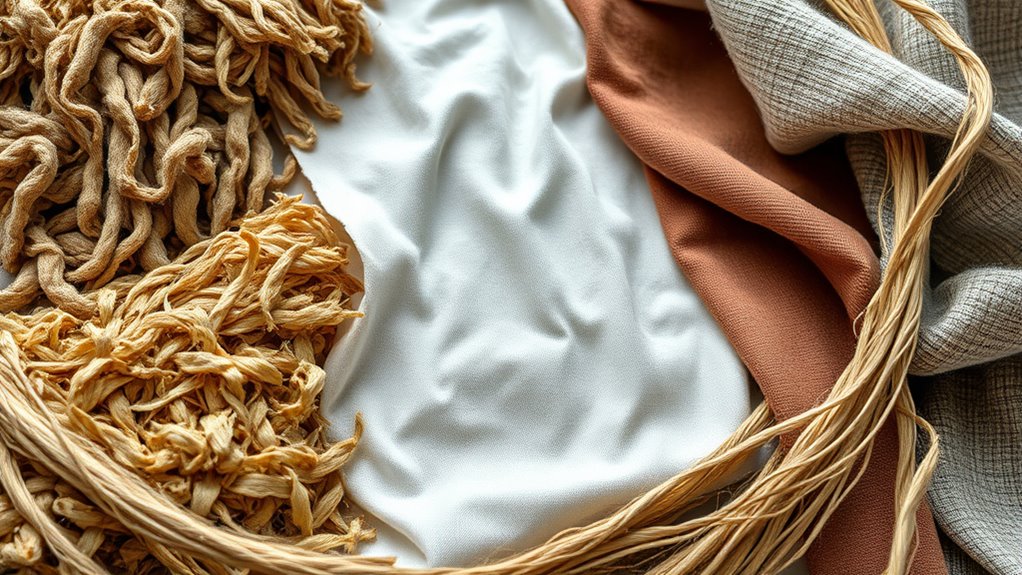

To determine if a fabric is sustainable, consider how it’s sourced ethically—favoring fair labor practices and transparency—and made from eco-friendly materials like organic cotton or hemp that require less water and chemicals. Look for certifications such as GOTS or Fair Trade, which verify responsible practices. Durable fabrics that last longer help reduce waste, while eco-friendly dyes minimize pollution. Keep exploring these aspects to make truly sustainable fashion choices.
Key Takeaways
- Ethically sourced fabrics ensure fair labor practices and minimal environmental impact throughout production.
- Eco-friendly dyes derived from natural or biodegradable sources reduce water pollution and lower carbon footprints.
- Sustainable fabrics are made from renewable, biodegradable materials like organic cotton, hemp, or Tencel.
- Certifications such as GOTS, OEKO-TEX, and Fair Trade verify ethical sourcing and environmentally friendly manufacturing.
- Durable, high-quality fabrics extend garment lifespan, decreasing waste and promoting responsible production practices.
Sustainable fabric choices are essential for reducing environmental impact and supporting ethical practices in the fashion industry. When you select fabrics made with ethical sourcing, you’re ensuring that the materials come from suppliers who prioritize fair labor practices, minimize environmental damage, and maintain transparency throughout their processes. Ethical sourcing means you’re not only reducing harm to the planet but also advocating for workers’ rights and fair wages. This commitment helps break the cycle of exploitative practices often associated with fast fashion, making your wardrobe more responsible and mindful.
Choosing ethically sourced fabrics supports fair labor, reduces environmental harm, and promotes transparent, responsible fashion practices.
In addition to ethical sourcing, eco friendly dyes play a vital role in fabric sustainability. Traditional dyes often contain toxic chemicals that pollute waterways and pose health risks to workers. Eco friendly dyes, on the other hand, are derived from natural, plant-based sources or are formulated to be biodegradable and less toxic. When you choose fabrics dyed with these eco conscious options, you’re helping to reduce water pollution and lower the carbon footprint associated with textile production. This choice supports a cleaner environment and encourages manufacturers to adopt safer, more sustainable dyeing processes.
Another important aspect to contemplate is the lifecycle of the fabric. Sustainable fabrics are often made from renewable resources like organic cotton, hemp, or Tencel, which are cultivated with minimal chemical inputs and require less water. These materials tend to be biodegradable, meaning they won’t persist in landfills for decades, unlike synthetic fibers. By opting for such fabrics, you’re contributing to a circular economy where materials can naturally decompose, reducing waste and pollution.
Certifications also serve as helpful indicators of a fabric’s sustainability credentials. Look for labels like GOTS (Global Organic Textile Standard), OEKO-TEX, or Fair Trade, which verify ethical sourcing and environmentally friendly manufacturing practices. These certifications provide assurance that the fabric aligns with your values for sustainability and social responsibility.
Additionally, choosing durable, high-quality fabrics can extend the lifespan of your clothing, reducing the need for frequent replacements and decreasing overall textile waste. Ultimately, choosing sustainable fabrics involves more than just the material itself; it’s about supporting systems that prioritize ethical sourcing, eco friendly dyes, and responsible production methods. Every time you make a conscious decision about what to wear, you’re contributing to a more sustainable fashion industry. By understanding the importance of these factors and seeking out certified, eco-conscious options, you help drive positive change — encouraging brands to innovate and adopt better practices. Your choices matter, and they can lead to a more transparent, ethical, and environmentally friendly future for fashion.
Frequently Asked Questions
How Can Consumers Verify a Fabric’s Sustainability Claims?
You can verify a fabric’s sustainability claims by checking its fiber sourcing and supply chain transparency. Look for certifications like GOTS or Fair Trade that guarantee responsible fiber sourcing. Research brands that openly share their supply chain details, showing where and how fibers are produced. Asking questions about sourcing practices and seeking third-party verification helps you confidently identify genuinely sustainable fabrics. Always stay informed and cautious of greenwashing.
What Certifications Indicate Sustainable Fabric Production?
Certifications act as your compass through the green forest of textile claims. Look for certification standards like GOTS (Global Organic Textile Standard), OEKO-TEX, and Fair Trade, which ensure eco-labeling programs meet strict environmental and social criteria. These badges of authenticity help you verify that the fabric’s production aligns with sustainability principles, giving you confidence that your choices support responsible practices and a healthier planet.
Are Natural Fibers Always More Sustainable Than Synthetic Ones?
Natural fibers aren’t always more sustainable than synthetic ones because their biodegradability benefits depend on how they’re produced and disposed of. While natural fibers often have a lower environmental impact and break down more easily, some require intensive farming practices that harm ecosystems. Synthetic fibers can be more durable and less resource-intensive if made responsibly. Ultimately, consider the entire lifecycle and environmental impact, not just whether a fiber is natural or synthetic.
How Does Fabric Dyeing Impact Sustainability?
Fabric dyeing can make or break sustainability, and it’s a game-changer! Using eco-friendly dyes drastically reduces toxic chemicals, protecting ecosystems, while water conservation methods cut water use to almost zero. Imagine saving gallons of water with each dye job—saving the planet one shirt at a time! Your choices in dyeing practices directly impact sustainability, so choose wisely. Every eco-friendly dye and water-saving technique helps create a greener, cleaner future.
Can Recycled Fabrics Fully Replace Virgin Materials?
Recycled fabrics can substantially replace virgin materials, but they might not fully do so yet. You’ll find that incorporating recycled content extends the material lifecycle, reducing waste and resource use. However, some applications still require virgin materials for durability or performance. As technology advances, recycled fabrics are becoming more versatile, so you’ll likely see increased adoption, but a complete replacement depends on balancing recycled content with functional needs.
Conclusion
As you weave sustainability into your choices, remember that each fabric is a thread in the larger tapestry of our planet. By choosing eco-friendly fibers, you become a essential part of the fabric’s story—strengthening the bond between nature and design. Let your decisions be the loom, shaping a future where every stitch reflects care and responsibility. Together, we craft a sustainable world, one fabric at a time, weaving hope into the very fabric of our lives.