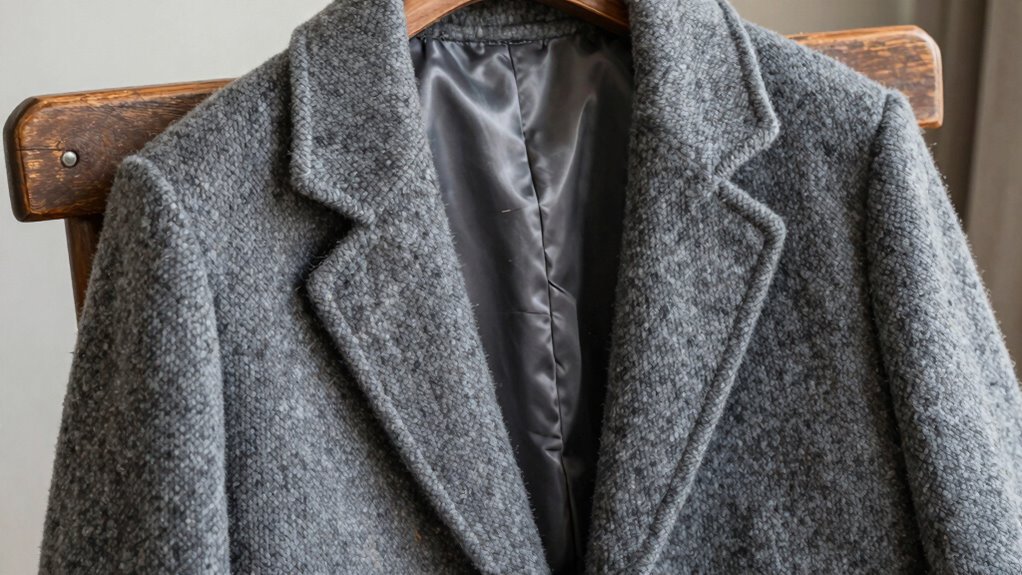
When choosing a wool coat, understanding GSM helps you pick the right thickness for warmth and comfort—higher GSM means heavier, warmer fabrics, while lower GSM feels lighter. Adding a lining improves comfort, warmth, and longevity by reducing irritation and protecting the wool. Pilling occurs more often with lower-quality fibers, certain treatments, or over time as fibers weaken. Staying aware of these factors guarantees your coat stays stylish and durable—continue exploring to get all the essential tips.
Key Takeaways
- GSM indicates fabric weight; higher GSM means thicker, warmer coats, while lower GSM fabrics are lighter and more breathable.
- Quality wool fibers and tight construction reduce pilling, whereas lower-quality fibers and softer treatments increase pilling risk.
- Linings enhance comfort, warmth, and durability, with materials like silk or satin providing smooth, insulating layers.
- Proper care, including gentle washing and storage, prevents fiber damage and minimizes pilling over time.
- Pilling often results from fiber quality, softening treatments, and age, making proper maintenance essential for a longer-lasting coat.
What Is GSM and How Does It Affect Wool Coat Quality?
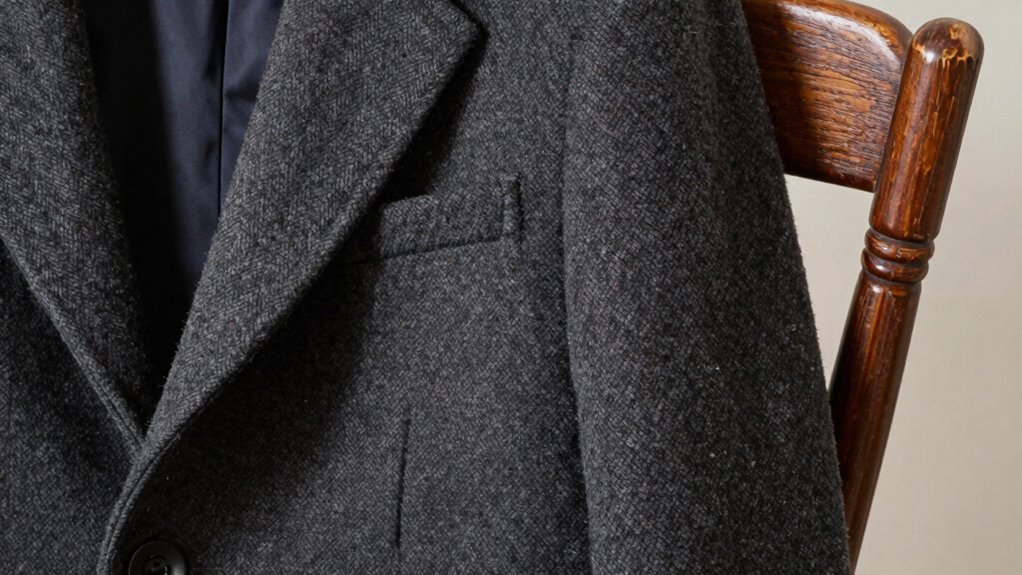
Have you ever wondered what GSM means when shopping for a wool coat? GSM, or grams per square meter, measures the fabric weight, giving you an idea of how heavy or light the material is. A higher GSM indicates a thicker, warmer coat, while a lower GSM suggests a lighter, more breathable option. Fiber type also plays a role; wool types like merino or cashmere influence the coat’s feel and durability. Heavier fabrics with higher GSM often use denser fibers, making them more insulating but potentially less flexible. Conversely, lighter GSM fabrics with finer fibers feel softer and are suitable for milder weather. Understanding GSM helps you choose a coat that matches your climate and comfort preferences, ensuring you get the right balance of warmth and wearability. Recognizing the fiber density of different wool types can further refine your choice for durability and comfort, especially when considering the fabric weight in relation to the coat’s intended use.
How Does Lining Improve Comfort, Warmth, and Durability?
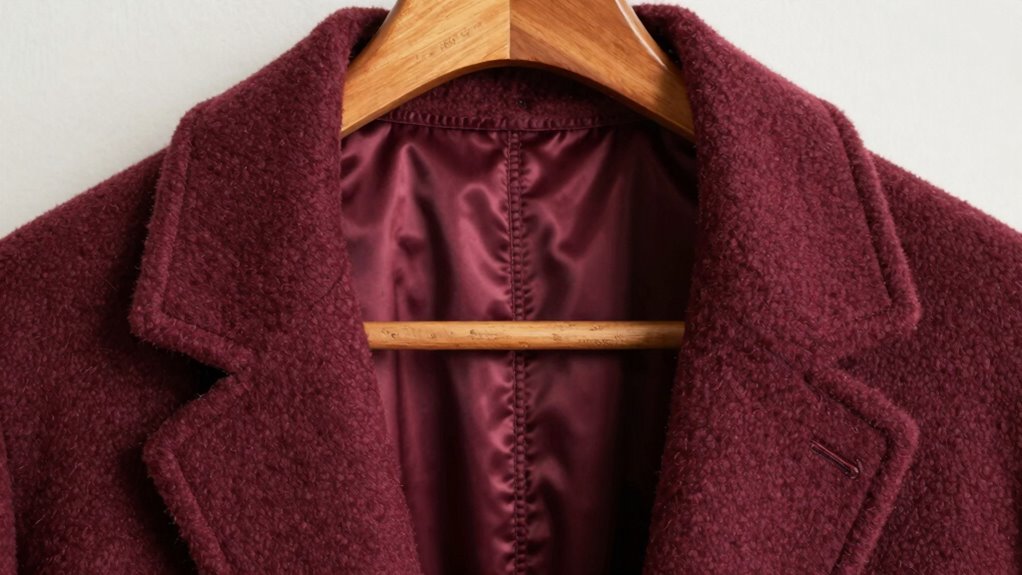
Lining plays a crucial role in enhancing a wool coat’s comfort, warmth, and durability. It provides a smooth layer that reduces irritation and improves comfort enhancement. Additionally, lining benefits include better insulation, trapping heat close to your body, which keeps you warmer. It also protects the wool fabric from wear and tear, extending the coat’s lifespan. Different lining materials influence how the coat feels and performs. For example, silky linings feel luxurious and glide smoothly over layers, while thicker linings boost warmth. Below is a quick comparison:
| Lining Material | Benefits | Comfort Enhancement |
|---|---|---|
| Satin | Soft, luxurious feel, easy glide | High |
| Wool Blends | Adds warmth, durability | Moderate |
| Polyester | Affordable, moisture-resistant | Moderate |
| Silk | Lightweight, breathable, elegant | High |
Why Do Some Wool Coats Pill Faster Than Others?
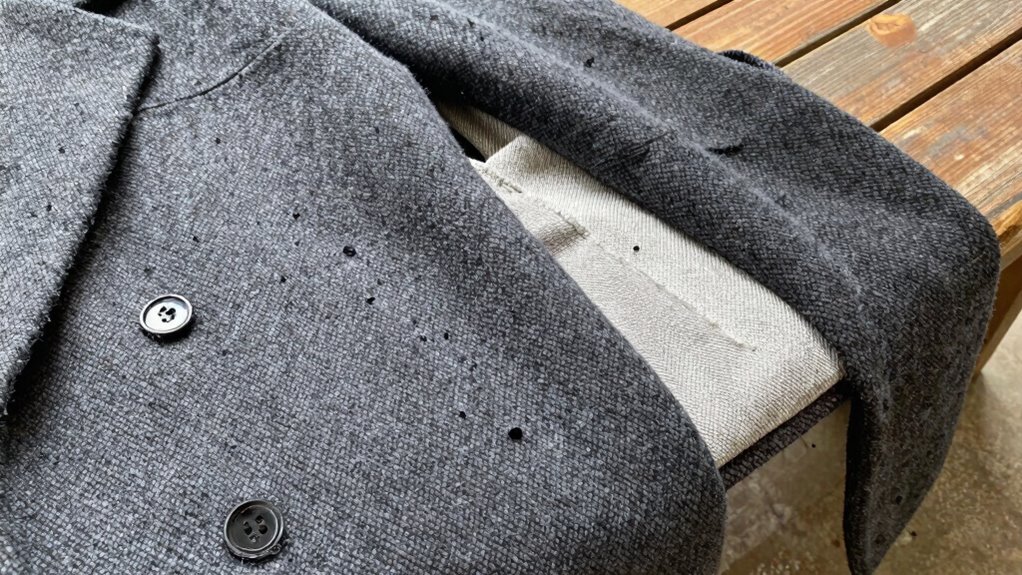
While lining materials influence a wool coat’s feel and insulation, the fabric’s fiber quality and construction play a significant role in how quickly it pills. Coats made from lower-quality fibers tend to pill faster because the fibers are less resistant to friction and wear. Fabric softening treatments can sometimes weaken fibers, making them more prone to pilling. Additionally, the dyeing process and coat color fading over time can indicate fiber degradation, which accelerates pilling. Darker or more vibrant colors may hide pills initially, but as the coat ages and color fades, pills become more noticeable. To minimize pilling, look for well-constructed coats with high-quality fibers, and consider how fabric treatments impact durability over time. Selecting fabrics with fiber resilience can help improve the coat’s longevity and resistance to pilling.
How to Choose a Wool Coat That Lasts and Keeps You Warm
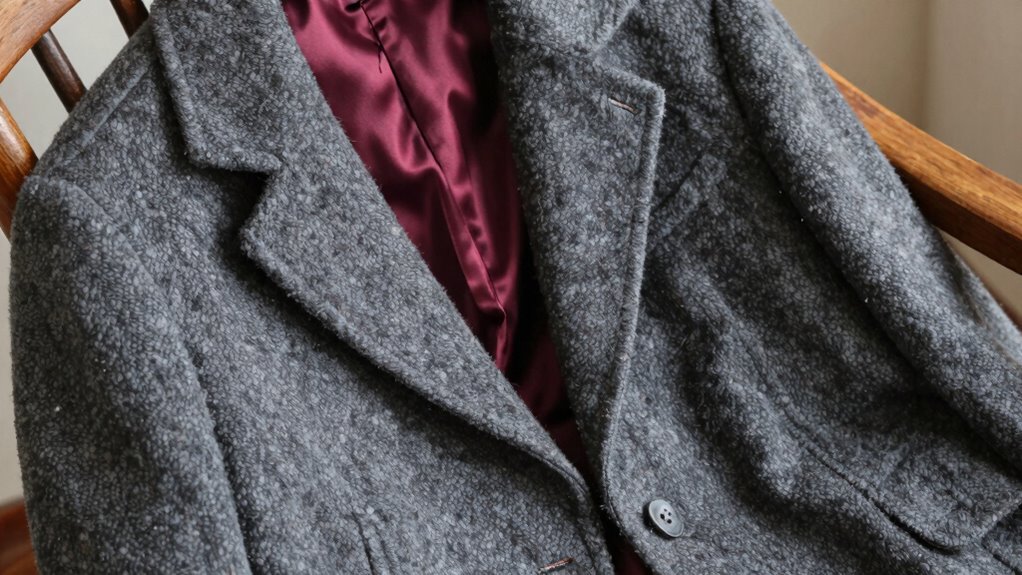
Choosing a wool coat that lasts and keeps you warm requires paying close attention to both material quality and construction. Look for fabric blends that combine wool with synthetic fibers like polyester or nylon, which can enhance durability and resilience against pilling. Incorporating fabric blends that include these fibers can improve the coat’s resistance to wear and tear over time. Additionally, selecting coats with anti-pilling treatments can help maintain a smooth appearance after multiple washes and wears. Avoid overly trendy styles that might sacrifice longevity for fleeting fashion trends; instead, opt for classic cuts that withstand changing tastes. Check the fabric’s GSM to ensure it’s thick enough for warmth without being bulky. Pay attention to details like reinforced seams and quality linings, which improve longevity and comfort. Additionally, understanding the importance of fabric chemistry can guide you in choosing materials that resist pilling and wear over time. Being aware of fiber composition can help you select a coat that balances durability and softness. Considering manufacturing quality can also influence how well a coat holds up through regular wear. By selecting a well-made coat with thoughtful fabric blends and timeless design, you’ll enjoy warmth and style that endure season after season.
Tips to Prevent Pilling and Make Your Wool Coat Last Longer
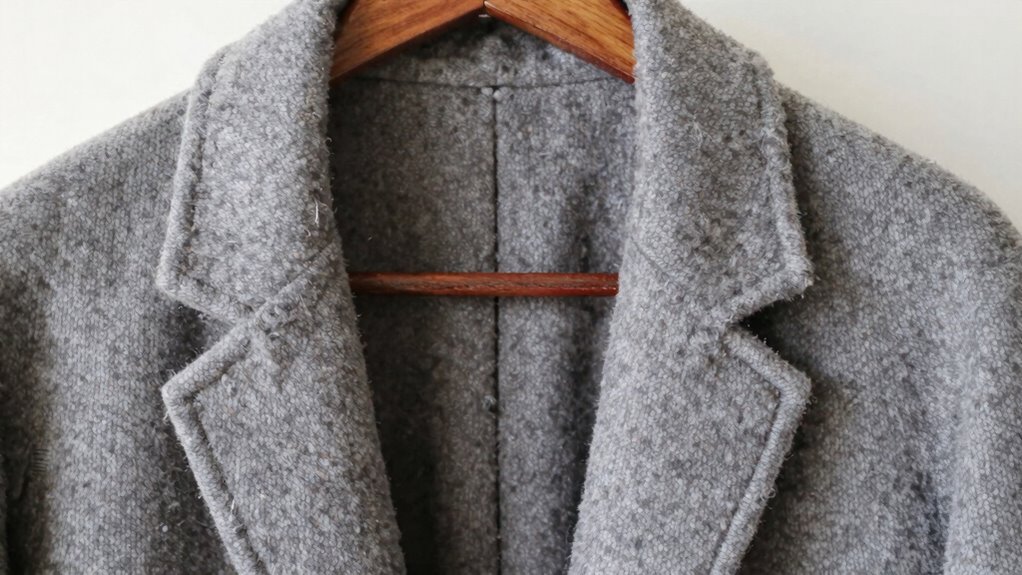
To keep your wool coat looking its best, you need to follow proper washing techniques and handle it carefully. Using fabric softeners sparingly and storing your coat properly can also prevent pilling and damage. Let’s explore some simple tips to help your coat last longer and stay smooth. Be mindful of the Free Floating nature of wool fibers, which can influence how the fabric responds to washing and wear.
Proper Washing Techniques
Proper washing is essential for maintaining your wool coat’s appearance and longevity. To prevent pilling and damage, always follow wool coat cleaning instructions carefully. Avoid fabric softener misconceptions, as softeners can weaken fibers and promote pilling. Instead, opt for gentle detergents designed for wool. Use cold water and avoid wringing, which can distort the fabric. Dry flat away from direct heat. Here’s a quick guide:
| Step | Action | Reason |
|---|---|---|
| Use gentle detergent | Wool-specific detergent | Prevents fiber damage |
| Avoid fabric softener | No softeners needed | Reduces fiber weakening and pilling |
| Wash in cold water | Maintain fiber integrity | Helps prevent shrinking and felting |
| Lay flat to dry | Shape and dry evenly | Avoids stretching and distortion |
Following these tips ensures your wool coat stays soft, stylish, and pill-free longer.
Use of Fabric Softeners
Ever wondered if fabric softeners really help your wool coat stay soft? While they can make your coat feel smoother, they aren’t always the best choice for wool fiber treatment. Many fabric softeners contain chemicals that may weaken wool fibers over time, leading to faster pilling. Instead, opt for gentle conditioners specifically designed for wool or use natural alternatives like white vinegar during rinsing. These options help maintain the fiber’s natural elasticity and softness without damaging the fabric. Avoid overusing softeners, as buildup can make the coat feel greasy or dull. Proper use of fabric softeners can extend your coat’s lifespan, but moderation and choosing the right products are key to preventing pilling and preserving its appearance.
Storage and Handling Tips
Storing your wool coat correctly is essential to prevent pilling and extend its lifespan. Follow proper storage requirements by hanging your coat on a wide, padded hanger to maintain its shape. Avoid cramped closets; instead, choose a cool, dry, well-ventilated space to prevent mold and fabric damage. Before storing, ensure the coat is clean to avoid attracting moths and pests. Handle your wool coat with care, avoiding rough or excessive handling that can cause fibers to pill. Use garment bags for long-term storage, especially in humid environments. Keep it away from direct sunlight and heat sources to prevent color fading. Proper garment storage is crucial for maintaining fabric integrity and longevity. Additionally, periodically airing out your coat can help remove any residual odors and moisture that might contribute to deterioration. Ensuring proper climate-controlled storage helps preserve the wool’s natural fibers and prevents damage from environmental fluctuations. Incorporating herbal sachets with natural repellents can also help keep pests away without risking chemical exposure. By following these handling precautions, you can protect your wool coat and keep it looking new for years to come.
Key Factors to Consider When Buying a Wool Coat for Winter
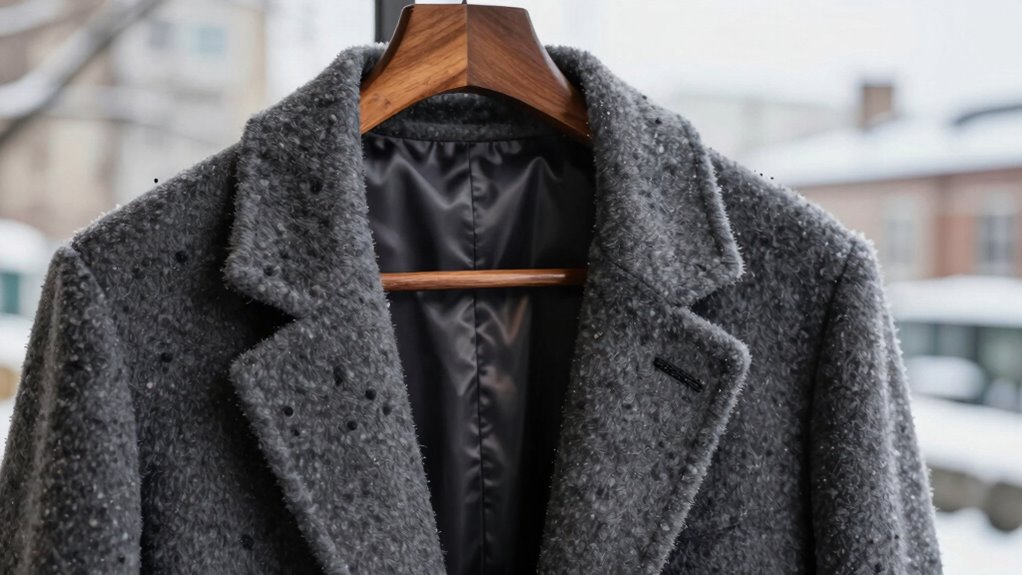
When shopping for a wool coat this winter, understanding the key factors can make all the difference in finding one that keeps you warm and looks great. Consider current fashion trends to choose a style that suits your personality and wardrobe. Pay attention to wool coat color options; neutral shades like black, gray, and navy offer versatility, while bold colors can make a statement. Check the wool’s GSM to verify quality and warmth without bulk. Also, examine the coat’s lining for comfort and added insulation. Fit is essential—make sure it’s tailored but allows room for layering. Avoid overly trendy pieces that may go out of style quickly. By focusing on these factors, you’ll find a wool coat that’s both stylish and functional for winter.
Frequently Asked Questions
Can Wool Coats Be Machine Washed Without Damage?
You can machine wash your wool coat, but it’s risky and not recommended for proper wool coat maintenance. Machine wash risks include shrinking, felting, or damaging the fabric’s fibers. To keep your coat in good shape, consider hand washing or dry cleaning instead. If you decide to machine wash, use cold water, a gentle cycle, and a wool-specific detergent, and always check the care label first.
How Does Wool Fiber Type Affect Coat Longevity?
You might be surprised, but wool fiber type really impacts your coat’s lifespan. If you choose a coat with carefully treated fibers and a dense weave, it’ll resist pilling and wear longer. Fine merino wool, for example, benefits from special fiber treatments that enhance durability. Conversely, loosely woven or untreated fibers wear out faster, making your coat look older sooner. So, pay attention to fiber treatment and weave density to keep your coat looking great.
Are There Specific Brands Known for Less Pilling?
Some brands are known for less pilling because of their strong reputation for fabric innovation and quality control. You’ll find that companies like Patagonia, Arc’teryx, and L.L. Bean focus on using advanced fibers and finishing techniques to minimize pilling. When shopping, look for brands that prioritize durability and have positive reviews about fabric longevity. Choosing well-regarded brands helps make certain your wool coat stays smooth and stylish longer.
What Care Tips Extend the Life of a Wool Coat?
Like a knight’s armor, your wool coat needs proper care to last. You should regularly fabric softening it with a gentle spray to keep fibers soft and prevent pilling. When not in use, follow proper storage techniques—hang it in a cool, dry place, ideally with a breathable cover. Avoid over-washing, and spot clean when needed to maintain its quality and extend its life.
Does Coat Color Influence Pilling or Durability?
Yes, coat color can influence pilling and durability. Darker shades often show pills less, helping your coat look newer longer, but they may show dirt more easily. Lighter colors can highlight pilling, making it more noticeable and potentially affecting coat durability over time. To prevent pilling and extend your coat’s lifespan, choose colors wisely, and follow proper pilling prevention tips like gentle washing and proper storage.
Conclusion
Think of your wool coat as a trusted companion on winter’s journey, its GSM, lining, and durability guiding you through cold days. By choosing wisely and caring for it, you’re nurturing a resilient shield against the elements—your personal armor of warmth and style. With each pilling prevented, you preserve its story, a symbol of your investment in comfort and longevity. Keep it well-loved, and it’ll stand by you through many seasons to come.