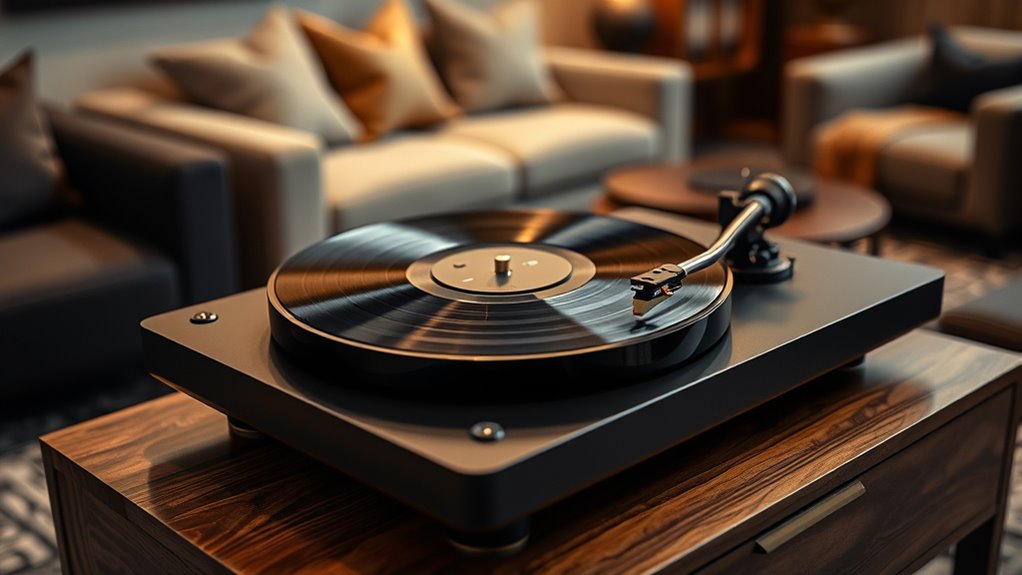

For most listeners seeking high-end vinyl record players, I’d start with the Fluance RT87: its Ortofon 2M Blue cartridge and acrylic platter make it a strong balance of sound-focused components and approachable ownership. The Pro-Ject Debut Carbon EVO is the more enthusiast-oriented choice, while the Audio-Technica AT-LP120XBT-USB suits buyers who want direct drive and flexible connections. The main tradeoff is between a more hands-on setup built around playback quality and convenient features such as Bluetooth, automatic operation, or built-in amplification. Some models also include speakers, while others need a separate system. Read on for the full breakdown and a guide to matching a turntable to your listening setup.

Get your wardrobe favorites delivered free with Prime
- Fast, free delivery on millions of items
- Prime Video, Amazon Music and more included
- Member-only deals all year
Key Takeaways
- Fluance RT87 leads as the balanced pick: its supplied Ortofon 2M Blue and acrylic platter make it more compelling for sound-focused buyers than the simpler RT81.
- Pro-Ject Debut Carbon EVO favors upgrade-minded listeners: it takes a more enthusiast-focused approach, but buyers should be comfortable with a less automated setup.
- Direct drive is about use as well as sound: the AT-LP120XBT-USB and AT-LP120XUSB offer a different operating style from the belt-drive Fluance and Pro-Ject models.
- Convenience models trade control for simplicity: the Sony PS-LX5BT and AT-LP70XBT emphasize wireless listening and easier operation over hands-on adjustment.
- A complete system can matter more than a premium deck: the 1 BY ONE includes bookshelf speakers, while most other picks require separate speakers or an amplifier.


| highend vinyl record player | Cartridge | Tonearm | Platter | Model |
|---|---|---|---|---|
| Fluance RT87 Reference High-Fi | Ortofon 2M Blue nude elliptical | 9-inch carbon fiber with adjustable VTA | 22 mm anti-static acrylic | RT87 |
| Audio-Technica AT-LP120XBT-USB | AT-VM95E dual moving magnet | — | Die-cast aluminum with felt mat | — |
| 1 BY ONE Bluetooth Turntable H | — | — | Solid iron | — |
| Pro-Ject Debut Carbon EVO Turn | Sumiko Rainier, factory mounted | 8.6-inch carbon fiber | 1.7 kg stamped steel with TPE damping | Debut Carbon EVO |
| Audio-Technica AT-LP70XBT Wire | AT-VM95C with conical stylus | J-shaped | — | — |
| Audio-Technica AT-LP120XUSB-BK | — | Balanced S-shaped tonearm with hydraulically damped lift control and lockable rest | — | — |
| Sony PS-LX5BT Wireless Bluetoo | Moving magnet | — | Black die-cast aluminum | PS-LX5BT |
| Fluance RT81 Elite High Fideli | Audio-Technica AT95E | Balanced aluminum S-type | — | RT81 Elite |
More Details on Our Top Picks
Fluance RT87 Reference High-Fidelity Turntable with Ortofon 2M Blue Cartridge, Acrylic Platter, and Natural Walnut Finish
The RT87 is the most calibration-focused choice here: its adjustable VTA carbon-fiber tonearm lets owners refine cartridge alignment, while the included Ortofon 2M Blue nude elliptical cartridge gives it a more ambitious starting point than the AT-LP70XBT’s conical stylus. A dual-plinth isolation platform and 22 mm acrylic platter are designed to limit unwanted vibration, making this a strong fit for a revealing, carefully assembled stereo system. Compared with the Pro-Ject Debut Carbon EVO, the RT87 emphasizes isolation and user adjustment; the Pro-Ject instead has a damped steel platter and electronic speed selection. The tradeoff is that the RT87’s adjustment options ask more of the owner, and the supplied details list no Bluetooth, USB, or built-in preamp. I’d choose it for sound-system builders, not casual plug-and-play listening.
Pros:- Ortofon 2M Blue cartridge is a strong factory-fitted starting point
- Adjustable VTA supports more precise cartridge calibration
- Dual-plinth isolation and acrylic platter are designed to reduce vibration
- Carbon-fiber tonearm suits a detail-focused hi-fi setup
Cons:- VTA and other adjustment options may be less welcoming to first-time owners
- Product details do not list Bluetooth, USB, or a built-in phono preamp
- Requires an AC adapter and a compatible external audio system
Best for: Vinyl enthusiasts building a wired stereo system who want a capable cartridge and room to fine-tune tonearm setup.
Not ideal for: Listeners who want automatic operation, wireless playback, or a turntable with an explicitly listed built-in phono preamp.
- Brand:Fluance
- Model:RT87
- Finish:Natural Walnut
- Tonearm:9-inch carbon fiber with adjustable VTA
- Cartridge:Ortofon 2M Blue nude elliptical
- Platter:22 mm anti-static acrylic
- Isolation:Dual-plinth vibration isolation
- Power:AC adapter
- Warranty:2-year manufacturer warranty
Our verdict“Choose the RT87 if cartridge detail and setup flexibility matter more to you than automatic playback or wireless convenience.”
Audio-Technica AT-LP120XBT-USB-BK Wireless Direct-Drive Turntable
The AT-LP120XBT-USB is the lineup’s connection hub: Bluetooth, USB, and dual RCA make it easier to use with wireless speakers, a computer, or a traditional stereo than the RCA-only Pro-Ject Debut Carbon EVO. Its direct-drive motor, quartz speed lock, and support for 33, 45, and 78 RPM also suit listeners with varied records who want speed control without belt changes. The included AT-VM95E cartridge and switchable phono preamp provide a practical foundation, though this package is geared more toward versatility than the RT87’s higher-tier Ortofon cartridge or the Pro-Ject’s damped steel platter. It is fully manual, so starting and returning the tonearm are the listener’s job. I’d pick it for a mixed-format setup, but skip it if automatic operation is a priority.
Pros:- Bluetooth, USB, and dual RCA support a broad range of audio setups
- Direct drive and quartz speed lock support stable speed control
- 33, 45, and 78 RPM compatibility accommodates varied records
- Switchable built-in phono preamp eases connection to line-level inputs
Cons:- Fully manual operation requires the listener to cue and return the tonearm
- The versatile feature set prioritizes convenience over the RT87’s more advanced included cartridge
- External power adapter adds another cable to the setup
Best for: Listeners who want one turntable for wired stereo playback, Bluetooth listening, computer recording, and 78 RPM records.
Not ideal for: Buyers seeking automatic tonearm operation or a simpler, more focused audiophile turntable with fewer connection options.
- Drive type:Direct drive
- Operation:Fully manual
- Speeds:33, 45, and 78 RPM
- Connectivity:Bluetooth, USB, dual RCA
- Cartridge:AT-VM95E dual moving magnet
- Preamp:Built-in, switchable
- Platter:Die-cast aluminum with felt mat
- Color:Black
Our verdict“Choose the AT-LP120XBT-USB if you need several playback and recording connections in one manual, direct-drive deck.”
1 BY ONE Bluetooth Turntable HiFi System with 36-Watt Bookshelf Speakers
The 1 BY ONE is the only option in this group that pairs a turntable with 36-watt bookshelf speakers, so it gives new listeners a route to playback without first assembling a separate speaker system. That makes it a more self-contained entry point than the Fluance RT87 or Pro-Ject Debut Carbon EVO, both of which are turntables rather than complete speaker packages. The solid iron platter, adjustable counterweight, and anti-skating system offer more setup control than a basic automatic deck, while Bluetooth and USB add ways to play or record audio. Those connections have limits: USB recording requires a computer, and Bluetooth playback comes through the system’s speakers. Compared with the AT-LP120XBT-USB, this trades broader standalone connectivity for included speakers. It makes the most sense for a first system, not for buyers selecting separate high-end components.
Pros:- Included bookshelf speakers provide a complete playback setup
- Solid iron platter supports a substantial turntable platform
- Adjustable counterweight and anti-skating provide playback adjustments
- Bluetooth and USB add wireless input and computer-recording options
Cons:- USB vinyl recording requires a connected computer
- Bluetooth playback is routed through the included speakers
- The bundled-speaker format offers less flexibility than choosing separate hi-fi components
Best for: First-time vinyl listeners who want a turntable and bookshelf speakers together, with Bluetooth and computer-recording options.
Not ideal for: Experienced hi-fi buyers who already own quality speakers or want greater freedom to build a component-based system.
- Speaker power:36 watts
- Platter:Solid iron
- Connectivity:Bluetooth, USB, dual RCA
- Preamp:Built-in, switchable phono/line
- Vinyl recording:USB connection to a computer
- Speakers:Bookshelf speakers included
- Playback controls:Adjustable counterweight and anti-skating system
Our verdict“Choose the 1 BY ONE if you want speakers included and value a ready-to-play system over component-by-component selection.”
Pro-Ject Debut Carbon EVO Turntable with Sumiko Rainier Cartridge (Gloss Red)
The Debut Carbon EVO is the most focused traditional hi-fi choice in this batch. Its 8.6-inch carbon-fiber tonearm, factory-mounted Sumiko Rainier cartridge, and 1.7 kg TPE-damped steel platter prioritize stable, wired playback rather than an array of digital features. That puts it in a different lane from the AT-LP120XBT-USB, which adds Bluetooth and USB, and from the 1 BY ONE, which supplies speakers. The Pro-Ject instead makes its case through its mechanical design and electronic speed selection, with 78 RPM capability for compatible records. The limitation is clear: it offers RCA output only, with no stated Bluetooth, USB, or built-in preamp, so buyers need a suitable phono stage and system. Its 6 kg weight also makes it less convenient to move. I’d choose it for a dedicated stereo, not a flexible all-in-one setup.
Pros:- Carbon-fiber tonearm and integrated headshell support precise tracking
- Factory-mounted Sumiko Rainier cartridge reduces initial setup work
- Heavy steel platter with TPE damping is designed to reduce resonance
- Electronic speed selection includes 78 RPM capability
Cons:- RCA-only connectivity excludes Bluetooth and USB
- Product details do not list a built-in phono preamp
- At 6 kg, it is less convenient to move than a lighter setup
Best for: Hi-fi listeners with a phono stage and stereo system who prefer a focused, wired turntable with a factory-mounted cartridge.
Not ideal for: Buyers who need Bluetooth, USB recording, a bundled speaker system, or an explicitly listed built-in phono preamp.
- Brand:Pro-Ject
- Model:Debut Carbon EVO
- Tonearm:8.6-inch carbon fiber
- Cartridge:Sumiko Rainier, factory mounted
- Platter:1.7 kg stamped steel with TPE damping
- Speed selection:Electronic 33/45 RPM; 78 RPM capable
- Connectivity:Wired RCA output
- Weight:6 kg
- Color:Gloss Red
Our verdict“Choose the Debut Carbon EVO for a dedicated wired hi-fi system, provided you already have the phono stage and other components it needs.”
Audio-Technica AT-LP70XBT Wireless Turntable (Black/Bronze)
The AT-LP70XBT is the easiest recommendation here for listeners who want vinyl playback without manual cueing. Its fully automatic operation starts and returns the tonearm for you, while Bluetooth and a switchable phono preamp support wireless or wired listening. Compared with the fully manual AT-LP120XBT-USB, this gives up 78 RPM playback and USB recording in favor of simpler operation; it also has fewer cartridge ambitions out of the box than the Fluance RT87’s Ortofon 2M Blue. The supplied AT-VM95C conical cartridge is a straightforward starting point, and its stylus can be upgraded within the VM95 series. A three-piece anti-resonance chassis is designed to limit unwanted vibration, but experienced listeners may find the fixed automatic format less engaging than a manual deck. I’d choose it for convenient everyday listening, not extensive setup control.
Pros:- Fully automatic operation simplifies starting and ending a record
- Bluetooth with aptX Adaptive supports wireless listening
- Switchable built-in phono preamp supports phono and line-level connections
- VM95-series stylus compatibility allows cartridge-stylus upgrades
Cons:- Supplied conical stylus may not satisfy listeners seeking finer detail
- Automatic operation offers less manual control than the AT-LP120XBT-USB
- Supports 33-1/3 and 45 RPM but does not list 78 RPM playback
Best for: New or casual vinyl listeners who want automatic playback and Bluetooth, with the option to connect by RCA.
Not ideal for: Manual-control enthusiasts or collectors who need 78 RPM playback, USB recording, or a more detailed cartridge supplied from the start.
- Drive type:Belt drive
- Operation:Fully automatic
- Speeds:33-1/3 and 45 RPM
- Connectivity:Bluetooth with aptX Adaptive, RCA
- Cartridge:AT-VM95C with conical stylus
- Tonearm:J-shaped
- Preamp:Built-in, switchable
- Included accessories:Detachable RCA cable, 45 RPM adapter, hinged dust cover
- Color:Black/Bronze
Our verdict“Choose the AT-LP70XBT if simple automatic playback and wireless connection matter more than manual control or high-detail stock stylus performance.”
Audio-Technica AT-LP120XUSB-BK Direct-Drive Turntable
The AT-LP120XUSB-BK suits listeners who want direct control over playback and the option to archive records. Its 33, 45, and 78 RPM support covers more record formats than the Sony PS-LX5BT, which plays two speeds, while variable pitch control and quartz speed lock give DJs and detail-oriented listeners more adjustment. The USB connection also lets you record vinyl to a computer with compatible software. That flexibility comes with a more involved setup: this is a fully manual turntable, so you handle cueing and playback rather than relying on Sony’s automatic start, stop, and return. Compared with the belt-drive Fluance RT81, this model puts more emphasis on speed options and hands-on features than on a straightforward analog listening setup. Choose it for control and digitizing, not convenience.
Pros:- Plays 33, 45, and 78 RPM records
- USB connection supports vinyl recording to a computer with compatible software
- Variable pitch control pairs with quartz speed lock
- Includes adjustable anti-skate, a hinged dust cover, and key setup accessories
Cons:- Manual operation requires the listener to handle playback and cueing
- USB digitizing requires compatible recording software and a connected computer
Best for: Listeners with records in multiple formats, or vinyl owners who want pitch adjustment and a USB route for making digital recordings.
Not ideal for: People seeking automatic cueing or the simplest start-to-finish listening routine; its fully manual operation requires hands-on use.
- Operation:Fully manual
- Drive:Direct-drive DC servo motor
- Speeds:33, 45, and 78 RPM
- Pitch control:Variable pitch with quartz speed lock
- Tonearm:Balanced S-shaped tonearm with hydraulically damped lift control and lockable rest
- Digital conversion:USB connection for recording vinyl to digital audio
- Included accessories:USB cable, detachable RCA cable, AC adapter, 45 RPM adapter, counterweight, felt mat, and hinged dust cover
- Color:Black
Our verdict“Choose the AT-LP120XUSB-BK if you value three-speed playback, pitch control, and record digitizing more than automatic operation.”
Sony PS-LX5BT Wireless Bluetooth Turntable with Full Auto Playback
The Sony PS-LX5BT prioritizes easy playback: press once to start, and the turntable handles stopping and tonearm return. That makes it a more relaxed choice than the fully manual Audio-Technica AT-LP120XUSB-BK, which asks the listener to manage playback directly. Sony adds Bluetooth with Qualcomm aptX Adaptive as well as wired audio connections, so you can choose a wireless setup or connect to compatible audio equipment. Its two speeds cover common LPs and singles, but unlike the Audio-Technica, it does not list 78 RPM support or USB record conversion. Wireless performance also depends on the receiving device, and the listed features do not include a built-in speaker. I’d pick it for convenience and flexible connections, not for extensive manual adjustment or a complete speaker system.
Pros:- One-step automatic start, stop, and tonearm return
- Bluetooth supports Qualcomm aptX Adaptive
- Offers both wireless Bluetooth and wired audio connections
- Aluminum tonearm and platter, plus a transparent dust cover
Cons:- Bluetooth playback depends on the capabilities of the connected device
- No built-in speaker is specified, so a separate audio system or speaker is needed
- Supports two playback speeds, unlike the three-speed AT-LP120XUSB-BK
Best for: Listeners who want automatic playback and the choice to connect wirelessly to compatible Bluetooth audio equipment or use a wired connection.
Not ideal for: Collectors with 78 RPM records, buyers who want USB digitizing, or anyone expecting the turntable to include speakers.
- Model:PS-LX5BT
- Playback speeds:33 1/3 and 45 RPM
- Cartridge:Moving magnet
- Stylus pressure:2.0 ± 0.5 g
- Wireless audio:Bluetooth with Qualcomm aptX Adaptive; up to approximately 96 kHz/24-bit
- Wired connection:Gold-plated audio jacks and detachable audio cable
- Platter:Black die-cast aluminum
- Included accessories:AC adapter, 45 RPM adapter, dust cover and attachment pieces, RCA cable, and rubber slip mat
Our verdict“Choose the Sony PS-LX5BT for automatic, wireless-friendly listening if you have compatible audio equipment and do not need 78 RPM playback or USB recording.”
Fluance RT81 Elite High Fidelity Vinyl Turntable with Audio-Technica AT95E Cartridge, Built-In Preamp, and Walnut Plinth
The Fluance RT81 is the analog-focused option here: its belt drive, Audio-Technica AT95E cartridge, and diamond elliptical stylus make a clear case for listeners who want a conventional record-player setup. A built-in preamp and gold-plated RCA line outputs make it easier to connect to compatible audio equipment without adding a separate phono preamp. Compared with the Audio-Technica AT-LP120XUSB-BK, the RT81 gives up 78 RPM playback, pitch control, and USB digitizing; in return, it emphasizes a vibration-conscious plinth, isolation feet, and a rubber mat. The Sony PS-LX5BT is the more convenient pick for automatic and wireless playback, while the Fluance favors a wired analog system. Its listed features do not include Bluetooth or USB conversion, so it is less suited to wireless setups or archiving records.
Pros:- Includes an Audio-Technica AT95E cartridge with a diamond elliptical stylus
- Built-in preamp supports connection to compatible equipment without a separate phono preamp
- Plinth, isolation feet, platter, and rubber mat are designed to help limit unwanted vibration
- Gold-plated RCA line outputs
Cons:- No Bluetooth or USB digitizing is specified
- No 78 RPM playback is listed, unlike the AT-LP120XUSB-BK
- The wired analog focus offers fewer convenience features than the automatic Sony PS-LX5BT
Best for: Vinyl listeners building a wired home audio setup who want a supplied elliptical-stylus cartridge and a built-in preamp.
Not ideal for: Buyers who need Bluetooth, USB record conversion, 78 RPM playback, or automatic playback features.
- Model:RT81 Elite
- Drive type:Belt drive
- Cartridge:Audio-Technica AT95E
- Stylus:Diamond elliptical
- Tonearm:Balanced aluminum S-type
- Plinth:Engineered MDF
- Finish:Walnut
- Preamp and outputs:Texas Instruments built-in preamp; gold-plated RCA line outputs
- Platter and mat:Aluminum platter and rubber mat
Our verdict“Choose the Fluance RT81 for a wired analog setup with a supplied elliptical-stylus cartridge and built-in preamp, rather than wireless convenience or digitizing.”

How We Picked
I compared these eight players on the factors that shape ownership, not on a single feature or a claim that every model belongs in the same class. I looked at the supplied cartridge and platter, drive approach, adjustment and upgrade options, built-in preamp or wireless connections, and how much extra equipment a buyer needs. Build and setup demands matter here: a turntable can be a strong match for a dedicated stereo system yet a poor fit for someone who wants playback with minimal setup.
The Fluance RT87 ranks first because it combines a capable supplied cartridge with a refined, accessible feature set. The Pro-Ject Debut Carbon EVO follows for listeners who prioritize a more enthusiast-oriented deck, while the Audio-Technica direct-drive models rank well for flexible use and connectivity. The bundled-speaker 1 BY ONE and the automatic or wireless models earn their place for system simplicity, but sit lower for buyers focused chiefly on turntable refinement. The RT81 offers a more attainable entry into a separate-component system, though its simpler cartridge package gives the RT87 an advantage for sound-focused shoppers.
| highend vinyl record player | Model | Cartridge | Connectivity | Color |
|---|---|---|---|---|
| Fluance RT87 Reference High-Fi | RT87 | Ortofon 2M Blue nude elliptical | — | — |
| Audio-Technica AT-LP120XBT-USB | — | AT-VM95E dual moving magnet | Bluetooth, USB, dual RCA | Black |
| 1 BY ONE Bluetooth Turntable H | — | — | Bluetooth, USB, dual RCA | — |
| Pro-Ject Debut Carbon EVO Turn | Debut Carbon EVO | Sumiko Rainier, factory mounted | Wired RCA output | Gloss Red |
| Audio-Technica AT-LP70XBT Wire | — | AT-VM95C with conical stylus | Bluetooth with aptX Adaptive, RCA | Black/Bronze |
| Audio-Technica AT-LP120XUSB-BK | — | — | — | Black |
| Sony PS-LX5BT Wireless Bluetoo | PS-LX5BT | Moving magnet | — | — |
| Fluance RT81 Elite High Fideli | RT81 Elite | Audio-Technica AT95E | — | — |
Factors to Consider When Choosing Highend Vinyl Record Players
Before choosing a deck, I’d match it to the rest of the listening setup and the amount of adjustment you want to handle. A turntable’s headline feature matters less if it leaves you without the right speakers, inputs, or room for future upgrades.
Match the turntable to the whole system
Start by listing what you already own: powered speakers, a stereo amplifier, a phono input, or none of these. A built-in phono preamp can connect to standard line-level inputs, but it does not provide speakers on its own. A bundled system can save setup steps, though its speakers may limit later changes to the listening chain. Buyers with existing hi-fi components may get more from a standalone deck than from paying for parts they will not use. Check the exact input requirements of your amplifier or speakers before choosing. This simple compatibility check can prevent a turntable from arriving only to sit unused while you source another component.
Decide how much setup you want
Manual turntables ask the listener to place the stylus and often make basic setup choices part of ownership. That suits buyers who want hands-on control, but can frustrate someone expecting one-button playback. Automatic operation lowers the effort of starting and ending a record, though convenience features should not be mistaken for a measure of sound quality. Setup also includes leveling the deck, balancing the tonearm where applicable, and selecting the correct speed. New vinyl owners should favor a model whose instructions and adjustment demands feel manageable. Experienced listeners may prefer fewer automated parts and more direct control.
Think beyond the supplied cartridge
The cartridge and stylus are the parts that contact the record, so their quality and replacement options affect both playback and ongoing ownership. A stronger supplied cartridge can save an immediate upgrade, while a more basic one may leave room to choose a different sound later. Check whether the cartridge is replaceable, which stylus options fit, and whether alignment or tracking-force adjustment is required. Do not assume a higher-spec cartridge will transform a system with poorly placed speakers or a noisy surface. Stylus replacement is routine maintenance, not a sign that the turntable has failed. Buyers who expect to explore upgrades should favor a platform with clear adjustment and compatibility information.
Choose drive style for your habits
Belt-drive and direct-drive designs differ in how the platter is driven, but the right choice depends on use and priorities rather than a universal winner. A belt-drive model often appeals to home listeners seeking a straightforward hi-fi deck, while direct drive can suit people who value speed stability, responsive operation, or DJ-style controls. Consider how often you change records, whether you want pitch controls, and if quick starts matter to you. Also check the specified record speeds and whether speed changes are easy to make. Do not select a drive type based only on a broad claim about sound; the full design and setup have a larger role in the result.
Treat wireless features as a system choice
Bluetooth can make vinyl playback convenient with compatible speakers or headphones, but it adds a wireless link to a format many buyers choose for a dedicated listening setup. Confirm that the turntable’s wireless connection suits your receiving device and how you plan to listen. USB output is a separate benefit: it can support digitizing records on a computer, but that matters only if you expect to create and manage files. Wired connections may make more sense for a fixed stereo system and avoid relying on wireless pairing. Avoid paying attention to a connectivity label without checking the ports and functions you will actually use. For a buyer who values simple playback, fewer connection steps can matter more than extra outputs.
Budget for maintenance and future changes
A turntable is one part of a setup that also needs records, speakers, and occasional replacement parts. Keep room in your plan for a stylus, a record-cleaning method, and any phono stage or speaker upgrade your system needs. A model with easy-to-source compatible styli can be a more practical long-term choice than one selected for appearance alone. Consider where the deck will sit: a stable, level surface away from speaker vibration supports more reliable playback. If you expect your system to grow, prioritize standard connections and replaceable components. Paying more makes sense when a feature improves daily use or avoids a near-term upgrade, not simply because the deck looks more elaborate.
Frequently Asked Questions
Do I need separate speakers for these turntables?
Most of the standalone models in this roundup need speakers or headphones elsewhere in the system, and a built-in phono preamp does not change that. The 1 BY ONE package includes bookshelf speakers, making it the most direct route to a complete basic setup. For the other players, check whether you have powered speakers or an amplifier that can drive passive speakers. If your amplifier lacks a phono input, choose a turntable with a built-in preamp or add an external phono stage. Confirm the connection type before buying, especially if you plan to use wireless speakers.
Is the Fluance RT87 worth choosing over the RT81?
The RT87 makes more sense if you want a stronger supplied cartridge package and a more sound-focused starting point without an immediate cartridge change. The RT81 is a simpler route into a separate-component setup and may suit listeners who want to keep their deck choice straightforward. Compare the full system cost, including speakers and amplification, rather than treating the turntable alone as the whole purchase. If you already own a preferred cartridge, the RT81’s supplied cartridge may matter less. For a buyer relying on the included cartridge, the RT87 has the clearer advantage in this lineup.
Should I choose Bluetooth or a wired connection for vinyl?
Choose Bluetooth if flexible placement, wireless speakers, or quick casual listening matter more than keeping the signal path wired. A wired connection is often the simpler fit for a dedicated stereo system and avoids pairing or compatibility steps. Wireless convenience does not tell you whether a turntable has the cartridge, tonearm, or adjustment options you want. Check the receiving equipment before buying, since not every speaker or amplifier accepts the same connections. If you expect to digitize records, look separately for USB support rather than assuming Bluetooth handles that task.
Which type is easier for a first-time vinyl buyer?
A first-time buyer should focus on clear setup instructions, a manageable number of adjustments, and a straightforward way to connect speakers. Automatic playback can reduce the effort of starting and stopping records, while a bundled speaker system can reduce the number of components to match. Those conveniences do not remove the need to handle records and the stylus carefully. A manual deck can still be a good first choice if you are comfortable learning basic setup. Choose based on how much involvement you want each time you play a record, not on the assumption that every beginner needs the same design.
What should I upgrade before replacing the turntable?
First identify the limiting part of your current setup: the stylus, speaker placement, speakers, phono stage, or the deck itself. Replacing a worn stylus can restore playback without changing the turntable, while better speakers may make a larger difference than moving between two capable decks. Check cartridge compatibility and setup requirements before ordering an upgrade. If you hear hum or low output, review grounding and phono-stage connections before assuming the turntable is at fault. A full-system check helps direct effort toward the component that is actually holding back your listening.
Conclusion
For the strongest all-round choice, I’d pick the Fluance RT87, which balances a capable supplied cartridge with a clear path into focused listening. The Pro-Ject Debut Carbon EVO is my premium-leaning pick for buyers who want an enthusiast-oriented deck and do not need automatic operation. For value in a straightforward component system, the Fluance RT81 is the accessible choice; the RT87 is the better fit if its cartridge package matters to you. Beginners who prefer simple wireless operation can look to the Audio-Technica AT-LP70XBT or Sony PS-LX5BT, while the 1 BY ONE suits buyers who want speakers included. Choose the AT-LP120XBT-USB for direct drive with wireless and USB flexibility, or the AT-LP120XUSB if USB and wired use better match your setup.
Halloween Picks
halloween
As an affiliate, we earn on qualifying purchases.