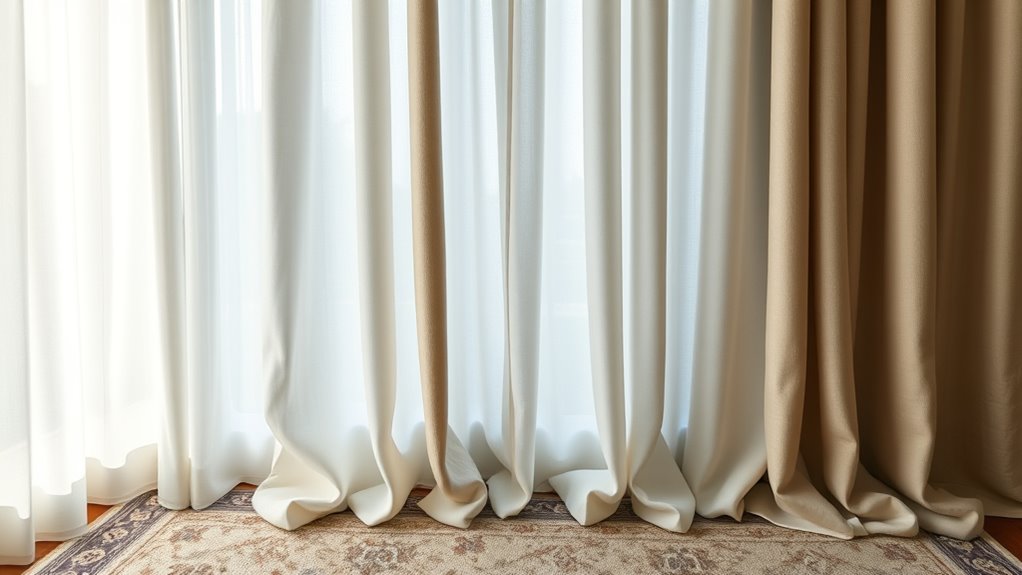

Choosing the right curtain length and proper hemming can elevate your window treatment. For a sleek, modern look, let curtains just touch the floor or slightly puddle for a cozy feel. If you prefer a tailored style, hang them a bit above the sill. Use precise measurements and choose a hemming technique suited to your fabric—narrow hems for delicate fabrics or double-fold for sturdy ones. Mastering these rules helps you create polished curtains that enhance your space seamlessly.

Get your wardrobe favorites delivered free with Prime
- Fast, free delivery on millions of items
- Prime Video, Amazon Music and more included
- Member-only deals all year
Key Takeaways
- Measure accurately from the curtain rod to the desired length before cutting or hemming.
- Use appropriate hemming techniques based on fabric weight and texture for a polished finish.
- Typically, curtains should just touch the floor or have a slight puddle; adjust length for your style.
- Secure fabric with pins or clips before hemming to ensure even, precise lengths.
- Practice hemming on scrap fabric to perfect your technique and achieve a professional look.

Have you ever wondered how the right curtain length can dramatically change the look of your room? It’s all about achieving that perfect balance — not too short, not too long — and your fabric choices play a significant role in this. When selecting fabric, consider its weight, texture, and how it drapes. Heavier fabrics like velvet or thick linen tend to hang straight and may require precise hemming to prevent bunching. Lighter fabrics such as voile or chiffon flow more freely, meaning you’ll want to choose a length that complements their delicate nature without dragging excessively or appearing too floaty. Your fabric choice influences how you approach hemming techniques, which are essential for a polished finish. For instance, a sturdy fabric might hold a clean, sharp fold, making a simple double-fold hem effective. Conversely, delicate fabrics often benefit from a rolled hem or a narrow hem to avoid bulky seams that could ruin the curtain’s fluid look.
Understanding the techniques used in hemming can help you achieve a professional appearance, especially when working with different fabric types. Getting the length right involves understanding the overall style you want. For a modern, minimalist vibe, floor-length curtains that just touch the floor give a sleek appearance, while a slight break — where the fabric puddles a bit on the floor — adds a cozy, inviting feel. For a more traditional look, you might opt for curtains that hover just above the floor, creating a clean, tailored edge. If you prefer a casual or coastal style, curtains that hang just below the window sill can work well. The key is to measure carefully, accounting for the type of fabric and the way it drapes. When hemming, your techniques should match your fabric choice and desired effect. A blind hem, for example, is quick and effective for heavier fabrics, creating a clean edge with minimal bulk. For lighter, more delicate fabrics, a hand-rolled hem ensures a nearly invisible finish, preserving the fabric’s flow and softness.
Hemming isn’t just about length; it’s about precision and patience. You want your curtains to hang evenly and look intentional. Use pins or clips to hold the fabric in place as you mark your hemline, and double-check measurements before sewing. If you’re new to hemming, consider practicing on scrap fabric first to perfect your technique. Whether you choose a machine-stitched hem or hand-sew for a more refined look, the right hemming techniques will guarantee your curtains look professionally finished. Ultimately, selecting the right fabric and mastering hemming techniques will help you achieve the perfect curtain length, elevating your space with a tailored, polished touch.
As an affiliate, we earn on qualifying purchases.
Frequently Asked Questions
How Do I Measure for Custom Curtain Lengths Accurately?
To measure for custom curtain lengths accurately, start by determining your curtain rod placement. Measure from the rod to where you want the curtains to end, whether just below the sill or touching the floor. Keep fabric shrinkage in mind if the fabric is prone to shrinking after washing. Add extra length for hems, usually about 1-3 inches, to guarantee a polished look. Always double-check measurements before cutting or ordering.
What Fabrics Are Best for Different Curtain Lengths?
For different curtain lengths, choose fabrics that suit your needs and fabric care preferences. Light curtains like sheers and voiles work well with airy fabrics, while heavier fabrics like velvet or brocade add elegance for longer lengths. Consider curtain accessories like weights and pleats to maintain shape. Always match fabric choices with your cleaning routine to keep your curtains looking fresh and beautiful, regardless of length.
Can I Alter Existing Curtains to Change Their Length?
Yes, you can alter existing curtains to change their length. First, adjust the curtain rod placement to ensure the new length suits your window. If needed, you can sew a new hem or add fabric for a longer length. Consider curtain stacking options to hide alterations or add decorative elements. Just make sure to measure carefully and use the right sewing techniques for a polished look.
How Do I Prevent Curtains From Dragging on the Floor?
Think of your curtains as a guardian, standing tall without touching the floor. You prevent dragging by adjusting the curtain rod placement higher, ensuring the fabric stays just above the ground. Choose durable fabric that maintains its shape, even if it brushes slightly. Regularly check and reposition the rod as needed, so your curtains always hover gracefully, symbolizing elegance and control over your space.
What Tools Are Necessary for Hemming Curtains at Home?
To hem curtains at home, you’ll need a measuring tape, fabric scissors, straight pins or clips, and a sewing machine or needle and thread. First, decide on your curtain rod placement and curtain heading styles, then measure and mark the desired length. Pin or clip the fabric, then sew or hem to secure the new length. This guarantees your curtains hang perfectly, complementing your window and room style.
Conclusion
Think of your curtains as the storybook of your room. Just as a good tale needs the right ending, your curtains need the perfect length and hem to complete the story. When you bend the rules wisely, you create a masterpiece that invites admiration. So, don’t be afraid to experiment—sometimes, the most beautiful chapters are written when you bend the rules, turning your space into a story worth telling.
Halloween Picks
halloween
As an affiliate, we earn on qualifying purchases.