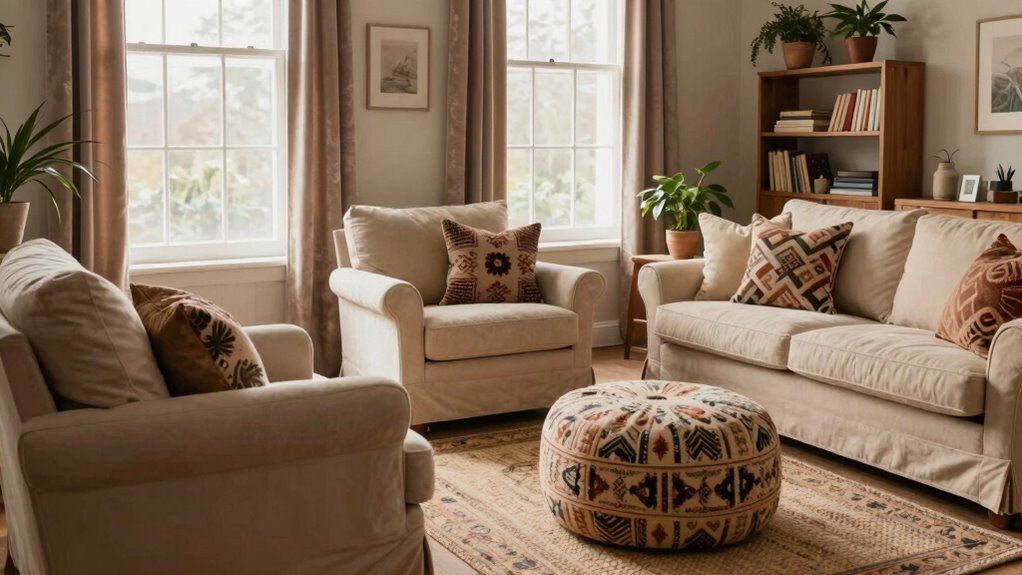

To improve your room’s acoustics with soft design choices, start by incorporating thick curtains over windows and plush rugs on floors to absorb sound and reduce echoes. Add soft furniture like upholstered chairs and sofas, and use fabric wall panels or tapestries for visual appeal and sound diffusion. Layering these elements creates a quieter, more comfortable space with better sound quality. Keep exploring to discover even more ways to fine-tune your acoustic environment.
Key Takeaways
- Incorporate thick curtains and fabric wall panels to absorb sound and reduce echoes.
- Use plush rugs and upholstered furniture to minimize sound reflections on floors and surfaces.
- Layer soft textiles like throw pillows and blankets to diffuse sound waves and enhance acoustics.
- Fill open shelves with books and soft objects to scatter sound and prevent harsh reflections.
- Combine multiple soft materials to create a balanced, quieter, and more comfortable room environment.

Are you tired of echoes and muffled sound in your space? Improving room acoustics doesn’t have to be complicated or expensive. One effective way is to incorporate soft design choices that naturally absorb sound and create a more balanced environment. Soundproofing techniques are often associated with blocking noise, but they also play a role in reducing sound reflections within a room. Using materials like thick curtains, plush rugs, and soft furniture can markedly cut down on echo and reverberation. These elements act as acoustic treatment options that absorb sound waves, preventing them from bouncing around endlessly. For example, hanging heavy drapes over windows or installing fabric wall panels can transform your space into a quieter, more comfortable setting.
Soft design choices like curtains and rugs reduce echoes and improve room acoustics naturally.
When you choose softer materials, you’re not only controlling sound, but you’re also enhancing the overall ambiance. Plush furniture, such as upholstered chairs and sofas, absorbs sound and adds a cozy feel to your room. Throw pillows and blankets also contribute to this effect, helping to diffuse sound waves and minimize harsh reflections. Additionally, incorporating textured wall coverings or acoustic panels made from fabric can further improve sound quality. These acoustic treatment options are designed to tackle specific issues like flutter echoes or standing waves, making your space feel more natural and welcoming. Incorporating biodiversity-inspired sound-absorbing materials can further enhance this effect by providing eco-friendly and innovative solutions.
You don’t have to settle for bare, echo-prone rooms. Soft design choices can be both functional and stylish. Strategically placing a large, soft area rug on hard floors instantly reduces sound reflections and makes conversations clearer. Wall-mounted fabric art or tapestries also serve as decorative acoustic treatment options that boost sound absorption without sacrificing aesthetic appeal. If you have open shelves, filling them with books or soft objects can help scatter sound waves and prevent them from bouncing directly back into your ears. The key is to layer different soft elements throughout the room to create a balanced acoustic environment. Using sound-absorbing materials, such as acoustic panels or wall coverings, can further fine-tune the room’s sound quality for optimal comfort and clarity. Recognizing the importance of soundproofing techniques can help you select the best combination of soft materials to achieve the desired acoustic comfort. Additionally, understanding room acoustics principles can guide you in designing a space that minimizes unwanted echoes and enhances sound clarity.
As an affiliate, we earn on qualifying purchases.
Frequently Asked Questions
Can Soft Furnishings Completely Eliminate Echo?
Soft furnishings can considerably reduce echo but might not completely eliminate it. Incorporate decorative cushions and plush curtains to absorb sound reflections. For more effective results, add acoustic panels strategically around the room, especially on hard surfaces like walls and ceilings. These combined soft design choices improve sound quality, making your space more comfortable and less echo-prone. Remember, the more soft materials you add, the better the sound absorption.
Do Curtains Affect Sound Absorption Equally as Carpets?
Curtains generally absorb sound more effectively than carpets because they cover walls and windows, which are major sound reflections. Window treatments like heavy drapes block and absorb sound waves, reducing echo. Furniture arrangements also matter; placing soft furnishings strategically can improve absorption. While both curtains and carpets help, curtains often have a bigger impact on sound absorption because they cover larger surface areas and can be made from dense materials.
How Do Wall Colors Influence Room Acoustics?
They say “you are what you paint,” and wall colors do influence room acoustics. Light, muted shades reflect sound better, reducing echoes, while dark, saturated hues absorb sound, creating a cozy atmosphere. Wall paint impacts how sound waves travel and dissipate, affecting clarity and noise levels. Using color psychology, you can choose shades that enhance comfort and acoustics simultaneously, making your space more pleasant and functional.
Are There Specific Fabric Types Better for Sound Absorption?
You’ll find that fabrics with higher density, like velvet or heavy drapes, absorb sound better than lighter materials. For ideal results, consider using acoustic panels covered with dense fabrics, as they effectively reduce echo and noise. Avoid thin, loosely woven fabrics, which let sound pass through. By choosing dense fabric types for curtains, upholstery, or acoustic panels, you create a cozy space with improved sound quality.
Can Soft Design Choices Improve Acoustics in Outdoor Spaces?
Imagine you’re in a 19th-century garden, wanting peaceful conversations without echo. Soft design choices can indeed improve outdoor acoustics. You can incorporate outdoor furniture with plush cushions and fabric drapes, which absorb sound. Landscape design also plays a role, with trees and shrubs acting as natural sound barriers. These elements work together, creating a cozy, inviting space where sound is softened, making outdoor gatherings much more enjoyable.
Conclusion
By choosing soft furnishings and mindful design, you can transform your room into a haven of clear, warm sound. Think of your space as a musical instrument—every soft cushion and plush rug adds to its harmony, reducing echoes and unwanted noise. With these simple touches, you’ll create an environment where sound flows smoothly, turning your room into a cozy symphony of comfort and clarity. Just remember, a little softness can make a world of difference.