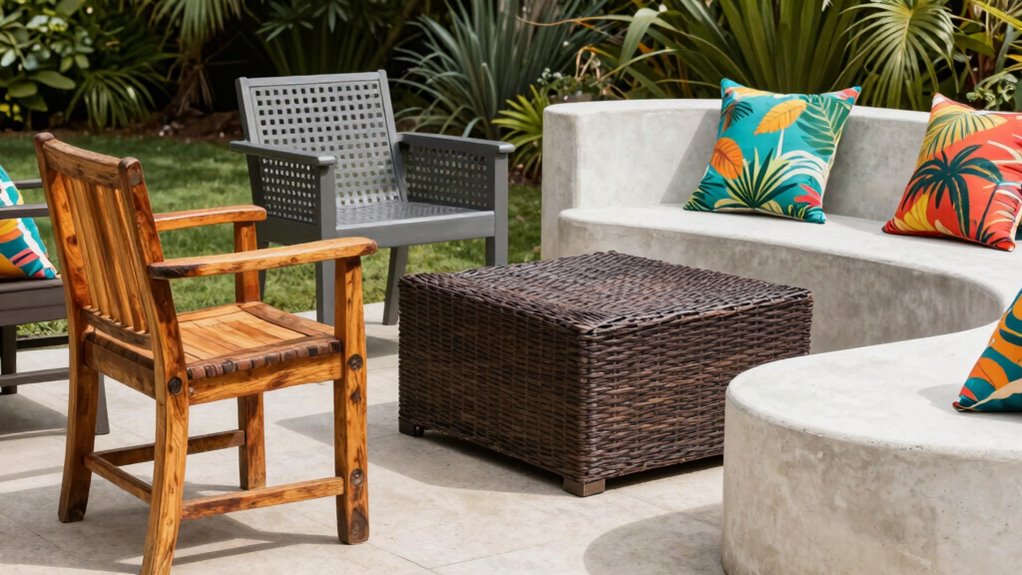

If you want patio furniture that ages well outside, consider materials like aluminum or synthetic wicker, which resist rust, moisture, and UV rays with minimal upkeep. Wrought iron lasts decades but needs regular maintenance to prevent rust, while cast iron is heavy and prone to corrosion without care. Wood can look great but requires sealing or staining for longevity. Keep in mind, proper maintenance extends furniture life—discover more about choosing the best material for your outdoor space.

Get your wardrobe favorites delivered free with Prime
- Fast, free delivery on millions of items
- Prime Video, Amazon Music and more included
- Member-only deals all year
Key Takeaways
- Aluminum furniture resists rust and corrosion, making it ideal for long-lasting outdoor use in all weather conditions.
- Synthetic wicker and resin are UV-resistant, preventing fading and cracking over time.
- Wrought iron, if properly maintained with repainting or sealing, can last decades outdoors.
- Teak and weather-resistant woods require regular sealing but offer traditional aesthetics and durability.
- Proper maintenance, including cleaning and protective treatments, significantly extends furniture lifespan regardless of material.
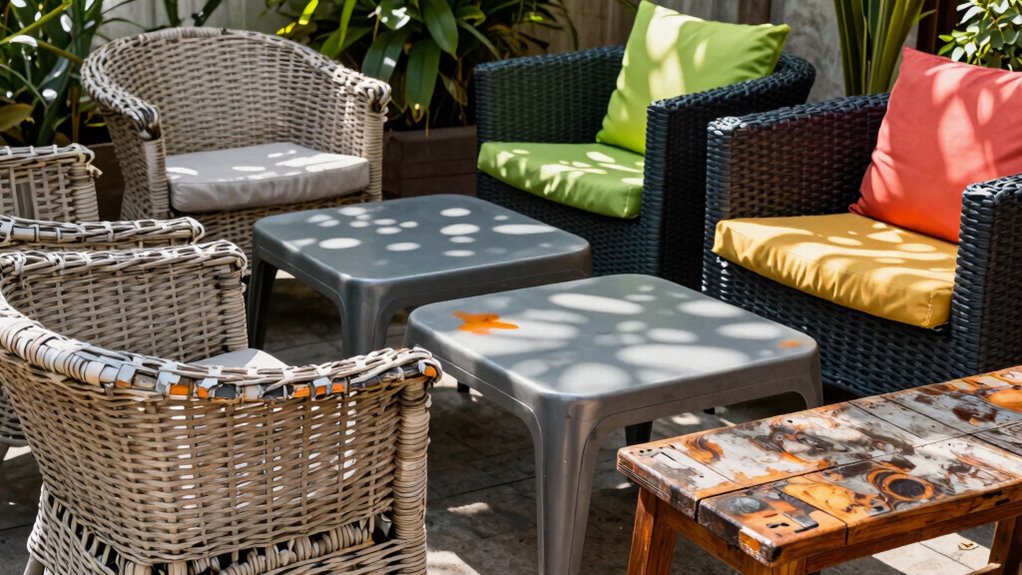
Choosing the right patio furniture materials is essential for creating a durable and attractive outdoor space. When considering which materials will stand up over time, you need to think about outdoor durability and maintenance requirements. These factors determine how well your furniture will perform with exposure to sun, rain, and temperature changes, and how much effort you’ll spend keeping it looking good.
If you’re after something that offers excellent outdoor durability, aluminum is a top choice. It resists rust and corrosion, making it suitable for all weather conditions, especially if you live in a humid or coastal area. Aluminum furniture is lightweight, so moving it around isn’t a hassle, and it generally requires minimal maintenance. You just need to occasionally clean it with mild soap and water to keep it looking fresh. However, keep in mind that aluminum can become hot in direct sunlight, so you might want cushions for added comfort. Additionally, outdoor durability is a key factor to consider when selecting materials for long-lasting furniture.
Wrought iron and cast iron present another durable option, particularly if you want a classic, elegant look. These materials are incredibly sturdy and can last for decades if properly maintained. Wrought iron, in particular, is resistant to outdoor elements, but it does require regular maintenance to prevent rust. Applying a fresh coat of paint or rust-proof sealant every few years will help preserve its appearance and strength. Cast iron is heavier and less prone to damage, but it’s also more susceptible to rust if not properly cared for. Both require effort to maintain their outdoor durability, but their longevity makes them worthwhile investments.
Synthetic wicker or resin furniture offers a mix of good outdoor durability and low maintenance. These materials are designed to withstand exposure to moisture, UV rays, and temperature swings. They’re lightweight, easy to clean—usually just a wipe with a damp cloth—and don’t need sealing or repainting. While they might not be as sturdy as metal options, modern synthetic wicker stands up well against the elements, making it ideal if you want something that ages gracefully without much upkeep. Additionally, UV resistance is a key feature to look for when selecting synthetic wicker to ensure it doesn’t fade quickly over time. Proper manufacturing processes also enhance their ability to resist cracking and fading, extending their lifespan.
Wood furniture presents a more traditional look, but its outdoor durability and maintenance requirements vary widely depending on the type of wood. Teak, for example, is naturally resistant to moisture and pests, requiring little more than occasional cleaning and oiling. Cedar and eucalyptus are also good options, but they need regular sealing or staining to prevent weathering and cracking. Untreated wood, while attractive, won’t last as long outdoors and needs frequent upkeep to maintain its appearance. Choosing weather-resistant woods can significantly reduce the amount of maintenance needed and improve the furniture’s longevity.
As an affiliate, we earn on qualifying purchases.
Frequently Asked Questions
Which Patio Furniture Material Is Most Eco-Friendly?
You’ll find that recycled teak or reclaimed wood are some of the most eco-friendly patio furniture materials. They score high on recyclability factors and sourcing sustainability because they repurpose existing materials instead of harvesting new ones. Additionally, options like recycled plastic or metal also rank well, as they reduce waste and lower environmental impact. By choosing these sustainable materials, you help promote eco-conscious manufacturing and protect the environment.
How Do Different Materials Handle Extreme Weather Conditions?
Different patio furniture materials handle extreme weather differently. Aluminum with high UV resistance resists fading and doesn’t rust, offering excellent corrosion durability. Teak naturally withstands rain and sun, making it highly durable outside. Wrought iron, if properly coated, resists rust but may need maintenance. Resin furniture is lightweight, UV resistant, and handles moisture well, but lower-quality options can degrade faster. Choose materials with proven UV resistance and corrosion durability for long-lasting outdoor furniture.
Are Some Materials Safer for Children and Pets?
Some patio furniture materials are safer for children and pets because they use child-safe coatings and pet-friendly fabrics. Look for furniture with non-toxic finishes, avoiding those with harmful chemicals. Opt for pet-friendly fabrics like solution-dyed acrylic or polyester, which resist stains and are easy to clean. These choices help guarantee your outdoor space remains safe and comfortable for your little ones and furry friends alike.
What Maintenance Is Required for Various Patio Furniture Materials?
You need to keep your patio furniture in top shape by following specific cleaning routines and applying protective coatings. For wood, regularly clean with mild soap and water, then seal with a protective finish to prevent weather damage. Metal furniture benefits from rust-proof paint and gentle cleaning. Wicker needs gentle dusting and occasional sealing. Plastic furniture is low-maintenance but should be washed with soap and water periodically to keep it looking fresh.
Which Materials Are Most Resistant to Mold and Mildew?
You’ll find that furniture with mold resistant fabrics and anti mildew coatings resists mold and mildew best outside. Materials like synthetic resin, aluminum, and teak naturally resist moisture, but adding these treatments enhances durability. Regular cleaning and ensuring proper drainage also help prevent mold growth. By choosing furniture with these features, you’ll keep your outdoor space looking fresh and mold-free, even in damp or humid conditions.
Conclusion
When choosing patio furniture, consider how each material ages and fits your outdoor lifestyle. Wrought iron offers timeless elegance, weathering decades like a fine vintage port, while resin might need a quick refresh after a few seasons. Your ideal choice depends on your climate and maintenance preferences. Remember, even the most durable piece can become a veritable ‘beau geste’ of your outdoor oasis, so select wisely to enjoy many sun-drenched afternoons ahead.
Fall Picks
fall essentials
As an affiliate, we earn on qualifying purchases.