Embroidery machines and sergers solve very different problems in sewing. An embroidery machine embellishes fabrics with intricate designs, perfect for adding decorative touches to clothing or home décor. In contrast, a serger finishes seams, prevents fraying, and creates clean, professional edges, especially on stretchy or heavy fabrics. Understanding these distinct functions helps you choose the right tool for your project. Keep exploring to discover how each machine can expand your sewing possibilities.
Key Takeaways
- Embroidery machines create decorative designs, while sergers focus on finishing seams and preventing fabric fraying.
- Embroidery machines enhance aesthetic details; sergers ensure clean, durable garment construction.
- Embroidery machines handle decorative stitching; sergers handle overlocking and seam construction.
- They address different project needs: embellishing versus finishing raw edges.
- Proper tool selection depends on whether the project prioritizes decoration or seam quality.
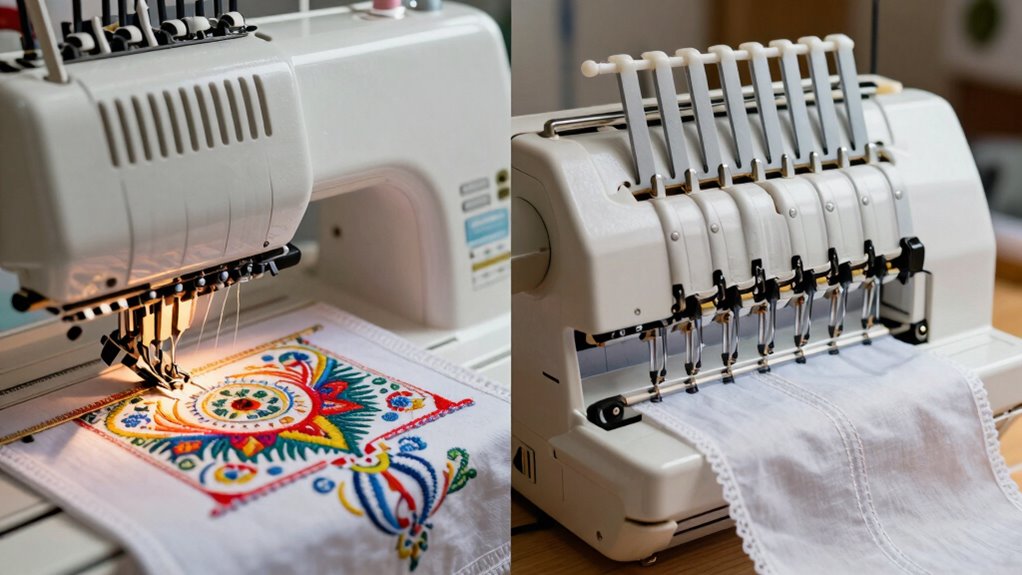
If you’re interested in enhancing your sewing projects, understanding the differences between embroidery machines and sergers is essential. These tools serve distinct purposes, and knowing which one to use can significantly improve your results. Embroidery machines are designed to create intricate decorative designs, patterns, and images on fabric. They often come with built-in designs or allow you to upload custom ones, making them perfect for personalized projects like monograms, floral patterns, or detailed artwork. Sergers, on the other hand, focus on finishing seams, preventing fabric fraying, and creating professional-looking edges. They excel at quick, clean seam construction and often include multiple threads to produce decorative stitches or overlocking effects.
When working with either machine, proper machine maintenance is crucial. Regular cleaning, oiling, and checking for worn parts ensure your equipment runs smoothly and produces high-quality results. For embroidery machines, paying attention to thread selection is vital. Using high-quality embroidery thread prevents breakage and ensures vibrant, consistent stitches. Conversely, with sergers, thread selection impacts seam durability and appearance. Using the right type and weight of thread for your fabric and project helps avoid tension issues and thread breakage, keeping your seams neat and secure. Proper tension adjustments are also essential to achieving the best finish with each machine.
Embroidery machines are excellent for adding decorative touches that elevate your projects, but they aren’t meant to handle heavy fabric or extensive seam construction. If you want to add a personal touch to clothing, home décor, or gifts, an embroidery machine is your go-to. Sergers, meanwhile, shine when you need to finish raw edges quickly or sew stretchy fabrics that require a flexible seam. They make your garments look polished and professionally finished. Additionally, understanding the different functions of these machines can help you expand your sewing capabilities and choose the right tool for each project. Knowing how each machine operates can also prevent frustration and help you achieve professional-looking results.
The key difference lies in the problems they solve. Embroidery machines focus on aesthetic enhancement, allowing you to produce detailed, decorative designs efficiently. Sergers solve construction and finishing issues, providing clean, durable seams that improve the longevity and appearance of your sewing projects. Recognizing these distinctions ensures you get the most out of your sewing setup and helps you tackle different projects with confidence. Whether you’re creating decorative art or preparing garments for wear, knowing how each machine operates will guide you in making the best choice for your needs. If you’re aiming for decorative embroidery, invest in a quality embroidery machine and pay close attention to thread selection for vibrant results. If finishing seams and preventing fraying are your priorities, a serger will save you time and give your projects a professional look. Understanding the specific functions of these tools can also help you better plan your projects and avoid unnecessary purchases or mistakes. Properly maintaining your equipment and understanding their distinct capabilities can greatly improve your sewing experience and output. Recognizing these distinctions ensures you get the most out of your sewing setup and helps you tackle different projects with confidence.
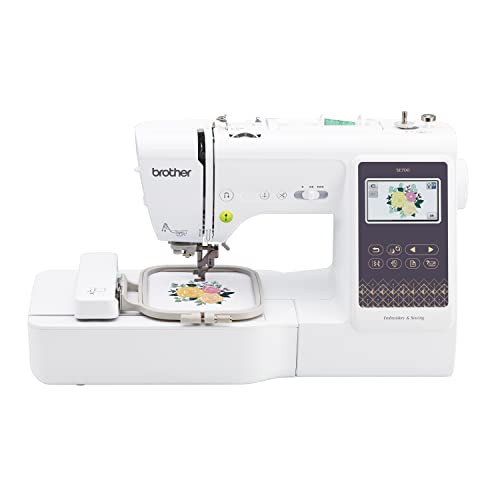
Brother SE700 Sewing and Embroidery Machine, Wireless LAN, 8 included Ft
- All-in-One Sewing and Embroidery: Combine sewing and embroidery functions
- Wireless LAN Connectivity: Transfer files via Wi-Fi or USB
- Artspira App Integration: Create and download custom patterns
As an affiliate, we earn on qualifying purchases.
As an affiliate, we earn on qualifying purchases.
Frequently Asked Questions
Can Embroidery Machines Be Used for Sewing Regular Garments?
Yes, you can use embroidery machines for sewing regular garments, but they’re primarily designed for embroidery design rather than garment construction. They handle decorative stitching well, adding detailed patterns or logos. However, for sewing seams or assembling clothing, a dedicated sewing machine or serger works better. If you want both functions, look for a combo machine. Otherwise, using an embroidery machine alone limits your options for constructing sturdy, functional garments.
Are Sergers Suitable for Detailed Embroidery Work?
Sergers aren’t suitable for detailed embroidery work because they lack the specialized features you need, like decorative stitches and precise control over thread tension. While they excel at seam finishing and quick garment construction, they don’t offer the intricate designs or detailed embroidery capabilities that embroidery machines provide. For elaborate, decorative embroidery, you should stick with an embroidery machine, which is designed to handle those detailed, thread-intensive projects.
What Is the Learning Curve for Beginners With Embroidery Machines?
As a beginner, you’ll find the learning curve for embroidery machines varies with experience and complexity. You might initially find machine maintenance and handling intricate embroidery design complexity challenging, but practice simplifies these tasks. Start with simple projects, follow the manual, and gradually progress to more complex designs. With patience and consistent use, you’ll become comfortable controlling stitch types, tension, and design placement, making embroidery enjoyable and rewarding.
Do Sergers Require Special Threads or Needles?
Yes, sergers do require special threads and needles. You need to take into account thread compatibility because sergers often use specific types like polyester or polyester-wrapped threads for durability. Needle types are also important; sergers typically use specialized needles designed for overlocking, such as ballpoint or twin needles, depending on your fabric. Using the right threads and needles ensures smooth operation, neat stitches, and prevents damage to your machine.
Can Both Machines Handle Thick or Layered Fabrics Effectively?
Both machines can handle thick or layered fabrics, but they do so differently. Sergers excel at layered fabric handling, making quick, clean seams on bulky materials. Embroidery machines may struggle with very thick fabrics, often requiring stabilization or adjustments. If you frequently work with thick or layered fabrics, a serger is better suited for seam construction, while an embroidery machine is ideal for detailed decorative work on lighter fabrics.
Conclusion
In the end, embroidery machines and sergers are like two sides of the same coin—each designed to tackle different challenges in your sewing journey. Knowing which one to use is like having the right tool for the right job; it’s the key to creating beautiful, professional results. Remember, choosing the right machine isn’t just about preference—it’s about solving your specific problems and turning your sewing dreams into reality.