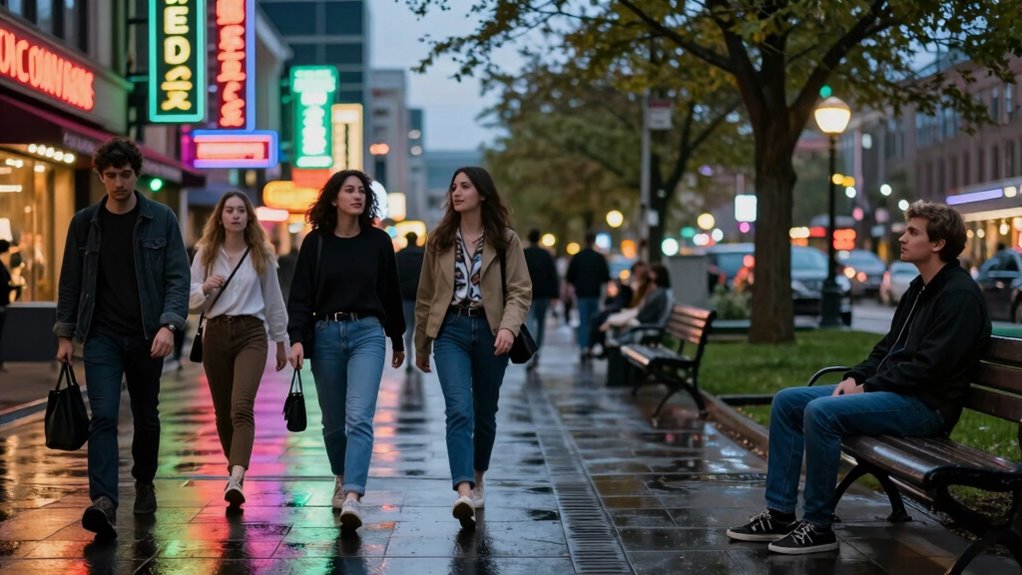

The biggest difference between a trend and a mood shift is how long they last and what’s behind them. Trends are sustained, long-term changes driven by cultural or societal factors, shaping behavior over months or years. Mood shifts are quick emotional reactions to current events or social media buzz that fade away fast. Recognizing this difference helps you respond appropriately in markets and strategies—if you want to master the nuances, there’s more to uncover.

Get your wardrobe favorites delivered free with Prime
- Fast, free delivery on millions of items
- Prime Video, Amazon Music and more included
- Member-only deals all year
Key Takeaways
- A trend is a sustained movement shaping long-term preferences, while a mood shift is a temporary emotional reaction.
- Trends last months or years; mood shifts typically fade within days or weeks.
- Trends are driven by cultural and societal changes; mood shifts are caused by immediate events or news.
- Recognizing a trend enables long-term planning; mistaking a mood shift for a trend risks resource misallocation.
- Trends influence consumer behavior over time; mood shifts cause short-term fluctuations.

Understanding the difference between a trend and a mood shift is essential because it shapes how you respond to changes around you. A trend is a broader movement that gains momentum over time, often influenced by cultural factors and collective consumer behavior. It reflects a sustained shift in preferences, attitudes, or styles that can last months or even years. Recognizing a trend means seeing patterns in society, technology, or markets that are shaping the way people live and buy. For example, the rise of sustainable fashion or plant-based diets didn’t happen overnight; they emerged from a combination of cultural influences and changing consumer behavior that gradually gained acceptance. On the other hand, a mood shift is more fleeting—a quick emotional reaction to current events, news, or social media buzz. It’s a temporary change in attitude that can influence behavior for days or weeks but isn’t rooted in deep-seated societal shifts.
Understanding whether a change is a trend or a mood shift guides strategic responses and long-term planning.
This distinction matters because understanding whether you’re observing a trend or a mood shift helps you adapt more effectively. When you identify a trend, you can position yourself or your business to capitalize on long-term opportunities. You might invest in sustainable products or develop marketing strategies aligned with ongoing cultural influences. Recognizing these patterns allows you to anticipate where consumer behavior is headed and plan accordingly. Conversely, if you mistake a mood shift for a trend, you might overcommit resources to a temporary spike, only to face disappointment when the excitement fades. For instance, a viral social media challenge might generate a lot of buzz, but it’s unlikely to reshape consumer behavior permanently.
Cultural influences play a significant role in shaping trends because they embed values, norms, and collective identities that persist over time. These influences guide consumer behavior, dictating what people find relevant, fashionable, or acceptable. When a cultural shift occurs—such as increased awareness of environmental issues—it can trigger a trend that influences industries and markets. Meanwhile, mood shifts are usually driven by immediate, emotional responses to current events, like a celebrity scandal or a political incident. They cause short-term fluctuations in consumer behavior, which fade as the emotional response dissipates. Recognizing the long-term nature of cultural influences helps differentiate between lasting trends and fleeting mood shifts. Additionally, understanding the underlying factors behind these shifts can help you develop more effective strategies for navigating volatile markets. Staying aware of these influences can also help you better interpret market signals and react more appropriately to changing conditions. Acknowledging the potential for rapid change is crucial because it influences how quickly businesses need to adapt in today’s fast-paced environment.
In essence, knowing whether you’re dealing with a trend or a mood shift allows you to make smarter decisions. Trends require patience and strategic planning, grounded in an understanding of cultural influences and long-term consumer behavior. Mood shifts call for agility—responding quickly to short-lived emotions without overcommitting. Recognizing the difference ensures you stay aligned with what truly matters in the long run, rather than reacting impulsively to fleeting moments.
As an affiliate, we earn on qualifying purchases.
Frequently Asked Questions
How Can Businesses Adapt Quickly to Mood Shifts?
You can adapt quickly to mood shifts by leveraging emotional intelligence and cultural sensitivity. Stay attentive to customer and employee emotions, listening actively and observing changes in behavior. Use this insight to adjust your messaging, products, or services promptly. Foster an inclusive environment where diverse perspectives are valued, helping you respond authentically to mood shifts. This agility builds trust, strengthens relationships, and keeps your business resilient amid changing emotional climates.
What Are Common Indicators of an Upcoming Trend?
You can spot upcoming trends by paying attention to cultural cues and social influences. Watch for emerging conversations on social media, new behaviors gaining popularity, or shifts in consumer preferences. Trends often start with niche communities before spreading widely. Stay alert to changes in fashion, technology, or entertainment that reflect broader cultural shifts. By observing these indicators, you’ll better anticipate trends before they become mainstream, giving you a competitive edge.
Can a Mood Shift Lead to a New Trend?
Yes, a mood shift can lead to a new trend because emotional drivers often spark collective changes. When cultural influences resonate with a sudden mood change, it can inspire widespread adoption of new behaviors, styles, or ideas. You might notice this in social media or pop culture, where a shift in feelings or attitudes quickly becomes mainstream. Recognizing these emotional and cultural signals helps you anticipate emerging trends before they fully take off.
How Long Does a Typical Trend Usually Last?
A typical trend lasts anywhere from a few months to several years, depending on cultural shifts and social dynamics. You’ll often see trends evolve as society adopts new behaviors or ideas, influenced by media, technology, or world events. As you observe, some trends fade quickly, while others gain momentum and persist longer. Understanding these factors helps you anticipate how long a trend might stay relevant in your community or industry.
What Role Does Consumer Emotion Play in Trend Development?
Consumer emotion plays a central role in trend development because it directly influences consumer psychology. When a trend resonates emotionally, it creates a strong connection, encouraging engagement and sharing. Emotional resonance drives loyalty and sparks word-of-mouth, making the trend more likely to spread. You’ll find that understanding these feelings helps predict which trends will gain momentum and endure, as they tap into genuine human needs and desires.
Conclusion
Understanding the difference between a trend and a mood shift is like spotting the steady lighthouse amid fleeting waves. Trends are the steady ships that sail through time, while mood shifts are the sudden gusts of wind that can change direction overnight. Recognize which is which, and you’ll navigate your choices with the confidence of a captain steering through calm and storm alike. Keep your eyes on the horizon, and you’ll always stay one step ahead of the tide.
Halloween Picks
halloween
As an affiliate, we earn on qualifying purchases.