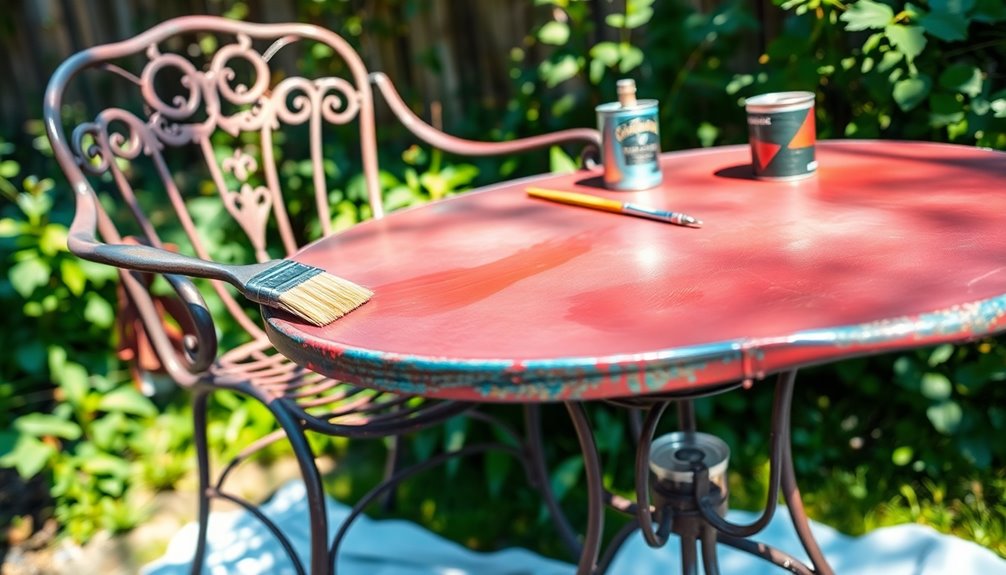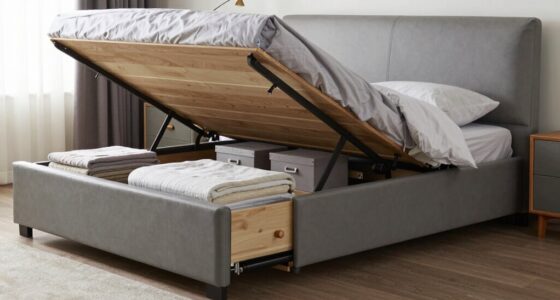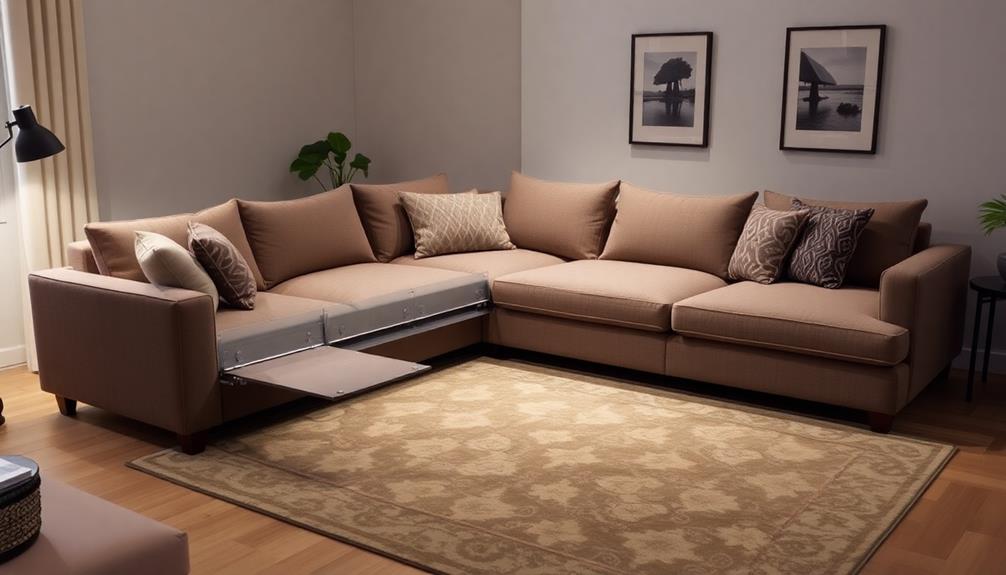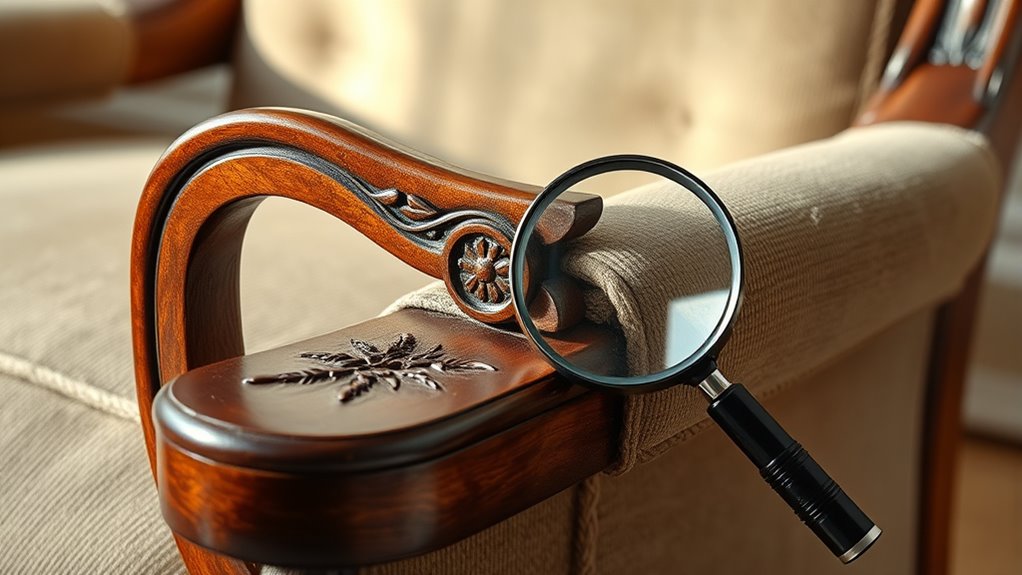

When sourcing vintage furniture, you should thoroughly inspect the piece for damage, loose joints, and any signs of excessive wear or repairs. Check the material quality, focusing on solid wood and craftsmanship details like dovetail joints. Look for labels or markings that confirm its authenticity and research similar items to gauge market value. Also, consider potential restoration costs to verify the piece fits your budget. Keep these tips in mind to make confident, informed choices as you explore your options.
Key Takeaways
- Examine for structural damage, cracks, warping, or loose joints with a flashlight for hidden issues.
- Verify authentic materials like solid wood and quality craftsmanship, such as dovetail joints.
- Look for labels, signatures, or markings to confirm the piece’s age and origin.
- Research similar items to assess market value and identify rarity or demand factors.
- Consider restoration costs and repairs, factoring them into your negotiation and overall budget.
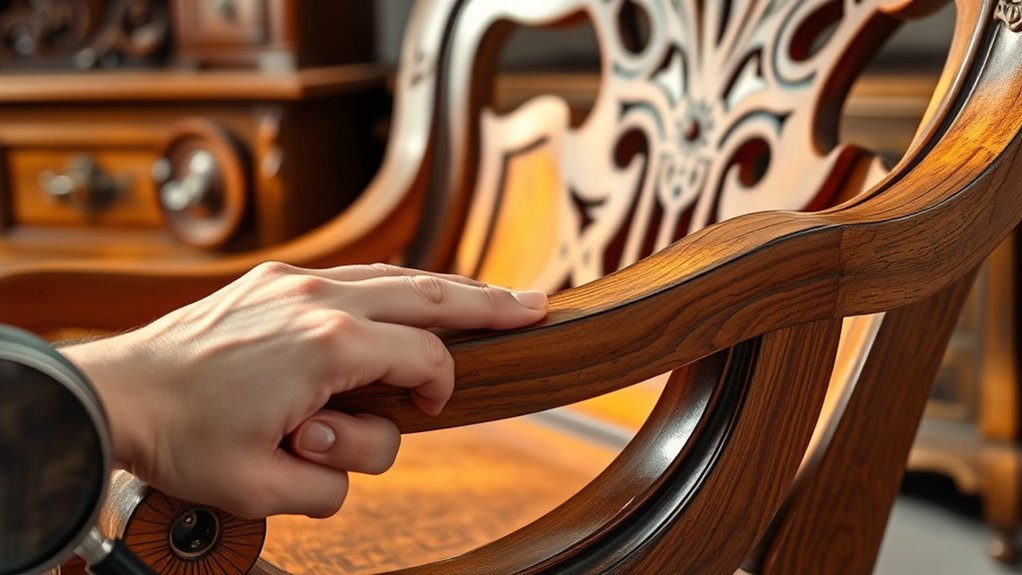
Sourcing vintage furniture can be an exciting journey that combines a love for history with a keen eye for quality. When you’re out hunting for authentic pieces, it’s vital to develop a solid understanding of quality checks. This helps guarantee you’re investing in furniture that not only looks great but is also structurally sound and worth the price. One of the first things you should consider is inspecting the overall condition of the piece. Look for signs of damage, such as cracks, warping, or loose joints, which could indicate extensive restoration needs. While some wear adds character, excessive damage might require costly restoration techniques, impacting your overall budget. It’s helpful to bring a small flashlight to examine hidden areas, corners, and underneath furniture where issues often hide.
Inspect vintage furniture carefully for damage and hidden issues using a flashlight to ensure quality and value.
Next, pay close attention to the material and craftsmanship. Authentic vintage pieces often feature solid wood, like oak, walnut, or mahogany, which are more durable than modern composite materials. Feel the weight of the furniture; heavier pieces tend to be sturdier and less likely to wobble. Check the joints and connections—dovetail joints, for example, are a sign of quality craftsmanship. If you notice loose or poorly aligned joints, it might still be repairable, but keep in mind that restoration techniques will be necessary, which can influence your pricing strategies. When negotiating, be aware of the costs involved in restoring or repairing a piece, and factor that into your offer.
In addition to physical inspections, always verify the authenticity of the piece. Look for labels, signatures, or markings that can confirm its age and origin. Sometimes, a quick online search can provide insights into the piece’s history, which can help justify your price point. Speaking of pricing, understanding the market value is vital. Do some research beforehand to see what similar items are selling for in antique shops, online marketplaces, or auctions. This knowledge empowers you to negotiate confidently and avoid overpaying. Remember, pricing strategies vary depending on the rarity, condition, and demand for the piece. If a piece needs minor repairs, you might negotiate a lower price to offset the cost of restoration techniques you’ll undertake later.
Ultimately, thorough quality checks and smart pricing strategies allow you to source vintage furniture that’s both beautiful and a worthwhile investment. By carefully inspecting each piece and understanding the costs involved, you guarantee your vintage finds will serve as timeless additions to your space, with their value preserved through proper care and restoration.
Frequently Asked Questions
How Can I Identify Authentic Vintage Furniture?
To identify authentic vintage furniture, look for authentic markings like maker’s labels, stamps, or signatures that date back to its era. Research the historical context of the piece, such as design styles or materials used during that time. Examine construction details, craftsmanship, and signs of age like wear or patina. Trust your instincts and compare with verified examples to confirm you’re getting a genuine vintage piece.
What Are Common Signs of Furniture Restoration?
You might worry that restoration signs ruin vintage charm, but they often tell you a story. Look for uneven finishes, over-enthusiastic touch-ups, or mismatched hardware—these are common restoration signs. Restoration techniques like new joints, fillers, or repainting can be subtle or obvious. By spotting these signs, you can determine a piece’s history and value, ensuring you choose authentic vintage furniture that fits your style perfectly.
How Do I Spot Hidden Damages or Repairs?
You can spot hidden damage or repair signs by closely inspecting the furniture for uneven surfaces, mismatched paint or stain, and irregular grain patterns. Look for tiny cracks, bubbles, or discoloration that might indicate previous repairs. Check joints and corners for looseness or wobbling, which could hide underlying issues. Use a flashlight to reveal subtle damages, and tap gently to listen for hollow sounds that might suggest hidden repairs or damage beneath the surface.
Are Certain Woods More Durable for Vintage Pieces?
Think of woods like oak, maple, and teak as the sturdy guardians of vintage furniture. Oak is renowned for its durability factors, making it ideal for pieces that endure daily use. Maple offers strength and a smooth finish, while teak resists moisture and pests. When sourcing, focus on these wood types for longevity, ensuring your vintage finds remain resilient and beautiful over time.
How Can I Verify a Vintage Item’s Provenance?
To verify a vintage item’s provenance, start by examining authenticity markers like maker’s marks, labels, or stamps. Request provenance documentation, such as receipts, appraisals, or historical records, to confirm its history. Research the item’s maker or style to guarantee consistency with its supposed era. Also, consult experts or reputable sources to validate the provenance, helping you confidently determine its authenticity and value before making a purchase.
Conclusion
As you run your hands over the smooth, aged wood and examine the intricate carvings, you’ll feel the story each piece tells. Trust your eyes and instincts to spot quality amid the timeless charm. With careful checks, you’ll uncover hidden gems that bring history and character into your space. Remember, sourcing vintage furniture isn’t just about picking pieces — it’s about capturing a piece of the past that will beautifully enhance your home for years to come.