If you’re exploring sustainable materials, linen, jute, wool, and cotton each have unique benefits. Linen, made from flax, is durable and water-efficient, while jute offers a biodegradable, eco-friendly option for packaging and textiles. Wool provides natural insulation and can be sustainably sourced from sheep. Cotton, though widely used, benefits from organic farming methods that reduce environmental impact. Keep going to discover how choosing these fibers can positively impact the planet and your projects.
Key Takeaways
- Linen is durable, breathable, and eco-friendly, made from flax with low water needs and natural dyeing options.
- Jute, known as the “golden fiber,” is biodegradable, renewable, and cultivated with minimal chemicals, ideal for sustainable packaging.
- Wool is a renewable, insulating fiber from sheep, sustainable when ethically sourced, and suitable for natural plant-based dyes.
- Cotton is versatile but resource-intensive; organic cotton reduces water use and chemical inputs, supporting sustainable farming.
- Natural fibers generally promote eco-friendly practices through sustainable cultivation, natural dyeing, and minimal environmental impact.
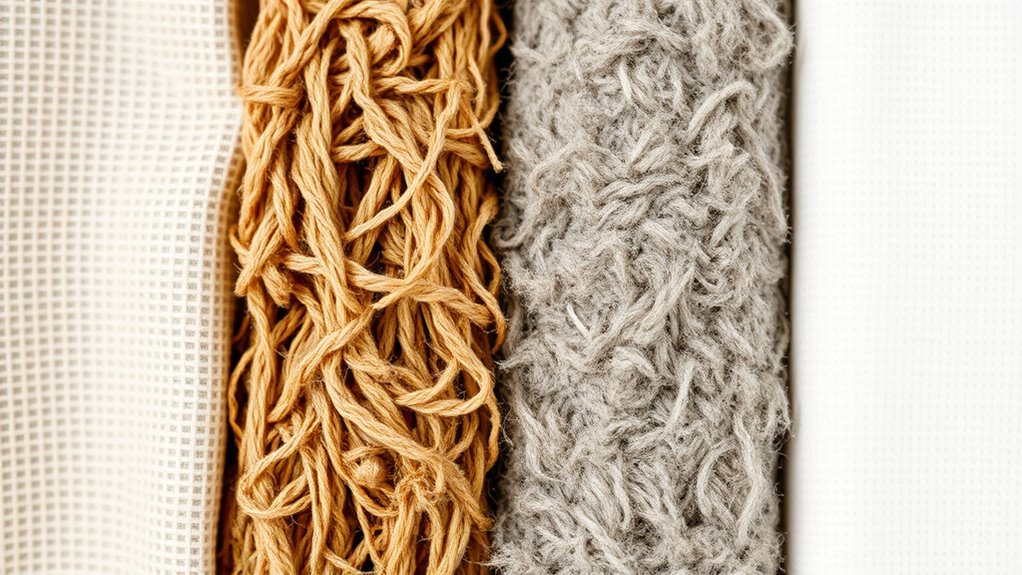
Are you curious about the different materials used in construction, manufacturing, or design? If so, understanding the qualities and origins of materials like linen, jute, wool, and cotton can help you make more conscious choices. These natural fibers each have unique characteristics, and their production methods often influence their environmental impact. For instance, the way linen and cotton are grown involves different farming practices, and sustainable farming plays a vital role in reducing ecological footprints. Sustainable farming methods for crops like cotton include crop rotation, reduced pesticide use, and water conservation, which help preserve soil health and decrease chemical runoff. When it comes to textile dyeing techniques, opting for eco-friendly dyeing methods can considerably lessen water pollution and energy consumption, making these materials even more sustainable.
Linen, made from flax plants, is one of the oldest textiles and is celebrated for its durability and breathability. It’s grown with relatively low water requirements compared to other crops, especially when farmers implement sustainable farming practices. Linen also benefits from natural dyeing techniques that avoid toxic chemicals, contributing to a greener textile industry. Jute, often called the “golden fiber,” is a biodegradable and renewable material that thrives in tropical climates. Its cultivation requires minimal chemical inputs, aligning with sustainable farming principles. Jute’s rough texture makes it popular for eco-friendly packaging, rugs, and bags. Its production process involves natural retting and dyeing methods that can incorporate natural dyes, further reducing environmental impact.
Wool, sourced from sheep, is a renewable resource that offers excellent insulation and resilience. Ethical wool production emphasizes sustainable grazing practices and humane treatment of animals. Wool’s natural dyeing processes can utilize traditional techniques that harness plant-based dyes, reducing reliance on synthetic chemicals. Cotton, perhaps the most widely used natural fiber, is versatile but has a reputation for high water use and chemical-intensive farming. However, organic cotton and sustainable farming practices have gained momentum, emphasizing water efficiency, reduced pesticide use, and soil health preservation. The textile dyeing techniques for cotton have also evolved—many brands now favor natural or low-impact dyes to minimize environmental harm.
Frequently Asked Questions
How Eco-Friendly Are Linen and Jute Compared to Synthetic Fibers?
You’ll find linen and jute more eco-friendly than synthetic fibers because their biodegradability comparison shows they break down naturally much faster, reducing long-term pollution. An environmental impact assessment highlights that both materials consume less energy during production and emit fewer greenhouse gases. By choosing linen and jute, you support sustainable practices, as they are renewable, biodegradable options that minimize environmental harm compared to synthetic fibers, which often persist in ecosystems for centuries.
Which Material Is Best for Allergy Sufferers?
When it comes to allergy sufferers, cotton is your best bet, as it’s naturally hypoallergenic and gentle on skin sensitivity. It’s like a safe haven, reducing irritation and allergic reactions. Linen also offers hypoallergenic properties, but cotton’s softness and breathability make it a top choice for sensitive skin. You won’t go wrong choosing either, but cotton’s proven track record makes it the safest and most comfortable option for allergy-prone individuals.
Can Linen and Jute Be Dyed Easily?
You can dye linen and jute quite easily using various dyeing techniques like immersion or tie-dye. Linen takes dyes well, resulting in vibrant, long-lasting colors due to its excellent colorfast properties. Jute, however, may not absorb dyes as deeply, so it might require pre-treatment for more consistent results. Overall, both materials respond well to dyeing, allowing you to achieve a wide range of beautiful, durable colors.
How Do These Materials Perform in Extreme Weather Conditions?
Think of these materials as your weather warriors. Linen and jute struggle in extreme conditions, offering limited insulation and moisture resistance. Linen’s breathable nature helps in heat, but it won’t keep you warm in cold snaps. Jute’s coarse fibers absorb moisture easily, making it less ideal in wet weather. Wool outperforms both with superior insulation properties and moisture resistance, making it your best bet for extreme weather resilience.
Are Linen, Jute, Wool, and Cotton Suitable for Sensitive Skin?
If you have sensitive skin, linen and cotton are typically your best options because they’re breathable and less likely to cause allergic reactions. Jute and wool might irritate skin sensitivity, especially if you’re prone to allergic reactions or have delicate skin. Always check for natural, untreated fibers and do a patch test first. Choosing the right material helps prevent skin irritation and keeps you comfortable.
Conclusion
Now that you’ve explored linen, jute, wool, and cotton, you hold the keys to nature’s artistry. Like threads weaving a vibrant tapestry, these materials connect you to the earth’s heartbeat, each offering comfort, strength, and soul. Embrace their stories and let them inspire your choices, transforming everyday moments into a symphony of textures. With each fabric, you’re not just wearing or using—you’re carrying a piece of the natural world’s soul.